Direct factory sourcing of food-grade cans, easy-open ends, and high-purity aluminum coils compliant with international safety frameworks.
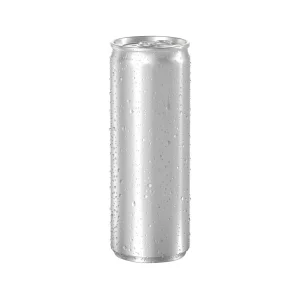
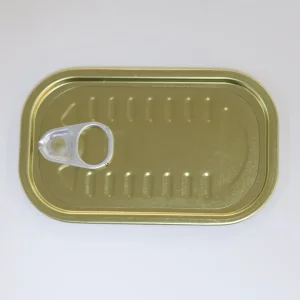

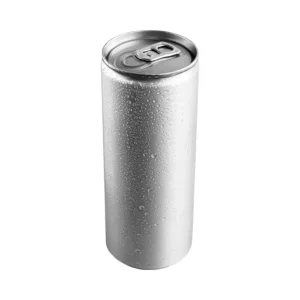
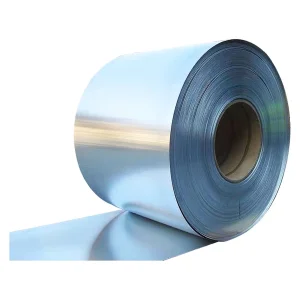

The global food and beverage packaging sector is undergoing a massive structural transformation. Driven by stringent sustainability mandates, ESG investment criteria, and shift away from single-use plastics, metal packaging—specifically aluminum cans and high-barrier tinplate components—has solidified its status as the premier infinitely recyclable alternative. Global commercial buyers, ranging from multinational food conglomerates to regional craft beverage producers, are demanding higher structural efficiency, specialized barrier coatings, and complete supply chain transparency from wholesale manufacturing partners.
Today's global supply chain landscape requires manufacturing partners who operate beyond simple commodity production. Modern automated filling lines operate at speeds up to 1,500 cans per minute. At these velocity scales, microscopic deviations in double-seam geometry, axial load capacity, or internal enamel thickness cause catastrophic line stops and immense product loss. Leading global canned food packaging factories must integrate material science, advanced metallurgy, and real-time AI computer vision quality control systems to guarantee zero-defect manufacturing.
To maximize shelf-life integrity and operational margin, enterprise procurement managers must align their product medium with exact metal alloy grades and internal lacquers:
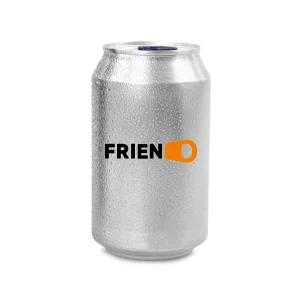
Optimized for Drawn & Wall Ironed (DWI) can bodies. Provides high tensile strength allowing down-gauging while retaining structural column strength against vertical pressure during stacking.
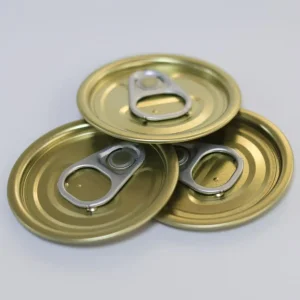
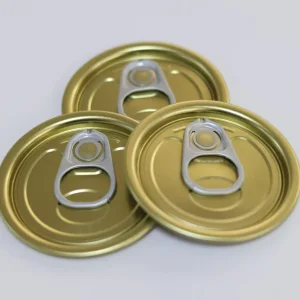
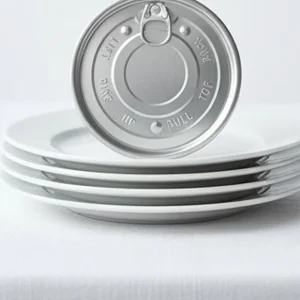
Specially formulated shell stock for Easy-Open Lids (EOL). Features high buckle resistance under internal carbonation or thermal retort expansion while maintaining easy tab fracture.
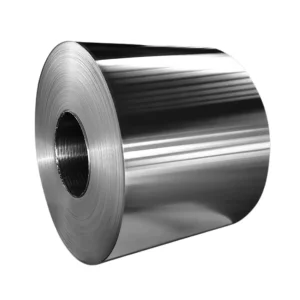
Ultra-pure deep-drawing aluminum coil stock ideal for flexible foil lids, pharmaceutical closures, and specialized food-grade airtight seals with zero pinhole tolerances.
Direct wholesale sourcing from leading manufacturing facilities requires navigating complex logistics, MOQ elasticity, total cost of ownership (TCO) optimization, and commodity price risk management. Modern procurement teams evaluate manufacturers across four core dimensions:
Global brands require packaging suppliers to accommodate dramatic seasonal demand surges without compromising lead times. Advanced factories utilize flexible, high-speed multi-cavity stamping lines that pivot between standard (330ml, 355ml), sleek, and slim formats with minimal tooling changeover latency.
Raw material cost constitutes over 60% of finished container expense. Leading factories partner with buyers by offering long-term supply framework agreements tied to London Metal Exchange (LME) hedging strategies, locking in conversion costs while insulating against macro inflation.
Empty metal containers are volumetric liabilities during ocean transport. Precision palletizing—utilizing corrugated slip sheets, top wooden frames, and heavy-duty shrink hooding—maximizes cube utilization inside 40ft High Cube containers, lowering sea freight cost per unit by up to 18%.
The evolutionary curve of metal packaging is governed by chemical barrier performance and structural lightweighting. Understanding the technical mechanics behind container integrity ensures optimized shelf life for highly aggressive food matrixes.
Regulatory bans on Bisphenol A (BPA) across Europe and North America have forced a complete overhaul of internal protective coatings. Advanced factories have transitioned to BPA-Non-Intent (BPA-NI) epoxy, acrylic, and polyorganosol spray systems.
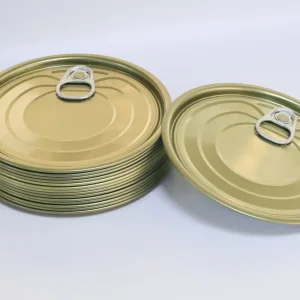
The conversion of aluminum coil into 200#, 202#, 307#, 401#, or 502# easy-open ends requires microscopic scoring accuracy. The score residual thickness must be controlled within ±0.002mm to balance low pop-and-pull opening force with high internal burst pressure capability (up to 6.2 bar for carbonated applications).
Through advanced cupping press alignment and multi-stage cupping-drawing-ironing dies, body wall thickness in modern 330ml/355ml cans is reduced down to 0.095mm at the mid-wall section while retaining thick bottom dome geometry to withstand axial column loads over 1.2 kN.
As global consumer brands face rising Extended Producer Responsibility (EPR) taxes and consumer backlash against plastic waste, metallic packaging provides an instantly viable circular economy solution. Over 75% of all aluminum ever produced in human history remains in active material circulation today.
Recyclability is not merely a theoretical claim—it is an industrial reality. Re-melting post-consumer aluminum cans consumes 95% less energy than producing primary aluminum from bauxite ore, resulting in a dramatic reduction in Scope 3 carbon footprint across corporate supply chains.
~16.5 kg CO2e per kg aluminum produced. Highly energy-intensive electrolysis process requiring substantial electrical power grid draw.
~0.6 kg CO2e per kg aluminum. Drastic energy saving, closed-loop scrap recycling direct from can manufacturing lines back into alloy slab casting.
Navigating target market customs and regional food contact regulatory hurdles is critical when procuring packaging overseas. Tier-1 packaging factories maintain exhaustive international certifications and perform rigorous batch-level chemical migration testing.
All internal lacquers and sealing compounds are certified compliant for direct food contact. Comprehensive overall migration limits (OML) and specific migration limits (SML) testing reports are supplied with every bill of lading.
Manufacturing facilities operate automated vision-inspection systems, HEPA-filtered clean air zones around lid curling lines, and strict pest control protocols to eliminate physical contaminants prior to pallet strapping.
Quality assurance labs utilize optical seam projectors to analyze seam overlap percentage, body hook, cover hook, and countersink depth to guarantee hermetic seals capable of surviving transportation vacuum drops.
Industrial raw material coils, specialized powder ends, and standard tinplate closures for global distribution.


Expert technical answers compiled by chief packaging engineers to facilitate engineering verification and procurement decision-making.
