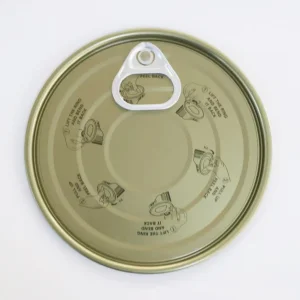
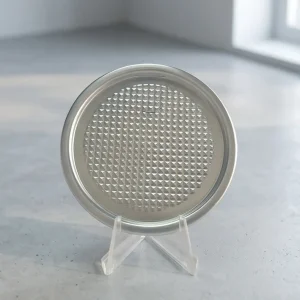
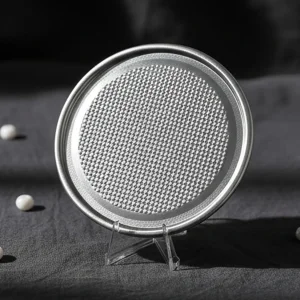
Explore our standard-setting food-grade tinplate lids engineered for severe retort sterilization, vacuum holding capacity, and flawless double-seaming line compatibility.
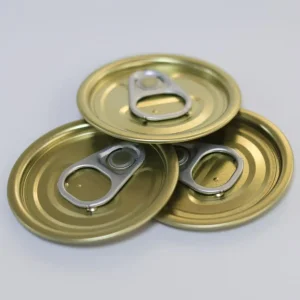
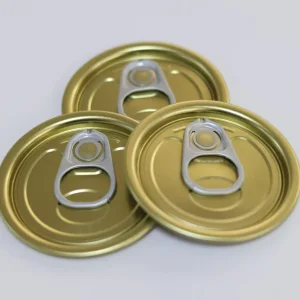
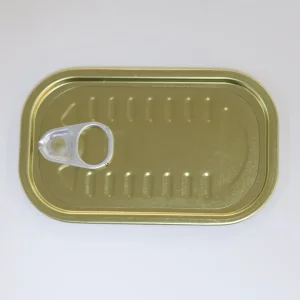
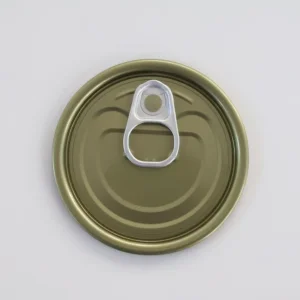
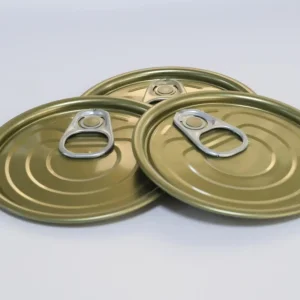
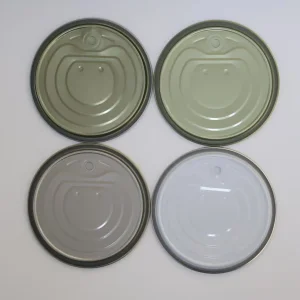
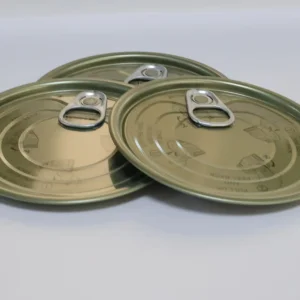
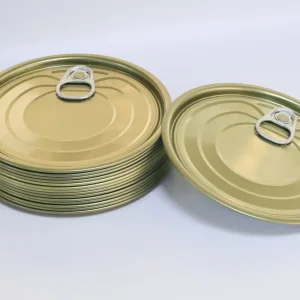
In the contemporary global packaging ecosystem, the term "Iron Lid"—technically recognized across metallurgical and manufacturing sectors as Electrolytic Tinplate (ETP) Ends or Tin-Free Steel (TFS / ECCS) Closures—represents the foundational cornerstone of long-shelf-life food preservation, industrial containment, and high-barrier rigid packaging. As global supply chains prioritize material circularity, zero-waste compliance, and total seal integrity, iron lids have experienced a technological renaissance, transcending their legacy origins into highly engineered, micro-gauge component solutions.
The global metal packaging market, valued at upwards of USD 105 Billion, relies heavily on tinplate closure systems to safeguard canned fruits, vegetables, processed meats, seafood, infant milk powders, paints, and specialized chemical solvents. The structural superiority of steel substrates provides unrivaled axial strength, internal pressure resistance, and total opacity to ultraviolet (UV) light, preventing photolytic degradation and lipid oxidation far more effectively than flexible polymer films or rigid clear plastics.
Furthermore, macro-economic factors such as the European Union’s Packaging and Packaging Waste Regulation (PPWR) and global ESG initiatives are driving food processors away from multi-layer un-recyclable plastics toward steel-based iron lid closures. Steel boasts the highest recycling rate of any primary packaging material globally (exceeding 84% across North America and Europe), creating a closed-loop economy where recycled iron lids are continuously remelted into high-grade commercial steel without physical quality degradation.
Delving into the chemical, physical, and mechanical properties that dictate iron lid performance under high-stress automated canning environments.
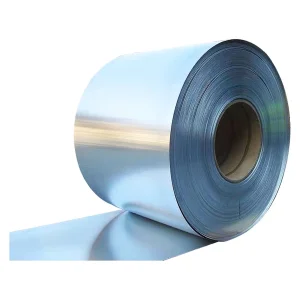
Utilizing cold-rolled low-carbon steel (T2 through T5 temper and Double Reduced DR7 to DR9 tempers) coated with ultra-precise tin layers (1.1/1.1 g/m² to 5.6/5.6 g/m²) to yield optimum ductility, drawability, and structural rigidity.
State-of-the-art internal lacquer coatings formulated without Bisphenol A (BPA-Non-Intent). Organosol, polyester, and epoxy-phenolic coatings prevent metallic migration and acid erosion from aggressive food matrices.
Advanced water-based and PVC-free plastisol sealing compounds applied into the lid curl. Guarantees complete micro-void filling during double-seaming to resist thermal shock and pressure drop during retorting.
| Industry Code | Nominal Diameter | Substrate Temper | Tin Coating (g/m²) | Recommended Coating | Primary Application Scenarios |
|---|---|---|---|---|---|
| 200# | 50 mm | T3 / DR8 | 2.8 / 2.8 | BPA-NI Organosol | Small-format dry milk, coffee, energy powders |
| 202# | 52 mm | T3 / T4 | 2.8 / 2.8 | Gold Epoxy-Phenolic | High-speed beverage & nutrition canned lines |
| 211# | 65 mm | T4 / DR8 | 2.8 / 5.6 | Aluminized Organosol | Processed vegetables, canned fruits, ready meals |
| 300# | 73 mm | T3 / T4 | 2.8 / 2.8 | Clear Polyester / BPA-NI | Condensed soups, sauces, seafood preserves |
| 307# | 83 mm | T4 / T5 | 5.6 / 5.6 | Meat Lacquer (Organosol) | High-sulfur meats, pet food, retort stews |
| 315# | 90 mm | T3 / DR8 | 2.8 / 2.8 | White Enamel / BPA-NI | Industrial dry ingredients, institutional foods |
| 401# | 99 mm | T4 / DR9 | 2.8 / 5.6 | Heavy-Duty Epoxy | Infant formula, milk powder, chemical seal ends |
| 603# | 153 mm | T5 / DR9 | 5.6 / 5.6 | Chemical Resistant Phenolic | Caterer-size bulk food cans, paints, oils |
| Square | Custom Rectangular | T3 / T4 | 2.8 / 2.8 | Decorative Lacquer / Gold | Edible oils, luxury biscuits, premium seafood |
Double seam mechanics represent a delicate equilibrium between cover hook length, body hook length, overlap percentage, and countersink depth. When an iron lid is joined to a tinplate or composite body by a high-speed automatic seamer (running at speeds up to 1,500 cans per minute), the lid's curl dimension and compound weight distribution dictate whether the resulting hermetic joint can withstand internal vacuum levels up to 75 kPa or internal pressures exceeding 3.5 bar without undergoing seam breakdown or micro-leakage.
How artificial intelligence vision inspection, ultra-lightweighting, and decarbonized manufacturing are defining the next decade of iron lid production.
Next-generation stamping lines integrate high-resolution 4K AI vision cameras capable of inspecting 100% of manufactured iron lids in real time. Systems detect micro-pinholes, compound bead discontinuities, scratches down to 10 microns, and rim deformities, automatically ejecting defective units before packaging.
By applying cold reduction processes after annealing, Double Reduced (DR8 and DR9) tinplate allows manufacturers to reduce nominal lid thickness from 0.22mm down to 0.16mm without sacrificing buckle strength or pressure resistance, achieving a 15–22% carbon reduction per million units.
Ahead of impending global chemical restrictions, progressive suppliers are pioneering 100% PFAS-free, Bisphenol-free organic bio-resins derived from renewable plant oils that match the chemical inertia and corrosion resistance of traditional epoxy coatings.
Laser-etched 2D DataMatrix codes on individual lid rims or master carton sleeves enable end-to-end traceability from raw steel mill coil batch up to the final customer filling line seamer setup.
Tailored tinplate closure architectures designed for rigorous performance demands across food, dairy, chemical, and luxury sectors.
Demands high-temperature steam sterilization (121°C–130°C for up to 90 minutes). Our 211#, 300#, and 307# tinplate lids feature anti-sulfur lacquers (incorporating zinc oxide fillers) to eliminate black staining caused by sulfide compounds released during meat and seafood processing.
Requires zero-oxygen hermetic environments. 401# and 502# iron lids are combined with aluminum foil tear-off membranes or nitrogen-flush rim profiles, maintaining headspace oxygen concentrations under 0.5% over a 36-month shelf life.
Industrial paints, automotive finishes, and volatile organic chemicals demand specialized double-phenolic internal linings. High-stress crimp-style iron lids resist solvent aggression and vapor pressure spikes during transport in hot climates.
Square and custom rectangular iron lids provide brand differentiation and optimal stackability for premium olive oils, sesame oils, and gift tins. Precision-engineered corners ensure seam integrity across non-circular geometries.
Built on 15+ years of packaging manufacturing experience, operating under international food-safety and metallurgical quality management standards.
Our operational authority as a leading global iron lid supplier is grounded in rigorous laboratory testing protocols and strict international regulatory compliance. Every batch of tinplate coil delivered to our pressing lines undergoes comprehensive chemical analysis, temper testing, and thickness mapping against certified mill reports.
Internal coating continuity is verified using high-precision Enamel Rater equipment. Current readings are maintained below strict food industry thresholds (< 2.0 mA), preventing micro-porosity and metal exposure.
Coated tinplate samples undergo neutral salt spray testing (NSS) exceeding 48 to 96 continuous hours in environmental chambers, assuring zero rust formation during marine shipment and high-humidity warehousing.
Fully compliant with US FDA 21 CFR 175.300, European Union Regulation (EC) No 1935/2004, EU 10/2011 plastics/coatings directive, and China GB 4806.10 standards for direct food contact safety.
Engineered answers addressing critical technical queries, seamer integration challenges, and compliance requirements from enterprise buyers.
Electrolytic Tinplate (ETP) features a thin electro-deposited layer of metallic tin over a low-carbon steel substrate, offering exceptional corrosion resistance, metallic luster, and natural lubricity for drawing processes. Tin-Free Steel (TFS), also known as Electrolytic Chromium Coated Steel (ECCS), features a dual layer of metallic chromium and chromium oxide. TFS is more economical and offers superior lacquer adhesion, making it ideal for deep-drawn ends and processed food lids that require heavy internal organic coatings.
High-acid foods (such as tomatoes, citrus fruits, and pickles with pH < 4.5) require organosol coatings or specialized BPA-NI polyester linings with elevated dry film weights (typically 8 to 12 g/m²). For sulfur-bearing protein foods such as meat, tuna, or pet food, an anti-sulfur lacquer containing zinc oxide (ZnO) or aluminum paste is specified to trap released hydrogen sulfide gas and prevent black iron-sulfide staining on the lid interior.
Due to steel's significantly higher modulus of elasticity and tensile yield strength compared to aluminum alloys, switching to iron lids requires recalibrating seamer chuck dimensions, first and second operation roll profiles, and baseplate pressure springs. Iron lids require higher seaming forces to properly fold the cover hook into the body hook without creating seam wrinkles or false seams. Our technical engineering team provides detailed Seam-Scope parameter charts and setup guidance for Angelus, Ferrum, FMC, and Somme seamers.
Iron lids are packed in heavy-duty polyethylene barrier sleeves with vapor corrosion inhibitor (VCI) paper and active silica desiccant packs inside reinforced corrugated shipping cartons or wooden export crates. Pallets are fully wrapped with heavy-gauge stretch hood film and top caps to prevent moisture ingress during ocean transit through variable climate zones.
Standard stocked sizes (such as 202#, 211#, 300#, 307#, and 401#) have flexible trial MOQs starting at 100,000 to 200,000 pieces. Custom lithograph-printed or bespoke gauge iron lids generally require a minimum production run of 300,000 pieces per design. Sample lots for double-seam teardown evaluation ship within 7 to 10 working days.
Explore our full line of tinplate lids, aluminum easy-open ends, and high-purity aluminum coil stock engineered for seamless line integration.