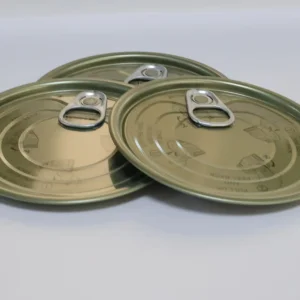
Direct factory supply engineered to exact mechanical tolerances, zero-defect barrier integrity, and high-speed automated filling line compatibility.
In the modern industrial supply chain, aluminium foil and light-gauge rigid metal container stock represent the absolute pinnacle of materials science, cold-rolling engineering, and chemical surface chemistry. As global consumer brand owners, pharmaceutical conglomerates, and advanced energy developers demand ultra-light packaging with complete gas, moisture, and light isolation, the global aluminium foil manufacturing ecosystem is undergoing a monumental transformation.
The core value driver for B2B procurement leaders is no longer limited to simple per-ton commodity pricing. Instead, strategic sourcing revolves around Information Gain, Total Cost of Ownership (TCO), micro-structural metallurgical stability, pinhole frequency mitigation, and continuous compliance across multi-jurisdictional food and drug safety frameworks. Modern high-speed converting machines operating at speeds above 1,200 units per minute require raw aluminium substrates with microscopic gauge uniformity ($\pm 1.0\%$), controlled surface tension ($\ge 38 \text{ dynes/cm}$), and precisely calibrated grain alignment to eliminate micro-fractures during draw and iron (DWI) or deep-stamping operations.
Choosing the correct alloy designation directly dictates tensile strength ($R_m$), yield strength ($R_{p0.2}$), elongation ($A_{50mm}$), and chemical resistance. Below is an engineering comparison of primary aluminium alloys utilized in state-of-the-art global manufacturing facilities:
| Alloy Grade | Temper | Typical Thickness | Mechanical Attributes | Primary Industrial Applications |
|---|---|---|---|---|
| Alloy 8011 | O, H14, H18, H22 | 0.006mm – 0.20mm | High tensile strength, superior ductility, excellent thermal stability | Pharmaceutical blister foil, food container foil, lacquered milk powder lids |
| Alloy 1235 | O, H18 | 0.006mm – 0.05mm | Minimum 99.35% Al purity, ultra-low pinhole density, soft temper flexibility | Aseptic liquid carton barriers, flexible packaging laminates, capacitor foil |
| Alloy 8079 | O, H18 | 0.0063mm – 0.08mm | Higher yield strength than 1235, superior puncture resistance | High-barrier retort pouches, infant formula seals, pharma strip packaging |
| Alloy 3104 | H19 | 0.23mm – 0.28mm | Manganese-alloyed, exceptional earring control, extreme drawability | DWI two-piece beverage can bodies (12oz, 250ml, 330ml, 500ml) |
| Alloy 5182 | H48 | 0.20mm – 0.25mm | Magnesium-rich, high buckle resistance, high rivet strength | Easy-Open Ends (SOT / RPT), shell stock for carbonated beverage lids |
The global industrial landscape has witnessed a fundamental shift toward digitalized production clusters. Chinese manufacturing hubs specializing in aluminium rolling, surface passivation, and high-speed precision stamping have evolved into Industry 4.0 smart factory ecosystems. By integrating fully automated continuous casting lines, high-precision cold rolling mills (equipped with Automatic Gauge Control AGC and Automatic Flatness Control AFC), and inline optical defect detection systems, top-tier Chinese facilities deliver benchmark quality at unmatched economies of scale.
Modern foil production lines utilize high-frequency X-ray/isotope thickness gauges combined with high-speed laser surface scanners capable of detecting pinholes down to 10 microns at mill speeds exceeding 1,500 meters per minute. Immediate automated reel-rejection guarantees zero out-of-spec material reaches the slitting station.
By co-locating primary aluminium smelting, liquid metal purification, continuous casting, cold rolling, and high-speed lacquering within integrated industrial parks, energy consumption is reduced by up to 28% while logistics lead times for raw coil feed stock are compressed from weeks to hours.
To insulate international procurement partners from freight volatility and seasonal demand spikes, advanced factories offer Vendor Managed Inventory (VMI) arrangements, maintaining strategic safety stocks of master coils, standard lid sizes (200#, 202#, 300#, 401#, 502#), and beverage cans.
The global packaging sector is at a decisive turning point driven by statutory sustainability mandates, strict chemical safety directives, and intense corporate ESG commitments. As major brand owners target carbon neutrality across Scope 1, 2, and 3 emissions, aluminium foil factory engineering is pioneering three major technological disruptions:
Aluminium possesses the unique operational attribute of infinite recyclability without structural degradation, consuming 95% less energy during re-melting compared to primary production. Industry leading mills are rapidly shifting raw material ratios toward certified post-consumer recycled (PCR) scrap and utilizing hydro-electric or solar-powered smelting facilities. Closed-loop scrap recovery systems inside converting facilities ensure 100% of stamping trimmings are instantly re-melted and returned to the rolling master loop.
Driven by European Food Safety Authority (EFSA) opinions and US FDA regulatory tightenings, traditional epoxy-phenolic inner coatings containing residual Bisphenol-A are being globally phased out. Advanced factories have successfully transitioned to high-performance Acrylic, Polyester, and Organosol BPA-NI inner lacquers. These advanced polymer matrix systems offer exceptional adhesion, resist high-temperature retort sterilization (up to 121°C – 131°C), and preserve flavor integrity across highly acidic beverage formulations (pH < 3.0) and sulfur-rich canned foods.
Through precise grain refining (using Titanium-Boron additions) and advanced multi-stage annealing processes, metallurgical engineers are continually reducing thickness thresholds without sacrificing mechanical buckle strength or bursting resistance. Can body wall thicknesses are migrating from 0.26mm down to 0.23mm and below, while flexible packaging foil gauges are achieving zero-pinhole hermetic performance at extraordinary thinnesses of 0.006mm (6 microns).
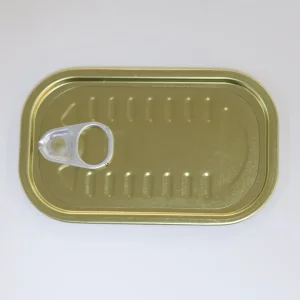
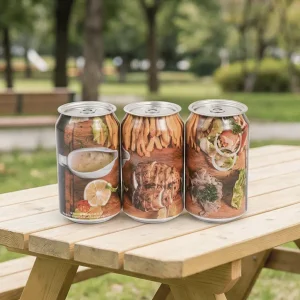
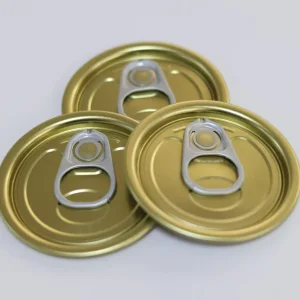
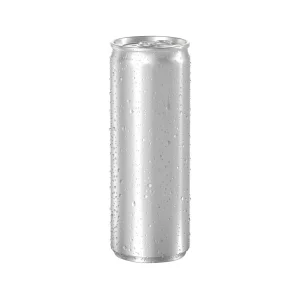
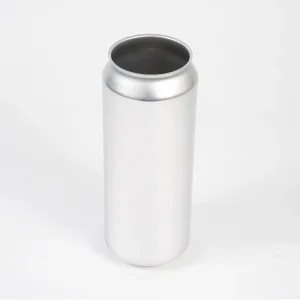
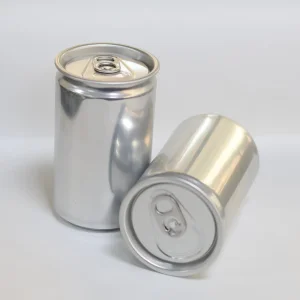
Engineered for high-volume canning facilities running fast-fill lines. Options include Standard 330ml/355ml/500ml bodies, Slim 200ml/250ml profiles, Sleek options, and precision-stamped 200# / 202# SOT & RPT easy-open ends featuring anti-corrosion lacquers capable of resisting high CO2 volume pressures.
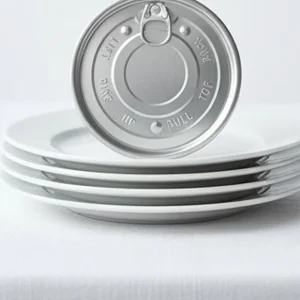
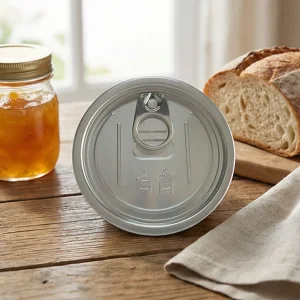
Ultra-cleanroom produced 300#, 401#, and 502# easy-open lids and transparent-top powder ends. Designed with peelable foil membranes, smooth safety-rim edges, anti-static inner coatings, and inert gas (Nitrogen) flush preservation performance for extended shelf life.
Non-magnetic, high-temperature sterilizable 209FA# and 305# pharmaceutical lids alongside 8011-O soft temper foil stock. Delivers 100% moisture vapor, oxygen, and ultraviolet light shielding for sensitive APIs, diagnostic powders, and clinical nutritional formulas.
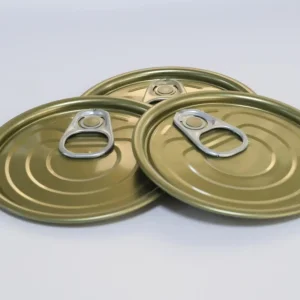
Heavy-duty food-grade tinplate and aluminum ends (307#, 315#, 603#) engineered with high-strain double-seam curls and retortable food contact compounds capable of enduring steam pressure cooking at 121°C for up to 90 minutes without delamination or seal breach.
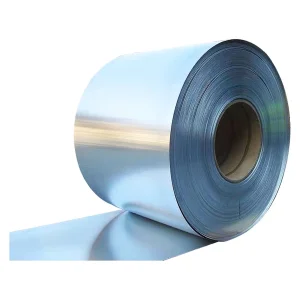
Bulk master coils of 8011#, 3104#, 5182#, and 5052# aluminum alloy slit to exact width tolerances (±0.1mm). Custom coil IDs (76mm, 152mm), tension-leveled surface cleanliness, and protective oiling for deep drawing, transformer winding, and HVAC fin stock.
Specialized high-purity 1235 and 8079 aluminum foil tailored for Lithium-ion battery cathode substrate and laminated pouch cell outer casing, featuring exceptional tensile uniformity, high surface energy, and minimal pinhole frequency.
For strategic procurement directors managing high-volume global packaging contracts, vendor qualification extends far beyond comparing FOB rates. Integrating a new aluminium foil or lid supplier requires rigorous technical evaluation to prevent catastrophic line stoppages, double-seam leaks, or regulatory non-compliance recall events. Global enterprise buyers evaluate factory partners against five critical operational criteria:
The interface between an easy-open lid curl and a drawn aluminum can body neck is measured in hundredths of a millimeter. Leading factories provide comprehensive Double-Seam Teardown Specification Sheets detailing first-operation seam tightness (target ≥ 80%), second-operation seam thickness, countersink depth, hook overlap (≥ 1.1mm), and body hook/cover hook parameters tailored specifically to the customer’s filling equipment (e.g., Ferrum, Angelus, FMC seamer models).
Every single mill shipment, master coil, and pallet lot must be accompanied by an auditable Certificate of Analysis (COA). Standard COA parameter reporting includes:
TCO evaluation encompasses total landed cost, scrap rate reduction at filling plants, working capital efficiency via flexible payment terms, and optimized container stuffing density. By shipping pre-cut, high-density bulk stacked pallets equipped with plastic top frames, moisture barrier shrink-wrap, and desiccant bags, shipping space utilization is maximized by up to 18% per 40ft High Cube container.
Operating across international trade boundaries requires absolute regulatory certainty. Direct supplier relationships must be backed by rigorous compliance certifications ensuring that all food-contact materials adhere strictly to destination market import laws.
| Regulatory Body / Standard | Jurisdiction | Scope & Compliance Requirement |
|---|---|---|
| US FDA 21 CFR 175.300 | United States & North America | Resinous and polymeric coatings for direct food contact surface compliance; total extractive limitation testing |
| EU Regulation (EC) No 1935/2004 | European Union | Materials intended to come into contact with food; Good Manufacturing Practice (GMP) EC 2023/2006 compliance |
| GB 4806.10 / GB 4806.9 | China National Standard | National Food Safety Standards for food-contact metal materials, coatings, and migration limit testing |
| ISO 9001 / FSSC 22000 | Global Certification | Quality management systems and comprehensive food safety management from raw coil receiving to shipping |
| REACH & RoHS Compliance | European Union / Global | Complete absence of heavy metals (Pb, Cd, Hg, Cr VI) and SVHC (Substances of Very High Concern) |
To streamline cross-border customs clearance, factory logistics departments provide full documentation suites prior to vessel arrival—including Bill of Lading, Commercial Invoice, Packing List, Mill Test Certificate (MTC), Certificate of Origin (Form E, Form A, or RCEP where applicable), and certified Phytosanitary Fumigation documentation for wooden pallets.
Direct engineering answers regarding alloy selection, minimum order quantities, barrier testing, and line integration.
Factory-direct wholesale pricing backed by comprehensive QA documentation, strict tolerance control, and fast worldwide logistics.
Connect directly with our senior metallurgical and packaging engineers to request full technical data sheets, double-seam teardown guidelines, custom trial samples, and volume contract quotations.