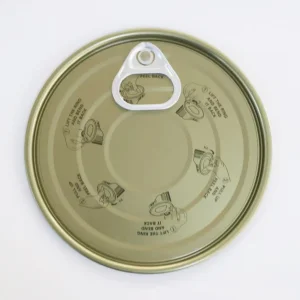
Explore our tier-one OEM/ODM catalog engineered for beverage, food processing, and high-barrier industrial packaging lines.

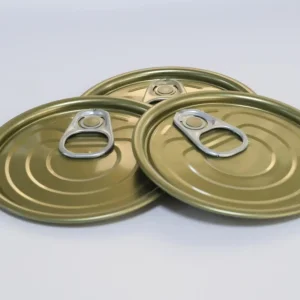

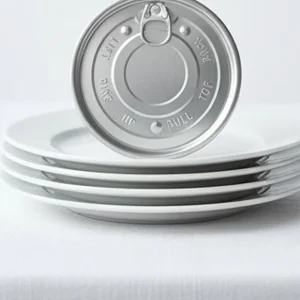


Analyzing market demand, supply chain mechanics, and technical specifications shaping the global industrial foil ecosystem.
In the contemporary B2B packaging and thermal protection sectors, the term "Heavy Duty Tin Foil"—historically referring to tin-coated or pure aluminum rolled sheets—represents a critical engineering material. Today, modern industrial heavy-duty foil is predominantly manufactured from high-purity aluminum alloys (such as 8011, 3003, and 8079) designed to provide an absolute barrier against moisture, gas, light, and microbial contamination. As global supply chains demand extended shelf life, enhanced food safety compliance, and robust thermal management in industrial applications, B2B buyers must navigate complex material specifications, gauge tolerances, and supplier capability matrices.
The global heavy-duty foil market is undergoing a structural transition. Demand driven by commercial catering, cold-chain logistics, flexible barrier packaging, pharmaceutical blisters, and thermal shielding in automotive and aerospace industries has placed unprecedented emphasis on mechanical performance. Procurement directors are no longer merely seeking cheap commodity suppliers; they require strategic factory partners capable of delivering continuous coil consistency, ultra-low pinhole counts, and certified food-contact or industrial-grade metallurgy.
Technical Information Gain Note: Heavy-duty foil is technically defined as aluminum foil with a gauge thickness ranging from 15 microns (0.015mm) up to 50 microns (0.050mm) or higher, offering tensile strengths exceeding 100 MPa. Standard household foils typically measure between 9 to 12 microns, making them prone to tear propagation under commercial mechanical strain.
Understanding the physical properties, tempers, and surface chemistry that define high-yield heavy-duty aluminum foil production.
The industry benchmark for food packaging and closure lids. Formulated with Iron (Fe) and Silicon (Si) additions to enhance tensile strength and burst resistance while maintaining excellent ductility during deep drawing and embossing processes.
Alloyed with Manganese (Mn), 3003 heavy-duty foil exhibits superior corrosion resistance and elevated mechanical strength. Ideal for semi-rigid food containers, heavy-duty baking trays, and HVAC heat-exchanger fins requiring high rigidity.
Engineered for pharmaceutical blister packs and ultra-thin, high-density flexible laminates. Delivers exceptional barrier integrity with near-zero pinhole frequency even at reduced thicknesses down to 12-15 microns.
When issuing Requests for Quotation (RFQs) to global factories, enterprise procurement managers must evaluate suppliers against rigorous technical thresholds. Below is the standardized technical specification benchmark applied in state-of-the-art aluminum foil manufacturing facilities:
| Foil Thickness (Gauge) | Typical Alloy & Temper | Tensile Strength (MPa) | Elongation (%) | Pinhole Limit (Pinhole/m²) | Primary B2B Application |
|---|---|---|---|---|---|
| 15µm – 18µm (0.015-0.018mm) | 8011 - O | 85 – 110 | ≥ 3.0% | < 50 | Commercial Foodservice Wrapping, Catering Rolls |
| 20µm – 25µm (0.020-0.025mm) | 8011 / 8079 - O | 95 – 125 | ≥ 3.5% | < 10 | Heavy Duty Turkey Foil, Retort Pouch Outer Barrier |
| 30µm – 45µm (0.030-0.045mm) | 3003 - H24 / H18 | 140 – 180 | ≥ 4.0% | Near Zero (0) | Semi-Rigid Foil Containers, Easy-Open Lid Membranes |
| 50µm – 100µm+ (0.050-0.100mm) | 3003 / 5052 - H19 | ≥ 200 | ≥ 2.0% | Absolute Zero (0) | Industrial HVAC Shielding, Automotive Heat Barriers |
How continuous casting, high-speed cold rolling mills, and integrated logistics deliver unmatched global competitive advantages.
Leading Chinese manufacturing plants utilize imported 2000mm+ wide Achenbach non-reversing cold foil mills equipped with automatic gauge control (AGC) and automatic flatness control (AFC) systems. This guarantees cross-web gauge deviation within ±2%.
By establishing industrial clusters in Henan, Shandong, and Jiangsu, Chinese factories integrate alumina refining, continuous ingot casting, hot rolling, and foil slitting under unified supply chains, significantly lowering energy overhead and raw material lead times.
Export-oriented Chinese factories adhere strictly to FDA 21 CFR 175.300, European Union Regulation EC 1935/2004, ISO 9001 quality management, FSSC 22000, and Kosher/Halal standards, providing complete chemical migration safety reports for global entry.
Over the past decade, Chinese heavy-duty foil manufacturers have evolved from low-cost bulk suppliers into high-precision technical partners. The combination of massive production capacity—accounting for over 60% of world aluminum foil rolling output—and rapid OEM customization allows international buyers to source bespoke jumbo coils, customized cutter-box retail rolls, and pre-cut embossed sheets with minimal lead times.
Furthermore, Chinese factories excel in surface treatment and degassing technologies. High-temperature annealing furnaces operated in inert gas environments fully eliminate residual rolling oils (achieving Wetting Tension Grade A according to GB/T 3198 / ASTM B479 standards). This ensures that when the foil is laminated with polyethylene (PE), polypropylene (CPP), or PET films, the inter-layer bond strength remains exceptional without blistering or delamination under high-retort processing.
From commercial kitchen operations to specialized industrial insulation and high-barrier energy storage components.
Restaurants, hotels, and airline caterers utilize heavy-duty 18µm–25µm foil rolls for high-temperature roasting, lining commercial baking sheets, and blast-freezing food portions. The heavy gauge prevents bone punctures and grease leakage.
High-tensile aluminum foil serves as the core barrier layer in retort pouches, milk powder easy-open ends, and vacuum-sealed coffee packaging, blocking oxygen transfer rates (OTR) to < 0.1 cc/m²/day.
Foil-Scrim-Kraft (FSK) facings combine 30µm–50µm heavy aluminum foil with fiberglass reinforcement mesh. Applied to duct wrap and roof insulation to reflect up to 97% of radiant heat transfer.
Key considerations for cost structure analysis, risk mitigation, and sustainable aluminum recycling frameworks.
A mature enterprise procurement strategy requires transparent pricing models. Heavy-duty aluminum foil factory pricing is traditionally calculated using the standardized formula:
Total Unit Cost (USD/MT) = LME Aluminum Cash Settlement Price + Manufacturing Processing Fee (Conversion Cost) + Surface Coating/Slitting Surcharge + Seaworthy Packaging Cost
The LME Price fluctuates according to global market trading on the London Metal Exchange. The Processing Fee reflects the manufacturing difficulty, target gauge, temper control, and slitting precision required. For instance, ultra-thin foils require slower mill speeds and higher annealing passes, resulting in a higher conversion cost per metric ton compared to thick 50-micron container stock.
Before issuing purchase orders for multi-container wholesale shipments, procurement teams should mandate the following supplier audit verifications:
As corporate Scope 3 emission targets become mandatory across North America and Europe, aluminum foil suppliers are rapidly adopting low-carbon smelting processes powered by renewable hydropower. Recycled content integration (Post-Consumer Recycled / PCR aluminum) is gaining momentum. Because recycling aluminum consumes only 5% of the energy required for primary smelting, top-tier factories are certifying closed-loop scrap recovery systems, providing verified Environmental Product Declarations (EPD) for eco-conscious global brands.
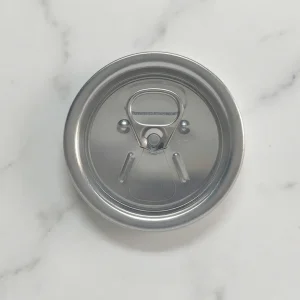
Precision-engineered easy-open ends, powder lids, and tinplate closures for global industrial canners and distributors.




Expert technical answers addressing common engineering, quality control, and shipping concerns.