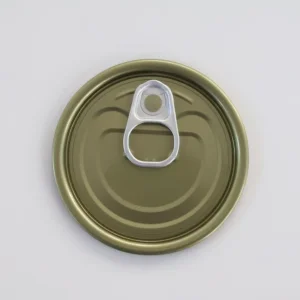
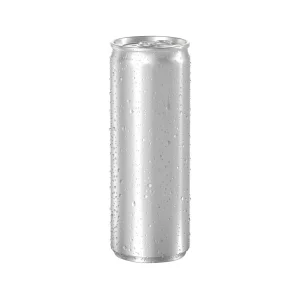
Engineered for high-volume automated packaging lines, meeting international FDA, EU, and ISO standards.
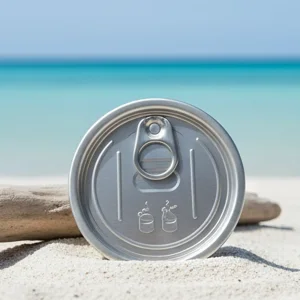
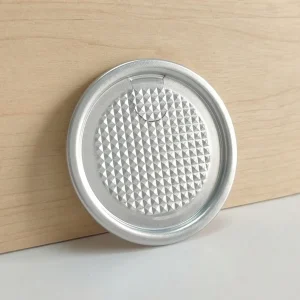
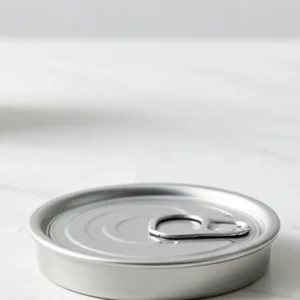
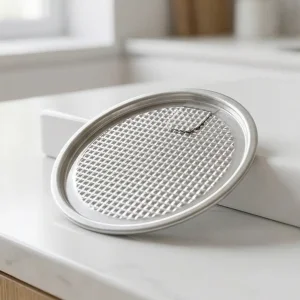
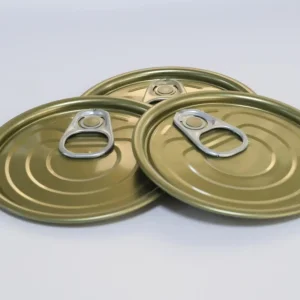
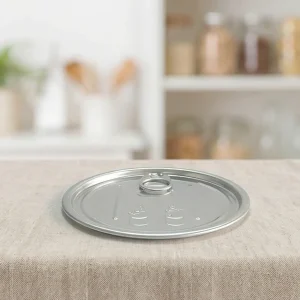
A whitepaper analysis on market demands, metallurgical alloy advancements, and sustainable packaging shifts.
The global metal packaging landscape is undergoing a structural paradigm shift. Industrial procurement teams across food, beverage, pharmaceutical, and electronic sectors are rapidly transitioning away from legacy multi-layer plastics toward high-purity aluminum coil, specialized easy-open ends (EOE), and technical kerajang aluminium (aluminum foil/sheet solutions). Driven by stringent ESG mandates, extended shelf-life requirements, and automated high-speed canning demands, the market requires manufacturers to provide more than just raw commodity supply—it demands technical partnership and systemic quality assurance.
Core Market Insight: High-performance kerajang aluminium and end-closure systems must balance zero-defect mechanical integrity under pressure with ultra-thin gauge tolerances to minimize material weight while maintaining absolute oxygen and moisture barrier performance.
As a leading tier-1 manufacturer based in Shanghai, our production infrastructure integrates precision metallurgy, continuous cold rolling, and advanced surface lacquer chemistry. By maintaining micro-level tolerances in alloy composition (such as 3104-H19 for draw-and-iron body stock and 5182-H48 for high-buckle easy-open ends), we ensure seamless integration with high-speed filling lines operating at speeds up to 1,200 cans per minute.
Complete light, oxygen, and moisture exclusion preventing product degradation across pharmaceutical, infant formula, and electronic powder applications.
Advanced temper treatments (H19, H48, H14) enabling gauge reduction down to 0.20mm without sacrificing burst resistance or score line integrity.
100% Bisphenol A Non-Intent (BPA-NI) and organosol coating systems compliant with European Union EFSA and US FDA food contact directives.
Rigorous empirical controls embedded across our coil processing and end-stamping facilities.
Custom engineering solutions tailored to regional storage climates, fill chemistry, and machinery dynamics.
Global procurement teams encounter significant operational hurdles when sourcing metal packaging across international borders. Variances in atmospheric humidity during ocean freight, micro-vibrations during transport, and aggressive product formulations (such as acidic RTD beverages, salty food products, or fine static-conductive powders) can compromise inferior closure systems.
Our engineering matrix addresses these procurement pain points directly through tailored material selection and structural modification:
| Procurement Challenge | Technical Root Cause | Manufacturer Macro Solution | Target Material Standard |
|---|---|---|---|
| Static Cling in Powder Filling | Friction charge build-up on lid surface during high-speed vacuum dosing. | Anti-static formulation applied to internal lacquers and non-magnetic alloy selection. | 300# / 209FA# Anti-Static Aluminum Lids |
| Coastal Oxidation & Rust | High salinity air exposure in marine transit and tropical warehousing. | Triple-pass exterior lacquer system with extended salt-spray resistance ratings. | 401# Marine-Grade Rust-Proof Ends |
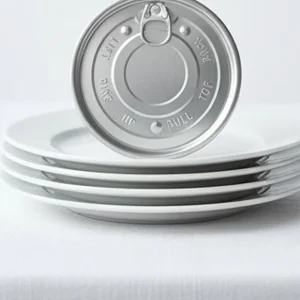
| Seam Failure at High Line Speeds | Inconsistent curl profile and countersink depth variation on the press line. | 100% optical sensor dimension control with automated double-seam tear-down matching. | 202# / 200# SOT & RPT Beverage Ends |
| Thermal Sterilization Leaks | Differential thermal expansion between lid compound and body under retort. | High-elastomer compound lining formulated for 121°C / 30-min autoclave cycles. | 305# / 307# Retortable Food Lids |
From mill test certificates to destination clearance, every shipment is backed by verified laboratory reporting.
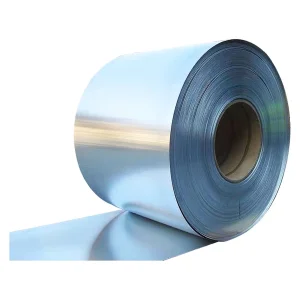
Compliance assurance is the cornerstone of trustworthy global manufacturing. Shanghai Friend Metals Technology Co., Ltd. operates under strict ISO 9001 and FSSC 22000 management systems. Every batch of aluminum coil entering our facility undergoes spectrographic analysis to verify alloy purity, yield strength, and percentage elongation prior to blanking or slitting.
To support localized regulatory submission across the European Union, North America, Middle East, and Asia-Pacific markets, we provide comprehensive documentation packages with every consignment:
Pioneering next-generation packaging engineering for ultra-low carbon footprints and smart factory automation.
Transitioning standard 202# beverage shells to ultra-thin gauges (down to 0.18mm) while maintaining 6.0+ bar buckle threshold using finite element analysis (FEA).
Integrating high-resolution vision systems operating at 3,000 units/min to detect sub-millimeter score line flaws, compound void spots, and rim dents automatically.
Laser-etching micro QR codes directly on the underside of tabs or inner lid surfaces to provide consumers and brand owners with end-to-end supply chain transparency.
Expert responses to critical engineering, logistics, and quality control inquiries.
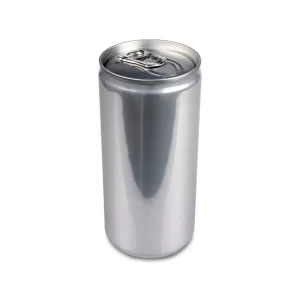
Can bodies are drawn from 3104-H19 alloy, providing high tensile strength and superior drawability. Easy-open end shells are stamped from 5182-H48 shell stock for optimal buckle resistance, while opening tabs utilize 5052-H38. Lacquered coil stock for specialized food and pharmaceutical lids is generally supplied in 8011-H14/H18 tempers, offering smooth foil flexibility and high surface cleanliness.
We employ flexible water-based organosol and epoxy-modified coatings specifically engineered to stretch during scoring and curling. Every batch undergoes an Enamel Rater test (measuring current leakage in milliamperes) after stamping to confirm zero micro-fractures in the protective barrier along the score line.
For stocked diameter sizes (such as 200#, 202#, 300#, 307#, and 401#), trial orders start at 200,000 units. Custom lithographic printed cans or specialized custom-slit coil runs start at 100,000 units. We provide free pre-production sample lots for double-seam teardown evaluation on your seamer line prior to mass manufacturing contracts.
Easy-open ends are stacked in heavy-duty paper sleeves, sealed inside moisture-barrier polyethylene bags with desiccant packs, and packed into heavy corrugated cartons or wooden pallets. Cans travel on wooden pallets protected by plastic top frames, layer boards, and heavy-gauge stretch hooding. High-purity coils are eye-to-sky or eye-to-wall strapped on heavy skids with VCI anti-rust paper wrap.
Yes. Our engineering department can adjust curl width, curl angle, countersink depth, and compound weight according to your seamer head specifications (e.g., Angelus, Ferrum, Continental Can). Engineering CAD drawings and profile matchings are provided during project setup.
Explore our broader industrial solutions designed for global manufacturing applications.