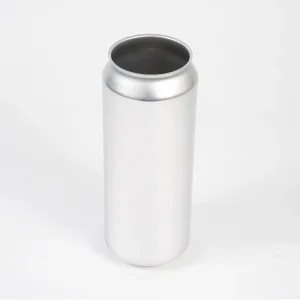
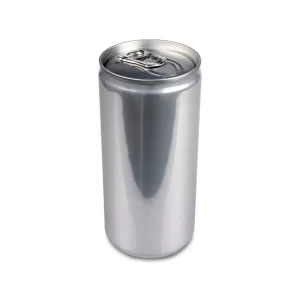
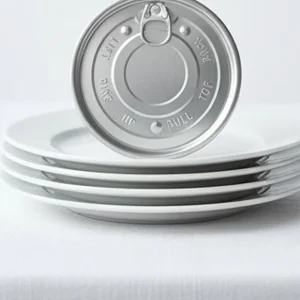
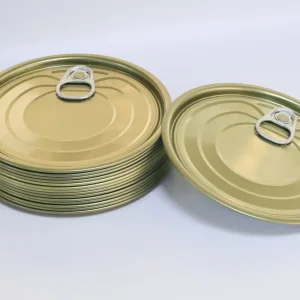
High-speed stamped easy-open ends, food-grade tinplate covers, and engineered aluminum coils manufactured under strict ISO9001 and FSSC22000 quality systems.
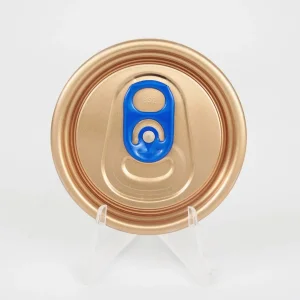
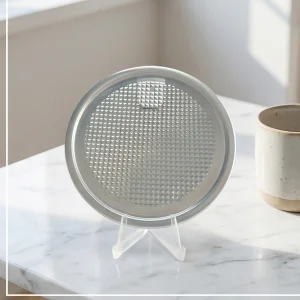
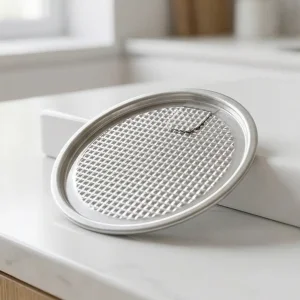
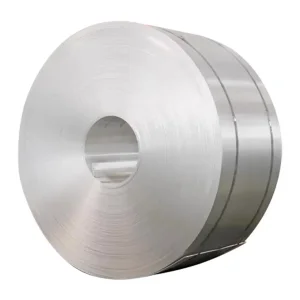

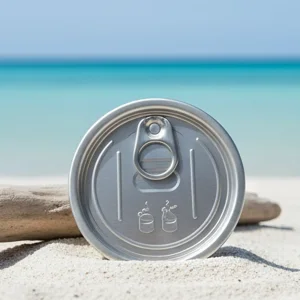
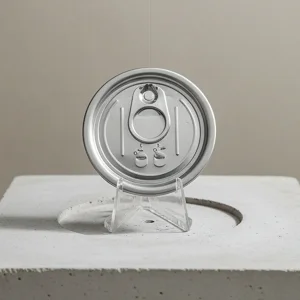
The global metal packaging industry has entered an era defined by rapid material conversion, stringent carbon accounting, and high-speed automated processing. Aluminum storage cans, easy-open ends (EOE), and structural lid systems represent the fastest-growing rigid packaging format worldwide. Driven by an unrelenting shift away from single-use plastics and fragile glass, multinational beverage conglomerates, pharmaceutical firms, infant formula processors, and specialty chemical manufacturers are standardizing their containment architectures on precision-engineered aluminum alloys.
China's modern manufacturing infrastructure stands at the center of this transformation. Accounting for over 45% of total global aluminum container production capacity, leading Chinese mega-factories have evolved beyond simple volume assembly to become world-class hubs of metallurgical engineering, ultra-high-speed stamping, and advanced surface coating research. Factories in industrial corridors such as Shanghai, Zhejiang, and Jiangsu deploy state-of-the-art European and American high-speed body-maker lines (operating at speeds exceeding 1,200 to 2,000 cans per minute) coupled with real-time AI optical inspection systems.
Commercial buyers sourcing from top-tier Chinese suppliers gain a formidable competitive advantage. Through concentrated supply chains that integrate primary bauxite refining, precision alloy rolling (3104, 5182, 8011 tempers), chemical passivating, and automated logistics within a tight geographic radius, Chinese manufacturers deliver unparalleled cost-efficiencies, rapid prototyping cycles, and rigid lot-to-lot consistency.
| Performance Parameter | DWI Aluminum (3104/5182) | Tinplate (ETP / TFS) | PET / Plastic Rigid | Borosilicate / Soda-Lime Glass |
|---|---|---|---|---|
| Oxygen Transmission Rate (OTR) | 0.00 cc/m²/day (Absolute Barrier) | 0.00 cc/m²/day (Absolute Barrier) | 1.5 – 5.0 cc/m²/day (Permeable) | 0.00 cc/m²/day (Absolute Barrier) |
| Light & UV Degradation Risk | Zero Penetration (100% Shielding) | Zero Penetration (100% Shielding) | High (Requires UV Absorbers) | Moderate (Amber/Green dependent) |
| Thermal Conductivity (Cooling Rate) | 205 W/m·K (Ultra-Fast) | 52 W/m·K (Moderate) | 0.15 W/m·K (Insulative) | 1.05 W/m·K (Slow) |
| Tare Weight (Standard 330ml Container) | ~11.5 to 12.8 grams | ~38.0 to 45.0 grams | ~18.0 to 24.0 grams | ~190.0 to 220.0 grams |
| Infinitely Recyclable Efficiency | >98% Yield (6-Week Can-to-Can) | ~85% Yield (Requires Slagging) | Degrades per Cycle (Downcycling) | High Energy Remelt Required |
The global trajectory of the aluminum container market is governed by regulatory tailwinds, corporate net-zero commitments, and evolving consumer preference for sustainable packaging. Understanding these overarching dynamics enables commercial procurement teams to future-proof their supply chains against upcoming regulatory hurdles.
With the European Union’s Packaging and Packaging Waste Regulation (PPWR), extended producer responsibility (EPR) legislation, and Carbon Border Adjustment Mechanisms (CBAM) taking hold globally, brands are under extreme pressure to minimize Scope 3 carbon footprints. Aluminum's circular life cycle enables brand owners to meet strict recycled-content mandates effortless.
Global health authorities (FDA, EFSA, SAMR) have accelerated restrictions on Bisphenol-A (BPA). Leading Chinese manufacturers have seamlessly transitioned production to advanced BPA-Non-Intent (BPA-NI) cross-linked acrylic, modified polyester, and water-borne organosol inner lacquers, guaranteeing chemical neutrality across acidic, alcoholic, and aggressive media.
Metallurgical breakthroughs in strain-hardened aluminum alloys allow factory engineers to down-gauge wall thicknesses to less than 0.095mm while maintaining column strength and internal pressure resistance exceeding 90 PSI. Down-gauging directly lowers freight costs and embedded carbon per unit shipped.
The conversion of flat aluminum coil into a high-pressure, hermetically sealed storage container involves sophisticated mechanical deformation and precise chemistry. Chinese export-oriented facilities utilize rigorous engineering controls at every phase of production.
Can body stock relies primarily on Alloy 3104-H19, an aluminum-manganese-magnesium matrix engineered for extreme work-hardening capabilities during drawing. Easy-Open End (EOE) shells utilize Alloy 5182-H48, offering superior tensile strength required to form the score-line rivet without metal fatigue. Lidding foils and specialty milk powder covers employ Alloy 8011/3003 for controlled tear strength and burst thresholds.
In the body-maker, circular blanks are punched from lubricated coils and drawn into shallow cups. Successive ironing rings stretch the metal walls while preserving bottom dome geometry. The bottom dome acts as a reverse pressure vessel, distributing internal carbonation forces evenly. Wall thickness profile control is held within ±0.002mm tolerances across the body length.
Formed containers undergo a multi-stage wash sequence (acidic degreasing, deionized water rinse, zirconate passivating) to remove drawing lubricants. Containers then pass through high-speed rotary airless spray guns where internal protective lacquers are electrostatically applied. Film weights are meticulously calibrated between 150mg/m² and 350mg/m² depending on aggressive media specifications (e.g., craft beers vs. acidic juices).
Before final automated packaging, 100% of finished cans and lids pass through multi-camera vision inspection towers. Advanced deep-learning algorithms detect micro-dents, flange damage, interior coating voids, and tab misalignment at full line speed. Online optical pinhole testers inspect 100% of easy-open ends for light leaks down to 0.01mm resolution.
Aluminum storage containers and easy-open end closures are customized to perform across diverse industrial conditions, storage temperatures, and chemical stresses. Chinese factories provide targeted technical configurations tailored to specific localized use-cases:
Nutritional powders require absolute oxygen and moisture barriers to prevent lipid oxidation and nutrient degradation over 24-to-36-month shelf lives. Factories equip 401# and 502# large-diameter aluminum easy-open ends with peelable foil membranes, scoop-rest rings, and nitrogen-flushing capability. Oxygen levels inside seamed cans are maintained below 0.5% post-vacuum sealing.
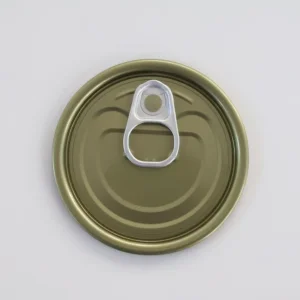
Carbonated beverages impose high internal pressure requirements (often reaching 60–90 PSI during tunnel pasteurization). Chinese factories provide specialized 202# SOT (Stay-On Tab) and RPT (Ring Pull Tab) ends engineered with reinforced countersink depth and anti-peel score lines that resist pressure spikes without buckling or leaker formation.
Specialty freeze-resistant aluminum lid formulations utilize low-temperature elastomeric sealant compounds inside the curl zone. These compounds retain elasticity at extreme sub-zero temperatures (down to -40°C), preventing micro-gapping and vacuum loss during long-term cold storage of frozen seafood, biological powders, and pharma ingredients.
High-purity chemical powders, metallic pigments, and electronic-grade reagents present electrostatic discharge risks during pneumatic filling. Factories supply customized anti-static coated aluminum closures incorporating conductive surface treatments that dissipate static charges, preventing product cling and seamer contamination.
Global sourcing extends far beyond buying physical cans or ends—it requires total operational alignment between the container supplier and the customer's high-speed filling line. Leading Chinese factories function as technical partners, offering end-to-end line integration services:
Factory technical teams provide precise dimensional profile drawings (countersink, curl thickness, chuck radius) tailored to your specific seamers (e.g., Angelus, Ferrum, CFT). We assist in setting up optical double-seam inspection protocols, monitoring countersink depth, seam length, body hook, and end hook overlap to guarantee zero-defect hermetic seals.
Deploying 6-to-8 color dry offset high-speed printing presses, Chinese factories offer full-wrap CMYK decoration, spot varnishes (matte, tactile, glossy, metallic), and temperature-sensitive thermochromic inks. Direct digital proofing guarantees exact color matching before mass production runs.
To withstand extended ocean transit across varied climate zones, cans are automated-palletized on heat-treated ISPM-15 wooden or plastic pallets, reinforced with top frames, protected by heavy kraft slip-sheets, and fully wrapped in moisture-resistant stretch hood film. Desiccant packs are inserted to prevent condensation rust during oceanic shipping.
Below are detailed answers to key technical questions encountered by procurement managers, packaging engineers, and QA directors when evaluating Chinese metal packaging factories.
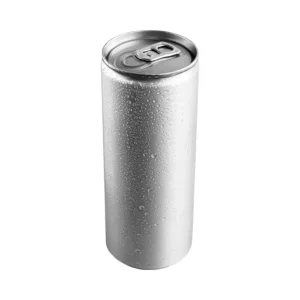
Precision-formed 250ml sleek, 330ml standard, 355ml 12oz, 473ml, and 500ml beverage containers manufactured with premium 3104-H19 alloy stock.