Precision-engineered aluminum easy-open lids, sleek beverage cans, food-grade tinplate ends, and high-performance coils directly from our certified manufacturing base.
In the modern metal packaging ecosystem, the 307# can end (nominal diameter 83.3mm / 307 diameter code) represents one of the most critical structural dimensions for worldwide food, beverage, infant nutrition, and chemical product distribution. Serving as the primary closure interface for 83mm metal cans, composite paper tubes, and rigid PET containers, the 307 easy-open end (EOE) balances structural rigidity, hermetic seam sealability, and ergonomic consumer opening dynamics.
Driven by skyrocketing global demand for shelf-stable foods, high-purity nutritional powders, craft coffee, and gourmet pet foods, Chinese 307 can end manufacturers have transitioned from high-volume OEM providers into technical pioneers. Leveraging ultra-high-speed Minster and Stolle stamping presses, integrated coil lacquering facilities, and automated vision inspection systems, top-tier factories in China now manufacture billions of 307 can ends annually under strict international standards, including ISO 22000, FSSC 22000, FDA 21 CFR 175.300, and EU Regulation 1935/2004.
To ensure perfect seam integrity on automated seaming lines (such as Ferrum, Angelus, and FMC seamers), procurement teams must carefully evaluate the dimensional tolerances and mechanical characteristics of 307 format ends. A minor deviation in curl height or countersink depth can cause double-seam defects like false seams, cut-overs, or micro-leakages under autoclave pressure.
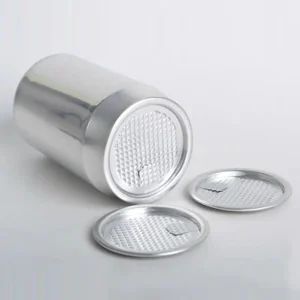
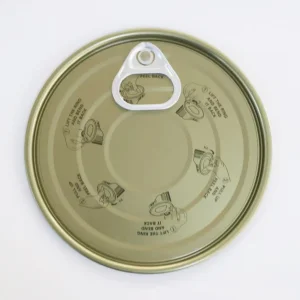
Chinese manufacturers produce three primary architectural variations of the 307 diameter end: 307 Full-Aperture Easy Open Ends (EOE), 307 Peel-Off Ends (POE / Foil Lids), and 307 Sanitary/Standard Non-Opening Ends. Below is the comprehensive engineering comparison matrix used by packaging scientists and QA managers worldwide:
| Engineering Parameter | 307 Aluminum EOE (Full Open) | 307 Tinplate EOE (ETP / TFS) | 307 Aluminum Peel-Off End (POE) |
|---|---|---|---|
| Nominal Outer Diameter | 83.3 mm ± 0.15 mm | 83.3 mm ± 0.15 mm | 83.3 mm ± 0.12 mm |
| Substrate Material | 5182-H48 / 5052-H19 Aluminum Coil | MR Grade Electrolytic Tinplate (0.21-0.24mm) | 5182 Aluminum Ring + Embossed Foil Membrane |
| Countersink Depth | 6.25 mm ± 0.10 mm | 6.35 mm ± 0.10 mm | 5.80 mm ± 0.10 mm |
| Pop Opening Force | 12.0 - 16.5 N | 14.0 - 18.5 N | 4.0 - 8.0 N (Ultra-Smooth Pull) |
| Pull Tear Force | 22.0 - 32.0 N | 28.0 - 38.0 N | 12.0 - 18.0 N |
| Internal Coating Options | BPA-NI Organosol / Epoxy-Phenolic | BPA-NI Acrylic / Golden Epoxy / Gold Lacquer | Heat-sealable PP/PE Polymer Film Layer |
| Buckle Pressure Resistance | ≥ 180 kPa (> 26 PSI) | ≥ 210 kPa (> 30 PSI) | ≥ 120 kPa (Designed for Nitrogen Flush/Dry) |
| Primary Application Spectrum | Nutritional Powders, Coffee, Nuts, Dry Food | Retort Canned Meats, Seafood, Vegetables, Pet Food | Infant Formula, High-End Milk Powder, Protein Powder |
Choosing between aluminum and tinplate for 307 diameter ends depends primarily on thermal processing requirements and cost considerations. 5182-H48 aluminum alloy delivers superior corrosion resistance, lightweighting capabilities, and zero risk of exterior rust in high-humidity ambient storage. It is the gold standard for milk powders, health supplements, dried fruits, and roasted coffee beans.
Conversely, Electrolytic Tinplate (ETP / TFS) provides high column strength and thermal stability, making it the top choice for retort processing (121°C for 30–60 minutes under high counter-pressure). Tinplate 307 ends withstand thermal expansion without buckling, ensuring seam integrity throughout high-pressure steam cooking cycles.
Unrivaled production scale, extreme automation, stringent QA, and structural cost efficiency create a competitive advantage for international procurement partners.
Leading Chinese facilities operate multi-die Minster and Stolle presses running at speeds up to 3,000 ends per minute. Precision carbide score dies maintain score residuals within ±0.001mm tolerances, ensuring smooth pull forces while eliminating spontaneous score cracking during ocean freight transit.
To meet strict European Chemicals Agency (ECHA) and US FDA food contact safety regulations, Chinese factories utilize state-of-the-art coil coating lines. Internal lacquers—ranging from PPG and Valspar BPA-Non-Intent organosols to food-grade epoxies—are applied evenly to prevent sulfur staining, acid migration, and metal taste transfer.
Located in close proximity to world-class aluminum rolling mills and tinplate production hubs (such as Chalco, Nanshan Aluminum, and Baosteel), Chinese 307 EOE factories benefit from stable substrate pricing, immediate alloy stock availability, and complete chemical heat-traceability.
Every single 307 can end passes through high-resolution CMOS camera inspection modules. Defect parameters—including tab misalignment, missing compound lining, scratch defects, edge burrs, and score line irregularities—are detected and ejected automatically at high speed.
Precision nozzle injectors place water-based, PVC-free lining compounds into the curl channel of every 307 end. The resulting resilient gasket achieves optimal weight distribution (±3mg tolerance), establishing an airtight barrier against oxygen ingress and micro-bacterial penetration.
Ends are wrapped in anti-moisture polyethylene sleeves, loaded into heavy-duty corrugated cartons or fiber drums, and vacuum sealed on solid wood or plastic pallets with protective corner boards. Pallet loads are optimized for 20ft and 40ft High Cube containers, minimizing shipping costs per unit.
The versatility of the 307 format (83.3mm) allows it to bridge multiple high-value market segments. Below are the specific field requirements and lining setups engineered for key international industries:
For high-sensitivity dairy powders, oxygen exposure leads to fat oxidation and rancidity. Chinese 307 aluminum easy-open ends and peel-off foil ends are specified with low oxygen-permeability compound gaskets. When combined with nitrogen flushing (<0.5% residual O₂), these ends deliver up to a 36-month shelf life. Transparent-top window designs are also available, allowing consumers to visually inspect powder color and scoops prior to purchase.
Retort processing subjects the packaging to temperatures up to 131°C and steam pressure exceeding 0.2 MPa. Chinese 307 tinplate easy-open ends are finished with high-durability gold organosol lacquers or modified polyester coatings that withstand acid attack from sauces (tomato, vinegar, brine) and prevent sulfide staining from meats and seafood. Double-seam curl radii are held to strict standards to prevent steam ingress during cooling.
Freshly roasted coffee beans release carbon dioxide over extended storage. Chinese 307 easy-open ends can be customized with integrated one-way degassing valves or high-vacuum foil liners. This prevents can deformation while keeping external oxygen out, protecting rich aromatic oils and flavor profiles.
For roasted nuts, potato chips, and candies, 307 easy-open ends are frequently paired with composite paperboard or PET plastic can bodies. The precision curl profile ensures seamless seaming onto non-metal walls, creating a moisture-proof seal that preserves crunchiness and taste in humid tropical climates.
When selecting a 307 can end supplier from China, global procurement teams must look beyond unit price and systematically evaluate engineering capability, quality assurance protocols, and compliance documentation. Use the following five-step technical checklist during vendor audits:
Verify that the factory performs digital Enamel Rater testing (electrolytic current check). Current leakage on finished ends should not exceed 0.5 mA (tested in a 1% NaCl solution under 6.3V DC for 3 seconds), guaranteeing continuous lacquer coverage over score lines and rivet areas.
Review automatic force-gauge test logs. Pop force (initial tab lift) must remain comfortably within 12 N to 17 N for consumer ease of use, while pull force (tearing full aperture) must not exceed 35 N, avoiding jagged metal edges or tab detaching defects.
Ensure ends are subjected to internal pressure testing using pneumatic burst chambers. Standard 307 aluminum EOE must withstand internal pressure >180 kPa, and tinplate retort ends must exceed >210 kPa before dome distortion or score rupturing occurs.
Request 3D CAD step files of the end's curl profile, countersink angle, and chuck fitting zone. Your supplier should provide sample ends for test runs on your production seamer to verify seam thickness, seam overlap (>1.1mm), and body hook / end hook parameters.
Confirm the vendor provides batch-specific compliance documentation: FDA 21 CFR 175.300 certification, EU No 10/2011 overall migration test results, Heavy Metal analysis (Pb, Cd, Hg, Cr VI), and non-BPA declarations signed by independent third-party labs like SGS or TÜV Rheinland.
Every shipment must trace back to the original coil heat number. Mill test certificates from Baosteel, Chalco, or Nanshan confirm exact yield strength, elongation, gauge tolerance, and temper (e.g., H48 for aluminum, T3/DR8 for tinplate).
The global metal packaging market is undergoing a structural shift toward circular economy principles and digital integration. Forward-thinking Chinese 307 can end manufacturers are investing heavily in three core areas:
1. Ultra-Lightweighting Shell Design: Through advanced finite element analysis (FEA) and ultra-precise stamping dies, top factories are reducing shell stock thickness from 0.24mm down to 0.21mm while maintaining original buckle pressure ratings. This reduces raw material usage by over 10%, cutting carbon footprint and freight costs.
2. Universal Transition to BPA-NI Lacquers: As global regulatory frameworks tighten—most notably Europe's full ban on bisphenol compounds in food contact materials—Chinese factories have adopted next-generation acrylic, polyester, and polyolefin coatings. These coatings provide barrier protection without compromising flavor profiles or chemical compliance.
3. Laser Etching & Anti-Counterfeiting: High-precision fiber laser systems now etch anti-counterfeiting QR codes, batch numbers, and promotional graphics directly onto the tab or underside of 307 ends. This enables brand owners to offer product traceability and interactive consumer engagement straight from the package.
Expert technical answers to common questions asked by B2B buyers sourcing 307 can ends and metal packaging solutions from China.
Explore our full line of easy-open ends, specialty tinplate lids, aluminum beverage cans, and raw aluminum coil supplies.