Precision-manufactured aluminum easy-open ends engineered for extreme hermetic sealing, aroma integrity, and high-speed double-seamer compatibility across Victorian packaging lines.
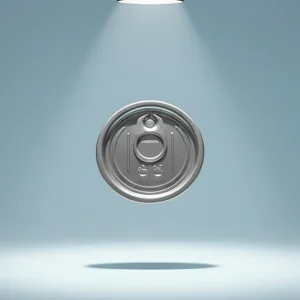
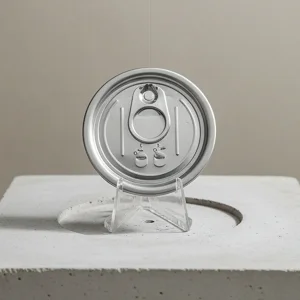
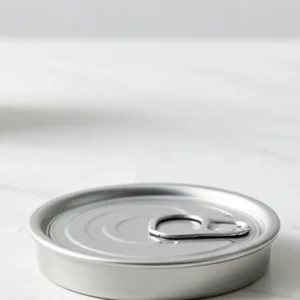
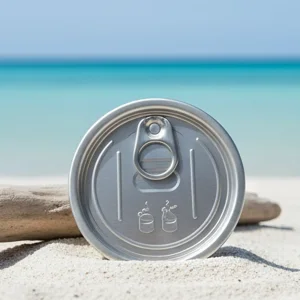
Understanding Victoria's Position as Australia’s Agri-Food & Bio-Nutraceutical Powerhouse
Greater Melbourne and the surrounding Victorian regions (Goulburn Valley, Gippsland) process over 60% of Australia’s commercial dairy exports. Supply chains handling premium infant formula, nutritional milk powders, and whey protein isolates demand stringent packaging containment systems. Aluminum easy-open ends (EODs) and specialized powder lids serve as the primary barrier preventing oxidation, moisture ingress, and enzymatic breakdown during trans-oceanic freight to APAC and Middle Eastern markets.
Storage facilities adjacent to Port Phillip Bay and the Port of Melbourne experience high relative humidity and salt-laden air. Micro-corrosion on standard tinplate closures can undermine double-seam integrity over extended warehousing periods. Modern packaging mandates high-purity aluminum alloys (such as 5182-H48) treated with specialized anti-corrosive passivation lacquers to guarantee a minimum 24-to-36-month shelf life under tropical or maritime ambient conditions.
Melbourne's burgeoning health supplement, organic botanical extract, and high-purity specialized chemical packaging sectors require lids that eliminate volatile aroma transfer and electrostatic particle adhesion. Brands located in industrial parks like Dandenong, Campbellfield, and Truganina demand precision tooling specifications matching high-speed automated canning lines (Ferrum, Angelus, and Pneumatic Scale seamer platforms).
Comprehensive Material Properties, Shell Thicknesses, and Coating Chemistries for Powder Lids
Selecting the correct powder lid specification is a multidimensional engineering choice balancing structural yield strength, countersink depth, tab pull force, and internal coating chemistry. Standard commercial powder ends utilize 5182-H48 aluminum alloy for high-tensile resistance against pressure differential during air-freight or retort operations, paired with 5052-H32 tab stock to prevent tab tearing.
| Diameter Code | Nominal mm | Substrate Alloy | Thickness Tolerance | Internal Coating System | Primary Target Application |
|---|---|---|---|---|---|
| 206# | 57 mm | Aluminium 5182-H48 | 0.210 ± 0.005 mm | Organosol / BPA-NI Epoxy | Specialty Instant Coffee, Aromatic Botanical Powders |
| 209# / 209FA# | 63 mm | Aluminium 5182 / Non-Mag | 0.220 ± 0.005 mm | Non-Phthalate Polyorganosol | Pharma Powders, Cold-Storage Probiotics, Freeze Dried |
| 300# | 73 mm | Aluminium 5182-H48 | 0.230 ± 0.005 mm | Conductive Anti-Static Lacquer | High-Purity Tech Powders, Ultra-Fine Spices & Pigments |
| 305# | 81 mm | Aluminium 5182 Retort | 0.245 ± 0.005 mm | High-Temp Sterilizable Epoxy | Clinical Nutrition, Infant Formula Retort Applications |
| 307# | 83 mm | Aluminium / Low-Profile | 0.235 ± 0.005 mm | BPA-NI Dual Coat | Space-Saving Stackable Cans, Dry Bakery Pre-Mixes |
| 401# | 99 mm | Aluminium 5182-H48 | 0.260 ± 0.005 mm | Triple-Pass Corrosion Guard | Bulk Dairy Powders, Coastal Long-Term Export Stocks |
| 502# | 127 mm | Aluminium / Clear Composite | 0.275 ± 0.008 mm | PET Barrier Film / Lacquer | Large-Format Retail Powders, Visible Quality Window Cans |
| 315# Tinplate | 80 mm | MR Grade Tinplate (T3) | 0.220 ± 0.005 mm | Aluminium-Pigmented Epoxy | Heavy-Duty Industrial Powder Cans & Metal Drums |
Modern Australian food safety mandates (in accordance with Food Standards Australia New Zealand - FSANZ) strictly limit bisphenol compounds in food-contact packaging. Shanghai Friend Metals utilizes state-of-the-art thermal curing ovens to apply Bisphenol A Non-Intent (BPA-NI) lacquers. Coating weight is maintained within 6.0–9.0 g/m² internally, guaranteeing zero lacquer degradation during high-speed seaming operations or post-fill thermal processing. Enamel Rater electrical continuity testing is conducted on every production batch to ensure zero micro-porosity (< 2 mA per end at 6.3V DC).
Precision Seam Mechanics, Compound Placement, and Vacuum Retention Protocols
A primary cause of oxygen degradation in powder cans is improper double-seam formation. Our aluminum powder lids feature automated computerized curl profiling. We provide precise double-seam dimensional recommendations (First Operation Roll Profile, Second Operation Roll Profile, Countersink Depth, Seam Overlap percentage ≥ 55%, and Body Hook / End Hook ratios) tailored for pneumatic seamer chucks used across Melbourne packing facilities.
To accommodate high-nitrogen flush canning processes (where residual oxygen must remain below 0.5% to prevent lipid oxidation in dairy powders), the peripheral channel of each end is injected with a water-based liquid synthetic rubber compound. Controlled thermal drying ensures precise compound placement weight, preventing gas leakage along the seam crease even under extreme atmospheric pressure fluctuations during air freight over the Southern Ocean.
Ultra-fine milk powders, pharmaceutical actives, and industrial toners generate high static charges during high-speed filling. Static charges cause fine dust to cling to the lid's inner lip, interfering with the hermetic seal compound during double-seaming. Our 300# and 209FA# lids incorporate conductive anti-static surface treatments that dissipate static charges instantly, keeping the seaming area clean and contamination-free.
How Shanghai Friend Metals Delivers Unrivaled Cost Efficiency, Structural Consistency, and Scale
Our Shanghai smart facility utilizes high-speed Minster and Stolle multi-die stamping presses equipped with real-time optical sensor inspection systems. Capable of producing over 3,000 ends per minute, each production cell continuously measures curl diameter, countersink uniformity, score line depth, and tab alignment with micron-level precision, eliminating human operational error.
100% of finished ends pass through high-resolution CCD camera visual inspection channels before automated sleeve packing. Micro-scratches, metal burrs, lacquer pinholes, tab misplacements, or compound voids trigger instant pneumatic rejection. This zero-defect policy guarantees smooth, uninterrupted feed speeds on high-volume automated seaming lines in Australia.
Operating close to Shanghai Port (the world’s largest container hub) grants our global enterprise clients direct maritime shipping schedules to the Port of Melbourne. With fixed weekly container sailings, optimized pallet loading patterns, and heavy-duty moisture-barrier export crating, ocean transit times are minimized to 12–15 days, helping clients avoid costly line downtime.
Full Audit Traceability, Food Safety Certifications, and Engineering Assistance for Australian Enterprises
Our food-grade lid products strictly adhere to the Food Standards Australia New Zealand (FSANZ) Code and the Department of Agriculture, Fisheries and Forestry (DAFF) export packaging requirements. Full heavy metal migration test reports (RoHS/REACH), overall migration limits (OML), and specific migration limits (SML) are supplied with every bill of lading.
Manufacturing processes take place inside enclosed clean-room environments under strict ISO 22000 Food Safety Management and HACCP risk control protocols. Pest control, air filtration, pest-barrier air curtains, and non-contact robotic palletization prevent physical contamination during production.
We don't just supply metal ends; our senior packaging engineers assist your technical teams with seamer setup. We provide complete pin-gauge, chuck-profile, and seam-teardown guidelines. Sample test lots (from 5,000 to 50,000 pieces) are readily dispatched for trial runs on your local filling lines.
Full Product Matrix Available for Direct Import & Custom Enterprise Orders in Melbourne
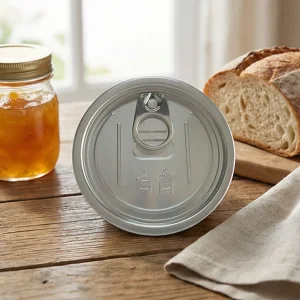
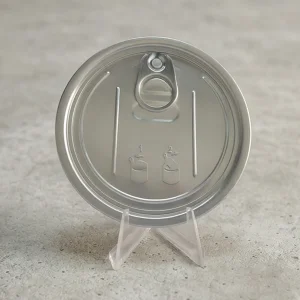
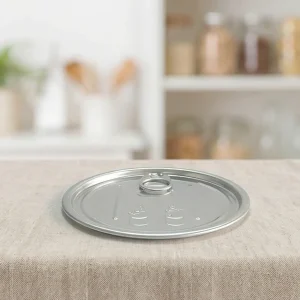
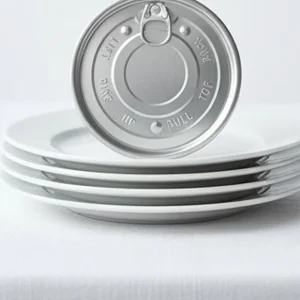
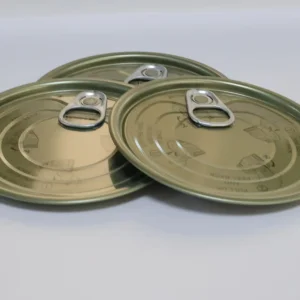
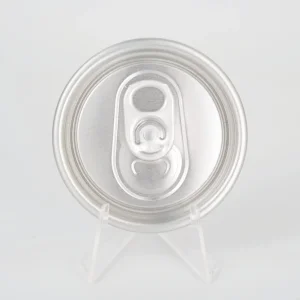
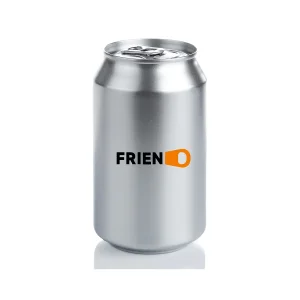
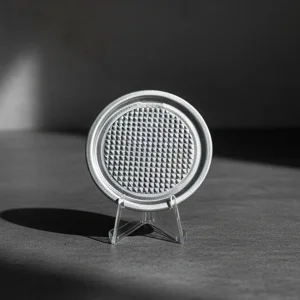
Direct Technical Insights from Our Packaging Engineering Team
Aluminum ends (specifically manufactured from 5182-H48 alloy) offer superior oxidation resistance compared to standard electrolytic tinplate (ETP), especially in humid coastal regions like Victoria. Aluminum is completely rust-proof, eliminates side-seam corrosion risks, provides a lighter tare weight, and delivers consistent pop-and-pull opening performance across temperature variations.
Yes. Our powder lids utilize precision-applied liquid synthetic rubber sealing compounds around the curl channel. When sealed under vacuum or modified atmosphere nitrogen flushing (MAP), the compound creates a gas-tight seal capable of maintaining internal oxygen concentrations under 0.5% over a 3-year shelf life—ideal for infant milk formula and sensitive pharmaceutical powders.
For standard stocked sizes (such as 206#, 209#, 300#, 401#, and 502# ends in plain unprinted finish), our baseline MOQ starts at 200,000 pieces per specification (approx. one full pallet or LCL shipment). For custom lithographic printing or specialized anti-static coating runs, the standard minimum production run is 500,000 pieces.
Every shipment includes a Mill Test Certificate (MTC) verifying alloy temper and thickness, a Food Grade Compliance Declaration (FDA 21 CFR 175.300 & EU 1935/2004), a BPA-NI certification, a heavy metal migration test report, an Enamel Rater QC report, and pre-shipment container loading photographs with seal numbers.
Lids are stacked inside high-density polyethylene (HDPE) protective sleeves, sealed with industrial desiccants, and packed into heavy-duty corrugated master cartons or fiber drums. Cartons are loaded onto ISPM-15 compliant heat-treated wooden pallets, wrapped with multi-layer stretch hood film, and secured with top frames to prevent movement during sea transport to the Port of Melbourne.
Consult with Shanghai Friend Metals' engineering team. Request free sample lots, technical drawings, or direct FOB/CIF Melbourne freight quotes.
Send Inquiry Now