Evaluating nearshoring trends, supply chain dynamics, and rigid metal packaging requirements across the Greater Mexico City Metropolitan Area (Zona Metropolitana del Valle de México).
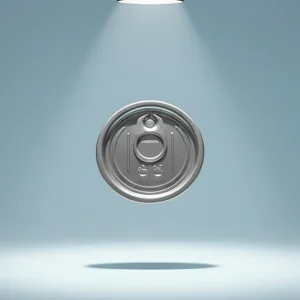
The industrial corridor surrounding Mexico City—encompassing Estado de México, Hidalgo, Puebla, and Querétaro—has emerged as Latin America's primary FMCG manufacturing epicentre. Global beverage conglomerates, specialty food preservers, and fast-growing craft breweries are rapidly shifting from traditional glass bottles and single-use plastics to highly sustainable aluminum packaging. As nearshoring accelerates export-oriented production destined for North American and Pan-American trade blocks under USMCA (T-MEC), demand for precision-engineered Ring Pull Tab (RPT) easy-open ends and SOT closures has reached unprecedented levels.
Operating a high-speed beverage or food filling line in Mexico City introduces distinct micro-climatic engineering hurdles. Positioned at an average elevation of 2,240 metres above sea level, the ambient atmospheric pressure in Mexico City drops to approximately 77 kPa (compared to 101.3 kPa at sea level). This elevation differential exerts higher net internal pressure against the can body and the score line of easy-open ends. Sourcing RPT lids with calibrated buckle strength, anti-peeling score residual uniformity, and precise internal lacquer flexibility is critical to prevent premature venting, micro-leakage, or structural failure during transport across variable topographies.
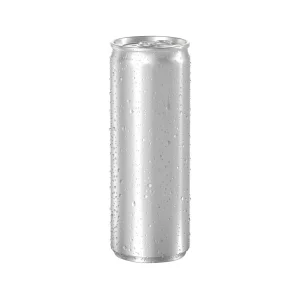
Engineered for seamless integration with high-speed seamers in Mexico City beverage and food processing plants.
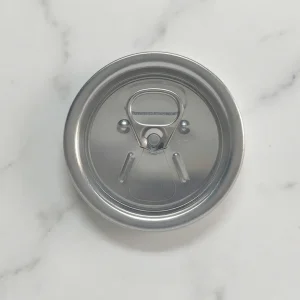
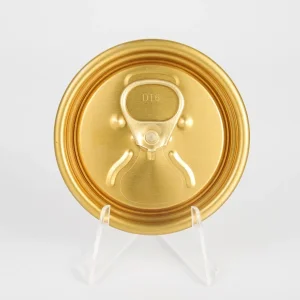
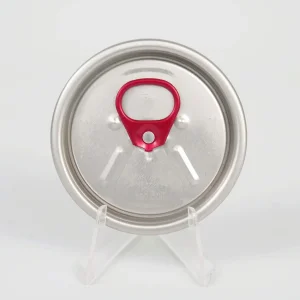
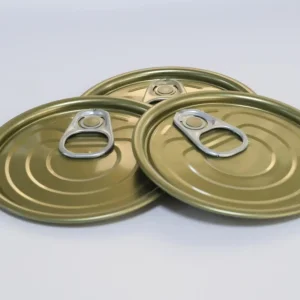
Understanding alloy selection, buckle strength dynamics, and internal lining chemistry required for the Mexican market.
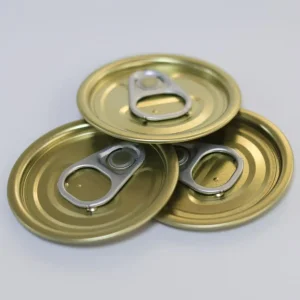
Our Ring Pull Tab ends utilize premium 5182-H48 aluminum alloy for the end shell, delivering an optimized yield strength to withstand internal carbonation pressure without dome distortion. The pull tab is crafted from 5052-H19 alloy, providing superior tensile strength during the opening action, ensuring zero tab detachment when pulled by consumers in high-volume retail environments.
Opening ergonomics are engineered down to Newton-meter tolerances. Score depth residual is maintained at strict standard limits to guarantee a smooth Pop Force (<30 N) and Tear Force (<45 N). This exact calibration prevents sharp edge burring while eliminating accidental popping caused by transit vibration across Mexican highway networks (such as the Mexico-Veracruz or Mexico-Guadalajara logistics corridors).
Compliant with COFEPRIS (Comisión Federal para la Protección contra Riesgos Sanitarios), US FDA 21 CFR 175.300, and EU 1935/2004 standards. We provide Next-Gen BPA-NI (Non-Intent) Organosol and Epoxy-Phenolic internal linings, tested to withstand aggressive pasteurization cycles, highly acidic juice mixes, and craft beers with elevated dissolved CO2 contents.
| Specification Parameter | 200# RPT Aluminum End | 202# RPT Aluminum End | 401# Easy-Open End | 300# Tinplate Lid |
|---|---|---|---|---|
| Nominal Diameter | 50 mm | 52.5 mm | 99 mm | 73 mm |
| Shell Metal Alloy | 5182-H48 Aluminum | 5182-H48 Aluminum | 5182-H48 / 8011 | MR Grade Tinplate (TH330) |
| Tab Alloy & Type | 5052 Ring Pull / SOT | 5052 Ring Pull / SOT | Full Aperture Ring Pull | Full Aperture / Sanitary |
| Internal Lacquer System | BPA-NI Water-based / Epoxy | BPA-NI Water-based / Epoxy | Organosol / Retort White | Aluminium Organosol |
| Buckle Pressure Resistance | ≥ 6.2 Bar (90 PSI) | ≥ 6.2 Bar (90 PSI) | ≥ 2.5 Bar (Atmospheric) | ≥ 3.0 Bar (Retort grade) |
| Enamel Rater Value | < 2.0 mA (100% inspected) | < 2.0 mA (100% inspected) | < 2.0 mA (100% inspected) | < 1.5 mA (100% inspected) |
| Typical Applications in Mexico | Energy drinks, Slim cans, Mixers | Carbonated soft drinks, Craft beer | Milk powder, Coffee, Nuts | Canned vegetables, Beans, Soups |
Overcoming global freight friction, customs compliance, and inventory management for Mexican industrial buyers.
Importing metal packaging components into Mexico City requires robust multimodal logistics planning. Our international supply chain architecture provides direct ocean container shipments to major Mexican ports—including Manzanillo (Colima) on the Pacific coast and Veracruz on the Gulf coast—followed by secure bonded rail or highway transport directly to logistics parks in Azcapotzalco, Tlalnepantla, and Cuautitlán Izcalli. We manage all export documentation, bill of lading (B/L) filings, phytosanitary pallet certifications (ISPM 15), and Certificate of Origin documents to simplify customs clearance under Mexican Pedimento regulations.
To guard against supply chain disruptions, we collaborate with tier-1 beverage distributors and contract packaging co-packers across Mexico to establish Vendor-Managed Inventory (VMI) frameworks. By maintaining 30-to-60-day safety stocks of standard 200# and 202# RPT ends in strategic warehousing nodes around Mexico City, local filling plants can eliminate production line downtime, rapidly absorb sudden surges in consumer demand, and minimize capital lockup in raw material inventory.
Demonstrating technical expertise, authoritative quality compliance, and environmental stewardship in rigid packaging.
Aluminum beverage cans and RPT ends represent the hallmark of circular packaging. Unlike multi-layer plastics or laminated cartons, aluminum can be infinitely recycled without loss of metallurgical properties. Our RPT lids utilize post-consumer recycled (PCR) aluminum content, reducing carbon intensity per unit by up to 75% compared to virgin aluminum smelting, directly aiding brand owners in fulfilling ESG and NOM sustainability targets in Mexico.
Every lot produced undergoes comprehensive laboratory validation: automated optical inspection (AOI) for shell symmetry, optical camera pinhole detection (100% online screening), micro-meter score thickness verification, and enamel rating current testing. Inspection certificates (CoA) are issued for every shipment, documenting compliance with ISO 9001, FSSC 22000, and international food contact security parameters.
Through advanced finite element analysis (FEA), our engineering teams have down-gauged RPT end shell thickness from 0.220mm down to 0.208mm while maintaining identical structural buckle limits (≥6.2 bar). This raw material savings directly reduces freight transport emissions and lowers unit costs for high-volume canning facilities throughout Latin America.
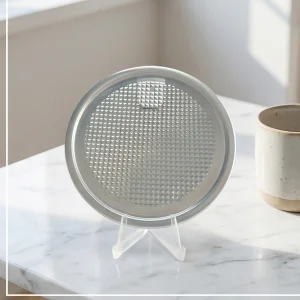
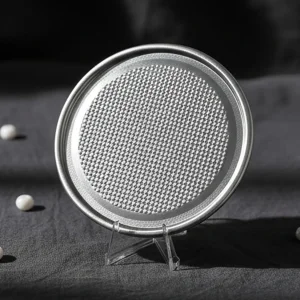
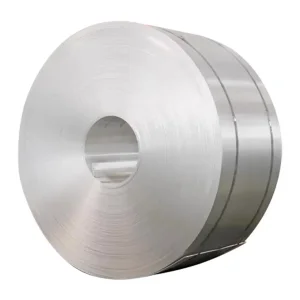
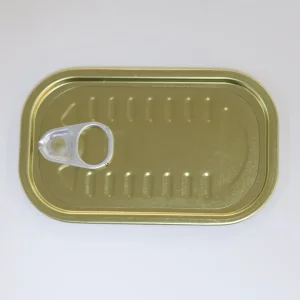
Explore our complete catalog of aluminum easy-open ends, specialty powder lids, aluminum coils, and food-grade tinplate closures.
Ensuring double-seam integrity and zero-defect operation on Ferrum, Angelus, and FMC seamers across Mexican canning plants.
Proper double-seam formation is the ultimate safeguard of product shelf life. Our 200# and 202# RPT ends are precision-manufactured to match standard chuck and seaming roll profiles (such as Ferrum, Angelus, and Continental Can machinery). Our application engineers provide exact dimensional specifications for Seam Thickness, Seam Height, Body Hook, Cover Hook, and Overlap percentage (>55%). We supply trial sample lots for destructive double-seam teardown inspection prior to commercial batch delivery.
We provide bilingual technical documentation and virtual support for maintenance managers in Mexico City. Whether calibrating first-operation roll pressure to eliminate flange cut-overs or adjusting seaming pin heights for high-speed hot-fill pasteurization, our technical team works directly with your plant technicians to optimize line speed and eliminate pinhole micro-leakage risks.
Pioneering laser etching, anti-counterfeiting tab technology, and bio-based internal liners for the next decade of metal packaging.
Transforming traditional RPT pull tabs into interactive digital touchpoints. Utilizing high-precision laser ablation, we etch unique QR codes under or on top of the pull tab, allowing Mexican beverage brands to run anti-counterfeiting validation, instant consumer reward campaigns, and supply chain traceability.
Transitioning from traditional SOT shell profiles to next-generation CDL and SuperEnd geometries. These advanced contours re-engineer the countersink wall angle, allowing further reduction in metal weight while maintaining maximum internal dome pressure resilience under tropical climate transport.
Advancing past non-BPA formulations toward zero-fossil, bio-derived monomer linings. Synthesized from renewable plant-based resins, these next-gen coatings deliver superior chemical inertia against highly corrosive salsa bases, RTD spirits, and acidic fruit beverages common in the Mexican market.
Detailed technical, regulatory, and logistics answers derived from real-world B2B buyer inquiries.
Connect directly with our senior metal packaging engineering team. Request technical CAD drawings, COFEPRIS compliance dossiers, or a custom price quotation for container-load shipments today.
Send Inquiry Now