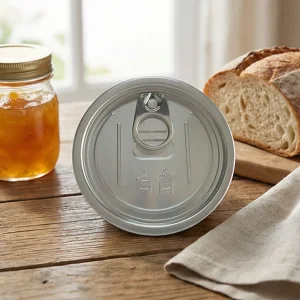
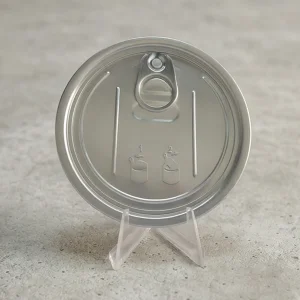
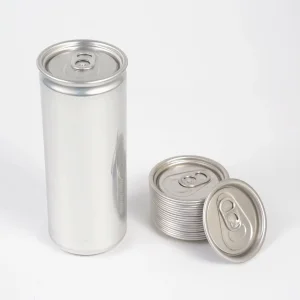
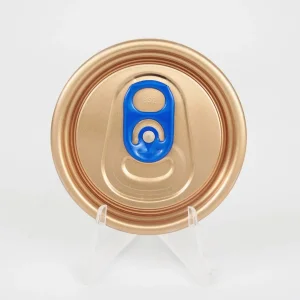
High-barrier aluminum easy-open ends engineered specifically for high-speed filling lines across Lombardy, Emilia-Romagna, and Piedmont packaging hubs.
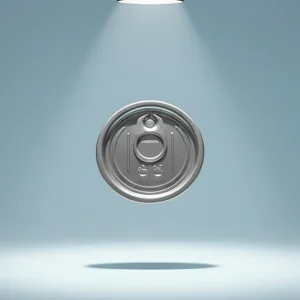
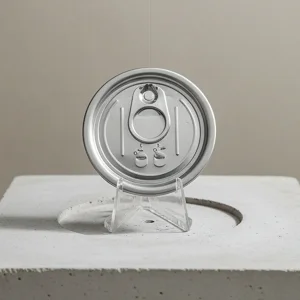
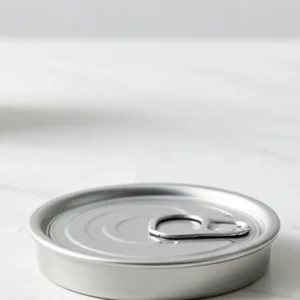
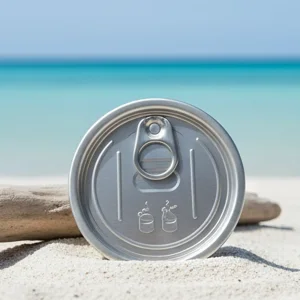
Italy stands as one of Europe’s premier manufacturing powerhouses, renowned worldwide for its sophisticated agro-food clusters, cutting-edge packaging automation, and high-end nutraceutical sectors. Regions such as Emilia-Romagna (frequently referred to as the "Packaging Valley" around Bologna and Parma), Lombardy, and Piedmont represent world-class epicenters for food processing, infant formula canning, and pharmaceutical encapsulation. In these highly regulated environments, the requirement for absolute seal integrity, extended shelf-life, and user-friendly opening mechanisms is paramount.
The market demand for specialized powder lid services and reliable aluminum end suppliers in Italy has escalated rapidly. Drive factors include tightening European Food Safety Authority (EFSA) parameters, mandatory transition toward Bisphenol A Non-Intent (BPA-NI) organosol coatings, and strict compliance with Italian MOCA regulations (Materiali e Oggetti a Contatto con gli Alimenti). Whether packaging sensitive infant milk powders requiring low residual oxygen content, premium espresso grounds needing aroma containment, or active pharmaceutical ingredients (APIs), selecting an advanced powder lid technical supplier is a mission-critical purchasing decision.
Italian canning lines operate at high throughput speeds—often exceeding 400 to 1,200 cans per minute on automated seamers (such as Angelus, Ferrum, or Somme platforms). Powder lids must exhibit razor-thin dimensional tolerances (curl thickness, countersink depth, and compound weight distribution) to eliminate jam-ups, preserve seam integrity, and pass stringent 100% helium leak tests.
Procurement directors and packaging engineers across Italian enterprises encounter distinct operational hurdles depending on their target end-market. Aluminum powder lids (including standard easy-open ends, full-aperture peel-off ends, and foil membrane assemblies) must be engineered to withstand varying chemical, thermal, and mechanical stresses.
Achieving structural failure resistance during ocean transit, temperature fluctuations in Mediterranean storage, and high-vacuum closing processes requires a disciplined technical approach to raw material selection and end construction.
Our manufacturing matrix utilizes high-grade 5182-H48 and 3104-H19 aluminum coil alloys for shell bodies, complemented by 5052-H32 tab stock. The high magnesium content in 5182 alloy provides superior tensile strength and elongation performance, enabling precise score-line drafting that minimizes opening pull force without risking premature pop failure under internal pressure changes.
| Parameter | Technical Specification | Italian / EU Standard | Quality Assurance Method |
|---|---|---|---|
| Alloy & Temper | 5182-H48 / 8011-O (Peel Foil) | EN 573-3 / EN 485 | Spectral Analysis & Mill Certs |
| Internal Coating | BPA-NI Polyorganosol / Acrylic | EU 10/2011 & EC 1935/2004 | Enamel Rater Test (<2 mA @ 6.3V) |
| Score Pop Force | 12 N – 22 N (Controlled Range) | ISO 9001 / ISO 22000 | Digital Force Gauge Testing |
| Tear Open Force | 25 N – 45 N Smooth Pull | DIN 55529 Compliance | Automated Tensile Tester |
| Sealing Layer | Water-based Synthetic Rubber Compound | FDA 21 CFR 175.300 / MOCA | Optoelectronic Vision Inspection |
The interface between the container rim and the aluminum powder lid is the single most important safety vector. A imperfectly formed double seam leads to moisture ingress, causing powder caking, mold growth, or lipid rancidity. Our engineers work directly with Italian canning lines to calibrate key seam parameters:
Unlike legacy suppliers relying purely on statistical manual sampling, our lid manufacturing lines feature high-resolution 360-degree optical vision inspection systems. Every single lid is scanned for score-line micro-cracks, tab alignment precision, sealant distribution voids, and surface scratches prior to automated sleeve packing.
In an increasingly volatile global economy, Italian packaging executives are optimizing their total cost of ownership (TCO) by establishing dual-sourcing partnerships with top-tier international manufacturers. Combining high-volume precision stamping from our state-of-the-art facility with local Italian engineering integration offers unbeatable economic and technical advantages.
Environmental packaging legislation in Italy is among the most advanced in the European Union. Under Italian Legislative Decree 116/2020 (implementing EU Directives 2018/851 and 2018/852), all packaging placed on the Italian market must be properly labeled with environmental coding to facilitate correct consumer disposal and sorting.
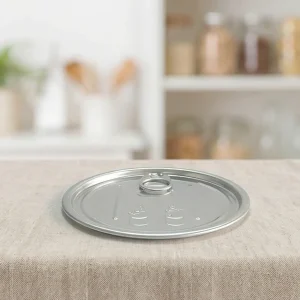
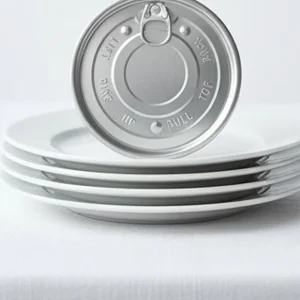
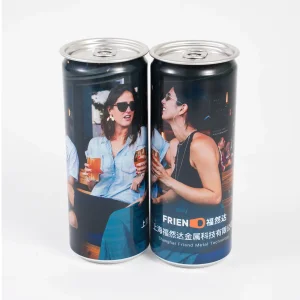
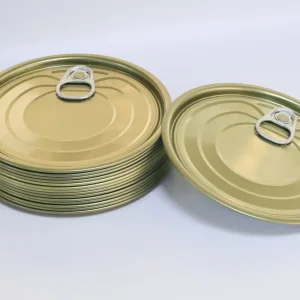
Explore our full line of specialized aluminum easy-open ends, sterilizable lids, low-profile designs, and high-performance tinplate closures.
Technical and regulatory answers provided by our senior packaging engineering team.
