Engineered to comply with Swiss food safety regulations (SR 817.023.21) and withstand differential atmospheric pressures across Alpine transport routes.
Switzerland represents one of the most demanding quality markets in Europe for food processing, specialized nutrition, and high-value chemical containment.
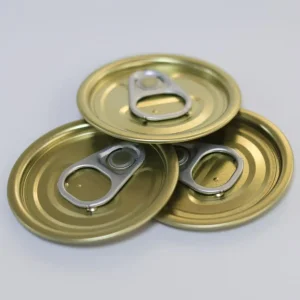
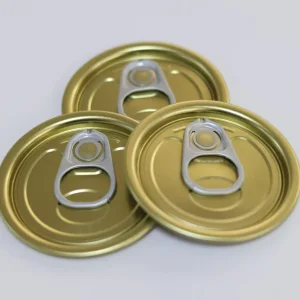
The Swiss food and beverage sector—renowned globally for premium dairy powders, luxury chocolates, gourmet preserves, and high-end instant coffee—requires rigid packaging solutions that maintain structural integrity and micro-hermetic sealing over multi-year shelf cycles. Iron lids (electrolytic tinplate ends) form the core protective barrier against oxygen ingress, moisture absorption, and volatile aroma loss.
Navigating the Swiss packaging market demands strict adherence to the Swiss Ordinance on Materials and Articles in Contact with Food (SR 817.023.21) alongside European Union Regulation (EC) No 1935/2004. As Swiss food manufacturers export globally across varying climate zones, metal components must be engineered to resist pressure differentials encountered during trans-Alpine logistics and maritime distribution.
Lucerne, Zurich, and Bern milk powder processors require 300#, 401#, and 502# lid ends compatible with nitrogen flushing and vacuum sealing.
Elevated pressure differentials in mountain regions demand higher buckle resistance (TH550/T4 temper steel) to avoid lid doming.
Precision component manufacturing using prime Electrolytic Tinplate (ETP) and advanced barrier lacquers designed for longevity and chemical inertness.
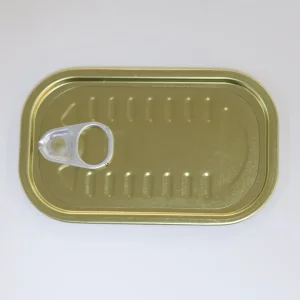
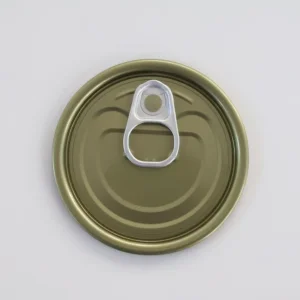
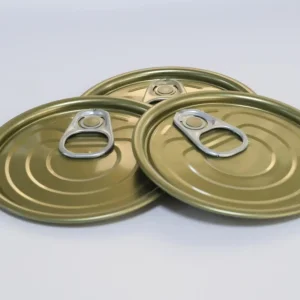
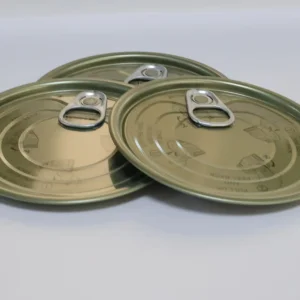
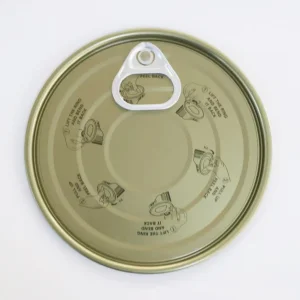
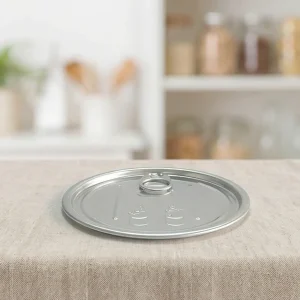
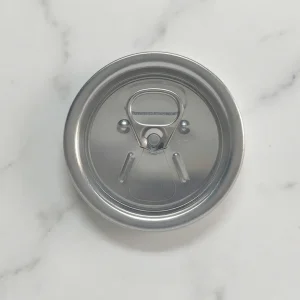
Iron lids, professionally referred to as tinplate bottom ends or top closures, rely on cold-rolled low-carbon steel substrates coated with ultra-thin metallic tin via continuous electroplating. This dual-layer architecture supplies structural tensile strength while preventing substrate oxidation.
| Technical Parameter | Standard Specification Range | Swiss Market Application Focus |
|---|---|---|
| Base Plate Material | Electrolytic Tinplate (ETP) / ECCS (TFS) | High-purity MR Grade steel with controlled trace elements |
| Temper Grade | T2.5, T3, T4, TH550 (DR8), TH620 (DR9) | T3/T4 for general food; DR8/DR9 for pressure-resistant ends |
| Tin Coating Weight | 2.8/2.8 g/m², 5.6/5.6 g/m², 8.4/8.4 g/m² | 2.8 g/m² for dry food; 5.6 g/m² for retorted acidic foods |
| Nominal Thickness | 0.17 mm to 0.28 mm (±0.005 mm tolerance) | Lightweighted 0.18 mm for high-efficiency high-volume lines |
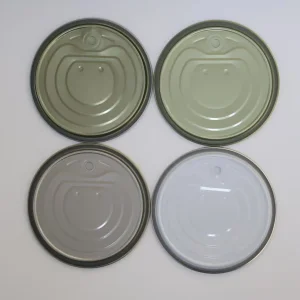
| Internal Coating System | BPA-NI Organosol, Polyester, Epoxy-Phenolic | BPA-NI compliant with EU 10/2011 and Swiss SR 817.023.21 |
| External Finish | Gold lacquer, Clear varnish, CMYK Print | High-gloss decorative clear & micro-embossed finishes |
| Sealing Compound | Water-based acrylic / PVC-free liquid gasket | Zero-VOC compound applied via high-speed centrifugal nozzle |
The choice of internal lacquer dictates the long-term interaction between the canned product and the tinplate substrate. For acidic foods (such as pickled condiments or fruit preserves), organosol lacquers provide exceptional flexibility and acid resistance during double-seaming without micro-cracking. For sulfur-rich foods (such as meats, legumes, or pet food), epoxy-phenolic lacquers fortified with zinc oxide or aluminum paste prevent "sulfur staining"—a cosmetic discoloration caused by iron sulfide formation.
Our iron lids are precision-curled and lined to ensure seamless operation on European high-speed seamers, including Ferrum, Lanico, Cantronic, and Angelus equipment. Tight tolerances on curl height, countersink depth, and chuck radius guarantee reliable seam tightness (>75%) and overlap (>45%), preventing double-seam leaks during thermal sterilization (retorting up to 121°C).
Combining tier-one raw material integration in Shanghai with rigorous European Quality Control standards to maximize total cost of ownership (TCO) advantage.
Direct sourcing from top steel mills (Baosteel, Shougang) ensures uniform tin coating thickness, zero surface inclusions, and stable metallurgical grain structures.
High-speed optical camera inspection lines screen every single lid end for pinholes, edge burrs, varnish scratches, and compound lining voids prior to packaging.
Streamlined sea freight to Rotterdam/Antwerp combined with Rhine river barges or direct China-Europe rail link into Basel freight depots guarantees stable supply lead times.
Customized engineering configurations tailored for Switzerland’s distinct manufacturing sub-sectors.
Infant formula packaging requires rigorous barrier sealing under nitrogen gas flushing. Our 401# and 502# bottom iron lids feature high-precision countersinks designed to integrate with foil easy-open membranes, keeping oxygen content below 0.5% over extended storage periods.
Small-batch Swiss honey and high-acid fruit preserves require specialized 202# and 307# tinplate lids lined with gold organosol lacquers. These components withstand thermal bath processing and resist acid attack without leaching metallic off-flavors.
The Basel chemical corridor demands non-reactive metal packaging for specialty coatings, reagents, and adhesives. Heavy-duty double-reduced (DR8/DR9) tinplate ends ensure high resistance to internal solvent pressure and mechanical puncture.
Artisanal coffee roasters in Geneva and Bern rely on elegant, airtight iron lids with customizable external printing and micro-embossing to convey brand exclusivity while preventing oxidation of volatile aromatic compounds.
Pioneering sustainable metal packaging innovations to meet Swiss 2030 climate action goals.
Advancing from 0.20 mm to 0.16 mm base steel thickness while maintaining buckle resistance through engineered structural ribbing and optimized countersink geometry.
Transitioning from traditional 311 chromate passivation to titanium/zirconium-based oxide coatings to achieve zero heavy metal residues in line with evolving Swiss environmental laws.
Tinplate remains the most recycled rigid packaging material in Europe. Our production loop incorporates high scrap steel recycling efficiency, cutting embodied carbon emissions by over 60% per unit.
Explore our full line of food-grade, airtight, and specialty tinplate and aluminum closure solutions.
Evaluating commercial metrics for Swiss food processors and packaging buyers.
| Evaluation Parameter | Local European Suppliers | Shanghai Friend Metals (Integrated Supply) |
|---|---|---|
| Cost Competitiveness | High energy overheads and metal premiums | 30–42% Unit Cost Reduction via raw material integration |
| Tooling & Mold Lead Time | 12–16 weeks for custom end sizes | 3–5 weeks with in-house CNC die tooling |
| Minimum Order Quantity (MOQ) | Strict high MOQs (500k+ pieces) | Flexible Trial Lots starting at 100k pieces |
| Coating Customization | Standard lacquers with high changeover surcharges | Tailored BPA-NI & Organosol Formulations |
| Quality Control Systems | Manual optical sampling | 100% Online Automated Vision Defect Scanning |
Full audit transparency and certification documentation provided with every export container.
Certified migration testing by independent third-party laboratories (SGS / Intertek) ensuring zero transfer of heavy metals or organic contaminants into food matrices.
Fully compliant with global food-contact requirements, enabling Swiss manufacturers to re-export finished canned goods globally without regulatory friction.
Each shipment includes Mill Test Certificates (MTC), coating weight verification reports, and batch-specific double-seam teardown data.
Clear answers regarding technical specifications, compliance, lead times, and customization.
Electrolytic Tinplate (ETP) features a pure metallic tin coating over steel, offering superior corrosion resistance and shiny aesthetics ideal for high-acid or visible ends. Tin-Free Steel (TFS/ECCS) uses a chromium/chromium oxide layer, which provides exceptional lacquer adhesion and cost savings for dry products or secondary closures but requires protective coatings on both sides.
Yes. All our food-grade iron lids dedicated to the Swiss and EU markets utilize certified BPA-NI organosol, acrylic, or polyester coatings. Migration tests are conducted regularly by accredited laboratories to confirm compliance with Swiss Ordinance SR 817.023.21 and EU Regulation 10/2011.
Our iron lids are manufactured to precise ISO/DIN dimensional standards. We supply full technical engineering drawings detailing curl angle, countersink radius, and rim diameter. Additionally, sample batches are made available for pre-production double-seam teardown checks on your specific Ferrum, Lanico, or Cantronic seamer line.
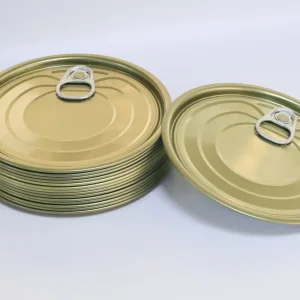
Iron lids are stacked in heavy-duty polyethylene sleeves inside moisture-sealed corrugated cartons or fiber drums, loaded onto fumigated wooden pallets, wrapped with high-tension stretch film, and fitted with desiccant packs to prevent condensation corrosion during maritime transit to European ports.
Standard stock dimensions (e.g., 200#, 202#, 307#, 401#) ship within 15 working days. Custom lithographic CMYK printing or custom tooling setup typically requires 3 to 4 weeks from final artwork and engineering drawing approval.
Elevate your Swiss packaging operations with certified food-grade iron lids, custom coating engineering, and robust global supply chain efficiency.
Send Inquiry Now