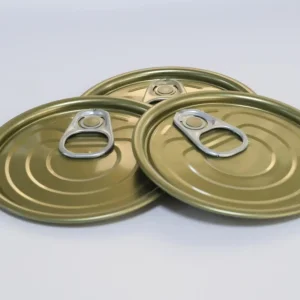
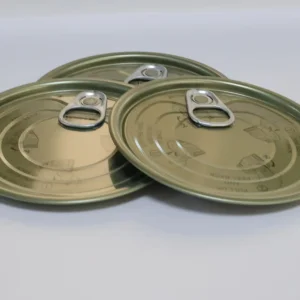
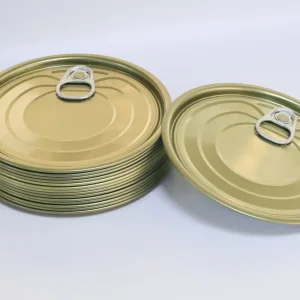
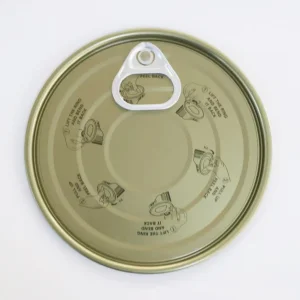
Airtight, anti-corrosive tinplate ends designed for seamless integration on automated and semi-automated canning lines across Addis Ababa, Hawassa, and Dire Dawa.
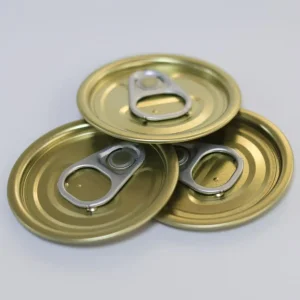
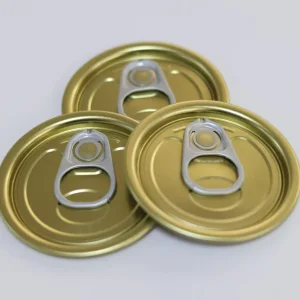
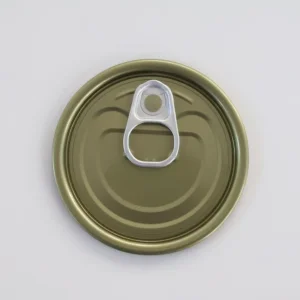
Ethiopia stands as one of Africa’s fastest-growing industrial landscapes, propelled by the second phase of the Homegrown Economic Reform Agenda (HGER II) and substantial public-private investments in agro-processing hubs such as the Hawassa, Kilinto, Bole Lemi, and Dire Dawa Free Trade Zones. As domestic production transitions from raw agricultural exports to value-added processed foods, the demand for high-performance, tamper-evident, and hermetically sealed rigid metal packaging has scaled exponentially.
The Ethiopian food and beverage industry spans diverse segments—ranging from roasted coffee beans, dairy powder, and edible seed oils (such as sesame, niger seed, and sunflower) to processed meats, tomato paste, legumes, and traditional beverages. Operating within East Africa presents distinct environmental and logistical challenges. High ambient temperatures, variable altitude atmospheric pressures (with Addis Ababa elevated at over 2,350 meters above sea level), extended transport corridors via the Port of Djibouti or Berbera, and prolonged sea freight routes necessitate packaging closures engineered to withstand mechanical stress, thermal expansion, and oxidative micro-leakage.
Technical Insight for Ethiopian Canners: Atmospheric pressure differentials at high elevations like Addis Ababa can cause compromised can ends to buckle or lose vacuum seal during thermal processing. Our engineered iron and tinplate lids feature optimized countersink depths and reinforced expander rings specifically calibrated for high-altitude thermal stability.
Furthermore, local Ethiopian food packers face intense market competition from imported canned commodities. To establish brand equity, prevent spoilage, and achieve compliance with both domestic standards set by the Ethiopian Conformity Assessment Enterprise (ECAE) and international export regulations, local food producers require world-class metal lid solutions backed by rigorous metallurgical control and precision seam alignment.
Procurement directors and supply chain managers sourcing metal closures for the Ethiopian market navigate complex operational variables. These include foreign currency allocation dynamics (ETB currency regulations and Letter of Credit verification), long sea transit lead times, humidity control during ocean carriage across the Red Sea and Gulf of Aden, and ensuring seamless compatibility with legacy or high-speed automated seamers.
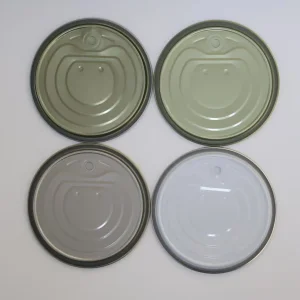
Shanghai Friend Metals technology provides engineered Electrolytic Tinplate (ETP) and Single/Double Reduced (SR/DR) iron lids built to rigorous tolerances. The base steel substrate provides high tensile strength to survive drop impacts and stack loads, while internal organosol, epoxy-phenolic, or BPA-NI (BPA Non-Intent) gold lacquers act as an impenetrable chemical barrier against aggressive food acids, sulfur compounds, and saline brines.
| Lid Type & Size Code | Substrate Material | Internal Coating System | Retort Stability | Target Ethiopian Application |
|---|---|---|---|---|
| 200# / 202# Tinplate Lid | ETP / DR8 Temper (0.18-0.20mm) | BPA-NI Gold / Organosol | Up to 121°C / 30 Mins | Small-format milk powders, spices & beverages |
| 211# / 300# Can Ends | ETP / T3-T4 Temper (0.21-0.23mm) | Epoxy Phenolic / Aluminized | 121°C - 130°C Retort | Canned vegetables, legumes, tomato pastes |
| 307# / 401# Industrial End | ETP / TFS Steel (0.23-0.28mm) | Sulfur-Resistant Organosol | High-Pressure Steam Retort | Corned beef, processed meats, instant coffee |
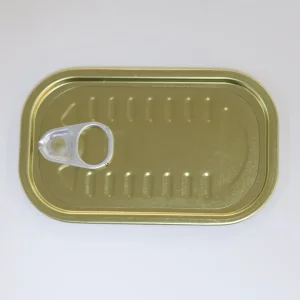
| Square & Custom Iron Lids | High-Gauge ETP Steel | Clear Oleoresinous / Gold Lacquer | Ambient Airtight Storage | 5L/10L Edible Oil, Ghee, and Bulk Tins |
The double-seam procedure is the critical junction between can body and lid. Shanghai Friend Metals utilizes precision-curled lid margins lined with automated liquid compound gaskets (PVC-free synthetic rubber compounds). When processed through can seamers (such as Angelus, Ferrum, or Zhejiang machines common in Ethiopian plants), the compound fills microscopic voids between the body hook and cover hook, guaranteeing an absolute oxygen transmission rate (OTR) of essentially zero.
Specialized external passivated chrome layers prevent rusting during transit through humid maritime trade routes and tropical Ethiopian storage environments.
Lid chuck profiles, curl angles, and countersink dimensions are engineered precisely to prevent jam-ups, flange cutting, or seam distortion on high-speed lines.
Absolute barrier against light, oxygen, UV rays, and biological contaminants ensures foods preserve nutritional value and flavor for up to 36 months.
The global metal packaging industry is undergoing a structural paradigm shift driven by circular economy mandates, carbon footprint reductions, and digital supply chain integration. For food processors in Ethiopia and the wider East African Community (EAC), adopting these forward-looking technologies provides a competitive moat for both regional sales and European/North American export initiatives.
By shifting from single-reduced (SR) tinplate to double-reduced (DR) high-tensile steel, lid gauge thickness can be down-gauged from 0.22mm to 0.18mm while maintaining identical buckle resistance (exceeding 2.5 bar). This 15% to 20% mass reduction translates directly into reduced ocean freight costs per unit and lower raw material carbon footprints.
Driven by strict European Food Safety Authority (EFSA) and US FDA regulatory shifts, international retail chains are rejecting traditional epoxy lacquers derived from Bisphenol-A. Shanghai Friend Metals offers next-generation acrylic and polyester-based BPA-NI linings that maintain chemical resistance against aggressive acidic foods (pH < 4.2) without leaching synthetic compounds into food contents.
Counterfeiting of premium edible oil tins, baby powder brands, and fast-moving consumer goods poses a risk to local producers in East Africa. Advanced iron lids can now be customized with high-precision QR micro-embossing, laser-etched matrix codes, and covert security varnishes enabling instant smartphone verification by consumers at the point of sale.
Navigating customs clearance at Ethiopian borders requires meticulous regulatory documentation. Shanghai Friend Metals establishes complete traceability from prime steel mill coil down to the sealed shipping pallet. Every shipment dispatched to Ethiopia includes:
Answers to common engineering, shipping, and quality assurance queries raised by food processors and industrial buyers in East Africa.
All our iron lids undergo passivated chromate treatment and are coated with protective external lacquer films. Furthermore, ocean export shipments are wrapped with vapor corrosion inhibitor (VCI) shrink hoods, packed with industrial desiccant bags, and stacked on heat-treated ISPM 15 pallets to prevent humidity or salt spray damage during ocean transit through the Red Sea.
Standard stock sizes (such as 200#, 202#, 211#, 300#, 307#, 401#) start at trial order volumes of 200,000 pieces. Custom printed lids or special organosol/BPA-NI lacquers typically carry an MOQ of 500,000 pieces. Factory production lead time is 15-20 days, with ocean freight from Shanghai to Djibouti taking approximately 20-25 days.
Yes. Our technical team works directly with your plant engineers. By reviewing your seamer model, chuck profiles, line speeds, and food thermal sterilization specs, we supply custom sample lots for double-seam teardown analysis (evaluating seam overlap, countersink depth, and body hook integrity) before mass production begins.
Absolutely. For aggressive or highly acidic food formulations (pH < 4.5), we recommend our organosol or heavy gold epoxy-phenolic double-coat systems. These lacquers resist chemical breakdown, sulfide staining, and organic acid penetration, guaranteeing a long shelf-life without metal interaction.
Yes. We supply comprehensive FDA, EU 1935/2004, and heavy metal test certificates with every batch. We regularly facilitate third-party inspection audits (SGS / Intertek) required by Ethiopian customs to ensure smooth entry and regulatory clearance.
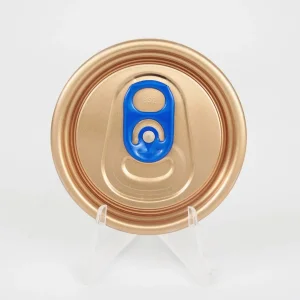
Explore our wide spectrum of food-grade tinplate ends, easy-open aluminum closures, and beverage packaging solutions optimized for global distribution.
Whether you require technical drawings, thermal retort coating recommendations, or a competitive quote for full container loads (FCL), our engineering specialists are ready to support your production goals.
Send Inquiry Now