High-performance metal closures engineered for seamless integration with Japanese double-seam automated filling machinery.
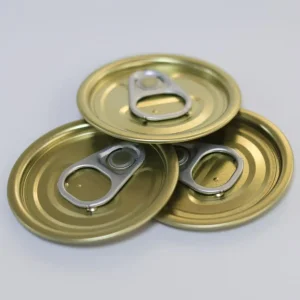
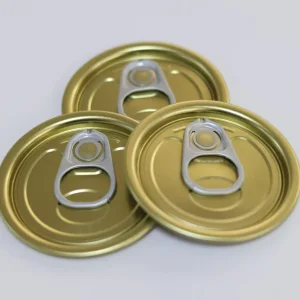
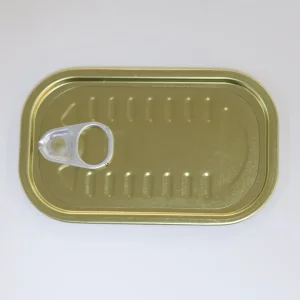
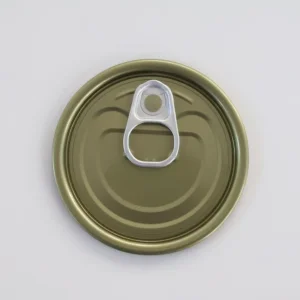
As Japan's historic epicenter of commerce and culinary innovation, Osaka—and the broader Kansai economic area—demands rigid packaging solutions that marry extreme technical precision with rigorous food safety standards.
The Osaka metropolitan region hosts an intricate network of food processing facilities, specialty confectionery manufacturers (Omiyage), industrial chemical blenders in the Sakai-Senboku coastal zone, and high-volume beverage canners. For decades, Japanese enterprises relied on localized supply chains; however, modern cost pressures, volatile raw material pricing, and the need for rapid packaging prototyping have accelerated procurement shifts toward top-tier Chinese manufacturing partners like Shanghai Friend Metals Technology Co., Ltd.
Iron lids and tinplate closures form the vital barrier link for canned products. Whether protecting delicate matcha powders, soy sauce concentrates, premium seafood, or industrial sealants against oxidation, moisture ingress, and light damage, the choice of metal substrate, lacquer formulation, and curling geometry dictates product integrity over multi-year shelf lives.
Understanding the chemical and mechanical properties of Electrolytic Tinplate (ETP) and Tin-Free Steel (TFS/ECCS) for rigorous packaging applications.
Iron lids are produced from low-carbon cold-rolled steel, electro-plated with pure tin or chromium oxide. Temper selection dictates rigidity and deep-drawing capability:
To prevent chemical interaction between aggressive food matrices and the iron core, custom lacquer formulations are applied via high-precision roller coaters:
Airtight performance relies on compound lining inside the curl and exact seam formation:
Selecting the wrong lid specification can lead to pack failure, lacquer feathering, or seam distortion during retorting. The comparative table below summarizes technical trade-offs between metal packaging substrates to guide Osaka engineering and procurement teams.
| Substrate Parameter | Electrolytic Tinplate (ETP) | Tin-Free Steel (TFS / ECCS) | Aluminium Alloy (5182 / 8011) |
|---|---|---|---|
| Base Material Composition | Low-Carbon Steel + Tin Coating (1.1–11.2 g/m²) | Low-Carbon Steel + Chrome / Chrome Oxide | Aluminium-Magnesium-Manganese Alloy |
| Tensile Strength (MPa) | 330 – 620 MPa (High Buckle Strength) | 350 – 650 MPa (Extreme Rigidity) | 270 – 310 MPa (Lightweight) |
| Retort & Thermal Resistance | Excellent (Up to 135°C) | Outstanding (Superior Lacquer Adhesion) | Moderate to Good (Requires Pressure Balance) |
| Sulfide Stain Resistance | Requires Special Lacquer / Passivation | Inherently High Sulfide Resistance | Non-Reactive to Sulfur Compounds |
| Cost Efficiency Index | Optimal for standard food & industrial cans | Highly cost-effective for processed dry goods | Higher material cost per thousand units |
| Target Osaka Application | Canned Soups, Sauces, Oils, Edible Tins | Dry Powder Cans, Retort Meat, Paint Cans | Beverage Cans, Easy-Open Ends (SOT/RPT) |
Unlocking cost efficiency, strict quality compliance, and rapid turnaround for Kansai industrial buyers.
Situated in Shanghai, our production facilities are located adjacent to the world’s busiest container port. Ocean vessels sailing directly from Shanghai Port to Osaka Nanko or Kobe Port take as little as 2 to 3 days. This proximity allows Osaka plants to operate with lean Vendor-Managed Inventory (VMI) strategies without risking supply disruption.
Our automated stamping lines—featuring high-speed Minster and Stolle presses paired with automated optical inspection systems—produce millions of tinplate lids monthly. We maintain custom tooling for all standard Japanese lid diameter codes (200#, 202#, 211#, 300#, 307#, 401#, 502#, 603#, and custom square/rectangular sizes).
Every coil batch is delivered with steel mill certificates documenting chemical analysis, yield strength, and temper. Finished iron lids undergo strict quality routines: compound weight verification, countersink depth checks, salt-spray corrosion testing (ISO 9227), and double-seam teardown simulations on client-specific seamer tooling.
By leveraging China’s integrated tinplate supply chain and economies of scale, we offer Osaka buyers 15% to 25% cost savings over local distribution channels. Furthermore, we accept flexible minimum order quantities (MOQs) for specialized trial runs, enabling product testing prior to full commercial rollout.
Tailoring coating chemistries, lining compounds, and dimensional specifications to Kansai’s leading commercial sectors.
Osaka's world-renowned food sector relies heavily on canned broths, specialty tare sauces, processed seafood, and dashi bases. Acidic or salt-rich liquid formulations require gold organosol or heavy epoxy-phenolic internal lacquers to withstand long-term immersion without pitting or corrosion. Our 211# and 307# tinplate lids are widely specified across Kansai food process lines for their leak-proof seam performance.
Osaka's luxury gift market demands high visual appeal. Square, rectangular, and round decorative tinplate lids feature high-definition CMYK offset printing, tactile spot varnishes, and custom embossing. These lids protect delicate Japanese matcha powders, rice crackers (Senbei), and cookies from humidity while presenting an elevated brand aesthetic in high-end retail hubs like Umeda and Namba.
The heavy industrial zones along Osaka Bay require rugged metal closures for lubricants, sealants, paints, and specialty chemicals. Our heavy-duty iron lids (300#, 401#, 603#) feature high-density PVC-free gaskets resistant to aromatic hydrocarbons, solvents, and pressure build-up during maritime transport.
Osaka-based infant formula and nutritional supplement packagers require absolute vacuum integrity and zero moisture penetration. Our 401# and 502# powder lids utilize advanced compound linings compatible with nitrogen-flushing lines, maintaining residual oxygen levels below 0.5% for extended shelf life.
Optimizing Total Cost of Ownership (TCO), risk mitigation, and circular economy compliance for enterprise procurement managers.
Direct sourcing from Shanghai Friend Metals optimizes unit pricing, reduces freight tariffs through optimized pallet stacking, and eliminates middleman margins. Our raw material locking mechanisms protect Osaka buyers against global tinplate steel price swings.
Iron and tinplate packaging are 100% infinitely recyclable without material degradation. Utilizing magnetic separation in Japanese municipal recycling, tinplate closures align perfectly with Japan’s strict Container and Packaging Recycling Law and corporate ESG directives.
Our engineering team collaborates directly with client plant technicians in Osaka to optimize chuck and roll profiles. We provide sample lots for pre-production seam teardown inspections, guaranteeing zero downtime when switching lid suppliers.
Expert answers to common engineering, regulatory, and logistics queries regarding iron and tinplate lid procurement.
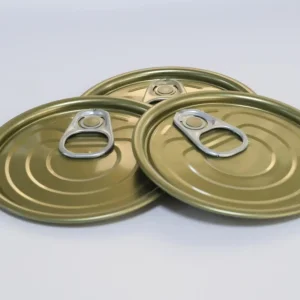
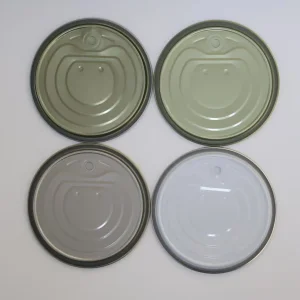
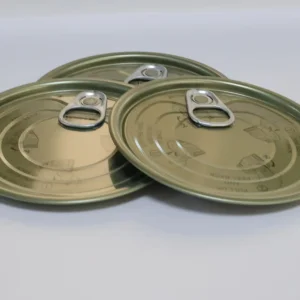
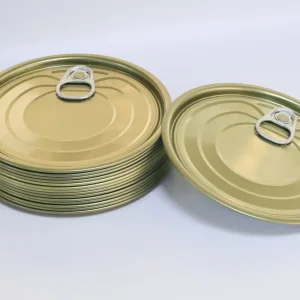
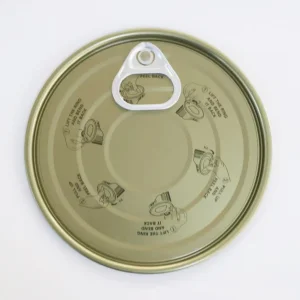
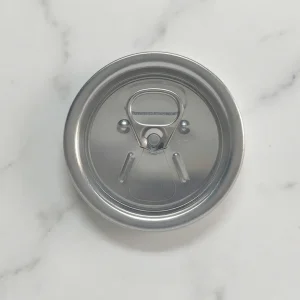
Select from standard round sizes, specialty powder ends, and high-performance easy-open closures available for fast delivery to Osaka.
Connect directly with Shanghai Friend Metals packaging engineers. Receive CAD drawings, material safety datasheets (MSDS), and custom sample kits dispatched to your Osaka plant within 48 hours.
