Germany represents the largest market for metal packaging in Central Europe. Characterized by strict EU safety frameworks, rigorous DIN standards, and an aggressive circular economy trajectory, German food processors and chemical fillers demand uncompromising precision in iron lid (tinplate end) manufacturing.
From the food production hubs of North Rhine-Westphalia and Lower Saxony to the chemical-technical industries in Bavaria and Baden-Württemberg, the requirement for high-barrier, hermetically sealed iron lids has escalated dramatically. Modern filling lines operating at speeds upwards of 1,200 cans per minute tolerate zero variance in double seam dimensions, curl radii, or internal lacquer integrity.
As European steel mills face fluctuating energy overheads and shifting production capacities, German packaging buyers are increasingly diversifying their sourcing strategies. China’s advanced metal packaging factories—supported by world-class coil lacquering lines, high-speed automated stamping presses, and rigorous quality assurance—have emerged as crucial strategic partners to secure resilient, cost-optimized, and fully compliant supply chains.
Standardized diameter sizes engineered to fit seamlessly onto European automated seaming equipment including Ferrum, Lanico, and Somme seamers.
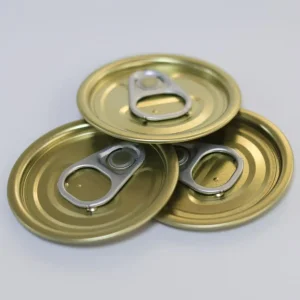
Ø50mm shell, ideal for small format food containers, luxury spices, and specialty pasteurized goods.
View Product Specification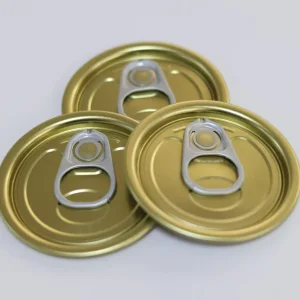
Ø52mm standard neck-in profile featuring organosol or BPA-NI internal protective coatings.
View Product Specification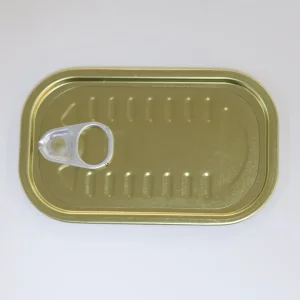
Custom rectangular and square geometry for specialty fish, oils, and premium delicatessen cans.
View Product Specification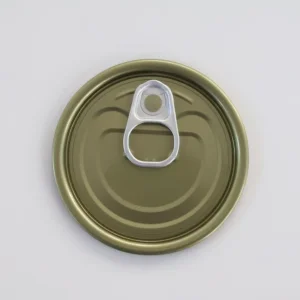
Ø65mm universal tinplate end, optimized for retort processing up to 121°C sterilization cycles.
View Product SpecificationTo commercialize metal closures within Germany and the broader European Union, suppliers must adhere to stringent regulatory frameworks governing food contact materials, recycling laws, and dimensional tolerances.
Every iron lid shipped to Germany is certified under LFGB §§ 30 & 31 (Lebensmittel- und Futtermittelgesetzbuch) and EU Regulation (EC) No 1935/2004. Internal lacquers undergo rigorous overall and specific migration testing (overall migration < 10 mg/dm²) against aqueous, acidic, and fatty food simulants.
In response to German retail mandates removing Bisphenol A, our production lines utilize high-performance BPA-Non-Intent (BPA-NI) polyester and organosol lacquers. These systems provide superior acid-resistance for aggressive products such as sauerkraut, pickles, and tomato paste without chemical migration.
Substrates adhere strictly to DIN EN 10202 specifications for cold-reduced tinmill products. We supply single-reduced (SR) and double-reduced (DR) tinplate with temper ratings from T2 to DR8, tailored for optimal feathering, bead stiffness, and double-seam integrity.
| Parameter / Standard | German Industry Requirement | China Supply Factory Assurance | Verification Protocol |
|---|---|---|---|
| Raw Material Grade | MR / SPCC Prime Tinplate | Baosteel / Shougang Prime Coils | Mill Test Certificate (MTC) EN 10204 3.1 |
| Tin Coating Mass | 1.1/1.1 g/m² to 5.6/5.6 g/m² | Controlled Electrolytic Tinning Lines | X-Ray Fluorescence (XRF) Gauge |
| Enamel Conductivity | < 2.0 mA under 6.3V DC | Automated WACO Enamel Rater | 100% Lot Sampling Inspection |
| VerpackG / Recycling | Dual System Registration (LUCID) | Recyclable Steel (FE 40) Marking | Infinite Recyclability Certification |
Bridging high-volume Chinese manufacturing capacities with European precision expectations provides German buyers with unmatched total cost of ownership (TCO) advantages and supply chain resilience.
Integrated steel mills in China enable continuous long-run production cycles. By sourcing directly from mega-scale tinning operations, our factories buffer German clients against localized European steel shortages and sudden energy-driven price spikes.
Equipped with high-speed Minster press systems and proprietary optical vision inspection tools, our manufacturing units detect microscopic metal burrs, curl deviations, and lacquer pinholes at line speeds exceeding 800 ends per minute.
Leveraging Shanghai's world-class maritime infrastructure, standard transit times to major German ports (Hamburg, Bremerhaven) or inland logistics hubs (Duisburg via Rail) are streamlined with pre-cleared customs documentation, VCI anti-corrosion barrier packing, and ocean-proof palletization.
European procurement directors are rapidly adopting a 70/30 dual-sourcing model. By pairing localized European suppliers with high-capacity Chinese manufacturing partners, German companies gain:
The metal packaging industry is undergoing rapid technical evolution driven by European decarbonization mandates and smart manufacturing integration.
Advancements in double-reduced (DR) steel and finite element structural design permit reduction of iron lid nominal thickness from 0.22mm down to 0.17mm without compromising pressure strength or buckle stability during retort autoclaving.
In alignment with EU REACH directives banning hexavalent chromium (Cr6+), production lines are converting to titanium- and zirconium-based passivation treatments, ensuring eco-friendly coil pre-treatment before lacquer application.
Laser-etched matrix QR codes on internal or external lid surfaces enable end-to-end supply chain transparency, anti-counterfeiting verification for exported German specialty goods, and direct consumer digital engagement.
Tailoring compound formulations, seam curls, and varnish protection to specific end-use environments across the DACH market.
High lactic acid content and brine liquids in traditional German vegetable processing demand ultra-stable double-coat internal lacquers. Our 300# and 307# iron lids incorporate specialized organosol linings that prevent sulfur staining and metal dissolution over extended multi-year shelf lives.
Exporters of premium German milk powders to Asia and the Middle East require zero-oxygen migration closures. Our 401# and 502# tinplate ends integrate precision foil peel-off membranes or heavy-gauge compound gaskets suitable for dry nitrogen flushing techniques.
Germany’s industrial coating sector relies on heavy-duty lever-arch and plain tinplate covers. Formulated with chemical-resistant external clear varnishes, these iron lids prevent solvent breakdown and rust formation during outdoor construction site storage.
Sterilization cycles reaching 121°C for 60 minutes demand high buckle-resistance. Our engineered expansion rings stamped into 211# and 401# lids accommodate thermal internal pressure spikes during high-pressure autoclaving without permanent distortion.
Explore our complete range of tinplate and aluminum easy-open closures exported directly to German packaging distributors and fillers.
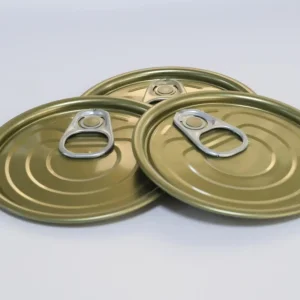
Ø73mm nominal diameter, widely used for canned soups, fruits, and ready-to-eat meals.
View Product Specification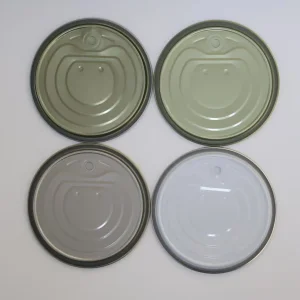
Ø83mm end shell featuring customized compound lined curls for high-speed seaming integrity.
View Product Specification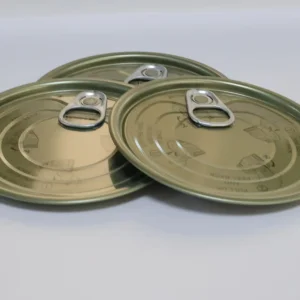
Ø90mm specialized closure engineered for extreme internal pressure differentials.
View Product Specification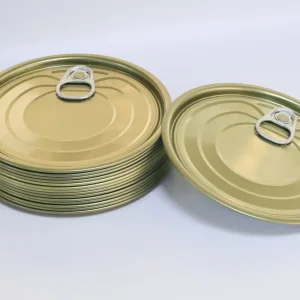
Ø99mm universal fitment for coffee cans, powdered infant nutrition, and pet foods.
View Product Specification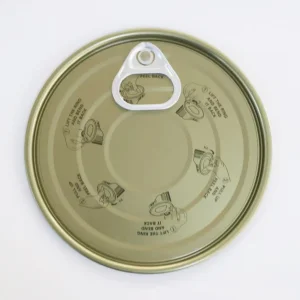
Ø153mm large industrial size designed for institutional food service and bulk ingredient packaging.
View Product Specification
High-volume supply option with custom gold lacquer or internal aluminum-pigmented coatings.
View Product Specification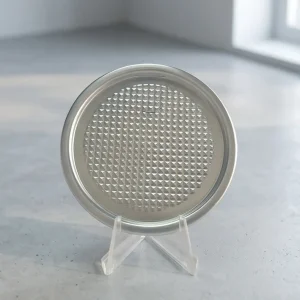
Safe scoop-level rim profile with tamper-evident peelable foil membrane technology.
View Product Specification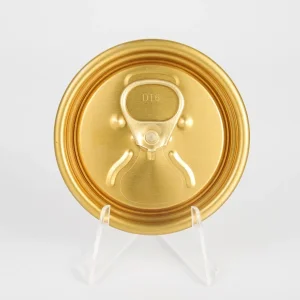
202# SOT / RPT ends tested to 6.2 bar internal pressure burst strength for beer and hard seltzers.
View Product SpecificationTechnical and commercial answers compiled by our packaging engineers to streamline your procurement process.
Optimize your packaging line efficiency, lower unit procurement costs, and ensure absolute EU food contact compliance. Request your customized quote and sample kit now.
Send Inquiry Now