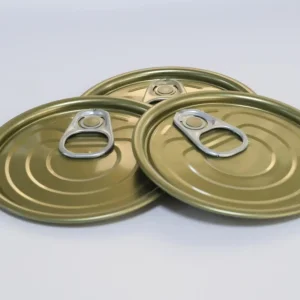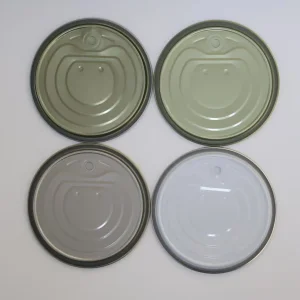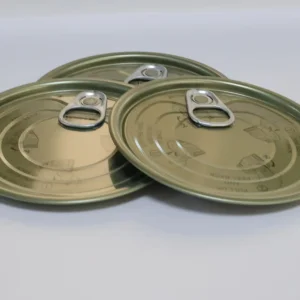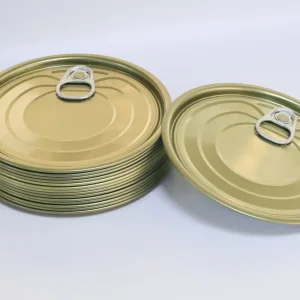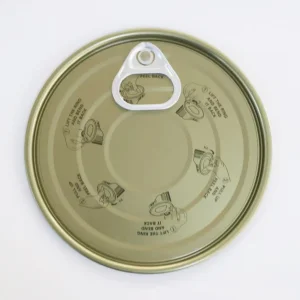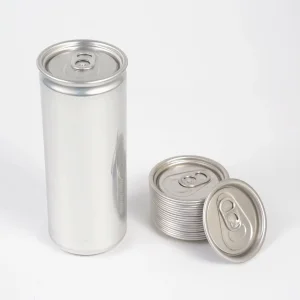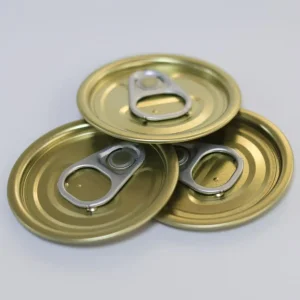
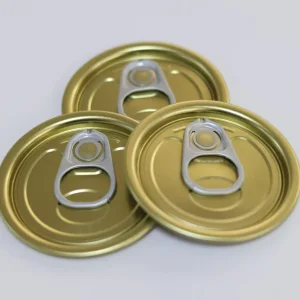
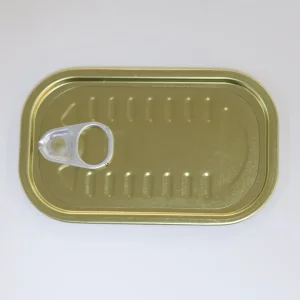

South Africa stands as the preeminent industrial powerhouse and agricultural exporter of Sub-Saharan Africa. From the bustling agrifood hubs of the Western Cape to the heavy manufacturing corridors of Gauteng and the logistics gateways of KwaZulu-Natal, the demand for high-integrity metal packaging closures—commonly referred to in industrial trade as Iron Lids or Electrolytic Tinplate (ETP) Bottoms/Ends—has reached unprecedented technical sophistication.
The Southern African commercial packaging ecosystem operates under distinct macro-environmental pressures. Local food processors, chemical packagers, and canning conglomerates face extreme thermal shifts during inland transport across the Karoo and Limpopo, coastal salt-spray humidity at ports like Durban and Cape Town, and ongoing regional supply chain volatility. To maintain thermal process integrity and hermetic seal durability, food processing enterprises require metal ends that conform rigorously to international metallurgical standards and South African National Standards (SABS / SANS).
Furthermore, South Africa functions as the primary distribution nexus for the Southern African Development Community (SADC). Metal canned goods produced in South African processing plants are regularly trucked across borders into Namibia, Botswana, Zimbabwe, and Mozambique. Iron lids must therefore demonstrate superior structural column strength, seam integrity, and rust prevention to withstand harsh long-haul freight over unpaved routes without vacuum collapse or micro-leakage.
Industrial iron lids (tinplate ends) are engineered for specific chemical, thermal, and mechanical environments. In South Africa, the application spectrum is geographically and sectorially diversified:
Location: Western Cape (Saldanha Bay, St Helena Bay) & Atlantic Coast.
Requirement: High sulfur-resistant internal lacquers (Aluminized or Organosol) for pilchards, sardines, and mackarel in tomato sauce or brine. Iron lids must withstand high-temperature autoclave retort process (121°C for 45+ mins) without enamel blistering or seam corrosion under marine salt air.
Location: Limpopo (Tzaneen), Mpumalanga & Western Cape Winelands.
Requirement: Acid-resistant gold epoxy or BPA-Non-Intent (BPA-NI) inner linings designed for canned deciduous fruits (peaches, pears, apricots), citrus concentrates, and high-acid tomato pastes. Prevents iron ion leaching and maintains shelf stability over 36 months.
Location: Gauteng (Johannesburg, Ekurhuleni) & KwaZulu-Natal.
Requirement: Heavy-gauge 300#, 307#, and 401# tinplate lids engineered for staple South African cuisine including Chakalaka, canned corned beef, savory braai relishes, and beans. Exceptional double-seam tightness prevents anaerobic bacterial growth.
Beyond food packaging, South Africa's thriving chemical manufacturing sector in Vanderbijlpark, Durban, and Port Elizabeth relies heavily on industrial iron lids for 1L to 5L tinplate containers housing solvent-based decorative paints, automotive refinish lacquers, mining reagents, and agricultural pesticides. These lids feature specialized triple-tight compound seals and rust-inhibiting external clear varnishes.
Modern iron lid manufacturing has evolved far beyond basic stamped steel plate. High-speed automated seaming lines (operating at speeds up to 1,200 cans per minute in modern South African processing facilities) demand extreme dimensional uniformity, tight curl radius tolerances, and precise compound lining weights.
We utilize prime Electrolytic Tinplate (ETP) conforming to ASTM A623/A624 and EN 10202 standards. Depending on the target package performance, two distinct temper classifications are deployed:
| Technical Parameter | Single Cold-Reduced (SR) Tinplate | Double Cold-Reduced (DR) Tinplate |
|---|---|---|
| Temper Grade | T2, T3, T4, T5 (HRB 53 - 65) | DR8, DR9, DR9M (HRB 73 - 77) |
| Nominal Gauge Range | 0.20 mm – 0.28 mm | 0.14 mm – 0.19 mm (Lightweighted) |
| Yield Strength | 330 – 450 MPa | 550 – 680 MPa |
| Primary Application | General food lids, deep-draw square lids, high-stress chemical container bottoms. | High-efficiency lightweighted round food lids (300#, 307#, 401#) for carbon-footprint reduction. |
To eliminate metal migration and ensure compliance with European Union (EU 10/2011) and US FDA 21 CFR 175.300 directives, our iron lids feature advanced internal lining chemistries:
The lining radius of each iron lid is injected with water-based or solvent-based synthetic rubber sealants (PVC-free option available). Applied using automatic high-speed nozzle gun lining machines, the compound dry weight is strictly regulated (e.g., 150mg ± 15mg for 307# ends) to ensure complete hermetic double-seam fill when compressed against the body flange of tinplate, plastic, or composite can bodies.
In an era characterized by global freight fluctuations and raw material price spikes, South African packaging buyers require supply partners capable of delivering uncompromised quality with ironclad delivery schedules. Shanghai Friend Metals Technology Co., Ltd. operates at the center of China’s world-leading metal manufacturing ecosystem.
Direct partnership with tier-1 steel mills (Baosteel, Shougang) ensures guaranteed tin-coating mass consistency (E2.8/2.8, E5.6/5.6 g/m²) and precise temper control, mitigating raw plate defects prior to stamping.
Multi-die automatic press lines from industry-leading machine makers yield production speeds up to 3,000 ends per minute per line, delivering unmatched economies of scale that pass directly to South African importers.
Located near Shanghai Port—the world’s busiest container terminal—we offer direct, high-frequency vessel departures to Port of Durban (approx. 18-22 days transit) and Cape Town, avoiding costly inland transport delays inside China.
While domestic South African manufacturers frequently face production interruptions due to local power grid constraints (load-shedding), our Shanghai manufacturing facilities maintain uninterrupted 24/7 continuous production cycles supported by dual-grid industrial power access and automated quality scanning systems.
The global packaging market is undergoing a structural transition toward circular economy materials. Plastic flexible pouches and multi-layer laminate cartons face increasing regulatory scrutiny globally and within the SADC region due to poor recycling rates and microplastic pollution.
Iron lids and steel cans represent the gold standard of circular packaging economy. Metal packaging boasts a "permanently recycled" status: steel can be recycled infinitely without loss of metallurgical strength or food-safety properties. Magnetic separation systems at South African municipal waste facilities make tinplate recovery far simpler and more economically profitable than flexible plastic collection.
From an operational standpoint, rigid iron closures provide unparalleled mechanical barrier protection. They offer zero oxygen transmission rate (OTR = 0.00 cc/m²/day), zero water vapor transmission rate (WVTR = 0.00 g/m²/day), and 100% light block—critical variables for extending shelf life without artificial chemical preservatives in warm climates across Southern Africa.
Importing metal components into South Africa requires complete technical compliance with compulsory national specifications. We support our South African clients with complete regulatory documentation packages:
Our engineering team provides full dimensional cross-section blueprints and recommended seaming roll profile settings (First & Second Operation Rolls) for major double-seamer brands used across South Africa, including FMC, Ferrum, Angelus, and Somme machines.
Iron lids are packed in heavy-duty moisture-proof kraft paper sleeves, sealed in polyethylene inner bags with active silica gel desiccants, and loaded onto export-grade wooden pallets wrapped with stretch-hood film to prevent sweat rust during ocean voyage through equatorial waters.
Connect directly with our senior metal packaging engineers to receive instant tooling CAD drawings, enamel rater test certificates, and trial container quotations shipped to Durban or Cape Town ports.
Send Inquiry NowWe supply a full spectrum of industry-standard tinplate end diameters commonly utilized across South Africa, including 200# (50mm), 202# (52mm), 211# (65mm), 300# (73mm), 307# (83mm), 401# (99mm), and 603# (153mm) institutional sizes, as well as specialized rectangular/square lids for fish and corned beef cans.
We apply high-purity electrolytic tin coatings (up to 5.6 g/m² tin mass) combined with passivation treatment (311 chromate or chromate-free alternatives) and clear or gold external protective lacquers. This provides over 72 hours of neutral salt spray (NSS) test resistance without rust formation.
Yes. All raw coating material lots undergo stringent migration testing against FDA 21 CFR 175.300 and EU 10/2011 standards. Certificates of Conformance (CoC) and overall migration test reports are included with every shipping consignment sent to South Africa.
Direct vessel routes from Shanghai to Durban Port average 18 to 22 transit days. Freight to Cape Town Port averages 24 to 28 days. Our production dispatch lead time for standard inventory sizes is typically 10-15 working days following artwork/technical approval.
Absoltely. We provide complete technical specification sheets detailing target countersink depth, curl width, end hook length, body hook length, and percentage seam overlap values engineered for your specific seamer chucks and rolls.