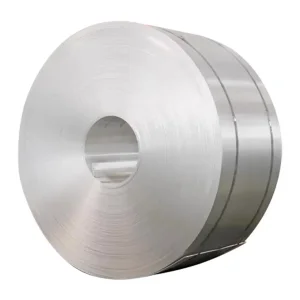
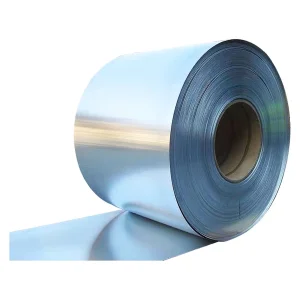
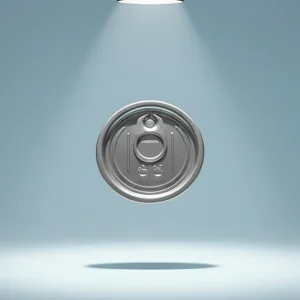
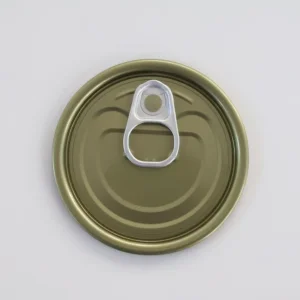
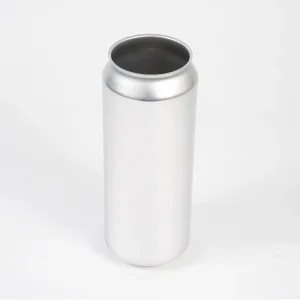
Engineered to strict ASTM B209 standards with tight gauge tolerances, optimized grain structure, and advanced surface lacquering for continuous high-speed stamping and drawing lines.
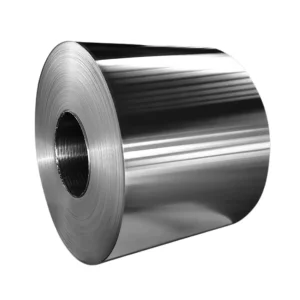
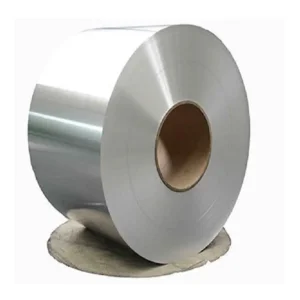
The United States industrial sector—spanning beverage packaging, automotive lightweighting, building envelope systems, and HVAC heat exchangers—consumes over 5.5 million metric tons of flat-rolled aluminium products annually. However, domestic rolling mill capacity, despite recent capital investments, faces structural constraints, aging cold-rolling infrastructure, and elevated regional operational premiums (Midwest Premium).
To bridge this supply gap while retaining competitive margin structures, U.S. procurement leaders are increasingly executing strategic hedging models by partnering with tier-1 Chinese aluminium coil manufacturers. China represents over 55% of global primary smelting and advanced rolling capacity, backed by continuous casting and cold-rolling technologies capable of maintaining thickness tolerances as tight as ±0.002 mm.
This technical white paper outlines the precise metallurgical standards, import logistics compliance protocols, tariff navigation strategies, and technical application parameters required to seamlessly integrate Chinese-sourced aluminium coil stock into U.S. high-speed production environments.
Our manufacturing partner network operates under rigorous global quality governance systems, including ISO 9001:2015, IATF 16949 (Automotive Quality Management), ISO 14001, and full FDA 21 CFR 175.300 compliance for food-contact coatings.
Quantitative validation of China-to-U.S. manufacturing and logistics capabilities.
Analyzing the structural realities of North American aluminium processing, domestic mill deficits, and strategic international sourcing strategies.
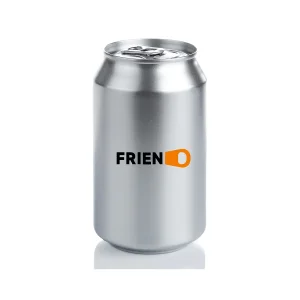
The U.S. beverage industry consumes over 115 billion cans annually. With craft breweries, RTD (Ready-To-Drink) canned cocktails, and hard seltzers shifting aggressively away from single-use plastics and glass, demand for 3104-H19 body stock and 5182-H48 shell stock has outstripped regional rolling mill output.
Driven by CAFE (Corporate Average Fuel Economy) mandates and electric vehicle range optimization, North American automotive OEMs require immense quantities of 5052-H32 and 6000-series coil for door skins, battery enclosures, heat shields, and structural stamping components.
U.S. residential and commercial construction growth demands high-durability 3003 and 5052 coils for ACP (Aluminium Composite Panels), standing seam roofing, and coated 8011 coil for HVAC evaporator/condenser fins resistant to coastal salt corrosion.
Importing aluminium coil into the United States requires deep familiarity with trade governance, including Section 232 tariffs, U.S. Customs and Border Protection (CBP) classifications, and HTS (Harmonized Tariff Schedule) coding. Leading Chinese suppliers provide comprehensive supply-chain mitigation models:
Quotations structured on DDP (Delivered Duty Paid) or DAP terms, incorporating precise HTS duty calculations, anti-dumping risk assessments, ocean freight insurance, and port handling charges to guarantee stable landed costs.
Partnering with West Coast (Long Beach/Los Angeles), Gulf Coast (Houston), and Midwest (Chicago) bonded warehousing to hold safety stock for U.S. plant operations, insulating buyers against ocean freight fluctuations.
Comparing core Chinese aluminium coil product lines customized for North American manufacturing lines.
| Alloy & Temper | Thickness Range | Tensile Strength (MPa) | Yield Strength (MPa) | Elongation (%) | Primary U.S. Industry Applications |
|---|---|---|---|---|---|
| 3104-H19 | 0.240 – 0.300 mm | 275 – 310 | 260 – 295 | ≥ 3.0 | DWI Beverage Can Bodies (330ml, 355ml/12oz, 500ml, Sleek, Slim) |
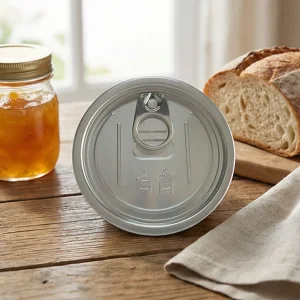
| 5182-H48 | 0.200 – 0.250 mm | 360 – 400 | 310 – 350 | ≥ 6.0 | Easy-Open Ends (200#, 202#, 206# SOT/RPT Shell Stock), High-Burst Lids |
| 5052-H32 / H34 | 0.180 – 3.000 mm | 210 – 260 | 130 – 200 | ≥ 8.0 | Can Easy-Open Tabs, Truck Trailers, Automotive Panels, Marine/Industrial |
| 8011-O / H14 | 0.015 – 0.250 mm | 95 – 165 | 75 – 135 | ≥ 12.0 | Pharma Seals, Milk Powder Peel-able Lids, HVAC Fin Stock, Flexible Packaging |
| 3003-H14 / H24 | 0.200 – 4.000 mm | 140 – 180 | 115 – 150 | ≥ 5.0 | Architectural Roofing, Heat Exchangers, General Sheet Stamping |
Through advanced tandem cold-rolling mills equipped with automatic gauge control (AGC) and automatic flatness control (AFC), our coils achieve exceptional crystalline uniformity. Minimizing coarse intermetallic compounds ensures superior ductility during high-speed 2-piece can drawing and wall ironing (DWI).
For beverage lid stock (5182) and pharmaceutical foil stock (8011), internal lacquers are formulated using non-BPA (BPA-NI) epoxies, modified polyesters, or acrylic coatings. Fully tested under US FDA 21 CFR 175.300 and European Commission Regulation (EU) No 10/2011.
How Chinese high-precision aluminium coils integrate directly into North American manufacturing lines.
On high-speed cupping presses running at 2,500 to 3,000 strokes per minute, coil lubrication and earing behavior dictate production efficiency. 3104-H19 coil stock provides an ultra-low earing percentage (<1.2%), preventing uneven can top trim, jamming, and tooling wear on Stolle or Belvac can body-makers.
5182-H48 end shell coil processed with food-grade pre-lubrication (DOS or synthetic wax) ensures flawless scoring and tab rivetting on Minister or DRT presses. Buckle resistance is guaranteed up to 6.2 bar, matching requirements for carbonated soft drinks, craft beers, and pasteurized RTD coffee beverages.
8011 and 3003 coils treated with hydrophilic blue or gold epoxy coatings are optimized for high-speed fin punches. The coating lowers water contact angles to below 25°, preventing water bridging in air conditioning evaporators installed in humid Southern U.S. climates.
For infant formula, powdered nutrition, and pharmaceutical bottle seals, 8011-O temper coils undergo 100% pinhole inspection. The coil supports peelable membrane heat-sealing against tinplate or composite ring bodies, maintaining zero oxygen moisture transmission rates (OTR/WVTR).
Strategic advancements driving sustainable, low-carbon aluminium coil production for global export.
Integrating over 75% Post-Consumer Recycled (PCR) aluminum into 3104 and 5182 melt charges, reducing embodied carbon by up to 80% compared to primary smelter ingot. Meets strict Scope 3 decarbonization targets for major North American beverage brands.
Implementing 100% inline optical camera inspection with deep-learning vision algorithms to detect micro-scratches, inclusions, roll marks, or pinholes down to 0.01 mm at line speeds exceeding 1,200 meters per minute.
Developing next-generation ultra-thin 0.220 mm can body stock and 0.180 mm end shell stock with elevated work-hardening characteristics, maintaining structural column strength while paring weight and material cost.
Explore our downstream finished products, drawn containers, and specialized closures engineered for U.S. fillers.
Expert responses regarding compliance, tariffs, tooling alignment, testing protocols, and ocean transport protection.
Our export compliance team collaborates directly with licensed U.S. customs brokers to ensure accurate HTS tariff classification (e.g., 7606.12 for rectangular aluminum alloy plate/sheet/strip). We provide fully transparent DDP (Delivered Duty Paid) pricing structures that encapsulate duty rates, port processing fees, ocean freight, and inland transportation to your facility door, eliminating unexpected landed costs.
Every shipment is issued an EN 10204 3.1 Mill Test Certificate (MTC) detailing melt heat numbers, exact chemical composition (Si, Fe, Cu, Mn, Mg, Cr, Zn, Ti), tensile strength, yield strength, elongation, and earing percentage. For 5182 and 8011 food/pharma grade coils, we attach FDA 21 CFR 175.300 compliance declarations, heavy metal test reports (RoHS/REACH), and BPA-NI lacquer migration certifications.
Coils are packed according to international heavy-duty export packaging standards ("Eye to Wall" or "Eye to Sky" configuration). Each coil is wrapped in neutral anti-corrosion VCI (Vapor Corrosion Inhibitor) film, backed by heavy cardboard protection, galvanized steel outer edge protectors, and secured with radial and circumferential steel strapping on fumigated wooden pallets. Desiccant packs are inserted inside the core to absorb ambient humidity during trans-Pacific transport.
Standard production lead times at the rolling mill range from 20 to 30 days depending on the alloy, temper, and lacquering specs. Ocean transit times from Shanghai/Ningbo ports to West Coast U.S. ports (Long Beach/Los Angeles) average 14 to 18 days; East Coast/Gulf Coast ports (Houston, Savannah, Newark) average 28 to 35 days. For high-volume contracts, we maintain Vendor Managed Inventory (VMI) buffers in U.S. regional warehouses for 48-hour call-off dispatch.
Yes. We routinely supply slit trial coils (e.g., 100 kg to 1,000 kg narrow slit coils) via air freight or express LCL shipping so your engineering team can perform cupping, drawing, enamel rating, double-seam tear-down analysis, and tab-rivetting checks prior to authorizing full multi-container production runs.