Engineered to exact OEM dimensional tolerances, food-contact migration protocols, and seam teardown parameters.
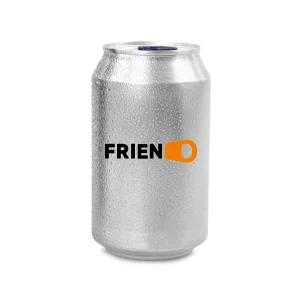
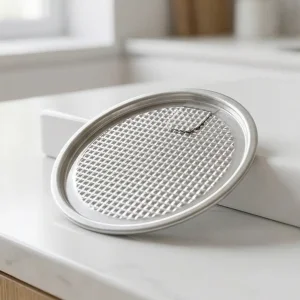
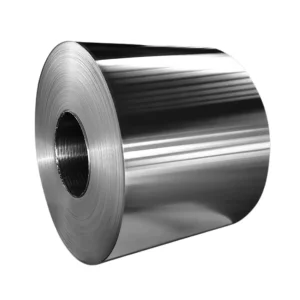
Evaluating market dynamics, supply chain integration, and regional compliance mandates across global B2B procurement networks.
The global industrial footprint for white foil manufacturing and coated metal substrate converting has entered a transformative era driven by stringent shelf-life requirements, circular economy mandates, and elevated consumer demand for premium food and beverage barrier systems. White foil—specifically lacquered, enamel-coated, or laminated aluminum foil and coil stock—represents an indispensable cornerstone of modern industrial packaging. It serves applications spanning peelable easy-open membranes, heat-sealable dairy container caps, pharmaceutical blister backings, dry powder barrier lids, and high-speed two-piece beverage can end stock.
From a macro-industrial perspective, procurement managers and packaging engineers are no longer selecting suppliers based solely on raw material cost per metric ton. Instead, enterprise buyers evaluate Wholesale White Foil Manufacturers through the lens of total cost of ownership (TCO), metallurgical consistency, pinhole-free coating integrity, and automated double-seaming compatibility. As international regulatory bodies enforce tighter restrictions on food-contact substances, the global manufacturing landscape has migrated rapidly toward advanced water-borne white epoxy-acrylic lacquers, organosol systems, and non-BPA (BPA-NI) polyester enamels.
Asia-Pacific remains the primary manufacturing hub for raw aluminum smelting, cold rolling, and high-speed coil lacquering. Chinese industrial centers leverage fully integrated supply chains—from bauxite processing to 5052, 3104, and 8011 alloy precision slitting—ensuring rapid lead times and robust volume scalability for global B2B buyers.
European and North American commercial sectors demand absolute regulatory alignment with FDA 21 CFR 175.300, EU Regulation 1935/2004, and REACH parameters. Manufacturers operating in these regions prioritize low-carbon secondary aluminum integration paired with zero-VOC emission coating lines.
Rapid urbanization in South America, the Middle East, and Africa is accelerating regional demand for shelf-stable canned goods, infant nutrition powders, and single-serve RTD beverages. Suppliers offering localized logistics support and ocean-freight corrosion protection gain a decisive competitive advantage.
Technical specs covering alloy tempers, white titanium dioxide (TiO2) opacification, dry coat weight precision, and pinhole micro-analysis.
The manufacture of enterprise-grade white foil requires meticulous control over substrate metallurgy, surface pretreatments, and thermal curing kinetics. Premium white foil is not simply plain aluminum painted white; it is a multi-layered functional composite material engineered to withstand severe mechanical deformation during stamping, scoring, embossing, and double-seaming without micro-cracking or loss of adhesion.
Selecting the optimal aluminum alloy temper is essential to balancing tensile strength, elongation, and burst pressure resistance. The core alloys deployed across enterprise white foil manufacturing include:
The white surface aesthetic is achieved by dispersing sub-micron food-grade Titanium Dioxide (TiO2) pigments into an advanced polymer binder matrix. The coating process demands ultra-clean room conditions to prevent airborne dust contamination, pinholes, or surface fisheyes.
| Technical Parameter | Standard White Epoxy Coating | Premium BPA-NI Polyester White | High-Retort White Organosol |
|---|---|---|---|
| Dry Coat Weight Range | 8.0 - 12.0 g/m² | 10.0 - 14.0 g/m² | 12.0 - 16.0 g/m² |
| Curing Peak Metal Temp (PMT) | 230°C - 245°C | 240°C - 255°C | 245°C - 260°C |
| Erichsen Cupping / Adhesion | ≥ 6.5 mm (No flaking) | ≥ 7.0 mm (No flaking) | ≥ 7.5 mm (No flaking) |
| Enamel Rater Porosity Pass Rate | < 2.0 mA at 6.3V | < 0.5 mA at 6.3V | < 0.1 mA at 6.3V |
| Retort Resistance (121°C / 60 min) | Standard Pass | Superior Pass (No blush) | Ultra-High Steam Autoclave |
Turnkey metal packaging engineering tailored for high-speed filling plants, dairy processors, and pharmaceutical bottlers.
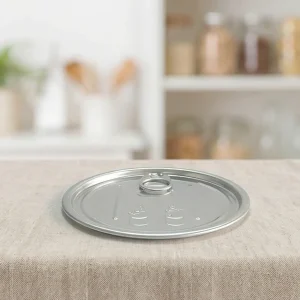
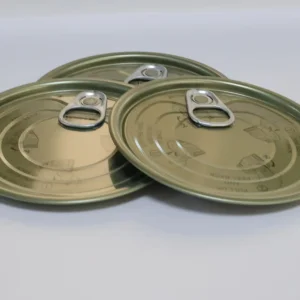
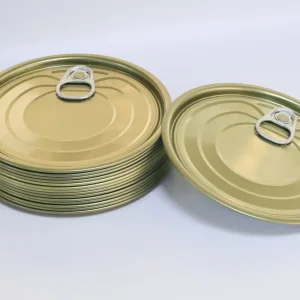
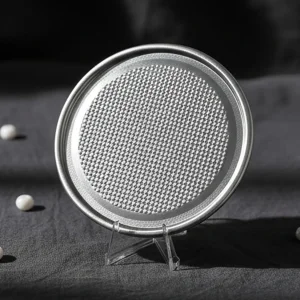
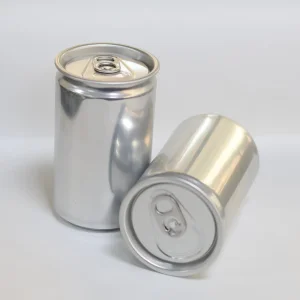
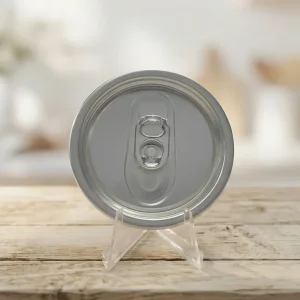
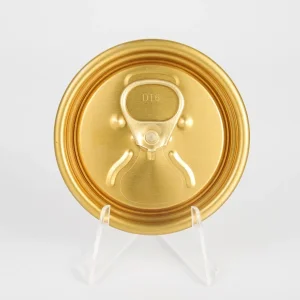
We engineered our white-coated 200#, 202#, and 206# easy-open lids to integrate seamlessly with Ferrum, Angelus, and pneumatically driven high-speed seamers operating at speeds up to 1,200 cans per minute. Precision curl dimensions and consistent countersink depth prevent jam-ups and minimize seamer chuck wear.
For high-sensitivity powders (milk formula, nutraceuticals, protein powders), our 401# and 502# white foil peel-off ends provide an absolute oxygen and moisture barrier. Nitrogen flushing preserves active lipid structures while the smooth peel force ensures consumer convenience.
Supplying non-magnetic 209FA# and 305# white foil lids engineered for steam sterilization processes at 121°C to 131°C. Custom lacquer chemistries guarantee zero chemical leaching into sterile lab reagents, diagnostic powders, or pharmaceutical matrices.
Verifying container performance across extreme climatic zones, maritime transit routes, and cold-chain supply loops.
Packaging performance varies significantly depending on geographical deployment, warehouse thermal cycles, and regional transit conditions. Wholesale white foil products manufactured in our facility undergo rigorous simulated environmental stress testing prior to global export clearance.
In Southeast Asia, Coastal Africa, and Latin America, high ambient humidity (RH > 85%) accelerates atmospheric corrosion along micro-scored lid edges. Our white foil lids utilize specialized passivated edge primers and hydrophobic rim wax, preventing side-seam rust and lacquer lifting over extended 24-month storage windows.
For refrigerated RTD coffees, craft beers, and functional juices distributed across North America and Northern Europe, rapid temperature drops cause moisture condensation on outer foil surfaces. Our white lacquers maintain flexibility down to -30°C, ensuring the barrier layer does not turn brittle or craze during freezing cycles.
Air freight and mountainous road transportation subject sealed containers to significant pressure differentials. Our 5182-H48 shell stock and engineered score depths prevent premature pop-open failures while maintaining low consumer pull-force thresholds.
Pioneering carbon-neutral smelting, bio-based monomer coatings, and AI-driven optical defect inspection.
The next decade of white foil manufacturing will be defined by the convergence of advanced material science, digital quality assurance, and aggressive decarbonization targets. As global packaging regulations enforce circular economy standards, our manufacturing roadmap focuses on four key pillars:
Transitioning multi-layer foil laminates toward 100% recyclable mono-aluminum structures. By replacing pet-film linings with ultra-thin water-borne white barrier coats, post-consumer aluminum recovery rates increase significantly without requiring thermal delamination processing.
Leveraging Finite Element Analysis (FEA) to reduce coil gauge by 0.01mm–0.02mm while maintaining structural buckle pressure. Lightweighting directly cuts raw material consumption and lowers ocean freight carbon intensity across global logistics networks.
Deploying high-resolution 8K optical vision inspection cameras along lacquering lines. Advanced AI algorithms detect micro-pinholes, coating weight variations, and microscopic surface dust in real-time, achieving zero-defect production output.
Direct answers from our senior packaging engineers regarding specifications, compliance, and custom production.
Comprehensive metal packaging portfolio certified for global food, beverage, and medical distribution.
Connect directly with our senior metallurgical and coating engineering team. We provide complete technical drawings, sample lots for line seam teardown, and customized container solutions within 24 hours.
