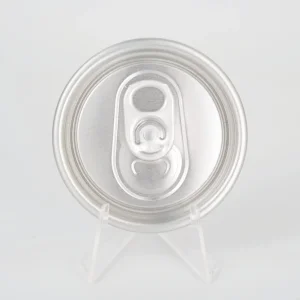
Engineered for commercial breweries, beverage canning lines, and high-speed filling operations requiring verified gas-retention and pressure tolerances.
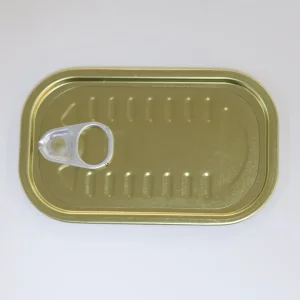



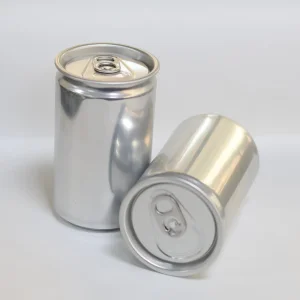

Analyzing global consumption shifts, technical brewing parameters, and packaging evolution across Hefeweizen, Witbier, Dunkelweizen, and American Wheat styles.
The global market for wholesale wheat beer has undergone a structural transformation. Once considered a regional European specialty centered primarily in Bavaria and Belgium, wheat-based malt beverages (comprising Hefeweizen, Kristalweizen, Belgian-style Witbier, and American Pale Wheat) now represent one of the fastest-growing segments in international B2B alcoholic beverage distribution. Global procurement executives, brand owners, and contract beverage manufacturers are recalibrating their supply chains to accommodate changing consumer preferences toward natural turbidity, ester-forward aromatic profiles, and sustainable container formats.
From an operational standpoint, producing wheat beer at commercial scale requires navigating unique brewing chemistry. Unlike 100% barley malt lagers, wheat beer grists incorporate between 40% to 70% malted or unmalted wheat (Triticum aestivum). The absence of a husk in wheat grains drastically elevates mash viscosity and beta-glucan concentrations, requiring advanced lautering equipment, decoction profile tuning, and specialized enzymes to maintain yield stability across multi-barrel brew houses.
Enterprise buyers require strict technical alignment between liquid organoleptic properties and packaging barrier performance.
Maintaining authentic Bavarian ester signatures (isoamyl acetate - banana) and phenolic traits (4-vinyl guaiacol - clove) demands specialized yeast propagation systems, controlled fermentation temperatures (18°C-22°C), and non-shear pump architecture.
Wheat beers carry higher carbonation levels (3.2 to 4.2 volumes of CO2) compared to standard lagers (2.5 volumes). This places severe structural demands on seamless beverage cans, 202# SOT lids, and draught keg couplers to prevent venting or seam failure.
Protective internal can coatings must feature modern Bisphenol A Non-Intent (BPA-NI) epoxy acrylic or organosol technologies. Coatings must pass strict migration limits (FDA 21 CFR 175.300 and EU 1935/2004) while resisting acidic pH levels (4.0-4.4).
For international procurement managers evaluating OEM/ODM manufacturing partnerships, the following technical matrix outlines standard production thresholds:
| Technical Parameter | Hefeweizen Standard | Belgian Witbier Standard | American Wheat Standard |
|---|---|---|---|
| Grist Ratio (Wheat %) | 50% - 70% Malted Wheat | 40% - 50% Unmalted Wheat | 30% - 50% Malted Wheat |
| Original Gravity (OG) | 11.5° - 13.5° Plato | 11.0° - 12.5° Plato | 10.5° - 12.0° Plato |
| Carbonation Level | 3.5 - 4.2 Vol CO2 | 3.0 - 3.5 Vol CO2 | 2.6 - 3.2 Vol CO2 |
| Haze Stability (EBC) | 25 - 60 EBC (Permanent) | 20 - 45 EBC (Pectin/Protein) | 5 - 15 EBC (Slight Haze) |
| Target Shelf Life | 12 Months (Canned/Kegged) | 12 Months (Canned/Kegged) | 12 Months (Canned/Kegged) |
From grain sourcing to automated counter-pressure canning, optimizing end-to-end beverage production architectures.
Commercial wheat beer supply chains demand flawless coordination between raw material suppliers, brewhouse engineering, quality control laboratories, and packaging component manufacturers. For multinational distributors and private label brand owners, contracting with certified, large-scale manufacturers in key production hubs provides scalable unit economics and guaranteed batch-to-batch repeatability.
Because unmalted and high-protein wheat strains lack sufficient husk structure for natural grain bed filtration, high-capacity wheat beer plants utilize specialized mash filters or high-torque lautering mechanisms. A strict temperature-programmed multi-rest mashing profile is executed:
Wheat beer is exceptionally vulnerable to oxidative degradation. Dissolved Oxygen (DO) pick-up during packaging causes immediate ester breakdown, staling, and premature drop-out of natural yeast turbidity. Modern wholesale packaging facilities deploy high-speed rotary counter-pressure fillers equipped with double pre-evacuation vacuum systems and CO2/N2 gas flush nozzles before double-seaming.
Unfiltered wheat beers containing live yeast strains require temperature-controlled warehousing (4°C-8°C) or thermal blanket pallet wraps during ocean transport to prevent secondary fermentation or heat-induced autolysis.
Supply partners offer adaptable packaging formats ranging from 200ml slim cans, 330ml/355ml standard aluminum cans, up to 20L/30L stainless steel and one-way PET kegs for global draft distribution.
Export-ready manufacturing sites operate under international food safety frameworks, including ISO 22000, FSSC 22000, HACCP, and GMP standards, providing complete lot traceability from grain to container.
Navigating customs documentation, alcohol excise regulations, food safety compliance, and regional labeling mandates across key import zones.
Cross-border wholesale of wheat beer involves complex regulatory requirements. B2B buyers must partner with manufacturers equipped with dedicated international trade compliance teams capable of tailoring products to destination markets.
Imports into the United States require TTB (Alcohol and Tobacco Tax and Trade Bureau) Label Approval (COLA). Packaging must adhere to mandatory health warning statements, allergen declarations (wheat/barley gluten disclosure), and standard fill volumes. Furthermore, aluminum cans and easy-open ends must comply with California Proposition 65 regulations regarding heavy metals and bisphenol compounds.
The EU market strictly enforces allergen labeling under Regulation (EU) No 1169/2011. In addition, packaging materials coming into contact with fermented liquids must provide documented compliance with Regulation (EC) No 1935/2004. Suppliers must supply certificate documentation for internal can lacquers, confirming zero heavy metal leaching and compliance with strict EU phthalate thresholds.
Importing into APAC markets (such as Japan, South Korea, China, and ASEAN nations) involves localized customs testing for microbiological stability, sulfur dioxide levels, and artificial additive screening. Suppliers provide full Certificate of Analysis (COA), Certificate of Origin (COO), and sanitized phytosanitary documentation for every sea container shipped.
Pioneering sustainable metallurgical developments, non-thermal pasteurization, and smart inventory tracking across the brewing ecosystem.
Advanced draw-and-iron (DWI) metallurgical forming allows reducing wall thicknesses from 0.24mm down to 0.208mm without lowering axial column load resistance or dome burst pressure ratings under high CO2 loads.
Industrial aluminum coil production is transitioning toward 80%+ post-consumer recycled content (PCR) smelted via hydro-electric energy, cutting Scope 3 carbon intensity by up to 60% per thousand cans.
Adoption of Cold-Plasma and Pulsed Electric Field (PEF) sterilization technologies enables microbial stabilization without thermal stress, preserving volatile wheat ester aromas intact.
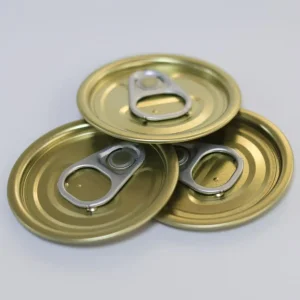
Explore our full line of food-grade tinplate lids, anti-static aluminum ends, 355ml cans, and specialized aluminum coils for industrial packaging lines.


Technical and commercial clarity for brewery purchasing managers, contract fillers, and beverage brand owners.
For custom-printed aluminum beverage cans (330ml / 355ml / 500ml), standard production MOQs start at 100,000 units per design SKU due to high-speed offset printing plate setup requirements. For plain unprinted (bright) aluminum cans or standard 202# SOT easy-open ends held in warehouse inventory, minimum order thresholds start at one full 20ft/40ft ocean container load (approx. 150,000 to 200,000 components).
Commercial wheat beers exhibit higher internal pressure than standard lagers. To ensure package integrity, we supply engineered 5182-H48 alloy aluminum shell ends paired with 202# SOT stay-on-tab profiles engineered to withstand internal pressure up to 6.2 bar (90 PSI). Combined with precise seam countersink depth and double-seam dimensional validation during filling, zero-leakage performance is maintained throughout maritime transport and warm warehouse storage.
Yes. All food and beverage packaging components feature advanced BPA-NI (Bisphenol A Non-Intent) internal lacquers, utilizing next-generation polyester or modified epoxy acrylic chemistry. Every lot is independently certified under FDA 21 CFR 175.300, EU Commission Regulation (EU) No 10/2011, and China GB 4806.10, ensuring regulatory clearance across all global jurisdictions.
Natural haze stability relies on controlling protein-polyphenol complexes during mashing, selecting low-flocculation yeast strains (e.g., WLP300 or WB-06), avoiding fine silica or PVPP filtration, and maintaining Total Packaged Oxygen (TPO) levels below 20 ppb. Low TPO stops yeast cell oxidation and premature auto-flocculation, keeping the characteristic cloudiness evenly dispersed upon gentle can inversion.
Standard production lead time for customized packaging or contract brewed orders is 15 to 25 business days following technical proofing and deposit confirmation. Ocean transit times vary by destination port: 12-18 days for APAC regional ports, 22-30 days to West Coast North America/European base ports, and 30-40 days for South American or African destinations. Bonded warehouse stocking options are available for contract partners with predictable monthly volumes.