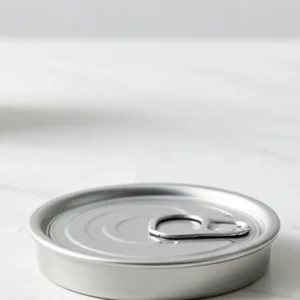
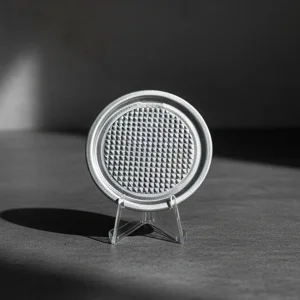
Direct factory wholesale inventory engineered for high-speed beverage canning, pharmaceutical powders, and hermetic food sealing.

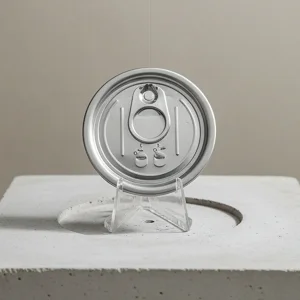
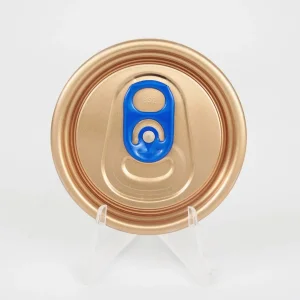
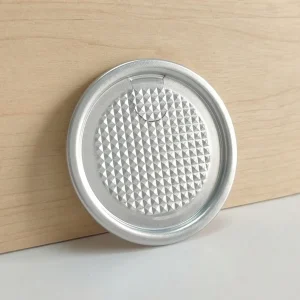
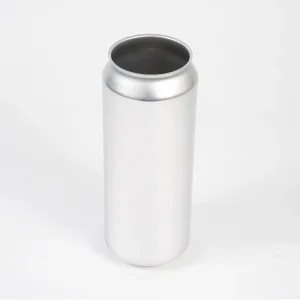
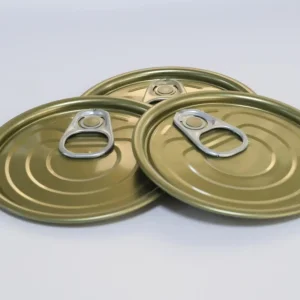
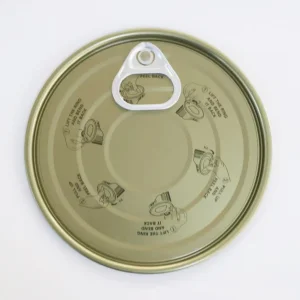
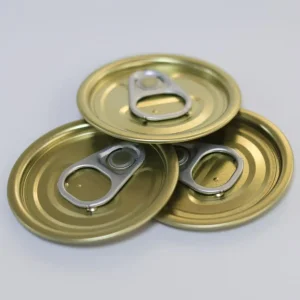
An in-depth analysis of material temper, gauge reduction physics, score line integrity, and internal pressure retention in modern high-speed beverage canning.
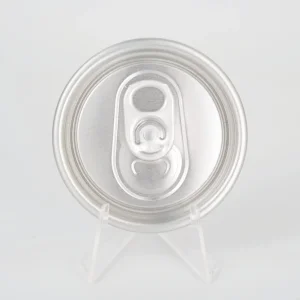
The SOT design features a traditional countersink depth and panel geometry that delivers exceptional resistance against internal carbonation pressure. Manufactured primarily from AA5182-H48 aluminium coil (Al-Mg-Mn alloy), SOT ends provide outstanding yield strength and fatigue resistance. The tab is produced from high-formability AA5052-H19 or H38 alloy, ensuring that the rivet formation does not crack or micro-fracture the underlying lacquer barrier during high-speed conversion.
The CDL profile represents a breakthrough in eco-friendly material reduction. By redesigning the chuck wall angle, countersink radius, and anti-peel panel contours, CDL ends reduce raw material metal weight by up to 8% to 10% compared to traditional B-64 or SOT ends without sacrificing buckle strength. The modified geometry allows thin-gauge coil down to 0.208mm–0.203mm to withstand severe thermal expansion during pasteurisation.
| Specification Parameter | Standard 202 SOT (B-64 / ISE) | Lightweight 202 CDL End | RPT (Ring Pull Tab) End |
|---|---|---|---|
| Nominal Shell Thickness | 0.220 mm ± 0.005 mm | 0.203 mm – 0.208 mm | 0.225 mm ± 0.005 mm |
| Base Aluminium Alloy | AA5182-H48 / H19 | AA5182-H48 High-Yield | AA5182-H48 / AA5052 |
| Minimum Buckle Pressure | 6.2 Bar (90 PSI) | 6.4 Bar (93 PSI) | 5.8 Bar (84 PSI) |
| Pop & Pull Force Limit | Pop: ≤ 24 N | Pull: ≤ 35 N | Pop: ≤ 22 N | Pull: ≤ 32 N | Pop: ≤ 28 N | Pull: ≤ 40 N |
| Internal Coating System | Epoxy / BPA-NI Organosol | BPA-NI Acrylic / Polyester | BPA-NI / Modified Epoxy |
| Primary Target Liquids | CSD, Beer, Energy Drinks | Craft Beer, CSD, Hard Seltzer | Juices, Non-Carbonated RTD |
Analyzing the structural supply chain efficiencies, high-speed conversion technology, and quality assurance protocols of China's leading packaging hubs.
Chinese tier-1 metal packaging facilities operate state-of-the-art conversion presses (such as Stolle, Minster, and DRT high-speed systems) operating at speeds exceeding 3,400 ends per minute per line. Integrated dynamic optical inspection systems scan 100% of finished ends for score-line micro-cracks, rivet malformations, and compound liner void gaps.
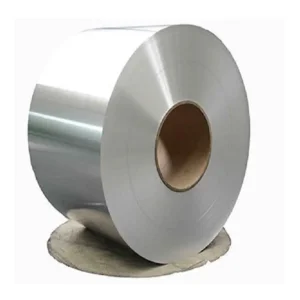
From raw aluminium bauxite refining and hot-rolling of AA3104 / AA5182 coils to specialized liquid coating and precision slitting, China’s industrial packaging clusters in East and South China offer an unbroken supply chain. This vertical integration minimizes raw material lead times and insulates international procurement partners from regional scrap shortages.
Export-grade Chinese factories operate strictly under FSSC 22000, ISO 9001, and ISO 22000 food safety certificates. Every pallet of ends is laser-coded with individual lot tracking numbers linking back to the raw material mill certificate, specific coating run, lacquer batch number, and press operator shift log.
Navigating global regulatory shifts, circular economy targets, and next-generation non-intent lining technologies in metal packaging.
Aluminium is universally recognized as the ultimate circular packaging material. Over 75% of all aluminium ever produced remains in active economic use today. Recycling aluminium beverage cans and easy-open ends requires only 5% of the energy compared to primary smelting, reducing CO2 emissions by up to 95%. As multinational brands target Scope 3 greenhouse gas reductions, converting from plastic closures to aluminium easy-open ends is the single most effective intervention for rapid decarbonization.
Regulatory bodies including the US FDA, European Food Safety Authority (EFSA), and China’s SAMR have enacted stringent regulations restricting Bisphenol A (BPA) in food contact surfaces. Chinese exporters have successfully transitioned production lines to BPA-NI (Bisphenol A Non-Intent) organosol, acrylic, and polyester linings.
Tailoring cover configurations, seam dimensions, and pressure resistance for diverse filling operations.
Key Requirement: Oxygen barrier preservation and thermal pasteurisation resistance.
Recommended End: 202 SOT / CDL with high-density BPA-NI acrylic lining.
Technical Note: Requires tight seam tightness (minimum 85% overlap) to maintain CO2 equilibrium and prevent dissolved oxygen (DO) pickup during high-speed filling.
Key Requirement: Ultra-high pressure containment (> 4.0 volumes CO2).
Recommended End: 202 SOT / CDL 5182-H48 shell.
Technical Note: Internal pressure can spike above 5.0 bar during summer logistics. End buckle rating must be tested to withstand 6.2 bar minimum under rapid thermal cycle tests.
Key Requirement: Hermetic seal, moisture barrier, and non-magnetic safety.
Recommended End: 209#, 300#, 401#, 502# Foil-Membrane or Powder Easy-Open Lids.
Technical Note: Incorporates inert gas nitrogen flushing capability to maintain residual oxygen levels below 0.5% for extended shelf life.
Standardized procedures for international buyers to ensure zero-defect ocean transport and seamless customs clearance.
Due to the high precision of the outer curl and compound gasket of 202 SOT ends, damage during ocean transit can cause micro-dents that lead to double-seamer jam-ups. Leading Chinese suppliers employ specialized export packaging:
Before issuing a formal Purchase Order (PO) for high-volume 202 SOT or CDL ends, procurement officers should request the following pre-shipment documentation:
Clear, engineer-verified answers to common technical queries regarding SOT 202 ends, tooling, MOQs, and quality control.
Explore our comprehensive range of aluminium cans, raw aluminium coils, beer lids, and industrial tinplate packaging solutions.