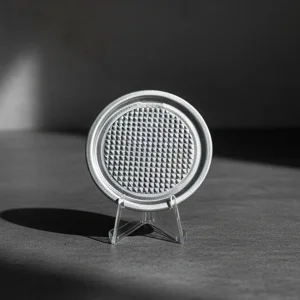
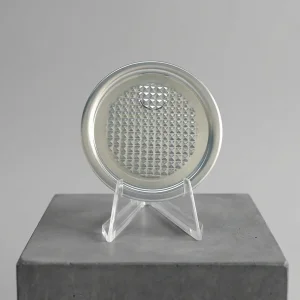
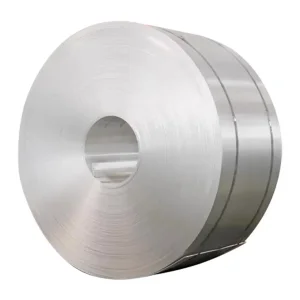
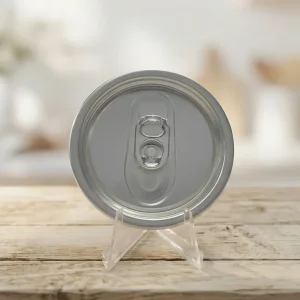
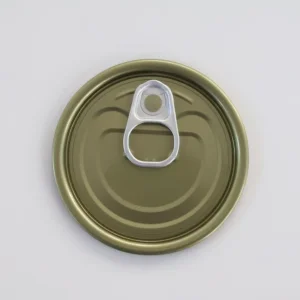
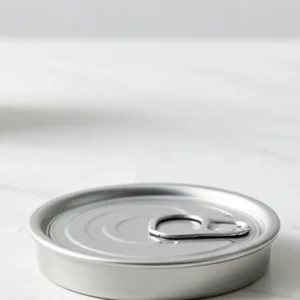
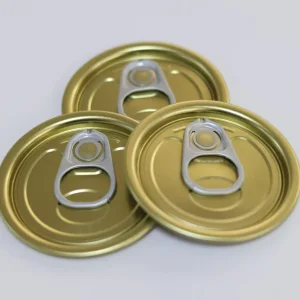
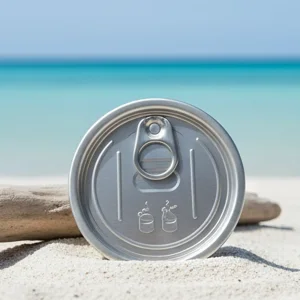
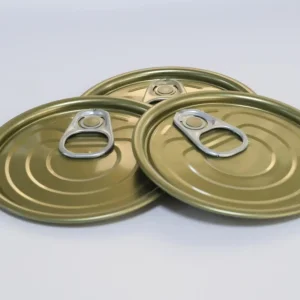
Explore our primary inventory of food-grade aluminum easy-open lids, high-tensile 3104 alloy coils, and hermetic tinplate covers engineered for global high-speed filling lines.
The global packaging sector is undergoing a structural transition driven by stringent Extended Producer Responsibility (EPR) mandates, net-zero carbon targets, and the imperatives of circular material stewardship. Tinplate (electrolytic tin-coated steel) and rigid aluminum formats represent the pinnacle of sustainable industrial design due to their permanent, non-degradable material properties.
Unlike polymers that suffer thermal-mechanical degradation during reprocessing, tinplate steel and 3104/5182 aluminum alloys undergo atomic-level re-smelting without loss of mechanical integrity or barrier purity. Metal packaging provides an impenetrable shield against oxygen, light, and moisture vapor transmission.
With the implementation of the European Union’s Carbon Border Adjustment Mechanism (CBAM) and Packaging and Packaging Waste Regulation (PPWR), enterprise buyers require detailed Life Cycle Assessments (LCA) and validated recycled content ratios to mitigate carbon tariff exposures.
Our wholesale production lines enforce strict dimensional tolerance controls (±0.005mm) across countersink depth, curl thickness, and body wall gauge, ensuring flawless operation on automated seaming lines running at speeds over 1,500 cans per minute.
Mining the operational shift from linear 'take-make-waste' packaging paradigms to closed-loop industrial material ecosystems.
The global metal packaging industry is experiencing a massive inflection point. Historically, rigid packaging decisions were dominated strictly by unit substrate cost. Today, multi-national brand owners, pharmaceutical packagers, and food conglomerates evaluate total life-cycle carbon intensity, regulatory penalty risk, and scrap recovery valuation. Tinplate (Steel coated with a microscopic layer of tin) and high-magnesium aluminum alloys hold an unrivalled operational advantage: magnetic scrap separation and universal metallurgical recycling infrastructure.
Under modernized EPR policies across North America, the European Union, and Asia-Pacific, brand owners are financially liable for the end-of-life collection and sorting efficiency of their post-consumer packaging. Tin cans enjoy a global post-consumer recycling rate exceeding 78% in developed markets, vastly outperforming multi-layer plastics and composite cartons. Recycling post-consumer tinplate consumes 75% less energy than virgin steel production from iron ore, while secondary aluminum smelting requires only 5% of the electrical power consumed by primary bauxite electrolysis.
Corporate Sustainability Reporting Directives (CSRD) mandate that enterprise procurement officers systematically quantify and reduce Scope 3 upstream emissions. Transitioning from multi-layer flexible pouches or virgin plastics to infinitely recyclable tinplate lids, 202# SOT aluminum ends, and 3104-H19 aluminum coils drastically reduces a corporation's net carbon footprint. Furthermore, scrap generated during high-speed stamping operations in our facilities is immediately returned to secondary smelters, achieving near-zero manufacturing material loss.
Navigating food-contact regulatory compliance, hermetic sealing integrity, and multi-tier supply chain audits.
Enterprise packaging buyers face intense scrutiny regarding chemical migration into food and beverage matrices. Our comprehensive product range utilizes strictly certified BPA-NI (Bisphenol-A Non-Intent) internal lacquers, organosol, and modified polyester coatings. Each production lot is subjected to migration extraction testing under US FDA 21 CFR 175.300, EU Regulation 1935/2004, and Chinese GB 4806.10 standards, guaranteeing absolute consumer safety across sensitive applications like infant milk powder and acidic beverages.
A zero-defect double seam is non-negotiable for extended shelf-life security. A micro-fracture or inconsistent compound lining can cause microbial contamination or pressure depressurization. Our manufacturing framework incorporates high-precision optical laser calipers and automated double-seam teardown projectors to measure overlap, seam length, body hook, and cover hook parameters to sub-micron accuracy.
Strategic procurement extends beyond FOB unit pricing. Operational efficiency is dictated by filling line downtime, jam rates on feed tracks, and seaming chuck wear. By engineering consistent metal temper (H19, H48, T2-T4) and uniform curl geometries, our products minimize mechanical friction, enabling high-speed automated lines to run continuously with minimal seamer adjustments.
An engineering benchmark matrix comparing metal substrates, temper designations, lacquer systems, and functional applications for wholesale procurement optimization.
| Substrate Material | Alloy / Temper Code | Thickness Range | Internal Lacquer System | Pop & Pull / Buckle Resistance | Primary Industrial Use Case |
|---|---|---|---|---|---|
| 3104 Aluminum Coil | H19 Deep-Draw | 0.24mm – 0.28mm | Modified Epoxy / Water-Based Epoxy | > 6.2 Bar Buckle Pressure | Beverage Can Body Stock (330ml, 355ml, 500ml) |
| 5182 Aluminum End Stock | H48 Ultra-High Strength | 0.21mm – 0.24mm | BPA-NI Organosol / Acrylic Coating | Pop Value: 18-28N / Pull: 28-42N | 200#, 202#, 206# SOT & RPT Easy-Open Ends |
| Electrolytic Tinplate (ETP) | T2.5 / T3 / DR8 | 0.16mm – 0.23mm | Gold Enamel / Organosol / Polyester | Retort Proof (121°C for 30 min) | 209#, 300#, 307#, 401#, 502# Food & Powder Lids |
| Tin-Free Steel (TFS/ECCS) | T3 / T4 DR Temper | 0.17mm – 0.22mm | Phenolic / Epoxyphenolic Resin | High Chemical Corrosion Resistance | Industrial Cans, Paint Containers, Bottom Ends |
| 8011 Aluminum Coil | Soft 'O' Temper / H14 | 0.18mm – 0.30mm | Lacquered Both Sides (Color Custom) | Ultra-Deep Draw & Pliable Formability | Peelable Foil Membranes, Pharmaceutical Caps |
Combining automated high-speed stamping, real-time AI optical inspection, and Shanghai port maritime logistics velocity.
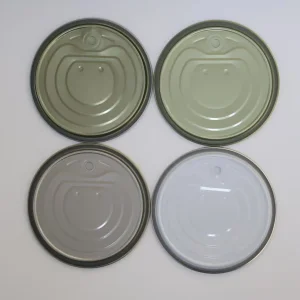
Our manufacturing facilities leverage world-class, ultra-high-speed Stolle and Minster presses capable of stamping thousands of easy-open ends per minute. Synchronized coil feed systems and sub-micron carbide tooling dies ensure zero burr formation, perfect tab orientation, and consistent scoring depth across millions of units.
Every single lid passing through the line is monitored by high-resolution CCD camera vision systems trained on deep-learning neural networks. These sensors identify surface micro-scratches, lacquer voids, foreign particles, or metal deformation in real-time. In parallel, routine Enamel Rater testing ensures current passage remains well below 1.5mA, guaranteeing flawless barrier continuity.
Located in immediate proximity to the Port of Shanghai—the world’s busiest container terminal—our supply chain guarantees rapid container loading, reduced inland freight costs, and flexible vessel booking options. Products are packaged in automated ocean-freight bulk pallets wrapped with heavy-duty stretch hood film and desiccant-infused vapor barrier wraps to prevent marine oxidation.
Customized metal packaging configurations optimized for distinct industrial, food, beverage, and medical sectors.
High-fat infant dairy powders require total exclusion of atmospheric oxygen and humidity to prevent lipid oxidation and nutrient decay. Our 502# and 401# Easy-Open Aluminum Powder Lids are coupled with nitrogen-flushing seaming machines to maintain internal residual oxygen levels below 0.5%, preserving product freshness across multi-year retail shelf cycles.
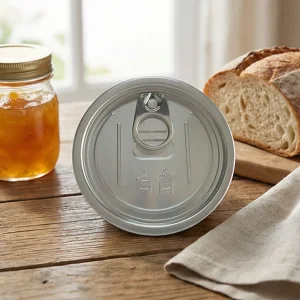
Modern RTD cocktail and craft beer producers demand precise pasteurization resistance and carbonation containment. Our 200# and 202# Stay-On-Tab (SOT) Ends feature reinforced countersink channels capable of handling internal carbonation pressures up to 6.2 Bar while providing an effortless pop-and-pull opening experience for end consumers.
Sensitive pharmaceutical formulations call for zero non-magnetic contamination and anti-static inner surfaces. We supply specialized Non-Magnetic 209FA# and 300# Anti-Static Aluminum Ends manufactured under clean-room conditions, eliminating micro-powder static cling during high-speed volumetric filling operations.
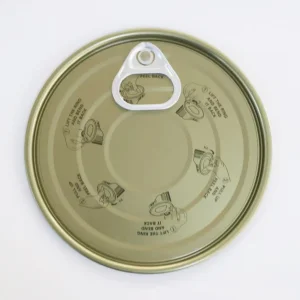
Thermal processing of canned seafood, meats, and vegetables subjects containers to temperatures exceeding 121°C (250°F) under high pressure. Our premium 307# and 211# Food-Grade Tinplate Lids incorporate specialized retort-resistant lacquers that prevent discoloration, blistering, or sealant degradation during industrial autoclave processing.
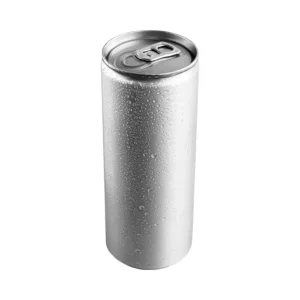
Explore our extended supply line featuring sleek aluminum beverage containers, non-magnetic pharmaceutical closures, and heavy-duty tinplate lids.
Technical responses curated by senior packaging engineers covering metallurgical specifications, food compliance, and supply chain logistics.
Both tinplate steel and rigid aluminum are classified as permanent materials that can be recycled infinitely without structural or chemical degradation. Magnetic separation renders tinplate steel the easiest material to extract from municipal solid waste streams. Aluminum scrap re-smelting requires 95% less energy than primary bauxite refining, offering an exceptionally low product carbon footprint when closed-loop recycling systems are maintained.
Beverage can bodies are drawn from high-formability 3104-H19 aluminum alloy coil. Easy-open end shells are stamped from high-magnesium 5182-H48 aluminum alloy stock to withstand elevated internal carbonation buckle pressures, while opening tabs are forged from 5052 alloy for optimal pull tensile strength.
Yes. All food-contact lacquers, organosol linings, and modified polyester coatings applied to our tinplate and aluminum lids are certified BPA-NI (Bisphenol-A Non-Intent). They comply strictly with US FDA 21 CFR 175.300, EU Regulation 1935/2004, and Chinese GB 4806.10 migration parameters.
Our engineering department provides fully dimensioned CAD drawings matching exact chuck and roll profiles for leading seamer models (e.g., Ferrum, Angelus, Continental Can). Before mass shipment, sample lots are released for double-seam teardown evaluation, verifying cover hook, body hook, seam thickness, and countersink depth alignment under active line speeds.
Metal lids and ends are packed in protective polyethylene sleeves, sealed in fiberboard cartons or fiber drums with desiccant packs, and stacked on export-grade heat-treated wood or plastic pallets. The entire unit load is secured with top corner frames and automated stretch hood film, protecting cargo from sea-freight humidity and vibration deformation.