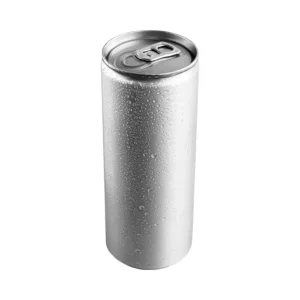
Analyzing the Strategic Structural Transition from Traditional Standard Cans to High-Margin Sleek and Slim Profiles Across Global Beverage Markets
Global search queries reveal a structural migration in B2B procurement patterns. Search intent has evolved beyond generic "aluminum can suppliers" toward micro-specifications: "250ml sleek vs slim canvas diameter," "200# SOT lid compatibility," and "high-axial strain resistance for high-speed filling lines." Procurement teams require quantitative structural data rather than high-level marketing brochures.
This report provides real empirical data from metallurgists, can-body engineers, and filling line technicians. By evaluating alloy compositions (3104-H19 body stock vs 5182-H48 shell stock), internal epoxy/BPA-NI coating matrices, and double-seam dimensional tolerances, we equip brand owners with the precise technical clarity needed for factory audit compliance.
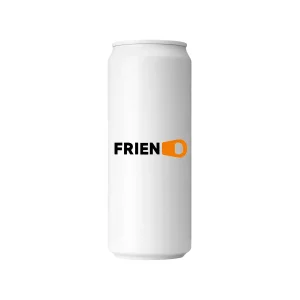
Understanding geometric differences, volumetric efficiency, neck-down necking ratios, and seamer tooling requirements.
| Engineering Metric | Slim Can Format | Sleek Can Format | Standard Can Format |
|---|---|---|---|
| Nominal Body Diameter | Ø 53.0 mm – 53.3 mm | Ø 57.5 mm – 58.4 mm | Ø 66.0 mm |
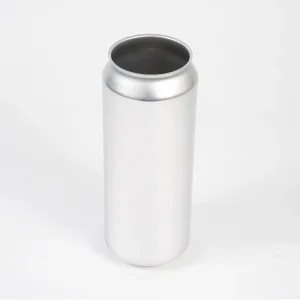
| Available Volumes | 150ml, 180ml, 200ml, 250ml | 250ml, 310ml, 330ml, 355ml (12oz) | 330ml, 355ml, 473ml (16oz), 500ml |
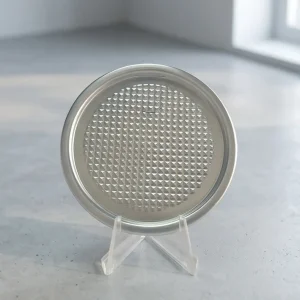
| Standard End (Lid) Compatibility | 200# End (Ø 50mm opening) | 202# End or 200# End | 202# End (Ø 52mm opening) |
| Alloy Temper & Grade | 3104-H19 Fully Hardened Aluminum | 3104-H19 Fully Hardened Aluminum | 3104-H19 Fully Hardened Aluminum |
| Axial Load Strength (Minimum) | ≥ 850 N (Engineered for stacking) | ≥ 950 N (Optimal pallet load) | ≥ 1020 N (High structural column) |
| Internal Dome Pressure (Burst) | ≥ 6.2 Bar (620 kPa) | ≥ 6.2 Bar (620 kPa) | ≥ 6.2 Bar (620 kPa) |
| Primary Target Categories | Energy Shots, Mixers, RTD Espresso, Premium Tonics | Hard Seltzers, Craft Beers, Functional Soda, Sparkling Water | Mass Domestic Lager, Carbonated Soft Drinks (CSD), Cider |
Technical Note for Plant Managers: Converting a filling line from Standard (66mm) to Sleek (58mm) or Slim (53mm) requires modifying container handling equipment, including infeed screws, starwheels, guide rails, elevator pockets, and seamer chucks/rolls. Tooling changeovers can be optimized to under 4 hours when using pre-calibrated quick-change sets.
How regional consumer preferences and regulatory environments influence can profile selection across international markets.
In the US and Canada, the 355ml (12oz) Sleek Can has become the standard for the hard seltzer, kombucha, and functional energy beverage categories. Consumers associate the slender profile with zero-sugar, low-calorie health positioning. Sleek cans deliver higher shelf density per linear foot in modern supermarket displays.
European markets show strong demand for the 250ml Slim Can across high-energy RTD formulations, tonic waters, and premium cocktails. Strict sugar taxation policies across the UK and EU have driven brands toward single-serve, portion-controlled formats without sacrificing premium branding surface area.
In APAC and MEA, 200ml and 250ml Slim cans dominate the ready-to-drink espresso, iced tea, and flavoured milk segments. The high surface-area-to-volume ratio allows for faster chill-down speeds in cold retail display cabinets, enhancing consumer satisfaction at point-of-consumption.
Why Shanghai Friend Metals Technology Co., Ltd. delivers unparalleled manufacturing capabilities and cost-efficiency to international buyers.
Our manufacturing complex incorporates fully automated, ultra-high-speed Draw & Wall Ironing (DWI) cupping and body-forming presses. Equipped with integrated optical vision inspection systems, our lines monitor every can shell for pinholes, neck splits, rim denting, and internal lacquer coverage at speeds over 3,000 units per minute.
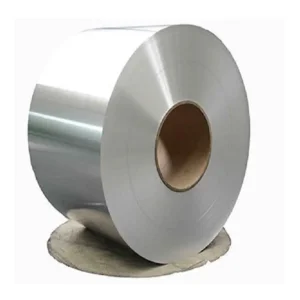
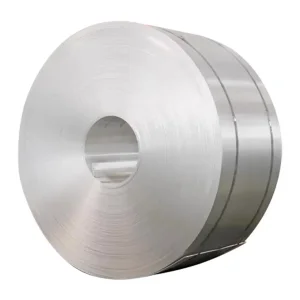
We source ultra-pure 3104-H19 and 5182-H48 coil stock directly from top-tier aluminum smelters. Strict control over chemical composition (Magnesium, Manganese, and Silicon ratios) guarantees uniform wall thickness tolerances (±0.002mm), protecting your filling line against premature can buckle or jam-ups during high-pressure carbonation.
Advancing the boundaries of aluminum packaging through lightweighting, advanced protective coatings, and digital decoration technologies.
Complete migration toward non-intent Bisphenol-A (BPA-NI) and polyolefin-based waterborne internal coatings. Designed specifically for aggressive beverage matrices (pH < 2.8, high chloride, and wine/RTD spirits) to eliminate organoleptic flavor scalping and prevent liner breakdown during extended shelf life (up to 24 months).
Engineering thinner sidewall profiles (down to 0.081mm mid-wall gauge) without sacrificing axial column stability or burst resistance. Concurrently transitioning sleek and slim packaging setups from 202# to 200# end profiles to reduce total aluminum usage by up to 8% per finished unit.
Integration of high-definition industrial inkjet printing lines capable of printing variable artwork, matte/gloss tactile finishes, and serialized QR codes directly onto sleek/slim can bodies at full production speed. Eliminates traditional minimum order quantities (MOQs) for craft seasonal launches.
Key quantitative drivers accelerating the replacement of PET plastic and glass by infinitely recyclable aluminum cans.
Aluminum cans feature a closed-loop recycling cycle where a recycled can returns to retail shelves as a new can in as little as 60 days. Over 75% of all aluminum ever produced remains in productive use today, directly supporting ESG mandates for multinational beverage conglomerates.
Compared to heavy glass bottles, sleek and slim aluminum cans cut tare freight weight by over 40%. Their uniform cylindrical geometry eliminates dead air space on transport pallets, maximizing container cube utilization and reducing freight-related CO₂ emissions per unit delivered.
Unlike PET plastic bottles which suffer from micro-porosity and gas permeability, two-piece metal cans provide a 100% barrier against UV light degradation and oxygen permeation, preserving delicate hop aromatics in craft beer and maintaining carbonation integrity over long distance transit.
Comprehensive Quality Protocol ensuring seamless integration between imported cans/lids and your local contract packing infrastructure.
Every shipment is accompanied by a comprehensive Certificate of Analysis (COA) detailing:
Our field application engineers provide remote and on-site support for seamer setup, line speed optimization, and double-seam teardown calibration. We assist client QA teams in tuning seamer roll profiles (1st and 2nd operation rolls) to guarantee micro-leak-free seals on Angelus, Ferrum, or Pneumatic Scale seamers.
Expert answers to critical operational, metallurgical, and logistics questions raised by international packaging engineers.
The primary operational difference lies in the height-to-width geometry. A 250ml Slim can has a narrower body diameter (Ø53mm) and is taller, requiring a 200# end lid. A 250ml Sleek can has a wider body diameter (Ø58mm) and is shorter, usually paired with a 202# or 200# end. Slim cans require specialized line guides for high-speed conveyor stability due to a higher center of gravity.
Yes. All our internal lacquers (both modified epoxy and 100% BPA-NI acrylic/polyester systems) comply fully with US FDA 21 CFR 175.300, European Regulation EC 1935/2004, EU 10/2011, and China GB 4806.10 standards. Migration test documentation and compliance certificates are issued with every production lot.
Plain (bright) cans are held in ready stock with an MOQ starting at one 40ft high-cube ocean container (approx. 150,000 – 200,000 units depending on size). Custom dry-offset printed cans (up to 8 colors) have a minimum manufacturing run of 100,000 units per graphic design SKU due to high-speed printing plate setup requirements.
Cans are layer-packed on heat-treated ISPM-15 wooden or plastic pallets, separated by heavy-duty kraft slip sheets, secured with top frames, and covered in multi-layer stretch hood film. Desiccant packs are inserted inside each container to absorb moisture and eliminate condensation rust or corrosion during transit.