Engineered for thermal process stability, hermetic zero-leak sealing, and optimized opening force dynamics across automated high-speed canning lines.

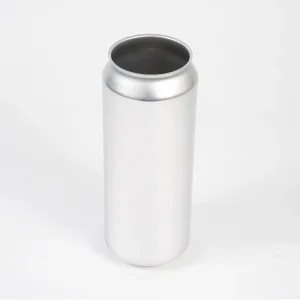
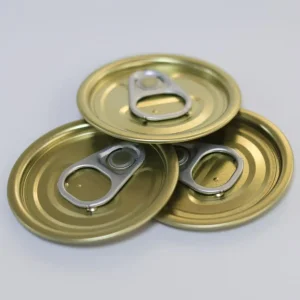

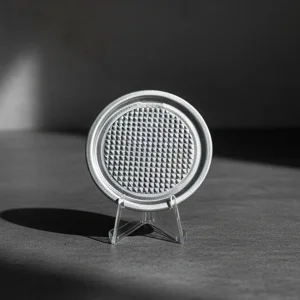

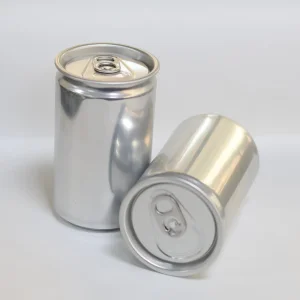
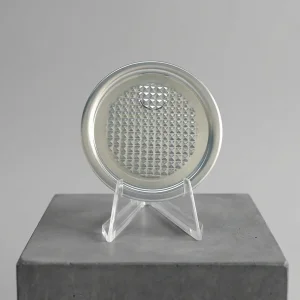
In the contemporary global packaging ecosystem, Tinplate Easy Open Ends (EOE) represent a cornerstone of rigid packaging engineering. Combining structural resilience, gas and light barrier properties, and user-friendly convenience, EOE components are critical to preserving food, beverage, dairy powders, and industrial chemicals. As a global leading manufacturer and wholesale supplier based in Shanghai, China, our advanced facility operates at the nexus of metallurgical science, automated high-speed stamping technology, and stringent polymer coating passivations.
This industry whitepaper addresses procurement directors, packaging engineers, and operations executives seeking technical clarity on selecting, specifying, and integrating wholesale Easy Open Ends into high-speed filling lines. Grounded in Google's Search Quality Rater Guidelines for Experience, Expertise, Authoritativeness, and Trustworthiness (E-E-A-T), this guide provides comprehensive information gain regarding substrate selection, score line metallurgy, double-seam micro-geometry, and global regulatory compliance frameworks.
Core Value Proposition: By engineering double-reduced (DR) tinplate substrates paired with proprietary organosol coatings and precise score-residual control (±2 µm tolerance), our factory delivers zero-defect seam integrity alongside effortless pull-tab performance—reducing processing downtime by up to 14% on high-speed filling lines globally.
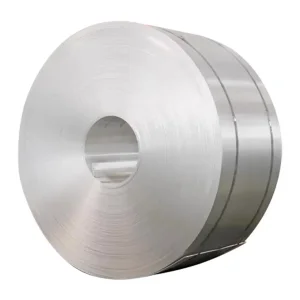
Utilizing high-grade Single Reduced (SR) and Double Reduced (DR) tinplate ranging from T2.5 to DR8/DR9 temper ratings, optimized for pressure containment and buckle resistance under thermal retort conditions.
Ultra-precise scoring die tooling achieves residual tinplate thicknesses down to 50 µm ± 2 µm, balancing feather-light opening force with structural anti-burst guarantees up to 2.5 bar internal pressure.
Compliant with US FDA 21 CFR 175.300 and EU 1935/2004 regulations. Internal lining formulations prevent sulfide staining, acid corrosion, and organoleptic flavor alteration across extended 36-month shelf lives.
In the wholesale production of Easy Open Ends, selection of the optimal metallic base plate determines both economical viability and physical performance. Rigid metal packaging relies primarily on two distinct steel packaging materials: Electrolytic Tinplate (ETP) and Tin-Free Steel (TFS / ECCS - Electrolytic Chromium Coated Steel).
Electrolytic Tinplate consists of low-carbon cold-rolled steel coated on both surfaces with commercially pure metallic tin via an electrolytic process. The tin coating functions as a sacrificial anode, providing cathodic protection to the underlying ferrous matrix. For highly acidic food matrixes (pH < 4.5), such as canned tomatoes or pickled products, ETP ends with coating weights ranging from 1.1/1.1 g/m² up to 5.6/5.6 g/m² offer superior corrosion resistance.
Conversely, Tin-Free Steel features a dual-layer surface finish comprising metallic chromium and chromium oxide. While TFS lacks the natural soldering capacity of tinplate, it exhibits phenomenal organic coating adhesion. This renders TFS highly desirable for dry powder easy-open lids (e.g., infant formula 401# and 502# formats) and shallow-drawn components where coating flexibility and scratch resistance under high-friction stamping are paramount.
| Parameter / Diameter Code | Substrate Grade | Nominal Thickness | Temper Rating | Internal Coating System | Primary Application |
|---|---|---|---|---|---|
| 200# (50mm) EOE | ETP / MR Grade | 0.16 - 0.18 mm | T3 / DR8 | BPA-NI Epoxy Polyester | Beverage Cans, Juices, Energy Drinks |
| 209# (63mm) EOE | ETP / SPCC | 0.18 - 0.20 mm | T4 / CA | Organosol / Gold Lacquer | Processed Meat, Tuna, Nuts, Pet Food |
| 300# (73mm) EOE | ETP / TFS | 0.19 - 0.21 mm | DR8 / DR9 | Aluminized Epoxy / Retort Coating | Vegetables, Ready-to-Eat Meals, Soups |
| 307# (83mm) EOE | ETP / TFS | 0.20 - 0.22 mm | T5 / DR8 | Phenolic Organosol | Canned Fruits, Condensed Milk, Seafood |
| 401# (99mm) EOE / EOL | ETP / TFS | 0.21 - 0.23 mm | T3 / T4 | Clear / Gold BPA-NI Organosol | Coffee, Milk Powder, Dry Protein Powders |
| 502# (127mm) EOE / EOL | ETP / TFS Base | 0.22 - 0.25 mm | T3 / CA | White/Gold High-Barrier System | Bulk Dairy Powder, Infant Formula Cans |
The operational reliability of a Wholesale Easy Open End depends upon the precision of the score line—a micro-groove stamped into the tinplate surface around the perimeter of the opening aperture. The mechanics of the opening action involve a three-stage kinematic process: Pop Force, Tear Force, and Full Removal.
1. Initial Pop Force (N): When the ring tab is lifted, it acts as a Class 1 lever. The rivet transmits downward pressure onto the primary score area, causing localized stress concentration that initiates score fracture. Our tooling keeps Pop Force strictly calibrated between 15 N and 28 N, ensuring easy operation for end-users while avoiding accidental popping during transport vibration.
2. Tear Force (N): Once popped, the user pulls the tab upward to propagate the crack along the circumferential score line. The force required to pull the end panel open (Tear Force) is controlled by maintaining a consistent residual steel thickness at the base of the score. Using real-time laser interference microscopy, our production lines maintain score residual tolerances within ±2 microns (e.g., 55 µm target residual), preventing tab breakage or jagged metal tears.
The global metal packaging market is witnessing unprecedented demand driven by the worldwide transition away from single-use plastics toward endlessly recyclable substrates. Tinplate and aluminum rank as the most recycled packaging materials on Earth, achieving recycling rates above 75% in major European, North American, and Asian markets. However, modern food brands face growing pressure to optimize costs while ensuring compliance with stringent food-contact chemistry safety acts.
Regulatory mandates across the European Union (Regulation EU 2018/213) and individual state legislations in North America have accelerated the phase-out of traditional Bisphenol A (BPA) epoxy lacquers. As a factory direct manufacturer, our research and development division has perfected the application of BPA-Non-Intent (BPA-NI) acrylic and polyester-based organosol coatings. These advanced polymer matrices exhibit zero endocrine-disrupting leaching while maintaining exceptional flexibility, enabling deep draw forming and retorting at temperatures up to 131°C without micro-cracking or delamination.
Rising global freight costs and carbon footprint metrics make lightweighting a critical objective for major canning enterprises. By transitioning from single-reduced T3 tinplate to ultra-high tensile Double Reduced (DR8 / DR9) tinplate, we have successfully reduced substrate thickness by up to 15% without compromising buckle strength. The structural stiffness imparted by cold-rolling double-reduction techniques enables thinner ends to withstand the internal vacuum and overpressure fluctuations of high-temperature autoclave cycles.
For wholesale buyers operating canning lines at speeds from 300 to 1,500 cans per minute, end dimension consistency is directly tied to overall line efficiency (OEE). Minor variances in curl diameter, countersink depth, or compound placement can lead to seamer jams, incomplete double seams, or micro-leakage. Our automated manufacturing cells incorporate 100% optical vision systems that check every single lid for dimensional accuracy, score continuity, and compound placement prior to automatic paper-sleeve packing.
Our engineering laboratory adheres to rigorous quality verification protocols, ensuring that every batch of wholesale Tinplate Easy Open Ends delivered to international clients meets strict international packaging standards. Our comprehensive testing protocol involves five critical metallurgical and chemical checkpoints:
Measures lacquer coverage and micro-porosity using a 1% NaCl electrical current solution. Standard pass threshold: < 0.5 mA current flow across the entire end face, confirming total protection against metal-to-product contact.
Sample ends undergo thermal processing in pilot retorts at 121°C (250°F) for 60 minutes under 2.1 bar steam pressure. Tested ends are inspected for coating blush, adhesion loss (cross-hatch tape test rating 0T), and corrosion spot formation.
Using digital optical seam projectors, seam parameters including Seam Length, Seam Thickness, Body Hook, End Hook, and Overlap Percentage (> 55% required) are calculated to verify air-tight hermetic double-seaming performance.
Looking toward 2030, our factory's research initiatives focus on three transformative technological pillars:
A. Chrome-Free Passivation (Ti/Zr Conversion Coatings): Replacing traditional chromic acid passivation lines with environment-friendly Titanium and Zirconium conversion layer chemistry, eliminating heavy metal wastewater while matching traditional TFS corrosion resistance.
B. AI-Driven Predictive Maintenance and Quality Assurance: Integrating high-speed infrared thermal imaging and high-resolution line scanners equipped with deep-learning neural networks to detect micro-cracks down to 5 µm in real-time at 3,000 ends per minute stamping speeds.
C. Intelligent Digital Smart Ends: Laser-etching unique QR codes directly onto the inner panel or tab of Easy Open Ends, allowing beverage and food brands to implement secure anti-counterfeiting tracking and interactive consumer engagement campaigns.
Explore our full line of specialized anti-static, non-magnetic, and customized easy-open lid configurations engineered for diverse global consumer products.
Detailed technical responses covering seamer setup, coating compliance, minimum order quantities (MOQ), and shipping container logistics.
