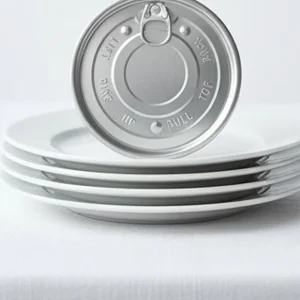
Explore our core 330ml standard aluminum cans and specialized closure components built for high-speed filling lines.
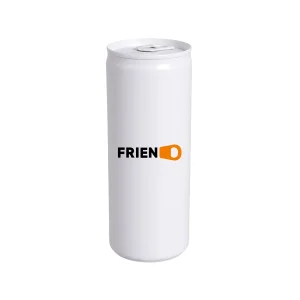
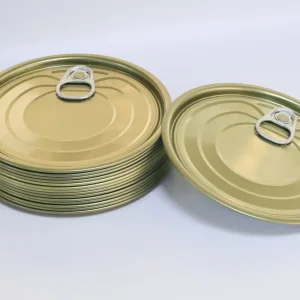
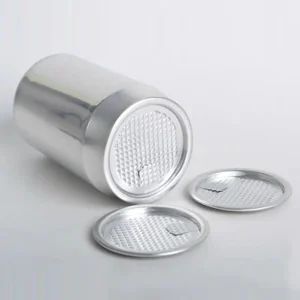

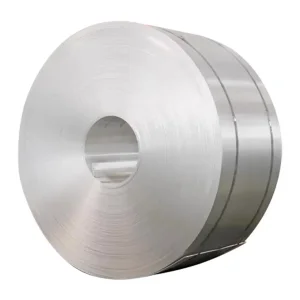
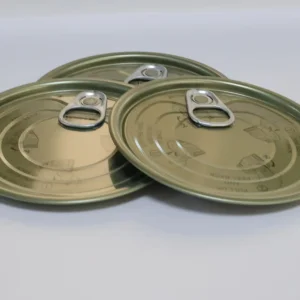
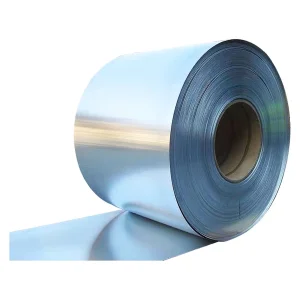
The standard 330ml beverage can represents the universal golden ratio of liquid packaging across Europe, Asia-Pacific, North America, and emerging Latin American markets. As global fast-moving consumer goods (FMCG) conglomerates aggressively accelerate their transition away from single-use polyethylene terephthalate (PET) plastics and heavy glass bottles, the demand for wholesale global leading standard 330ml aluminum cans has reached an unprecedented zenith. Aluminum beverage packaging offers infinitely closed-loop recyclability, rapid chilling thermal conductivity, absolute light shielding, and unparalleled logistical efficiency.
In modern industrial beverage canning, a 330ml can is far more than a simple metal vessel—it is an ultra-precise pressure vessel operating under stringent mechanical tolerances. Modern high-speed filling lines run at speeds ranging from 1,200 to 2,200 cans per minute (cpm). At these speeds, even microscopic deviations in flange neck thickness, axial load crush resistance, or double-seam countersink profiles can result in catastrophic line jams, micro-leaks, or brand-damaging product spoilage.
For procurement directors, packaging engineers, and supply chain managers, partnering with a global leading standard 330ml can manufacturer and supplier requires total transparency into metallurgical specifications, internal coating chemistry, and double-seam structural compatibility. This technical whitepaper unpacks the engineering precision, Chinese manufacturing efficiencies, localized market scenarios, and total cost of ownership (TCO) advantages defining today's global metal packaging market.
Manufacturing a two-piece 330ml aluminum can requires the Drawn and Ironed (DWI) process—one of the most advanced mass-production metalworking procedures in modern manufacturing. The process transforms flat aluminum coil into a thin-walled, high-strength cylinder capable of withstand internal pressures up to 90 psi (6.2 bar).
The structural integrity of a 330ml can relies on distinct aluminum alloys engineered for specific mechanical stresses:
| Parameter / Dimensional Specs | Standard 330ml Can Specs | Sleek 330ml Can Specs | Quality Control Test Method |
|---|---|---|---|
| Nominal Brimful Volume | 350 ml ± 3 ml | 348 ml ± 3 ml | Gravimetric Distilled Water Check |
| Can Body Outer Diameter | 66.0 mm ± 0.2 mm | 58.0 mm ± 0.2 mm | Laser Micrometer Scan |
| Can Overall Height | 115.2 mm ± 0.3 mm | 146.0 mm ± 0.3 mm | Digital Height Gauge |
| Neck Match Diameter | 202 End (52.5 mm) | 200 End (50.0 mm) | Go/No-Go Gauge Calibration |
| Mid-Wall Thickness | 0.095 mm ± 0.005 mm | 0.098 mm ± 0.005 mm | Ultrasonic Wall Thickness Transducer |
| Dome Reversal Pressure | > 6.2 bar (90 psi) | > 6.5 bar (94 psi) | Pneumatic Destruction Tester |
| Internal Lacquer Dry Weight | 80 - 120 mg/m² | 90 - 130 mg/m² | Solvent Extraction / Gravimetric |
The internal barrier spray is the unsung hero of beverage shelf stability. Direct contact between acidic liquids (pH < 3.0 in cola, energy drinks, and craft beer) and raw aluminum causes swift oxidation, pinhole corrosion, metallic off-flavors, and hydrogen gas generation.
Our global production facilities utilize Next-Generation BPA-NI (Bisphenol A Non-Intent) modified acrylic and polyester internal linings. Applied via high-speed rotary airless spray nozzles and cured at precisely controlled thermal baking profiles (190°C - 210°C), these coatings deliver:
Why sourcing 330ml aluminum cans from top-tier Chinese manufacturing hubs provides global brands with an unassailable competitive advantage.
Our primary manufacturing facilities in the Shanghai and Yangtze River Delta industrial belts are situated directly adjacent to world-class aluminum coil rolling mills (supplying 3104 and 8011 coil), chemical lacquer formulators, and deep-water container ports. This eliminates internal raw material transport friction, dropping production lead times by up to 35% compared to Western counterparts.
Our plants operate state-of-the-art Schuler cupping presses, Stolle body makers, Belvac neckers, and Rutherford 8-color decoration presses. Automated high-speed vision camera inspections scan 100% of manufactured cans for flange dents, neck wrinkles, rim defects, and internal particles at 2,000 cpm, ensuring near-zero defect rates at arrival.
Using automated bulk palletization with custom wooden top frames, kraft paper slip sheets, and heat-shrink hooded film, we optimize container loading density. A standard 40ft High Cube (HQ) ocean container accommodates up to 115,000–120,000 bright 330ml cans or over 1.2 million 202# easy-open lids, minimizing ocean freight cost per unit.
The global 330ml aluminum can standard spans multiple product categories, each demanding specialized mechanical configurations and specialized internal coatings:
Challenge: Sustaining high internal pressures (up to 4.2 volumes of CO₂) and preventing dissolved oxygen (DO) pickup that degrades hop aroma and taste.
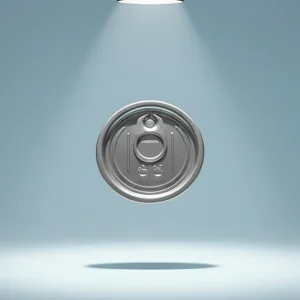
Solution: 330ml Standard cans equipped with reinforced dome geometry and paired with 202 SOT (Stay-On Tab) CDL/B64 lids. Applied with high-crosslink BPA-NI liner ensuring zero metallic leaching and oxygen barrier retention over 18 months.
Challenge: Highly corrosive liquids containing taurine, citric acid, B-vitamins, and artificial sweeteners prone to attacking standard lacquers.
Solution: Heavy-duty internal epoxy-acrylic or PPG Amercoat lacquers applied at elevated film weights (>110 mg/m²), combined with sleek 330ml formats preferred by premium demographic segments.
Challenge: Requiring absolute airtight sealing, nitrogen flush preservation (<0.5% residual O₂), and non-magnetic materials for cleanroom filling.
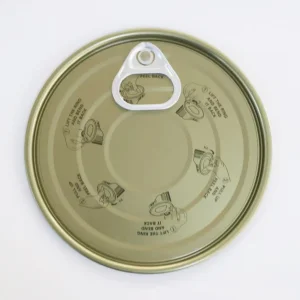
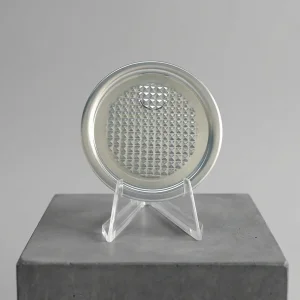
Solution: Specialty non-magnetic aluminum easy-open ends (202#, 300#, 401#, 502#) and tinplate peel-off membrane lids. Engineered with food-grade sealing compounds capable of maintaining negative vacuum pressures during ocean transit.
When sourcing wholesale 330ml aluminum cans on a global scale, procurement leadership must evaluate potential suppliers beyond nominal unit price. Mitigating line downtime and product failure requires rigorous quality assurance protocols and international compliance standards.
To avoid micro-leaks or mechanical seam cut-overs during high-speed seaming, incoming 330ml cans and ends must adhere strictly to international double seam parameters:
Our manufacturing sites operate in strict alignment with international food contact safety and quality management benchmarks:
US Food and Drug Administration compliance for resinous and polymeric coatings in direct food contact.
European Union compliance on materials and articles intended to come into contact with food.
Global Food Safety Initiative (GFSI) recognized management system ensuring batch traceability.
The global metal packaging industry is experiencing rapid technological evolution driven by circular economy mandates, carbon footprint auditing, and consumer preferences for premium tactile experiences.
Through advanced finite element analysis (FEA) computer modeling, our R&D teams are reducing can body wall thickness from 0.098 mm down to 0.088 mm while increasing dome bottom ribbing. This saves hundreds of metric tons of raw aluminum annually per line, directly reducing Scope 3 carbon emissions for our global clients without sacrificing column crush strength.
To support craft beverage brands launching micro-batches or seasonal flavors, traditional photopolymer plate printing is being complemented by high-resolution digital ink-jet printing. Furthermore, tactile matte finishes, spot gloss accents, and temperature-sensitive thermochromic inks are creating hyper-engaging consumer shelf experiences.
Partnering with Tier-1 smelting mills, we are scaling the proportion of post-consumer recycled (PCR) aluminum coil to over 80% in our standard 3104 alloy mix. Recycling aluminum requires only 5% of the energy compared to primary bauxite smelting, drastically shrinking the overall carbon footprint of every 330ml can produced.
Complete your supply chain with our full series of tinplate lids, multi-volume aluminum cans, and raw lacquered coils.
Detailed answers based on real-world B2B buyer inquiries and packaging engineering standards.
Accelerate your global beverage supply chain with high-precision DWI aluminum cans, BPA-NI barrier liners, and competitive factory-direct pricing.