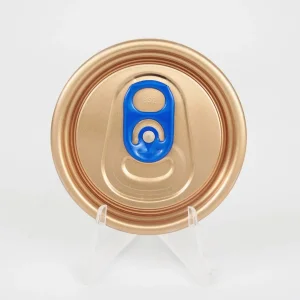
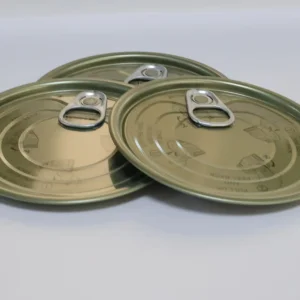
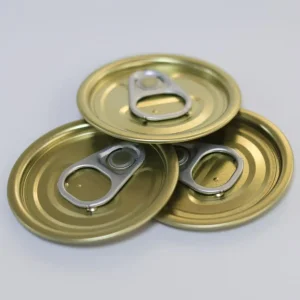
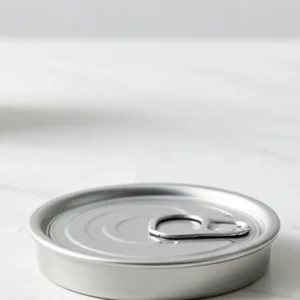
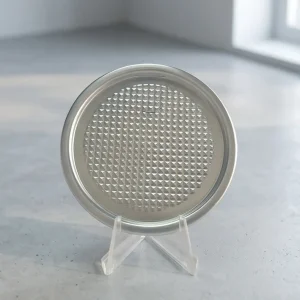
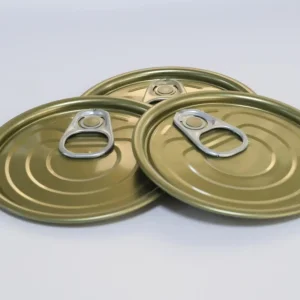
Standard-setting aluminum coils, easy-open ends, and rigid beverage containers designed for high-speed filling lines and extreme shelf-life reliability.
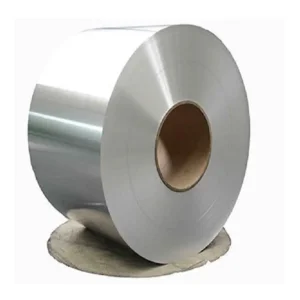
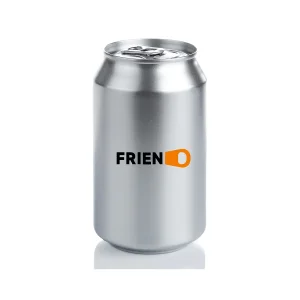
The global metal packaging landscape is undergoing a systemic shift toward hyper-lightweighting, decarbonization, and ultra-high-speed automated filling. Modern B2B procurement strategies mandate deep transparency into material sourcing, alloy consistency, and operational circularity.
Global regulatory mandates—including the European Union’s Carbon Border Adjustment Mechanism (CBAM) and strict Scope 3 emission targets—have positioned aluminum as the premier sustainable substrate. Unlike rigid polymers, container aluminum maintains infinite recyclability without structural degradation. Top-tier manufacturers utilize up to 75%+ recycled scrap (PCR), dramatically slashing embedded carbon metrics while providing full traceability across international supply chains.
The manufacturing paradigm has transitioned from conventional three-piece welded cans to ultra-precise Two-Piece Drawn and Wall Ironed (DWI) aluminum technology. By subjecting 3104-H19 alloy stock to multi-stage ironing dies, wall thicknesses are reduced to micrometer tolerances while retaining necking ductility. This technical evolution maximizes axial column strength while eliminating potential leakage vectors associated with traditional side-seams.
Regulatory shifts across North America and the EU banning Bisphenol-A (BPA) have forced a revolution in protective internal lacquers. Enterprise aluminum container manufacturers now deploy advanced acrylic, polyester, and modified organosol BPA-NI (Non-Intent) coatings. These linings withstand aggressive liquid chemistries—such as craft beers, carbonated soft drinks, energy beverages, and acidic food slurries—preventing metal migration and securing sensory purity.
Aluminum container performance depends directly on alloy chemistry, cold-reduction grain structures, and surface passivations. Below is the definitive metallurgical reference matrix utilized by global procurement teams.
| Alloy Grade | Temper State | Primary Component Application | Tensile Strength (MPa) | Yield Strength (MPa) | Key Metallurgical Property |
|---|---|---|---|---|---|
| 3104 Aluminum | H19 (Extra Hard) | DWI Beverage Can Bodies (250ml - 500ml) | 270 - 310 | 250 - 290 | Exceptional deep-drawability, low earing percentage, high axial column strength. |
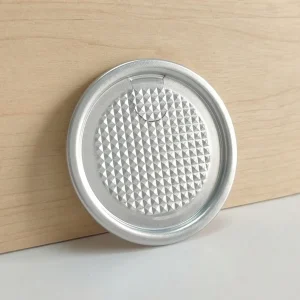
| 5182 Aluminum | H48 / H19 | Easy-Open End (EOE) Shell Stock (202# - 502#) | 360 - 410 | 310 - 360 | High magnesium content, superior internal pressure burst strength & buckle resistance. |
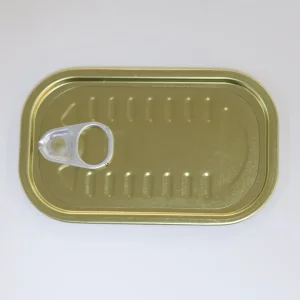
| 5052 Aluminum | H32 / H34 | Pull-Tabs, Rivets, Specialty Closures | 210 - 260 | 130 - 180 | Superior fatigue resistance, high ductility for rivet forming and score lines. |
| 8011 Aluminum | O / H14 / H18 | Pharma Seals, Powder Lids, Tear-Off Membranes | 120 - 185 | 80 - 150 | Ultra-low pinhole density, superior foil laminating compatibility, hermetic barrier. |
During the cupping and ironing phase, non-uniform grain orientation leads to "earing"—uneven height projections around the top rim. Leading container aluminum coil suppliers strictly control hot-rolling and cold-rolling anneals to maintain earing rates below 1.5%. This reduces trim scrap, prevents jam-ups on press lines running at 300+ strokes per minute, and ensures precise flange formation.
Coil surface chemistry dictates coating adhesion. Modern coil lines apply chemical pretreatment (such as zirconium-titanium conversion coatings) followed by electrostatic oiling. This balance provides adequate lubrication during stamping while guaranteeing zero lubricant residue that could compromise internal lacquers or decorative outer ink systems.
Precise addition of Manganese (Mn) and Magnesium (Mg) in 3104 and 5182 alloys creates fine intermetallic dispersions. These micro-structures increase resistance to micro-cracking during scoring—where easy-open lids are weakened to allow smooth opening forces—without sacrificing structural pressure integrity.
Securing global container aluminum supplies requires navigating complex trade environments, stringent ocean-freight packaging standards, and continuous line-matching integration.
Aluminum components are sensitive to moisture oxidation during long ocean voyages. Export standard shipments utilize high-density wooden pallets reinforced with top frames, heavy-duty VCI (Vapor Corrosion Inhibitor) plastic hoods, desiccants inside poly-bags, and anti-static slip-sheets. Easy-open ends are packed into moisture-sealed paper sleeves housed in solid fiberboard cases or bulk drums.
B2B procurement goes far beyond FOB metal pricing. A comprehensive TCO evaluation incorporates tool wear rates, double-seamer maintenance intervals, waste rates per million units, and transit damage safety stock. Sourcing high-consistency aluminum shells reduces seam jam-ups on high-speed lines, saving tens of thousands of dollars in line downtime.
With operational hubs serving over 40 countries across Europe, North America, APAC, and LATAM, enterprise partners benefit from multi-regional stocking programs, vendor-managed inventory (VMI) arrangements, and flexible production scheduling to buffer against shipping channel disruptions and seasonal demand surges.
Every batch of aluminum coil, can body, and easy-open closure undergoes rigorous laboratory inspection to meet international food-contact laws and structural performance metrics.
Internal lacquer integrity is verified using high-sensitivity enamel raters. By introducing an electrolyte solution under precise voltage, micro-amperage (mA) leakage is measured. Readings below 2.0 mA guarantee that no exposed aluminum micro-pores exist to react with beverage formulations.
Critical seam parameters—including Seam Height, Seam Thickness, Countersink Depth, Body Hook, Cover Hook, and Overlap Percentage—are verified with digital optical seam analyzers. This prevents leakers, micro-leakage, and shelf-life degradation during high-temperature thermal processing or retorting.
Products fully satisfy FDA 21 CFR 175.300 (Resinous and Polymeric Coatings), EU Regulation 1935/2004/EC (Materials in Contact with Food), GB 4806.10, and REACH/RoHS toxicological safety guidelines. Comprehensive migration test certificates accompany every export lot.
Anticipating market needs over the next decade through AI-driven quality monitoring, ultra-lightweight end geometry, and specialized pharmaceutical barrier closures.
Implementing high-speed AI optical sorters directly on press lines. Scanning up to 3,000 units per minute, computer vision models detect sub-millimeter score flaws, tab misalignment, and coating scratches in real-time, enforcing zero-defect delivery.
Transitioning legacy 202 SOT ends to advanced CDL (Super-Lightweight) and B64 profiles. These next-gen shell designs reduce aluminum usage per lid by up to 10% while maintaining the exact same pressure retention capability (up to 90 PSI / 6.2 bar buckle strength).
Direct-to-shape digital printing eliminates label waste while enabling small-batch craft beverage customization. Combined with laser-etched QR codes underneath easy-open tabs, brands can drive consumer engagement and supply-chain traceability.
Explore our complete portfolio of standardized aluminum beverage cans, specialty tinplate ends, and pharmaceutical-grade non-magnetic lids.
Addressing essential technical specifications, minimum order quantities, compliance protocols, and double-seamer compatibility.
Can bodies are typically drawn from 3104-H19 aluminum alloy, which offers high tensile strength and deep-drawing ductility for wall ironing. Easy-Open Ends (EOE) utilize 5182-H48 or 5182-H19 alloy due to its superior magnesium content, delivering high score line ductility and internal pressure buckle resistance (exceeding 90 PSI). Pull tabs are stamped from 5052-H32 alloy for high fatigue resistance during pop-and-pull opening.
All internal lacquers are formulated using modern acrylic, modified polyester, or organosol system bases that completely eliminate Bisphenol-A. Formulations are certified compliant under FDA 21 CFR 175.300, EU Regulation 1935/2004, and China GB 4806.10. Batch-specific migration test reports and Enamel Rater electrical conductivity readings (verified under 2.0 mA) are provided with all shipping documentation.
For plain/unprinted bright aluminum cans or standardized stock easy-open ends (such as 202# SOT), trial order quantities start at one 20ft/40ft ocean container. Custom dry-offset printed cans (up to 6–8 colors) typically carry an MOQ of 100,000 to 150,000 units per design to optimize press setup and lacquer washdowns. Standard production lead times run between 15 to 25 business days from final artwork proof approval.
Our engineering team provides full dimensional cross-section schematics for all end profiles (such as 200#, 202#, 206#, 307#, and 502#). We align curl parameters, countersink depths, and flange widths to seamlessly integrate with high-speed Ferrum, Angelus, or Pneumatic Scale seamer tooling, ensuring immediate operational double-seam teardown compliance.
Shipments strictly implement seaworthy packaging standards: cans travel on heavy-duty wooden bulk pallets featuring high-rigidity top frames, kraft paper slip sheets, VCI moisture barrier shrink-wrap, and automated stretch-hooding. Easy-open ends are packed into moisture-resistant paper sleeves within sealed poly-bags and reinforced corrugated outer cartons or fiber drums equipped with industrial desiccants.