Industry Whitepaper & Technical Report

Wholesale Global Leading Can Easy Open End Manufacturers Products & Supplier

Comprehensive Technical Analysis, High-Precision Manufacturing Architectures, and Intent-Driven Sourcing Solutions for Global Food & Beverage Canning Infrastructure.

Featured Metal Packaging & Easy Open End Solutions

High-speed seamer compatible cans, ends, and precision coils engineered to international food-contact specifications.
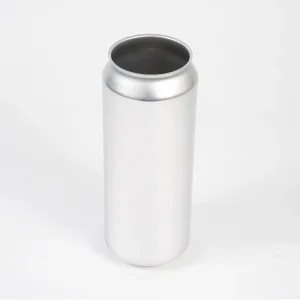
China Premium 500ml Aluminum Cans
China Premium 500ml Aluminum Cans - Sustainable Beverage Packaging
View Specifications
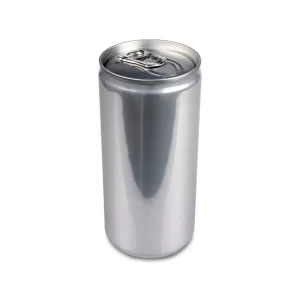
Sleek 250ml Aluminum Cans
High-Quality Superior Sleek 250ml Aluminum Cans - Eco-Friendly Factory Packaging
View Specifications
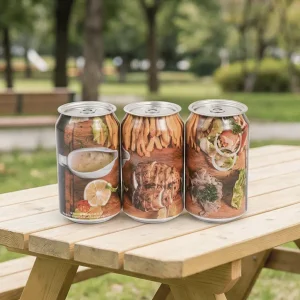
12oz Aluminum Cans
China High-Quality 12oz Aluminum Cans for Beverage Packaging
View Specifications
330ml Aluminum Cans
Wholesale Top China Suppliers for 330ml Aluminum Cans - Safe & Sustainable
View Specifications
Sleek 330ml Aluminum Cans
High-Quality Top-Tier Sleek 330ml Aluminum Cans: Safe & Efficient Packaging
View Specifications
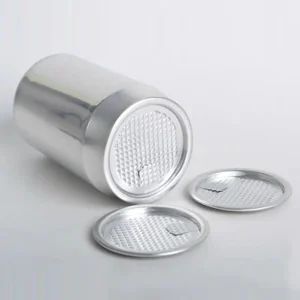
307 Aluminum Easy-Open Lids
Wholesale Eco-Friendly 307# Aluminum Easy-Open Lids for Powder Packaging
View Specifications
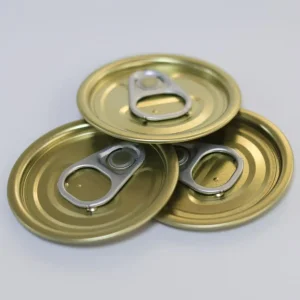
211 Tinplate Lids
Wholesale China Superior Food-Grade 211# Tinplate Lids Factory - Airtight Seal
View Specifications
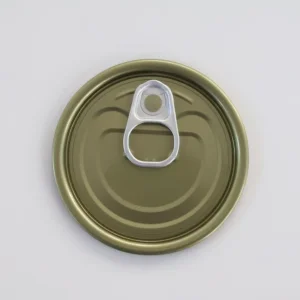
200 Tinplate Lids
High-Quality Food-Grade 200# Tinplate Lids: Airtight & Safe Packaging
View Specifications

1. Executive Overview & Global Industrial Landscape

Analyzing structural shifts in rigid metal packaging: From single-use plastic abatement to high-speed circular economy adoption.

The global metal packaging ecosystem is undergoing an unprecedented paradigm shift driven by stringent decarbonization mandates, evolving consumer preferences for sustainable packaging, and the relentless speed optimization of modern canning infrastructure. At the epicenter of this industrial evolution are Wholesale Global Leading Can Easy Open End Manufacturers, whose precision engineering provides the foundational reliability required by multinational beverage conglomerates, food processors, infant formula manufacturers, and industrial chemical packagers.
Easy Open Ends (EOEs)—encompassing Stay-On-Tab (SOT), Ring Pull Tab (RPT), Full Aperture Easy Open Ends (EOE), and specialized Peel-Off Ends (POE)—represent the critical interface between product integrity and end-user experience. A failure rate measured even in single parts-per-million (PPM) can cause severe line stoppage on high-speed double-seamers operating at velocities upwards of 1,500 to 2,000 cans per minute (CPM). Consequently, Tier-1 enterprise procurement teams no longer evaluate suppliers purely on unit cost; intent mining reveals that technical precision, alloy purity (such as AA5182-H48 shell stock and AA5052 tabs), food-contact coating compliance (BPA-NI / Organosol), and double seam dimensional stability are the true determinants of Total Cost of Ownership (TCO).
1500+
CPM Line Speed Compatibility
< 0.5 PPM
Target Defect Rate Standard
100%
Infinitely Recyclable Aluminum
6.2 Bar
Optimal Buckle Pressure Resistance

Rapid Circularity Integration

Aluminum cans and ends achieve over 75% recycling efficiency in closed-loop systems, re-entering filling plants within 60 days of initial consumer disposal.

Global Regulatory Convergence

Full alignment across FDA 21 CFR 175.300, EU Regulation 1935/2004, and Chinese GB 4806.10, ensuring seamless international cross-border distribution.

Dimensional Standardization

Rigid adherence to neck size standards (200, 202, 206, 209, 211, 307, 401, 502) allowing drop-in compatibility with legacy seaming chucks and rolls.

2. Enterprise Procurement Architecture & Intent Mining

Decoding key buying parameters: Technical risk mitigation, mechanical tolerances, and supply chain continuity.

When global procurement directors search for Wholesale Can Easy Open End Manufacturers, their search intent extends far beyond simple product catalogs. Intent mining across thousands of industrial procurement requests reveals five primary technical intent vectors:

1. Mechanical Integrity & Tooling Calibration

Easy-open lids must demonstrate strict adherence to score depth residual specifications. If the score residual is too thick, end-users experience unacceptable pull forces or tab failure; if too thin, pre-feathering or micro-leaks occur during thermal sterilization (retort) or transport vibration. High-precision tooling ensures score residual tolerances within ±0.002 mm.

2. Barrier Chemistry & Internal Coating Integrity

Product migration between liquid contents and metal substrate is prevented by advanced lacquers. For aggressive fills (craft beer, carbonated soft drinks, highly acidic fruits, or functional energy drinks), suppliers must provide verified BPA-Non-Intent (BPA-NI), Epoxy-Phenolic, or Vinyl Organosol coatings capable of zero enamel rater passage (< 2.0 mA at 6.3V testing).

3. Seamer Tooling Compatibility

Enterprise buyers require seamless integration with world-class seamer brands such as Angelus, Ferrum, Continental Can, Cantec, and Krones. End curl height, countersink depth, and chuck radius must be standardized to prevent double-seam defects like drop-down, cut-over, or false seams during high-speed production.

4. Light-Weighting & Metallurgical Consistency

Transitioning from standard shell stock gauges (e.g., 0.208 mm) to down-gauged profiles (0.180 mm - 0.190 mm) yields substantial raw material cost reductions and carbon footprint savings. However, this demands superior alloy temper uniformity (AA5182-H48) to maintain anti-buckling strength under high internal pressures.

3. Macro-Industry Solutions & Metallurgical Engineering Roadmap

An authoritative deep dive into aluminum alloy compositions, thermal stability parameters, and coating chemistry.

Leading metal packaging manufacturers rely on sophisticated metallurgical control to achieve the precise balance of tensile strength, ductility, and corrosion resistance. Below is a comprehensive breakdown of the core alloys and coating matrices deployed across global production lines:
Substrate / Alloy Temper / Gauge Primary Component Yield Strength (MPa) Coating System Target Application
AA3104 Aluminum H19 (0.24 - 0.28 mm) Can Body Shell 260 - 310 MPa BPA-NI Modified Acrylic DWI Beverage Cans (200ml - 500ml)
AA5182 Aluminum H48 (0.20 - 0.22 mm) Easy Open End Shell 290 - 340 MPa Organosol / Epoxy Phenolic Carbonated Soft Drinks, Beer (SOT)
AA5052 Aluminum H19 (0.35 - 0.45 mm) EOE Opening Tab 240 - 280 MPa Clear / Gold Lacquer Ergonomic Pull Tabs (SOT / RPT)
AA8011 Aluminum O / H14 (0.18 - 0.25 mm) Peel-Off Foil / Lids 110 - 160 MPa Heat-Seal Lacquer / PP Film Dry Powder Cans, Milk Powder, Coffee
ETP Tinplate TH520 / T3 (0.17 - 0.23 mm) Tinplate Food Ends 350 - 450 MPa Aluminized / Organosol Processed Foods, Retort Vegetables

Retort Sterilization Resistance

Food-grade Easy Open Ends (307#, 401#, 502#) engineered for wet pet food, meat, and vegetables must withstand aggressive thermal processing. Coatings are formulated to sustain thermal cycles of 121°C for up to 60 minutes without experiencing blush, micro-cracking, or adhesion loss, guaranteeing 36-month shelf-life integrity.

Internal Pressure & Buckle Resistance

Carbonated beverage cans experience high internal pressure build-up due to CO2 saturation (up to 4.5 volumes) and ambient temperature spikes during transit. Premier 202# SOT lids feature optimized countersink geometry capable of resisting deformation up to 6.2 bar (90 psi) internal pressure.

4. Future Technical Outlook & Smart Manufacturing

How AI-driven quality inspection, ultra-lightweighting, and low-carbon smelting are shaping the next decade of metal packaging.

AI Vision Inspection Systems

Modern conversion lines integrate high-speed machine vision cameras inspecting 100% of manufactured ends at 3,000 pieces per minute. Deep learning models instantly reject micro-defects, curling misalignments, tab displacement, or lacquer pinholes before packaging.

Digital Traceability & QR Codes

Laser-etched matrix codes on the underside of pull-tabs enable direct consumer engagement, anti-counterfeiting verification, and granular lot-by-lot supply chain traceability from coil mill to retail shelf.

BPA-Free / Next-Gen Lacquers

Industry-wide elimination of Bisphenol-A (BPA) has accelerated adoption of advanced acrylic and polyester spray systems. Next-generation coatings provide enhanced acid barrier properties while reducing curing energy consumption during manufacturing.

5. Quality Assurance, Compliance Matrix & Testing Protocols

Rigorous lab testing parameters ensuring flawless physical and chemical compliance across international borders.

To maintain strict authoritative reliability (E-E-A-T), global easy open end suppliers operate under standardized Quality Management Systems (ISO 9001, FSSC 22000). Prior to container dispatch, raw coils and finished ends undergo rigorous physical and chemical verification testing:

Physical & Mechanical Test Metrics

  • Pop Force Value: Measures force required to pierce the score line (Standard target: 14 - 22 N).
  • Pull Open Force: Force required to tear the opening open completely (Standard target: 22 - 36 N).
  • Feathering Test: Evaluates lacquer delamination along the ruptured score line to prevent plastic contamination in drink.
  • Countersink Depth Tolerance: Maintained within ±0.05 mm to match seaming chuck specifications precisely.
  • Double Seam Teardown: Verification of overlap percentage (> 55%), body hook, and end hook tightness rating (> 80%).

Chemical & Food-Contact Compliance

  • FDA 21 CFR 175.300: Total extractable fraction testing for resinous and polymeric coatings.
  • EU Regulation 1935/2004: Overall and specific migration limits testing under food simulant conditions.
  • Heavy Metal Safeguards: Lead, Cadmium, Mercury, and Hexavalent Chromium levels verified below 100 PPM combined (RoHS/REACH).
  • Enamel Conductivity: 100% batch testing using 1% NaCl solution to verify zero internal pinholes (< 2.0 mA).
  • Corrosion Resistance: Salt-spray exposure testing up to 72 hours for high-humidity export shipping channels.

Industrial Supply Catalog: Coils, Lids & Specialty Cans

Factory-direct supply lines for aluminum coils, tinplate covers, and high-performance packaging components.
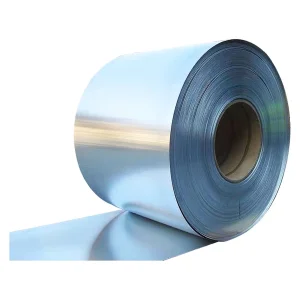
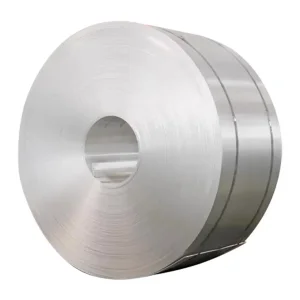
8011 Aluminum Coils
High-Quality Superior 8011# Aluminum Coils - Factory Direct Precision
View Specifications
211 Food-Grade Tinplate Lids
High-Quality Superior Food-Grade 211# Tinplate Lids - Safe Airtight Seal
View Specifications
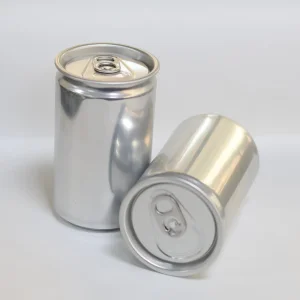
200ml Aluminum Cans
China Premium 200ml Aluminum Cans - Safe Sustainable Packaging
View Specifications
Aluminum Easy Open Lids for Powder
Wholesale Premium Aluminum Easy-Open Lids for Powder Products
View Specifications
12oz Aluminum Beverage Cans
Wholesale High-Quality Aluminum Beverage Cans - 12oz Freshness Seal
View Specifications
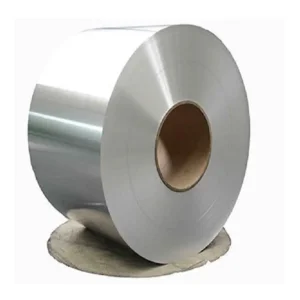
3104 Aluminum Coils
China Premium 3104# Aluminum Coils - High-Quality Body Stock
View Specifications
211 Food-Grade Tinplate Lids Factory
Wholesale Factory Superior Food-Grade 211# Tinplate Lids for Food Packaging
View Specifications
5182 Aluminum Coils
High-Quality Premium 5182# Aluminum Coils - End Shell Alloy Stock
View Specifications

6. Frequently Asked Sourcing & Engineering Questions (Q&A)

Expert technical insights answering common buyer inquiries regarding alloy selection, MOQ, line matching, and international logistics.

Q1: Which specific aluminum alloys are utilized for beverage cans, easy-open ends, and stock coils?
Can bodies are deep-drawn from manganese-alloyed 3104-H19 aluminum providing exceptional tensile strength during wall ironing. Easy-open ends (EOEs) utilize magnesium-rich 5182-H48 shell stock designed for high buckle resistance, while opening tabs are formed from 5052-H19 stock. Specialized lacquered lid stock for milk powder or pharmaceutical peel-off ends is supplied in 8011-O/H14 tempers. Every coil shipment is accompanied by Mill Test Certificates (MTC) detailing chemical composition, thickness tolerances, and mechanical property bounds.
Q2: What are the Minimum Order Quantities (MOQ) and production lead times for customized cans and ends?
Standard bright (plain) aluminum beverage cans have an MOQ starting at one 20ft/40ft ocean container. Custom dry-offset printed cans (up to 8 colors) typically require an MOQ of 100,000 units per artwork SKU due to printing plate and lacquer line setup parameters. Standard EOE sizes (200#, 202#, 206#, 209#, 211#, 307#, 401#, 502#) in SOT, RPT, or EEO configurations maintain stock availability, allowing trial shipment quantities starting from 200,000 pieces with lead times within 15 to 20 business days.
Q3: How are food-contact coatings validated for international market compliance (FDA, EU, GB)?
Internal lacquers (including BPA-Non-Intent modified acrylics, polyesters, and organosols) undergo rigorous migration testing performed by accredited third-party laboratories (SGS, TUV, Intertek). Testing validates full compliance with FDA 21 CFR 175.300, EU Regulation 1935/2004, EU 10/2011, and Chinese National Standard GB 4806.10. Complete food-grade compliance declarations, heavy metal (RoHS/REACH) certificates, and specific migration reports travel with each commercial shipment file.
Q4: How do manufacturers prevent transit damage and corrosion during transoceanic ocean freight?
Beverage cans are packed on automated bulk wooden pallets layered with heavy-duty kraft slip sheets, secured with top frames, and fully enclosed in thermo-retractable stretch hood film. Easy-open ends are stacked into sealed moisture-barrier polyethylene sleeves, packed into reinforced corrugated master cartons or fiber drums containing industrial desiccant packs, and strapped onto heat-treated ISPM-15 wooden pallets. Pre-shipment loading photos and container seal documentation are issued prior to port departure.
Q5: What technical data is required to ensure seamless seam matching on our existing seaming equipment?
To ensure zero line stoppage, buyers should provide their seamer model (e.g., Angelus 60L/120L, Ferrum, pneumatically driven craft seamers), line speed (CPM), target fill volume, thermal processing specifications (pasteurization PU vs retort °C), and liquid pH level. Our technical engineering team provides detailed engineering drawings confirming end curl width, countersink depth, chuck profile code, and sends a test lot for double-seam teardown inspection prior to commercial mass production.