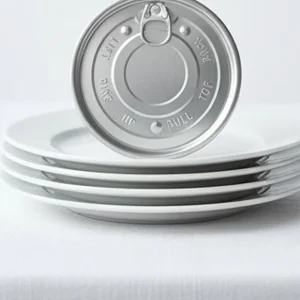
Explore our top-tier precision-engineered tinplate lids, aluminum easy-open ends, and specialized aluminum beverage and storage cans. Certified for global export, high-pressure sealing integrity, and complete food-contact compliance.
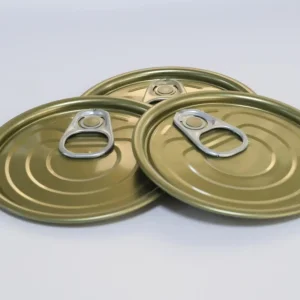
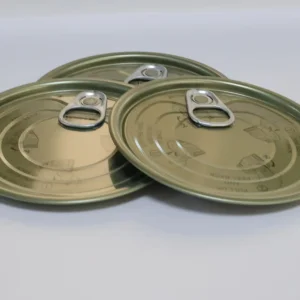
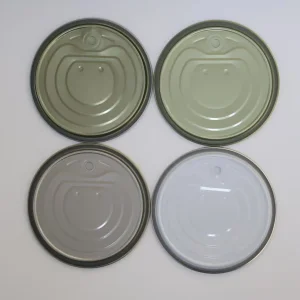
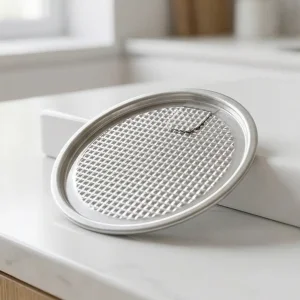
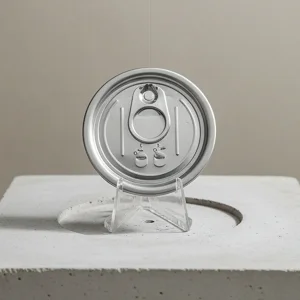
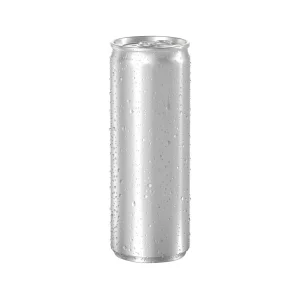
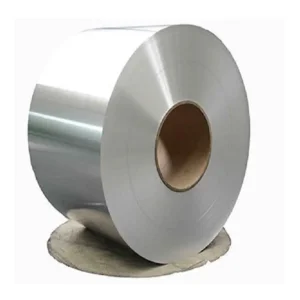
The global rigid packaging market is undergoing a seismic structural transition toward metal containment. Accelerated by strict single-use plastic restrictions, extended producer responsibility (EPR) legislation, and elevated consumer demand for premium freshness, wholesale global leading aluminum storage cans have emerged as the gold standard across beverage, food, infant nutrition, and chemical industries.
Valued at over USD 45 Billion globally, the aluminum packaging market is expanding at a steady CAGR of 5.8%. Growth is heavily anchored by the rapid surge in ready-to-drink (RTD) craft beverages, specialty powders, and functional food products demanding absolute barrier protection.
Unlike PET or glass, aluminum yields a 100% impenetrable physical barrier against oxygen ($O_2$), moisture vapor ($H_2O$), ultraviolet (UV) radiation, and environmental contaminants, dramatically lengthening product shelf-life without chemical preservatives.
Nearly 75% of all aluminum ever produced remains in active circulation today. Recycling aluminum consumes 95% less energy than primary extraction from bauxite, matching global corporate ESG mandates and circular economy initiatives.
Precision aluminum storage packaging relies on rigorous metallurgical control. Formulations must balance deep-drawing ductility, structural buckle strength, tear-tab scoreline integrity, and internal chemical inertness. Below is the technical breakdown of primary alloys utilized in high-performance aluminum packaging systems.
| Alloy Grade & Temper | Primary Component Use | Tensile Strength (MPa) | Yield Strength (MPa) | Core Metallurgical Benefit |
|---|---|---|---|---|
| AA3104-H19 | DWI Can Bodies (330ml, 355ml, 500ml) | 270 - 310 | 250 - 290 | Superior deep-drawing workability, uniform wall ironing, and resistance to axial crush loads during high-speed vertical stacking. |
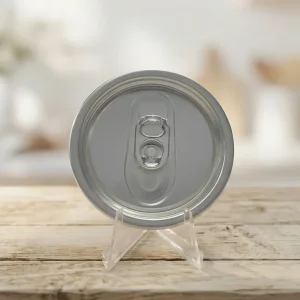
| AA5182-H48 | Easy-Open Ends / Shell Stock (200#, 202#) | 360 - 410 | 310 - 360 | High magnesium content provides extreme pressure buckle resistance and clean scoreline popping without feathering. |
| AA8011-H14/H16 | Lid Stock, Peelable Foils, Powder Closures | 140 - 180 | 110 - 150 | High ductility and surface smoothness, providing an ideal substrate for organic lacquering and heat-sealable foil laminates. |
| AA5052-H32 | Pull-Tabs & Industrial Structural Rings | 210 - 260 | 160 - 210 | Excellent fatigue resistance and salt-spray corrosion protection, ensuring tab integrity upon repeated leverage stress. |
To eliminate organic compound migration, advanced aluminum storage containers utilize modified Epoxy-Phenolic, Polyorganosol, or Next-Gen Acrylic BPA-NI (Non-Intent) lacquer systems. Applied via automated spray lances to a dry film weight of 3.5–8.0 g/m², these coatings ensure zero flavor alteration and resist aggressive acidic beverages (pH < 3.0) or saline food pastes.
Airtight sealing reliability depends on exact double-seam geometry. Seam overlap must consistently exceed 1.10 mm with countersink depths held within ±0.05 mm tolerances. This mechanical interlock withstands internal carbonation pressures up to 90 PSI (6.2 bar) and prevents microbial ingress during thermal retort processing.
Factory quality protocols enforce strict Enamel Rater inspection (< 2.0 mA micro-current conductivity). Every production batch undergoes electrolyte bath testing to verify zero micro-pinholes in the coating matrix, guaranteeing long-term shelf stability up to 24 months.
Global procurement officers choose Chinese aluminum packaging manufacturers not merely for unit cost optimization, but for unrivaled production velocity, complete supply chain integration, and extreme metallurgical quality consistency.
Modern Chinese manufacturing facilities operate high-speed multi-die stamping lines (e.g., Minster, Stolle) capable of outputting up to 3,000 easy-open ends per minute. High automation minimizes human handling, eliminates surface defects, and drops unit manufacturing overhead drastically.
From aluminum ingot smelting and continuous casting to coil lacquering, high-definition dry-offset printing, and end stamping, China’s clustered industrial ecosystem keeps raw material transportation lead times to mere hours rather than weeks.
Every line integrates high-resolution optical cameras and laser vision sorters. Automated inspection screens 100% of finished cans and lids for rim deformation, curl defects, coating scratches, and compound gasket void anomalies before palletizing.
Different market sectors demand customized structural designs, specific alloy tempers, and specialized liner formulas. Aluminum storage packaging provides optimized solutions across diverse commercial environments.
Formats: 250ml Slim, 330ml Sleek, 355ml & 500ml Standard Cans paired with 200# or 202# Stay-On-Tab (SOT) / Red-Pull-Tab (RPT) ends.
Requirements: High internal pressure rating (> 6.2 bar), pasteurization stability, and UV shield for hops protection.
Formats: 300#, 307#, 401#, and 502# Easy-Open Ends, paired with transparent-top lids and scoop holders.
Requirements: Nitrogen-flush sealing capability to preserve residual $O_2 < 0.5\%$, preventing lipid oxidation and vitamin degradation.
Formats: 209# Freeze-Resistant Aluminum Lids & Deep-Drawn Cans.
Requirements: Specially formulated elastomer compound gaskets that remain flexible at temperatures down to -40°C without micro-cracking or seal failure.
Formats: Odor-proof easy-open aluminum closures and tinplate lids (315#, 603#).
Requirements: High chemical resistance coating systems preventing volatile aromatic compounds from permeating or corroding the container rim.
When contracting global aluminum container suppliers, enterprise buyers must evaluate manufacturers based on strict metallurgical, mechanical, regulatory, and logistics standards to prevent line downtime or cargo degradation.
Always verify supplier end dimensions against your high-speed seamer chuck and roll profiles (e.g., Ferrum, Angelus, Continental). Request detailed mechanical engineering prints covering Countersink Depth ($A$), Curl Height ($B$), and Shell Wall Angle ($\theta$) prior to tooling qualification.
Ensure the supplier provides third-party laboratory test reports (SGS, TUV, Intertek) confirming full compliance with US FDA 21 CFR 175.300, EU Regulation 1935/2004, and China GB 4806.10 for heavy metals, overall migration, and BPA-NI verification.
Ocean freight causes thermal cycling and condensation. Mandate vacuum-sealed polyethylene inner sleeves, high-absorption desiccant bags, wooden top-frame bracing, and heavy plastic stretch-hooding on standard heat-treated ISPM-15 wooden pallets.
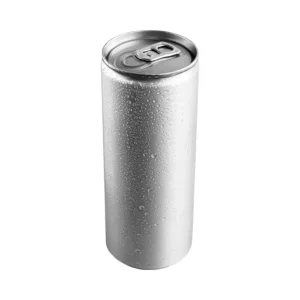
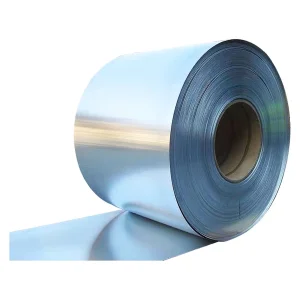
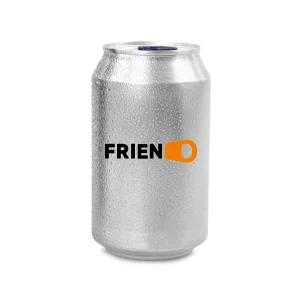
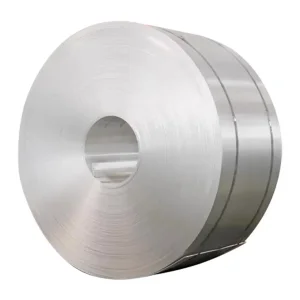
Select from our specialized line of odor-proof easy-open ends, transparent-top powder lids, raw lacquered coils (5182/8011/3104), and high-volume aluminum beverage containers.
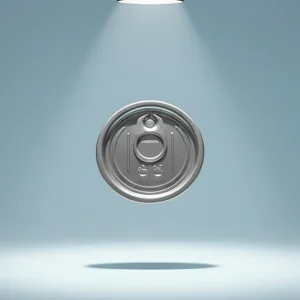
The metal packaging landscape is accelerating toward down-gauging, digital printing integration, and zero-carbon aluminum manufacturing pathways.
By leveraging advanced AA3104-H19 temper modifications and finite element analysis (FEA) computer simulations, container body wall thicknesses are shrinking from 0.095mm down to 0.082mm. This saves tons of metal annually per line while retaining full vertical column crush strength.
Moving beyond conventional 6-to-8 color dry-offset printing, digital inkjet direct-to-can printing enables ultra-short runs, variable QR codes for consumer engagement, rapid pre-press sample turnaround (within 48 hours), and eliminated plate setup fees.
Major Chinese aluminum coil mills are transitioning toward hydropower and solar-fueled smelters utilizing inert anode smelting. This drops the embodied carbon footprint per aluminum storage can by up to 70%, assisting global brands in reaching Scope 3 net-zero emission goals.
In-depth technical answers addressing common engineering, procurement, metallurgical, and regulatory questions from global enterprise buyers.
