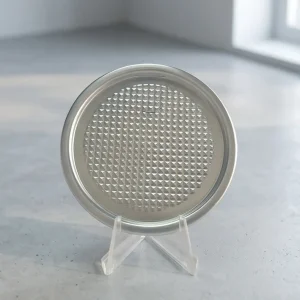
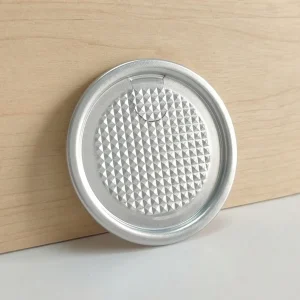
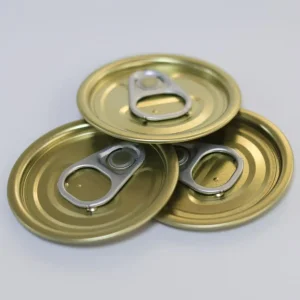
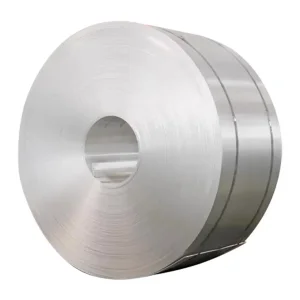
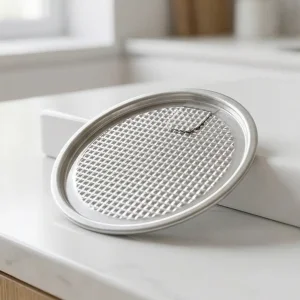
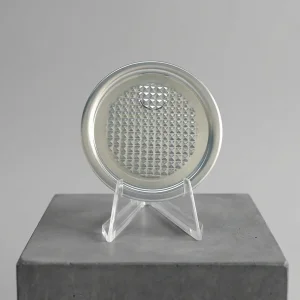
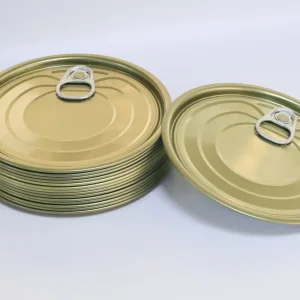
Direct factory supply of precision-engineered aluminum can bodies, easy-open ends, tinplate closures, and lid stock coils engineered for zero-downtime automated fill lines.
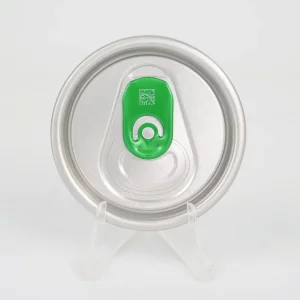
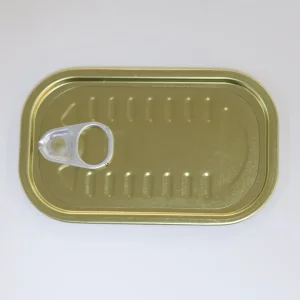
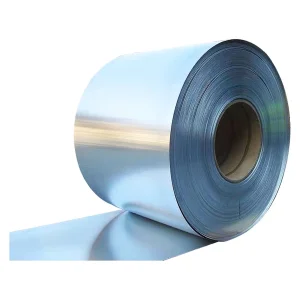
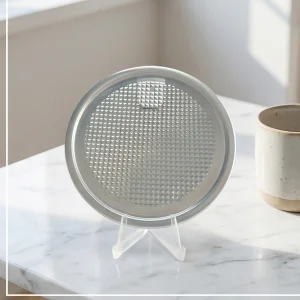
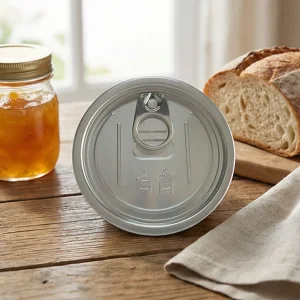
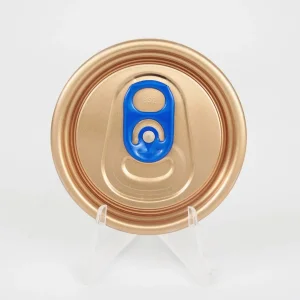
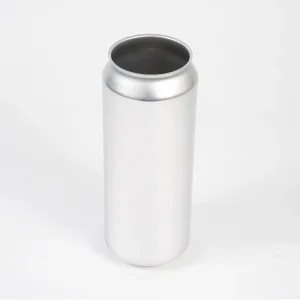
The global rigid metal packaging market is undergoing a seismic structural shift toward high-speed, infinitely recyclable aluminum can formats. Driven by rapid expansion in craft beer, ready-to-drink (RTD) canned cocktails, hard seltzers, functional energy drinks, and premium cold-brew coffee, the 355ml (12 US fl oz) standard can remains the unchallenged baseline volume across global distribution networks.
The 355ml standard body format (202 neck design, 66mm body outer diameter) is engineered to interface directly with existing cold-fill and flash-pasteurization canning lines across North America, Europe, and Latin America. As consumer preference migrates away from single-use PET bottles and heavy glass containers due to environmental regulations and freight weight tariffs, aluminum cans deliver unprecedented supply chain logistics density.
By leveraging advanced DWI (Drawn and Wall Ironed) manufacturing technology, modern 355ml aluminum cans achieve optimized wall-thinning dynamics without sacrificing vertical column strength or internal pressure integrity under carbonation loads up to 4.2 volumes of CO2.
Traditional manufacturing often faces trade-offs between metal gauge reduction and structural integrity. Our advanced 3104-H19 alloy formulation incorporates a precise manganese-magnesium matrix that enhances work hardening during the wall ironing process. This allows a reduction in nominal wall thickness to 0.095mm while maintaining axial crush strength exceeding 1.2 kN.
This metallurgical advancement translates to significant carbon emission reductions during international transport, directly supporting Scope 3 decarbonization metrics for multinational beverage enterprises.
Enterprise procurement directors must balance material unit price against line efficiency, freight volumetric density, and double-seam defect rates. Sourcing wholesale 355ml aluminum cans directly from tier-1 manufacturers eliminates multi-tier broker markups while securing strict dimensional tolerances.
Export logistics represent a significant component of landed TCO. By utilizing standardized corrugated slip sheets, high-density bulk wood pallets, and automated stretch-hooding, a single 40ft High Cube container accommodates up to 108,000 un-necked 355ml can bodies or over 550,000 202 SOT Easy-Open Ends.
This maximized volumetric load factor drastically reduces per-unit ocean freight charges across transpacific and transatlantic shipping routes.
Modern beverage bottling operations running at 1,500 to 2,400 cans per minute cannot tolerate component stockouts. Direct manufacturing contracts provide dedicated safety stock buffer programs in regional port warehouses.
Coupled with LME (London Metal Exchange) aluminum price hedging mechanisms, enterprise buyers secure predictable fixed unit costs while maintaining flexible rolling release schedules.
Brand impact on retail shelves demands high-fidelity artwork reproduction. Premium 355ml aluminum cans are processed through high-speed 8-color dry-offset decoration presses capable of executing complex color gradients, tactile matte varnishes, metallic spot effects, and thermochromic temperature-sensitive inks.
Integrated laser pinhole inspection systems ensure 100% ink coverage without pinhole voids or registration misalignments.
Understanding the multi-stage engineering required to transform prime aluminum alloy coil into precision-engineered 355ml beverage containers capable of retaining high pressure under extreme environmental stress.
High-speed cupping presses punch precision discs from 3104-H19 aluminum coil (thickness 0.260mm - 0.280mm) and draw them into shallow cups with controlled wall thickness tolerance.
The cup is forced through a series of tungsten carbide ironing rings. The body wall is stretched and thinned to 0.095mm while the thick bottom dome is formed to resist internal pressure.
Extrusion lubricants are stripped via multi-stage acid washing, deionized water rinses, and zirconium conversion coatings to prepare the surface for food-grade lacquer adhesion.
The open top end undergoes 14-stage progressive spin necking to reduce the diameter from 66mm to 52mm (202 neck specification), followed by outer flange creation for seaming.
| Parameter Standard | 355ml Standard Can | 355ml Sleek Can | 202 SOT Easy-Open End | Quality Test Standard |
|---|---|---|---|---|
| Nominal Volume | 355 ml (12 US fl oz) | 355 ml (12 US fl oz) | N/A (Lid Closure) | Brimful Water Weight Volumetry |
| Base Alloy Grade | Aluminum 3104-H19 | Aluminum 3104-H19 | Aluminum 5182-H48 | ASTM B209 Metallurgical Cert |
| Body Diameter | 66.0 mm ± 0.2mm | 58.0 mm ± 0.2mm | 52.3 mm (202 Shell) | Optical Laser Micrometer |
| Total Can Height | 122.0 mm ± 0.3mm | 148.0 mm ± 0.3mm | N/A | Digital Height Gauge Standard |
| Axial Load Strength | > 1.20 kN (120 kgf) | > 1.10 kN (110 kgf) | N/A | Instron Top-Load Tester |
| Internal Pressure Limit | > 6.2 Bar (90 psi) | > 6.2 Bar (90 psi) | > 6.5 Bar (95 psi) | Pneumatic Buckle Pressure Test |
| Internal Lacquer Type | BPA-NI Acrylic / Organosol | BPA-NI Acrylic / Organosol | BPA-NI Epoxy-Free Liner | FDA 21 CFR 175.300 / EU 1935/2004 |
| Enamel Rater Porosity | < 3.0 mA (Avg < 1.2 mA) | < 3.0 mA (Avg < 1.2 mA) | < 0.5 mA Coverage | 1% NaCl Current Electrolysis Test |
The internal barrier coating is the critical component safeguarding liquid flavor profiles from metal ion migration while protecting the aluminum wall from chemical attack by high-acidity beverages.
Global food safety agencies—including the US FDA, European Food Safety Authority (EFSA), and China’s SAMR—have established strict migration thresholds for endocrine-disrupting compounds. Modern 355ml aluminum cans produced by tier-1 manufacturers utilize next-generation BPA-NI (Bisphenol-A Non-Intent) acrylic and polyester internal lacquers.
These water-borne polymeric matrix lacquers are spray-applied inside the can body at high rotational speeds, forming a cross-linked barrier film with a film weight of 4.5 to 6.5 g/m². This guarantees compliance with zero-migration standards even under high-temperature pasteurization regimes.
Beverages containing aggressive chemical profiles—such as low-pH citrus sodas (pH < 2.8), heavily hopped India Pale Ales (IPAs), cold-brew coffee with organic acids, and spirit-based canned cocktails—can cause pitting corrosion or flavor scalping if internal coverage is compromised.
Our advanced dual-pass internal spray system ensures 100% continuous coverage across the critical bottom dome perimeter (chime area). Electrolytic conductivity tests (Enamel Rater < 1.5 mA) confirm complete pinhole-free isolation, preserving original taste profiles over extended 12-to-24-month shelf life windows.
Operational success on high-speed filling lines requires perfect harmony between the container flange and the seamer chuck roll tooling. Every production lot undergoes rigorous statistical process control (SPC).
Preventing micro-leaks and spoilage requires strict double-seam geometry. Our packaging engineers provide detailed seaming specification sheets detailing Countersink Depth (1.90mm - 2.10mm), Seam Thickness (1.10mm - 1.20mm), and Overlap Percentage (> 85%).
We supply sample calibration lots for optical seam teardown inspection on customer seamers including Angelus, Ferrum, KHS, and Krones platforms prior to mass production runs.
Every 355ml can passes through integrated high-resolution camera vision systems and high-voltage light box detectors. Cans exhibiting flange dents, rim scratches, interior spray voids, or microscopic wall pinholes are automatically ejected at production speeds exceeding 2,000 cans per minute.
This automated defect elimination guarantees an AQL (Acceptable Quality Limit) of 0.65 Class 1 Critical for enterprise customers.
All production facilities operate under ISO 9001:2015, ISO 22000, and FSSC 22000 food safety management systems. Every export shipment includes full batch traceability linking finished pallets back to the raw aluminum coil mill certificate.
Documentation suites include FDA 21 CFR 175.300, EU Regulation 1935/2004, EC 2023/2006 GMP, and China GB 4806.10 compliance declarations.
Expert answers to critical technical and logistical questions faced by enterprise packaging buyers, beverage co-packers, and supply chain managers.
For unprinted (bright) standard 355ml aluminum cans, the MOQ starts at one 40ft High Cube container (~108,000 pieces). For fully customized 8-color printed cans, the standard production MOQ is 100,000 pieces per artwork design to optimize lithographic plate setup and ink wash efficiency. Easy-open ends (202 SOT / RPT) held in standard inventory have trial MOQs starting from 200,000 pieces.
Can bodies are manufactured from cold-rolled Aluminum 3104-H19 alloy, which offers optimal strain-hardening during DWI draw-ironing and provides high sidewall tensile strength. Easy-open end shells are formed from Aluminum 5182-H48 alloy, providing superior buckle pressure resistance (> 6.5 bar). Opening pull-tabs are punched from high-ductility Aluminum 5052 alloy.
Yes. All internal coatings are 100% BPA-Non-Intent (BPA-NI) formulation, utilizing advanced acrylic or organosol water-borne spray linings. Products undergo rigorous overall migration testing (OMT) and specific migration testing (SMT) conducted by independent laboratories (SGS / Intertek), fully satisfying US FDA 21 CFR 175.300, EU Regulation 1935/2004, and Germany LFGB standards.
Cans are layer-stacked on heavy-duty fumigated wooden or plastic pallets, separated by high-burst kraft slip sheets. The entire pallet tower is capped with a rigid top frame, bound under vertical and horizontal PET strapping, and fully encased in heat-shrinkable stretch hood film. Desiccant packs are inserted inside container voids to manage humidity during ocean transit.
Absolutely. Our packaging application engineers work directly with your plant maintenance team. We review your seamer make and model (e.g., Angelus 60L/120L, Ferrum, Pneumatic Scale), verify chuck lip radius and roll profile geometry, and supply certified technical engineering drawings along with sample testing ends for seam teardown evaluation prior to full production releases.
Explore our complete manufacturing lineup of high-barrier powder packaging lids, specialized easy-open ends, and industrial grade aluminum coil stock.