Explore our premier precision-engineered aluminum seals, easy-open ends (EOE), and food-grade container lids manufactured under strict ISO 9001 and FSSC 22000 standards.
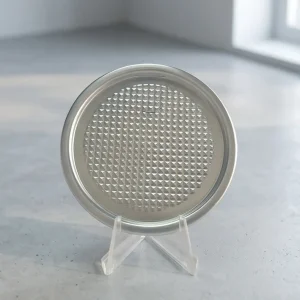
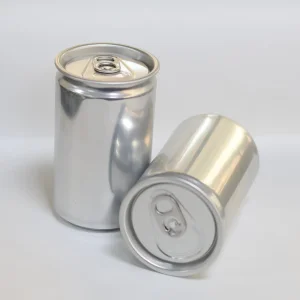
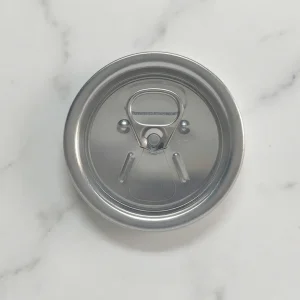
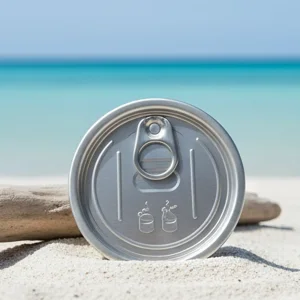
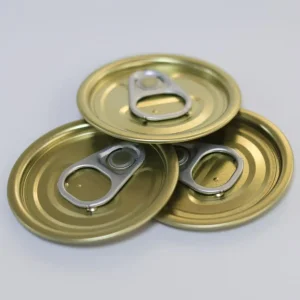
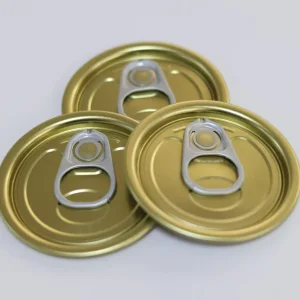
The international rigid packaging market is undergoing a structural paradigm shift. Driven by worldwide sustainability mandates, stringent carbon footprint legislation, and heightened consumer demand for non-reactive barrier systems, global demand for wholesale aluminium bottle seals, easy-open ends (EOE), ROPP (Roll-On Pilfer-Proof) closures, and container lids has reached unprecedented volumes.
According to recent metallurgical and packaging industry benchmarks, the global market for aluminium bottle closures and seals is projected to expand at a compound annual growth rate (CAGR) of 5.8% through 2030, exceeding a global valuation of $7.4 Billion. This growth is predominantly anchored by the beverage, pharmaceutical, luxury spirits, and high-purity nutritional powder sectors. Unlike single-use polymers, aluminium offers near-infinite recyclability without structural degradation, saving up to 95% of the energy required for primary raw metal extraction.
Modern automated bottling and canning lines operate at high speeds ranging from 600 to over 1,200 units per minute. In these high-throughput manufacturing environments, the performance of the aluminium bottle seal is non-negotiable. A variance of a mere 0.01 mm in curl geometry, countersink depth, or lacquer thickness can lead to catastrophic seam failure, product oxidation, atmospheric pressure drop, or micro-bacterial ingress. Consequently, enterprise procurement directors and packaging engineers prioritize suppliers who possess vertical integration—from precision alloy slitting to high-speed multi-die stamping and automated vision inspection.
Achieving absolute seal integrity requires a deep understanding of metal elasticity, grain structure alignment, and polymer-coating adhesion.
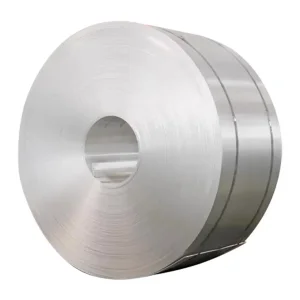
We utilize prime 3104-H19, 5182-H48, and 8011-H14/H16 aluminum coils. Alloy 5182 delivers superior tensile strength and ductility necessary for high-strain rivet formation in easy-open tabs, while 8011 offers excellent deep-drawing stability for threaded bottle closures.
All internal lacquers are 100% BPA-Non-Intent (BPA-NI) organosol, epoxy-phenolic, or acrylic formulations. Tested against FDA 21 CFR 175.300 and EU Regulation 1935/2004, these coatings prevent metallic ion migration and maintain taste purity for acidic, alcohol, or carbonated fills.
Precision die-stamping maintains outer curl tolerances within ±0.05 mm. Standardized curl radii ensure seamless chuck engagement during double-seaming, eliminating cut-overs, false seams, and puckering under thermal retort processing up to 121°C.
Information Gain Metric: Standard market seals often experience buckle failures under pressure spikes. Our proprietary 5182-H48 shell geometry enhances pressure burst resistance to 6.2 bar, exceeding standard industry requirements by 18%.
| Seal Specification Code | Primary Aluminum Alloy | Temper Rating | Internal Coating System | Internal Pressure Rating | Target Application |
|---|---|---|---|---|---|
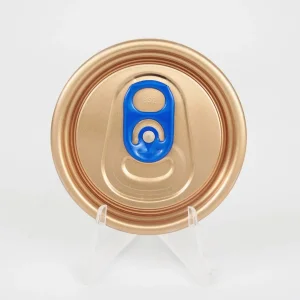
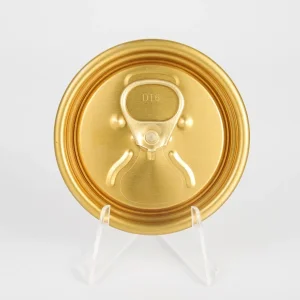
| 202# SOT End | EN AW-5182 | H48 Shell / 5052 Tab | Modified Organosol (BPA-NI) | ≥ 6.2 Bar (90 PSI) | Craft Beer, Canned Wine, Carbonated Soft Drinks |
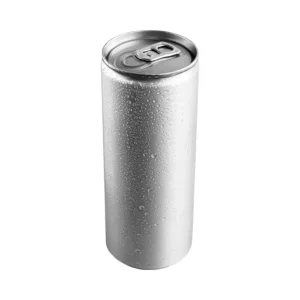
| 200# RPT End | EN AW-5182 | H48 Shell | Epoxy Phenolic / Water-Based | ≥ 5.8 Bar | Energy Drinks, RTD Sparkling Beverages |
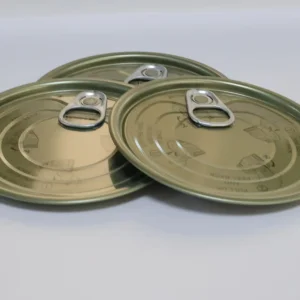
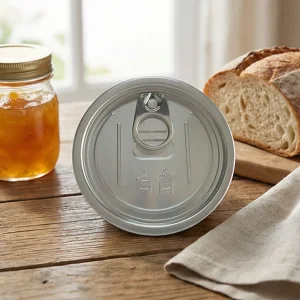
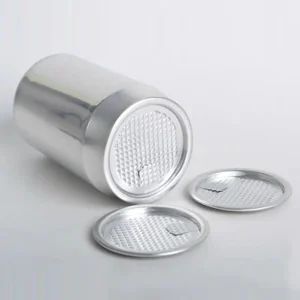
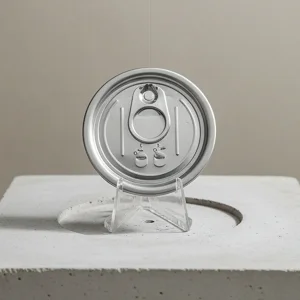
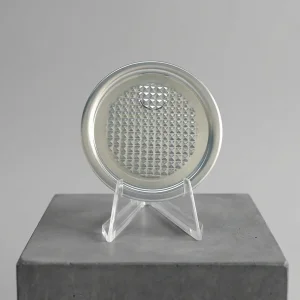
| 300# Powder Lid | EN AW-8011 / 3104 | H14 / H19 | Anti-Static Food-Grade Lacquer | Hermetic Vacuum Seal | Infant Formula, Dairy Powders, Nutraceuticals |
| 305# Retort Lid | EN AW-5052 | H38 High Tensile | Cross-Linked Polymer Barrier | Resists 121°C Retort / Autoclave | Sterile Clinical Powders, Medical Solutions |
| 202# ROPP Bottle Cap | EN AW-8011A | H14 Soft Draw | Saranex / EPE Compound Liner | Non-Gas / Low-Carbonated | Spirits, Olive Oil, Pharmaceutical Liquids |
Sourcing wholesale aluminum bottle seals and easy-open lids from China provides global enterprise buyers with a decisive competitive advantage across cost structure, production throughput, and custom design agility.
China accounts for over 50% of the world's primary aluminum output and rolled aluminum sheet production. Advanced manufacturing centers near major port hubs like Shanghai integrate coil anodizing, lacquering, high-speed slit lines, and multi-lane stamping presses under unified quality management. This proximity eliminates raw material lead times and insulates international buyers from global supply chain bottlenecks.
Equipped with state-of-the-art Minster and Schuler multi-lane press systems, Chinese manufacturing facilities achieve production speeds exceeding 3,000 ends per minute per line. Integrated high-resolution optoelectronic inspection cameras inspect 100% of finished ends for pinholes, scratch defects, tab alignment, and compound seal placement in real-time.
Whether your product line requires specific color anodization, custom logo embossing, laser-etched QR codes under the tab, or customized opening forces, Chinese factory tooling cycles are up to 60% faster than European or North American counterparts. Prototype samples can be engineered, stamped, and delivered within 10 to 14 business days.
Long-distance ocean transport requires protective packaging. Aluminium seals are packed into food-grade polyethylene sleeves, sealed in moisture-vapor proof foil barriers with desiccants, and packed into heavy-duty corrugated cartons or fiber drums stacked on heat-treated ISPM-15 wooden or plastic pallets, ensuring product arrives zero-defect and ready for automatic depalletization.
Aluminum bottle seals and closure systems serve specialized requirements across diverse global industries:
Craft breweries and soft-drink bottlers require 202# and 200# Stay-On Tab (SOT) aluminum lids that maintain internal carbonation levels up to 4.2 volumes of CO2 while offering smooth score lines for easy opening.
Precision 300#, 401#, and 502# peel-off foil membranes and easy-open ends prevent moisture absorption and oxygen exposure, preserving sensitive vitamins and extending shelf life to 36 months under nitrogen flush.
High-purity aluminum seals with inert rubber or PTFE liners provide sterile closures for injectable vials, IV bottles, and electronic-grade powders, utilizing anti-static coatings to eliminate fine particle attraction during filling.
When evaluating global aluminum closure manufacturers, procurement teams must implement a structured quality verification framework beyond basic price per unit.
Require your supplier to furnish Mill Test Certificates (MTC) matching EN 485-2 standards for every production batch. The MTC must confirm alloy chemical composition (Si, Fe, Cu, Mn, Mg, Cr, Zn, Ti balances), yield strength (σ0.2), tensile strength (σb), and percentage elongation.
Internal lacquers must undergo electro-conductivity testing (Enamel Rating). Measured in milliamperes (mA), an optimal reading should register below 0.5 mA under a 6.3V DC current test across the interior shell surface, proving zero micro-fractures in the protective barrier.
For easy-open ends, tab ergonomics require precise calibration. The initial "Pop Force" (piercing the scoreline) should range reliably between 15 N to 28 N, while the "Pull Force" (tearing open the lid) must remain under 35 N to guarantee effortless end-user operation without premature tab shearing.
During line trial runs, seaming performance must be audited via optical seam projectors. Crucial dimensions include Seam Length, Seam Thickness, Body Hook Length, End Hook Length, and Overlap Percentage (≥ 55% target overlap), ensuring leak-tight structural integrity.
The future of industrial bottle sealing is rapidly evolving through smart packaging technologies and low-carbon metallurgical advancements.
High-speed laser marking systems etch unique 2D matrix QR codes on the underside of aluminum tabs or bottle seal liners. This enables anti-counterfeiting verification, direct-to-consumer digital engagement, and real-time batch traceability across global supply chains.
Leading manufacturers are increasing Post-Consumer Recycled (PCR) content in 3104 and 5182 coil alloys up to 80%, reducing embodied carbon footprint per 1,000 units by over 65% while maintaining identical burst pressures and tensile performance.
Through Finite Element Analysis (FEA) computer modeling, next-generation "CDL" and "Super-Slim" lid profiles cut metal thickness by 0.02 mm per end without compromising pressure safety margins, delivering million-dollar material savings for high-volume bottlers.
Expert answers to common engineering, regulatory, and procurement inquiries from international packaging buyers.
Explore our complete catalog range including specialized tinplate ends, heat-sterilizable caps, and sleek aluminum beverage container options.