Engineered to exact dimensional tolerances for flawless performance across automated seaming, nitrogen dosing, and thermal sterilization lines.
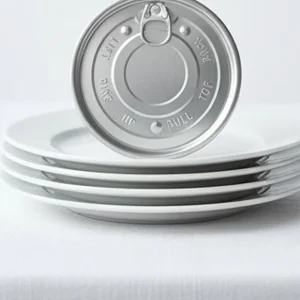
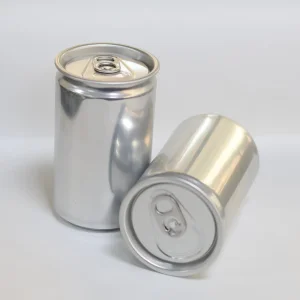
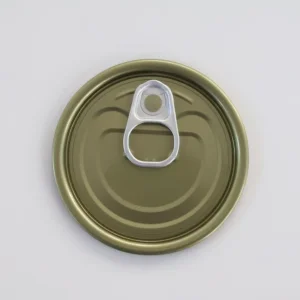
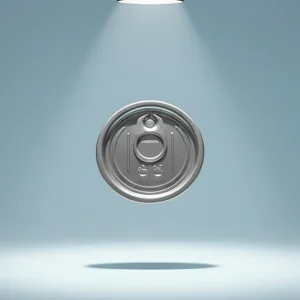
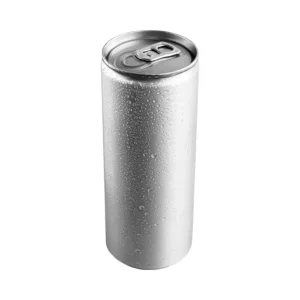
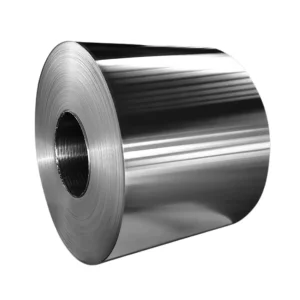
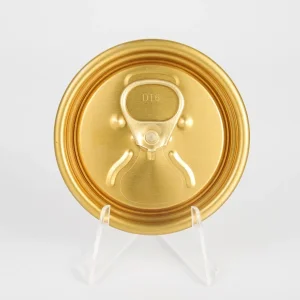
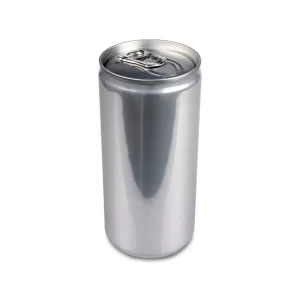
The global rigid container industry is experiencing a profound structural shift away from single-use plastics and fragile glass toward ultra-lightweight, infinitely recyclable aluminum bottle caps, easy-open ends (EOE), Roll-On Pilfer-Proof (ROPP) closures, and two-piece drawn and wall-ironed (DWI) aluminum cans. As international environmental mandates such as the EU Packaging and Packaging Waste Regulation (PPWR) enforce stringent recycled content minimums and closed-loop circular economy targets, global brand owners in beverages, pharmaceuticals, infant nutrition, and specialty chemicals require high-performance metal packaging engineered to withstand high-stress industrial environments.
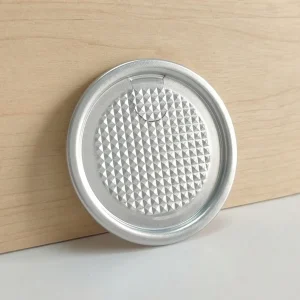
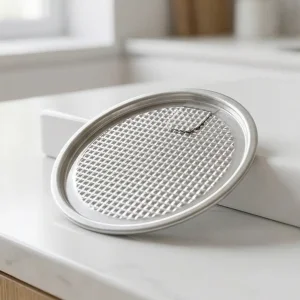
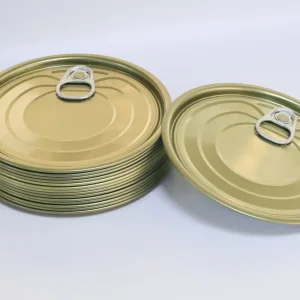
Modern aluminum bottle closures and easy-open lids serve a dual mandate: providing absolute barrier integrity against oxygen ingress, moisture absorption, and volatile organic compound (VOC) migration while enabling rapid, high-yield seaming on automated bottling lines operating at speeds exceeding 1,200 units per minute. Achieving this balance requires deep metallurgical expertise in premium alloy temper control—specifically optimizing 3104-H19, 5052-H32, 5182-H48, and 8011-O coil stocks. By controlling tensile strength, yield stress, and earing percentages at the mill level, our wholesale manufacturing operations deliver bottle caps and lid solutions that eliminate seaming micro-fractures, lower enamel rater conductivity values, and maximize shelf-life stability across extreme climate zones.
Formulated for seamless compatibility with Ferrum, Angelus, and Krones high-speed seamers. Precise curl geometry, flange radius, and countersink depth ensure consistent double-seam teardown parameters and minimal seamer downtime.
Multi-layer internal spray coating systems utilizing next-generation BPA-Non-Intent (BPA-NI) organosol and polyester resins guarantee total chemical isolation between the metal substrate and aggressive acid, alcohol, or sulfur-heavy products.
Aluminum packaging components require extreme precision during the deep-drawing, stamping, and scoring manufacturing phases. Variations in coil wall thickness as slight as ±0.002 mm can result in score-line fracturing during riveting or premature dome buckling under pasteurization pressure. Below is a comprehensive breakdown of our technical manufacturing tolerances and material specifications:
The score line on easy-open lids represents a delicate balance of fracture mechanics. A residual metal thickness of 0.055 mm ± 0.003 mm is maintained at the score groove. This guarantees an initial opening "pop" force below 18 N and a smooth continuous "pull" force below 32 N, preventing tab detachment while ensuring absolute leak tightness during vacuum sealing or retort cooking up to 121°C for 45 minutes.
Each end and cap features an automated water-based or solvent-based lined synthetic rubber or PVC-free plastisol gasket applied into the outer curl channel. Upon seaming, this compound flows into the double-seam overlap, filling micro-voids and maintaining hermetic seal integrity under extreme thermal cycling and transportation vibration.
The commercial landscape for aluminum packaging is governed by regional regulatory frameworks, beverage consumption habits, and industrial distribution logistics. Procurement teams in North America, Europe, the Middle East, and Asia-Pacific must navigate distinct regional technical standards:
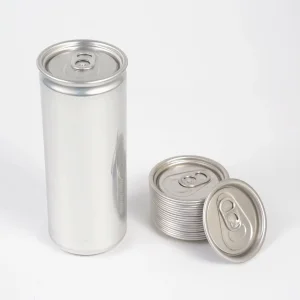
Dominated by standard 202 SOT (Stay-On Tab) sleek and standard cans (355ml/12oz and 473ml/16oz formats). High demand for ultra-clean BPA-NI internal lacquers validated against stringent FDA food contact guidelines and Proposition 65 compliance.
Accelerated shift toward 200# lightweighted ends and 330ml/250ml slim profiles driven by sugar taxes and strict carbon footprint disclosure laws. Total ban on primary bisphenols pushes the industry toward polyorganosol and acrylic spray systems.
In the Asia-Pacific, Middle East, and African regions, high ambient humidity and temperature fluctuations necessitate superior external varnish protection and anti-rust passivation treatments on tinplate and aluminum lids. Large-diameter food ends (such as 401# and 502# for infant milk powder, coffee, and dry gourmet products) demand specialized non-magnetic alloys to pass inline metal detector checks without triggering false alarms on automated filling lines.
To eliminate cross-border trade friction and guarantee absolute consumer safety, our wholesale manufacturing ecosystem operates under a unified Quality Management System accredited to ISO 9001, FSSC 22000, and ISO 14001 standards. Every production lot undergoes rigorous laboratory analysis prior to release:
Our aluminum caps, easy-open ends, and specialized tinplate lids are tailor-engineered for specific commercial processing environments:
Standard 202 SOT and RPT (Resealable Pull Tab) ends designed for internal pressures up to 90 PSI. Internal modified epoxy or BPA-NI organosol coatings prevent acid erosion from low-pH beverages (pH 2.5–3.2) and preserve sensitive flavor profiles.
Transparent-Top 502# and non-magnetic 209FA# lids. Nitrogen-flush ready to maintain residual oxygen content under 0.5%, extending the shelf life of sensitive infant formulas, nutraceuticals, and active pharmaceutical ingredients.
Odor-proof, hermetic easy-open aluminum lids providing total essential-oil retention. Blocks humidity ingress and aroma loss, ensuring spices, coffee beans, and herbal extracts remain potent over extended storage periods.
Food-grade 211#, 307#, and 401# tinplate and aluminum ends equipped with high-temperature retort liners capable of enduring steam sterilization up to 134°C without deformation or liner delamination.
As the packaging sector moves toward complete decarbonization and digital manufacturing integration, our engineering roadmap focuses on four breakthrough technological vectors:
High-grade raw coil material and engineered functional ends designed for critical food-safety, medical, and specialized industrial packaging.
Expert answers from our packaging metallurgical engineers addressing seamer setup, coating chemistry, alloy performance, and global compliance.
