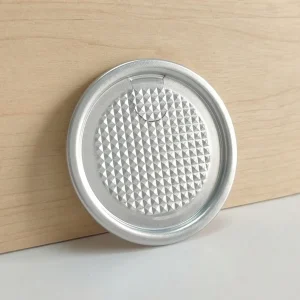
Directly sourced from state-of-the-art manufacturing lines designed for ultra-high-speed filling machines, strict airtight seals, and certified food-grade compliance.
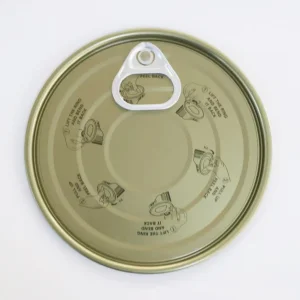
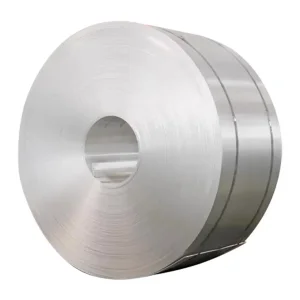
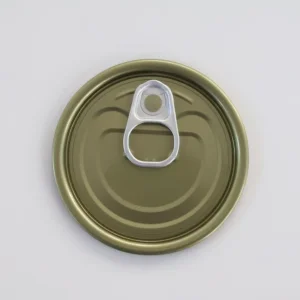
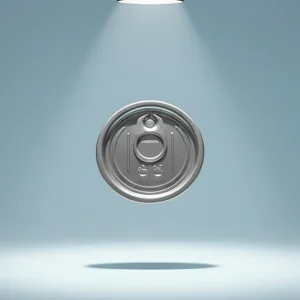
The global rigid packaging ecosystem is undergoing an unprecedented structural transition driven by stringent environmental legislation, carbon-neutral commitments, and shifting consumer preferences toward infinite circular economy materials. As key global regulatory frameworks—such as the European Union’s Packaging and Packaging Waste Regulation (PPWR) and the US FDA Food Contact Directives—enforce strict reduction targets on single-use plastics, global beverage brands, pharmaceutical manufacturers, and specialty food producers are rapidly replacing legacy plastic closures with ultra-lightweight, 100% infinitely recyclable aluminum bottle caps, ROPP (Roll-On Pilfer-Proof) closures, and SOT/RPT easy-open lids.
Aluminum closures represent the gold standard for atmospheric barrier protection. Offering a near-zero Oxygen Transmission Rate (OTR) and Moisture Vapor Transmission Rate (MVTR), high-precision aluminum caps guarantee product stability across extended shelf lives. Furthermore, the thermodynamic efficiency of aluminum allows rapid chill-down cycles during commercial filling, minimizing total operating thermal expenditure for beverage bottlers and contract packaging operations globally.
Aluminum can be continuously recycled without structural degradation, saving up to 95% of the energy required for primary bauxite smelting while drastically lowering Scope 3 carbon emissions for global brands.
Eliminates gas migration and light degradation. Advanced liner compounds ensure zero flavor scalping and total resistance against aggressive carbon dioxide pressures up to 6.2 bar.
Precision-engineered curl geometries and strict gauge tolerance ensure seamless integration with high-speed automatic seaming machinery operating in excess of 1,200 cans/caps per minute.
To assist procurement directors and packaging engineers in evaluating rigid closure materials, our technical R&D division has compiled an empirical performance evaluation across core industry metrics:
| Evaluation Parameter | Aluminum Closures (Alloy 5182/8011) | Tinplate / Steel Ends | HDPE / PP Plastic Caps |
|---|---|---|---|
| Oxygen Transmission (OTR) | < 0.0001 cc/m²/day (Impermeable) | < 0.0005 cc/m²/day | 1.5 – 5.0 cc/m²/day (Permeable) |
| Internal Pressure Burst Capacity | > 6.2 bar (620 kPa) | > 5.5 bar (550 kPa) | < 4.0 bar (Deforms under CO₂) |
| Infinitely Recyclable Rate | 100% (Without Quality Loss) | 90% (Magnetic separation) | 15% – 30% (Downgraded recycling) |
| Retort Thermal Stability (121°C / 30 min) | Superior (Zero Delamination) | Good (Risk of edge corrosion) | Poor (Thermal deformation) |
| BPA-NI Compliance (EU 2024 Regs) | 100% Certified Organic Lacquers | Requires Heavy Undercoat | Additive leaching risks |
The core of superior bottle closure engineering lies in temper selection and grain-size homogenization. Modern aluminum factories utilize high-grade 3104-H19, 5182-H48, and 8011-O/H14 alloys. Grain boundary refinement achieved via cold-rolling tension levelling ensures uniform tensile strength (> 310 MPa) and high yield stress, preventing tab tear-offs, score fracture premature venting, or micro-cracking during deep-drawing operations.
Global regulatory compliance mandates complete phase-out of Bisphenol-A (BPA) chemistries. Next-gen production lines deploy advanced BPA Non-Intent (BPA-NI) polyorganosol and acrylic-polyester inner lacquers. Applied at film weights between 6.0 – 10.0 g/m², these food-grade coatings withstand aggressive pasteurization thermal shocks while protecting beverage matrix flavor integrity against metal ion migration.
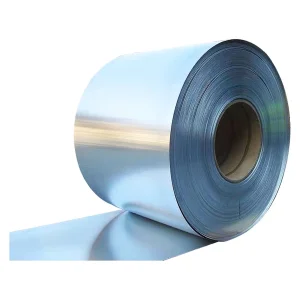
Driven by raw material efficiency, engineering teams are pushing shell-stock down-gauging from traditional 0.24mm down to 0.20mm and 0.18mm coil thicknesses. Through finite element analysis (FEA) countersink geometry design, structural buckle strength is preserved under high carbonation load, reducing raw metal usage by up to 12% per thousand units.
Incorporating high-resolution inkjet laser etching underneath tab surfaces and inner cap liners enables consumer engagement, anti-counterfeiting verification, and automated batch tracking across global distribution networks. Smart closures now interface directly with brand loyalty ecosystems and supply chain blockchain verification platforms.
Modern Chinese aluminum bottle cap and metal packaging manufacturing facilities have transformed into fully automated Industry 4.0 production hubs. By integrating high-speed multi-station stamping presses (such as Minster and Stolle systems) with AI-powered Automated Optical Inspection (AOI) units operating in real-time, Chinese manufacturing hubs deliver world-class dimensional accuracy at scale.
For procurement executives managing multinational beverage, dairy, or pharmaceutical supply chains, sourcing metal packaging components extends beyond nominal unit pricing. It requires optimizing the Total Cost of Ownership (TCO), mitigating shipping damage risks, and guaranteeing operational compatibility with existing filling line infrastructure.
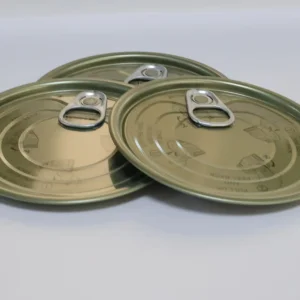
While standard mass runs begin at one 20ft container for plain stock, flexible production schedules permit mixed-spec trial orders starting from 200,000 units for standard 200#, 202#, and 206# lid configurations, lowering capital lockup for new beverage launch trials.
Dedicated packaging engineers evaluate client seamer models (Ferrum, Angelus, Continental, etc.), matching countersink depth, curl thickness, and body wall gauge to prevent seaming jams, micro-leaks, or excessive chuck wear.
Caps and lids are vacuum-sealed into anti-static polyethylene sleeves inside corrugated fibre drums or heavy-duty cartons with integrated desiccant packs, then stacked on ISPM-15 heat-treated pallets wrapped in stretch hood film for zero sea-transit oxidation.
Operating across international boundaries demands full transparency regarding food safety certification and environmental safety standards. Products manufactured and supplied under our global metal packaging platform adhere strictly to international standards, providing complete quality dossier packages prior to container dispatch.
Every shipment is accompanied by Mill Test Certificates (MTC) stating precise alloy composition and temper, Food Contact Compliance Declarations under FDA 21 CFR 175.300, EU Regulation 1935/2004, GB 4806.10, Heavy Metal Test Reports (RoHS / REACH), and specific batch migration test results.
Our packaging engineering team provides virtual and on-site technical support for client bottling facilities. Services include double-seam teardown calibration, seam thickness/overlap optimization, roll-on pilfer-proof (ROPP) head pressure setting, and troubleshooting line jam errors.
Answers curated directly from our packaging technical team regarding alloys, seaming integrity, food contact safety, and supply logistics.
Explore our broader lineup of precision-engineered beverage packaging, pharmaceutical powder lids, and specialty aluminum containers for global export.