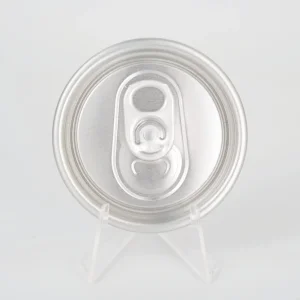
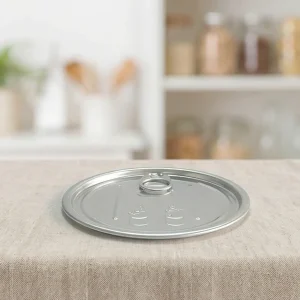
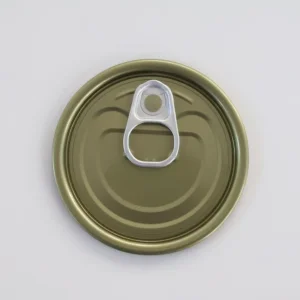
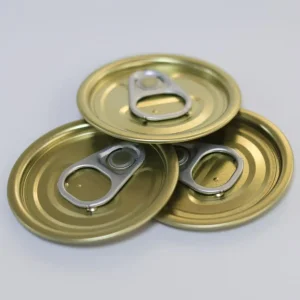
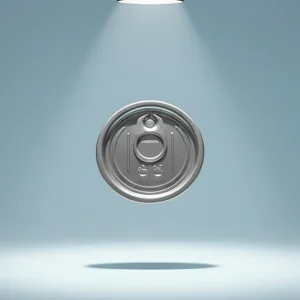
The global metal packaging sector is undergoing a profound technological transformation driven by strict environmental mandates, the phase-out of single-use plastics, and elevated consumer expectations for shelf-stable freshness. At the apex of this packaging evolution is the 509 Easy Open End (EOE) — technically designated in trade standards alongside the 502 diameter (127mm) large-format full-aperture end. Representing one of the most critical structural components in modern food cans, infant nutrition tins, and industrial powder containers, 509 and 502 EOE specifications require an intricate equilibrium of metallurgical ductility, micro-thin residual score line integrity, internal barrier inertness, and flawless seamability.
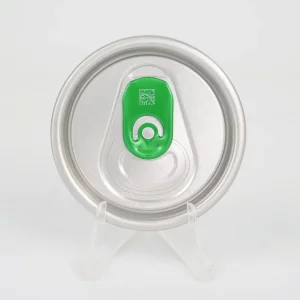
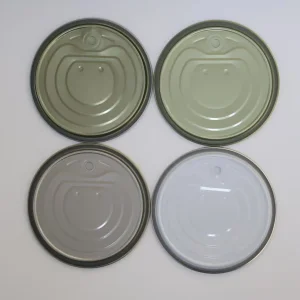
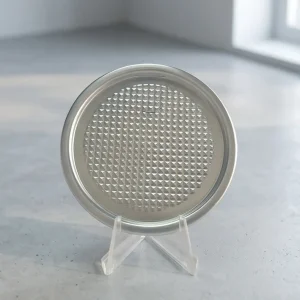
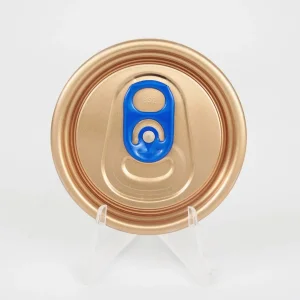
Precision engineered shell profile matching international 502/509 gauge standards across high-speed filling lines.
Guaranteed pinhole-free internal lacquering via automated 6.3V DC conductivity verification per production batch.
High-strength 5182-H48 aluminum coil matrix engineered to absorb thermal retort cycles and vacuum pressure spikes.
Global consumer goods manufacturers (CPGs) and industrial food processors face stringent regulatory frameworks including the European Packaging and Packaging Waste Regulation (PPWR), U.S. FDA 21 CFR 175.300, and China National Food Safety Standard GB 4806.10. Procuring high-performance Wholesale Global Leading 509 Easy Open End Manufacturers Service & Product solutions is no longer merely a commodity purchasing decision; it is a critical quality-assurance strategy designed to eliminate container leakage, maintain vacuum integrity over 36-month shelf lives, and prevent micro-fracturing during transoceanic shipping.
Leading manufacturers like Shanghai Friend Metals Technology Co., Ltd. employ high-precision multi-stage conversion presses (such as Minster and Stolle systems) operating with dynamic optical monitoring. By controlling coil thickness tolerances of 5182-H48 aluminum alloy down to micro-level consistency, engineering teams ensure that the residual metal underneath the score line remains uniform across 360 degrees of the aperture circumference.
To assist packaging engineers, QA managers, and international OEM procurement teams, the following standardized engineering matrix highlights the technical variances across our primary Easy Open End product lines, spanning beverage Stay-On Tabs (SOT), Ring Pull Tabs (RPT), and Full Aperture Easy Open Ends (FAEOD).
| EOE Code / Size | Nominal Dia. | Alloy Grade & Temper | Score Residual Gauge | Pop Force (N) | Pull Force (N) | Internal Coating Matrix |
|---|---|---|---|---|---|---|
| 502# / 509# EOE | 127 mm | 5182-H48 / Tinplate 0.22mm | 0.065 ± 0.003 mm | 16 – 22 N | 28 – 38 N | BPA-NI Organosol / Polyester |
| 401# Powder EOE | 99 mm | 5182-H48 / 5052-H38 | 0.058 ± 0.002 mm | 14 – 18 N | 24 – 32 N | Gold Epoxy / BPA-NI Acrylic |
| 307# Food EOE | 83 mm | Tinplate / TFS / 5182-H48 | 0.052 ± 0.002 mm | 12 – 16 N | 22 – 28 N | Modified Polyester Retort Grade |
| 211# Airtight EOE | 65 mm | 5182-H48 Shell / 5052 Tab | 0.048 ± 0.002 mm | 11 – 15 N | 20 – 26 N | Organosol Food-Contact Liner |
| 202# SOT / RPT | 52 mm | 5182-H48 Shell / 5052 Tab | 0.042 ± 0.002 mm | 10 – 14 N | 18 – 24 N | High-Acid Beverage Polymer |
| 200# SOT Beverage | 50 mm | Lightweighted 5182-H48 | 0.040 ± 0.002 mm | 9 – 13 N | 16 – 22 N | Water-based Cross-linked Epoxy |
Formulated with elevated Magnesium (4.0% - 5.0%) and Manganese (0.20% - 0.50%) content, 5182-H48 delivers exceptional tensile strength (>360 MPa) and high yield strength (>310 MPa), preventing shell doming or buckle deformation under positive internal pressure.
Applied via high-speed water-based lining machines, the expanded synthetic rubber lining compound ensures micro-hermetic sealing against the double seam curl. Tested against helium mass spectrometer leak detection down to 1x10⁻7 mbar·L/s.
To conform with strict EU regulations and US state-level chemical mandates (e.g., California Proposition 65), our internal lacquers utilize third-generation non-intent Bisphenol-A (BPA-NI) polyorganosol and polyester technologies.
Achieving zero-defect reliability in massive wholesale production runs requires a rigid manufacturing workflow. At Shanghai Friend Metals Technology Co., Ltd., every coil of aluminum or tinplate stock undergoes continuous automated monitoring before, during, and after the conversion process:
X-ray fluorescence alloy composition verification, ultrasonic gauge thickness scanning, and surface oil density measurement to ensure coating adhesion strength.
Multi-cavity high-precision presses stamp basic end shells with uniform countersink depth, curl radius, and outer diameter tolerances within ±0.05 mm.
Carving score line profiles, forming the bubble, staking the tab, and rivet formation under optical camera supervision with real-time score depth laser feedback.
Automated precision jet applicators inject water-based sealant compound evenly along the inner curl channel, followed by infrared induction curing ovens.
Post-production batch testing includes destructive mechanical testing (pop, tear, and total pull force evaluation using digital force gauges), enamel rater electrical porosity tests, buckle pressure testing in autoclaves, and double-seam teardown evaluation. Each batch shipped from our Shanghai facilities carries a complete Certificate of Analysis (CoA) tied directly to the raw material mill certificate.
Large format 509/502 EOE lids offer wide-aperture accessibility for scoops while ensuring airtight nitrogen flushing capability. Oxygen residual levels inside properly seamed cans can be maintained below 0.5% to prevent lipid oxidation of milk fats.
Engineered with thermal-resistant organosol lining systems, 307#, 401#, and 509# tinplate/aluminum lids withstand 121°C (250°F) autoclave retort cycles for 30–60 minutes without enamel delamination or compound migration.
200# and 202# SOT/RPT ends incorporate smooth-pour geometry optimized for carbonated beverages loaded up to 4.2 volumes of CO₂. Special internal coatings prevent metal pickup, preserving delicate beverage flavor notes.
Custom anti-rust clear coat lacquers applied to outer metal surfaces prevent galvanic corrosion and oxidation during ocean container transport across tropical or high-salinity maritime routes (96-hour neutral salt spray test passed).
To enable seamless international trade, Shanghai Friend Metals Technology Co., Ltd. ensures full documentary compliance across regional import zones:
As global sustainability goals accelerate toward Net-Zero carbon emissions, the metal packaging industry is undergoing rapid technical iterations. Our engineering team is leading three key industrial innovations set to redefine EOE performance through 2035:
Transitioning standard 502/509 shell thickness from 0.22 mm down to 0.20 mm and 0.18 mm through advanced finite element analysis (FEA) countersink rib reinforcement. This yields a 12% raw aluminum weight reduction per million units without compromising buckle pressure resistance.
Pioneering plant-derived resin matrix lacquers free of PFAS (per- and polyfluoroalkyl substances), styrene, and epoxy derivatives, achieving superior acid resistance against aggressive food matrices like canned tomatoes and citrus juices.
Integrating high-speed micro-laser etching directly onto the pull tab or shell face. This allows individual unit traceability, anti-counterfeiting verification for high-value infant formula, and interactive consumer engagement via invisible digital watermarking.
In trade terminology, "502#" refers to the nominal 5-2/16 inch diameter standard (127mm outer diameter), whereas "509#" represents specific dimensional variants or regional catalog designations within the 127mm large-aperture full-open end family. Both share identical seaming chuck profiles and are engineered for wide-mouth food cans, milk powder tins, and large dry-good packaging containers.
Double seam integrity requires correct setup of the first and second operation seaming rolls. For 502/509 EOE aluminum lids, recommended seam dimensions typically target a Seam Length (Height) of 2.80–3.10 mm, Seam Thickness of 1.40–1.55 mm, Body Hook of 1.30–1.50 mm, Cover Hook of 1.30–1.50 mm, and an Overlap percentage exceeding 55%. Regular optical double seam teardown analyses should be performed every 2 hours during high-speed production runs.
5182-H48 is the industry benchmark temper for beverage and food EOE shell stock due to its optimal balance of work hardening and tensile yield strength. For pull tabs, 5052-H38 is preferred because of its superior bendability and resistance to cracking during high-speed riveting operations.
Modern BPA-NI polyorganosol and acrylic-polyester hybrid coatings match or exceed traditional epoxy-phenolic resins in adhesion strength and chemical inertia. They withstand 121°C retort cycles without blushing, feathering, or cracking along the score line, passing 0.5 mA enamel porosity ratings after autoclave processing.
Standard stocked sizes (such as plain 202#, 307#, 401#, and 502# ends) carry trial MOQs starting from 200,000 pieces with ship-out capability within 15 working days. Fully custom printed or specially lacquered orders generally require 500,000 pieces per run due to coating line set-up parameters.
Ends are tightly stacked in continuous heavy-duty polyethylene sleeves, packed into moisture-resistant corrugated fiberboard drums or export cartons, lined with volatile corrosion inhibitor (VCI) paper and active desiccant bags, and shrink-wrapped on heat-treated ISPM-15 compliant wooden pallets.
Connect directly with Shanghai Friend Metals Technology Co., Ltd. packaging engineers to receive full mechanical CAD drawings, custom lacquer compatibility testing, or an expedited sample kit for double-seam trial setups.
