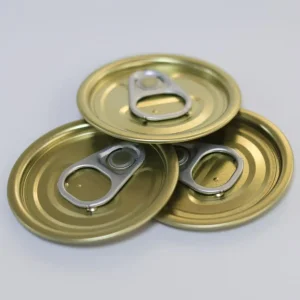
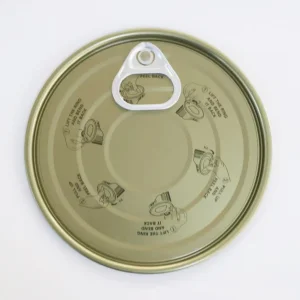
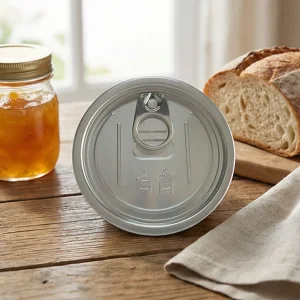
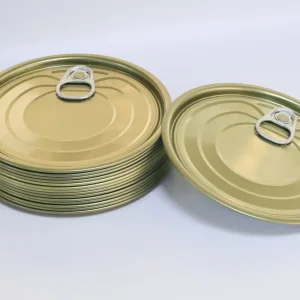
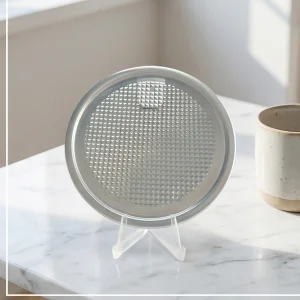
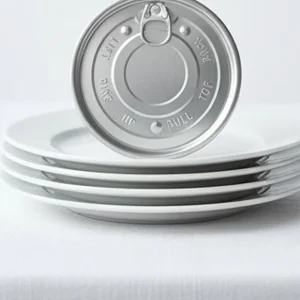
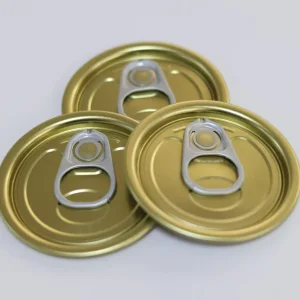
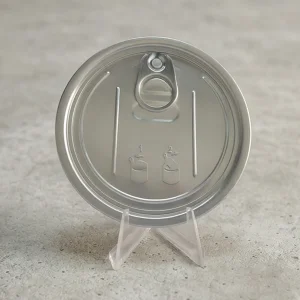
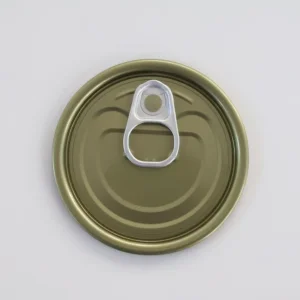
Explore our core portfolio of precision-engineered aluminum cans, easy-open lids (EOD), and tinplate closures manufactured under ISO 9001 and FSSC 22000 standards.
In the rapidly evolving global beverage sector, the 330ml aluminum beverage can has established itself as the global standard for carbonated soft drinks (CSD), craft beer, RTD (Ready-To-Drink) cocktails, energy drinks, and functional sparkling waters. As a world-leading manufacturer and wholesale supplier, our manufacturing ecosystem utilizes advanced DWI (Draw and Wall Ironing) technology to process high-purity 3104-H19 aluminum coil stock into rigid, lightweight, and infinitely recyclable packaging formats.
This technical whitepaper outlines the essential metallurgical, chemical, and operational variables critical to global B2B procurement managers, beverage co-packers, and supply chain executives seeking a sustainable competitive edge.
The structural integrity of a 330ml aluminum can depends on precise gauge control during wall ironing. Utilizing 3104-H19 alloy, the wall thickness is reduced to approximately 0.095 mm at the mid-body while maintaining a thicker dome base (0.210 mm) to absorb internal pressure fluctuations.
The necking process transitions the upper body diameter to accommodate 202 SOT (Stay-on Tab) or RPT (Ring Pull Tab) ends. This geometric precision ensures smooth double-seaming compatibility across high-speed filling lines running at up to 1,500 cans per minute.
Internal corrosion protection is paramount when packaging acidic carbonated soft drinks (pH 2.5–3.2) or alcohol-infused hard seltzers. We deploy advanced BPA-NI (Bisphenol A Non-Intent) polymer lacquers, including modified acrylics and polyester organosols.
Every production batch undergoes rigorous enamel rater testing, ensuring electrical conductivity readings remain below 2.0 mA to guarantee zero interaction between beverage ingredients and the raw aluminum substrate over a 12-to-24-month shelf life.
Sourcing wholesale 330ml aluminum cans from our China manufacturing hub delivers strategic advantages that combine raw material proximity, automated high-throughput manufacturing, and unmatched port logistics efficiency via Shanghai Port.
Our plants are directly linked with premier coil rolling mills producing 3104, 5182, and 8011 alloys. This integrated raw material pipeline protects global buyers from price volatility and secures continuous coil allocation even during global material squeezes.
Equipped with multi-stage cupping presses, 14-station body makers, and automated high-resolution vision inspection cameras, every can body is checked for pinholes, flange dents, and sidewall scratches in real-time, holding defect rates below 5 PPM (Parts Per Million).
Located near major shipping terminals, we offer flexible shipping formats: high-density bulk palletization wrapped with anti-static stretch hood films, layer-card separation, and customized container stuffing plans that maximize FCL (Full Container Load) volume.
| 330ml Can Specification | Standard Profile | Sleek Profile | Slim Profile |
|---|---|---|---|
| Nominal Volume | 330 ml (11.2 fl. oz.) | 330 ml (11.2 fl. oz.) | 250 ml / 330 ml Variant |
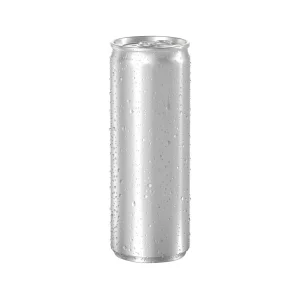
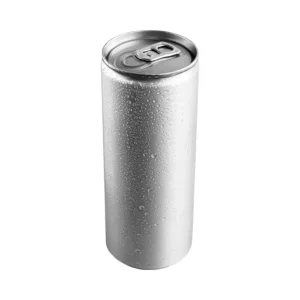
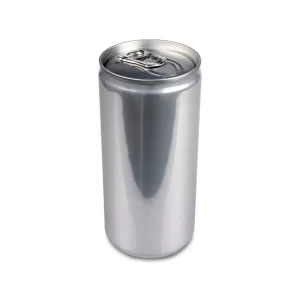
| Body Outer Diameter | 66.0 mm | 58.0 mm | 53.0 mm |
| Can Height | 115.2 mm | 145.8 mm | 134.0 mm – 156.0 mm |
| Neck Opening Code | 202 End (Ø 52.3mm) | 202 or 200 End | 200 End (Ø 50.8mm) |
| Recommended Pressure Limit | > 6.2 Bar (90 PSI) | > 6.2 Bar (90 PSI) | > 6.5 Bar (94 PSI) |
| Primary Market Applications | Beer, Carbonated Soft Drinks | Hard Seltzers, Energy Drinks | Functional Shots, RTD Wines |
For international beverage brands and high-volume canning facilities, seamless integration with automated seaming equipment (e.g., Ferrum, Angelus, CFT, Comac) is mandatory to eliminate down-time and double-seam micro-leaks.
Our 330ml bodies and 202/200 ends are produced to tight dimensional tolerances (+/- 0.05mm). We provide comprehensive double-seam guidelines specifying Countersink Depth, Body Hook, Cover Hook, and Overlap Percentage (>85%) for optimal airtight sealing under pressure or vacuum.
Stand out on retail shelves with up to 8-color high-definition dry offset printing, tactile varnish finishes, spot-matte coatings, photo-realistic artwork replication, and metallic ink effects that elevate brand recognition and drive consumer interaction.
We accommodate scale transitions: plain/bright unprinted cans available with low MOQs (from 1 FCL), while fully customized litho-printed cans feature scalable production runs engineered for regional market launches up to multi-national retail distributions.
Navigating regulatory frameworks across North America, the European Union, Asia-Pacific, and the Middle East requires rigorous food-contact certification and transparent documentation. Every shipment leaves our facilities with full traceability and lab-validated compliance certificates.
Our production facilities maintain compliance with global health, safety, and operational protocols:
Before release, every batch undergoes destructive and non-destructive laboratory evaluation:
The shift away from single-use plastics has accelerated global adoption of aluminum cans across non-traditional beverage categories. Here is how our 330ml products serve key market verticals:
Requirement: 100% UV protection and zero oxygen transmission to preserve delicate hop aromatics and flavor profiles.
Solution: Standard 330ml cans with high-barrier internal organosol lining and 202 SOT ends certified for flash pasteurization.
Requirement: High chemical resistance against aggressive alcohol combinations, organic acids, and high carbonation pressures.
Solution: Specialized thick-film BPA-NI lining designed specifically to resist corrosion from low-pH spirit mixes.
Requirement: Nitrogen liquid dosing support and retort processing tolerance for dairy-infused drinks.
Solution: Reinforced dome geometry engineered to sustain high internal pressures caused by liquid nitrogen expansion.
Modern ESG goals demand reduction in carbon footprints. Aluminum can bodies are infinitely recyclable—75% of all aluminum ever produced remains in active use today. Recycling an aluminum can consumes 95% less energy than producing primary aluminum from bauxite.
Our R&D team continues to push boundaries in lightweighting (downgauging), reducing metal consumption per unit while maintaining structural column strength. Choosing aluminum supports a true closed-loop circular economy, enabling cans returned to recycling bins to re-appear on store shelves as new cans in as little as 60 days.
Clear answers to critical technical questions asked by global beverage brands, co-packers, and supply chain directors.
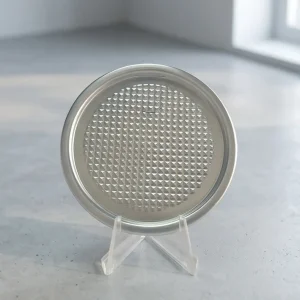
Explore our extended catalog of high-performance beverage containers, powder packaging lids, and specialized easy-open ends.