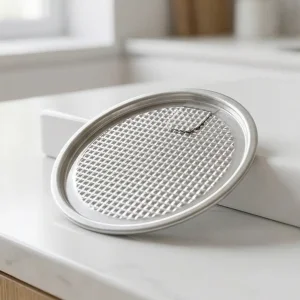
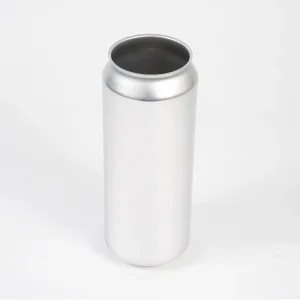
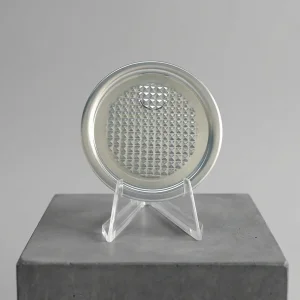
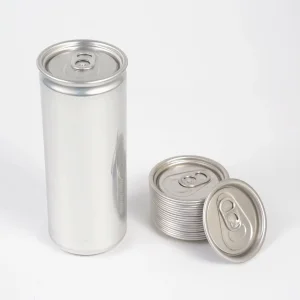
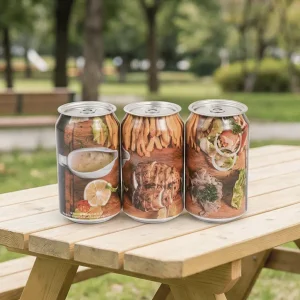
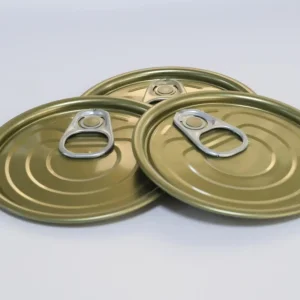
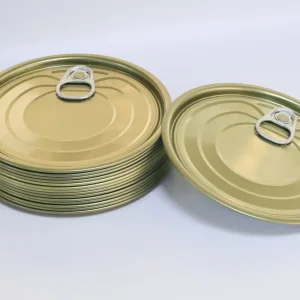
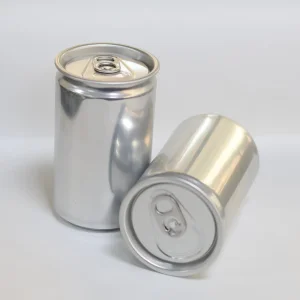
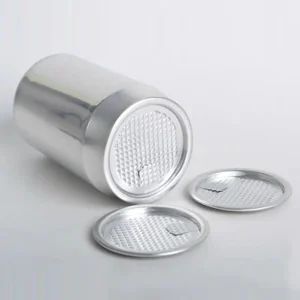
Direct factory supply featuring high-barrier easy-open ends, standard & slim cans, and heavy-duty protective lids certified for global export compliance.
An in-depth metallurgical analysis of production efficiency, mill technology, alloy customization, and supply chain resilience in modern heavy aluminum foil manufacturing.
China's leading heavy aluminum foil factories utilize state-of-the-art non-reversible 4-high and 6-high cold rolling mills equipped with Automatic Gauge Control (AGC) and Automatic Flatness Control (AFC) systems. These technologies enable precise thickness tolerances down to ±1% across heavy-gauge foils (ranging from 30 to 200 microns). The inclusion of inline laser surface defect scanners guarantees zero-pinhole integrity, critical for ultra-high barrier performance.
By collocating bauxite refining, primary aluminum smelting, continuous casting, hot rolling, and secondary foil converting within integrated industrial clusters (such as Shandong, Henan, and Yangtze River Delta zones), Chinese factories minimize thermal energy loss and transit overheads. This structural integration yields a competitive cost advantage of 15% to 25% over European and North American counterparts without compromising mechanical tensile strength or surface wettability.
Factories offer bespoke chemical composition tuning for key metallurgical alloys including 8011, 8079, 8021, 3003, 1235, and 1060. Through computer-controlled batch annealing furnaces operating under protective nitrogen and hydrogen atmospheres, manufacturers achieve exact temper states—from dead-soft Fully Annealed (O temper) for complex deep-drawing application, to work-hardened H18, H22, and H24 tempers for maximum burst resistance and structural stability.
Heavy aluminum foil (thickness > 30 µm) serves as the structural backbone for demanding barrier applications. By fine-tuning Fe-Si intermetallic phase precipitation during homogenization annealing, Chinese factories enhance elongation limits up to 20% while maintaining tensile strength above 110 MPa. This eliminates pinhole formation during deep-drawing processes in pharmaceutical cold-form foil (Alu-Alu) and retortable food container forming.
Key technological shifts reshaping heavy foil consumption across clean energy, zero-plastic packaging directives, and smart manufacturing ecosystems.
Driven by EU Packaging and Packaging Waste Regulation (PPWR) updates and global ESG mandates, the flexible packaging sector is shifting from complex multi-layer plastic-metal laminates toward recyclable aluminum-heavy mono-structures. Heavy foil (40–80 µm) coated with functional lacquer layers replaces non-recyclable multi-polymer structures. This transition ensures 100% infinitely recyclable packaging while maintaining total isolation from light, oxygen, water vapor, and microbial contamination.
The rapid expansion of global lithium-ion battery manufacturing has transformed heavy aluminum foil specifications. Modified 1235 and 1060 alloy foils (12–30 µm heavy duty collector foils) require ultra-high surface tension (>72 dyne/cm), zero oil contamination, and exceptionally high mechanical yield strength (>200 MPa) to endure high-speed electrode coating and continuous calendering without wrinkling or micro-fracturing.
Leading Chinese export manufacturers are incorporating Certified Recycled Aluminum (post-industrial scrap and closed-loop process returns) alongside hydro-powered primary aluminum smelting. Utilizing recycled aluminum reduces carbon emission intensity from ~16 kg CO2/kg Al down to under 2.5 kg CO2/kg Al—saving 95% of electrical energy and providing international buyers with verifiable Scope 3 carbon footprint reductions.
Factory 4.0 integration across Chinese aluminum mills features online X-ray fluorescence gauge sensors and high-speed CCD camera vision inspection systems operating at rolling speeds exceeding 1,500 m/min. Pinholes, oil spots, edge tears, and gauge fluctuations are flagged instantly and automatically logged into the coil’s digital quality passport for 100% lot traceability.
From pharmaceutical cleanrooms to aerospace heat shields—how heavy aluminum foil engineering satisfies extreme environmental demands.
| Application Sector | Alloy & Temper | Thickness Range | Core Technical Requirements | Key Barrier Functionality |
|---|---|---|---|---|
| Pharmaceutical Cold-Form (Alu-Alu) | 8021 / O Temper | 45 µm – 60 µm | High deep-drawing burst strength, zero pinholes, high ductility | Complete light, moisture, and moisture vapor transmission isolation (100% barrier) |
| Heavy Food Retort Containers | 3003 / H24 Temper | 50 µm – 100 µm | 121°C–135°C sterilization resistance, corrosion-resistant inner lacquer | Prevents oxidation, maintains vacuum tightness, extends shelf life to >36 months |
| Industrial Thermal Insulation | 8011 / H18 Temper | 30 µm – 150 µm | High radiant heat reflectivity (>97%), tear resistance, scrim lamination compatibility | HVAC duct wrapping, building radiant barrier, pipe thermal loss reduction |
| Automotive & EV Heat Shields | 1050 / 3003 O-H14 | 100 µm – 200 µm | 3D stampability, vibration fatigue resistance, high heat dissipation | Engine compartment heat insulation, EV battery pack thermal runaway suppression |
| Cable Shielding & Electronics | 1235 / O Temper | 30 µm – 50 µm | High electrical conductivity, smooth surface, low oil residue (<2 mg/m²) | Electromagnetic Interference (EMI) shielding, RF noise rejection in telecommunication cables |
Heavy pharmaceutical blister foil requires flawless sealing compatibility with PVC, PVDC, and PP films. Applying heat-seal lacquer coatings (3.5–6.0 g/m²) under ISO Class 7 cleanroom conditions ensures hermetic seal integrity, preventing active pharmaceutical ingredient (API) degradation caused by humidity ingress or UV radiation exposure.
For MREs (Meals Ready-to-Eat), pet food, and gourmet soups, heavy foil laminated with BOPA (Nylon) and CPP films creates a flexible container capable of withstanding autoclaving at 121°C for 45 minutes without delamination or burst failure. The heavy foil layer acts as an absolute physical shield against oxygen ingress.
Hydrophilic and epoxy-coated heavy aluminum foil (80–150 µm) forms the fins of high-efficiency air conditioning condensers and industrial heat exchangers. The hydrophilic coating reduces condensate water bridge formation, boosting heat dissipation efficiency by 15% while offering 500+ hours of salt spray corrosion protection.
A comprehensive roadmap for international procurement managers seeking defect-free heavy aluminum foil shipments, regulatory compliance, and seamless cross-border freight execution.
Direct factory procurement requires strict adherence to international metallurgical testing standards. Reputable Chinese manufacturers provide lot-specific Mill Test Certificates (MTC) conforming to EN 10204 3.1 alongside the following mandatory QA checkpoints:
Heavy foil rolls are vulnerable to physical impact and oxidation during long-distance ocean transit. Strategic factory suppliers deploy heavy-duty export packaging protocols designed for multi-month maritime storage:
Each foil roll is wrapped in Volatile Corrosion Inhibitor (VCI) film, enclosed in a hermetically sealed aluminum-plastic vacuum barrier bag with activated silica gel desiccants, and suspended inside wooden crates via steel spindles (eye-to-side or eye-to-sky configuration). Wooden packaging strictly complies with ISPM-15 heat treatment regulations. Compliance certificates include FDA 21 CFR 175.300, EU 1935/2004, REACH, RoHS, ISO 9001, ISO 14001, and FSSC 22000.
Detailed technical answers derived from enterprise buyer technical inquiries and metallurgical engineering specifications.
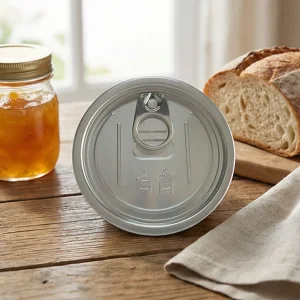
Complete your packaging line with transparent-top lids, high-temp sterilizable ends, and custom beverage can formats.