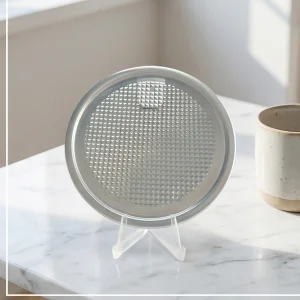
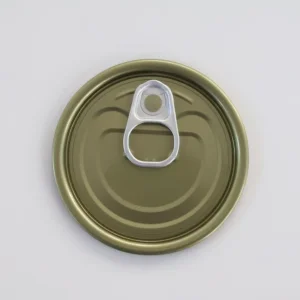
Explore our industrial-grade catalog of Easy-Open Ends (EOE), specialized aluminum covers, and high-performance beverage containers engineered to sustain internal pressure and resist aggressive liquid matrixes.
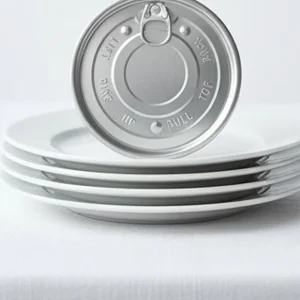

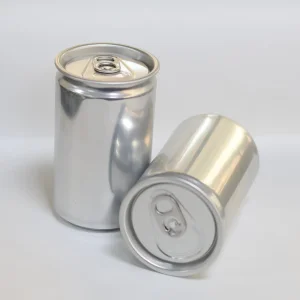
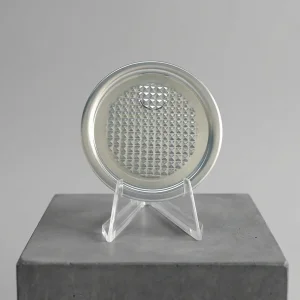
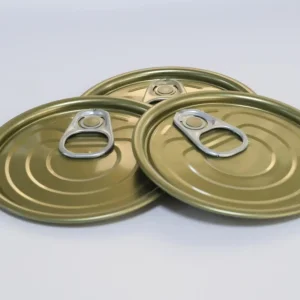
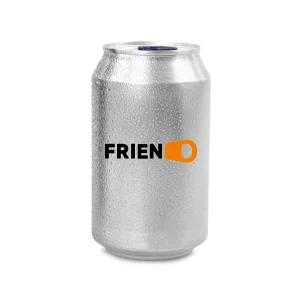
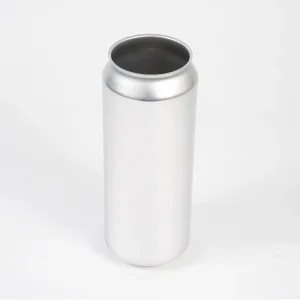
In the high-speed beverage packaging ecosystem, the aluminum beer can end—commonly designated as the Easy-Open End (EOE)—represents one of the most sophisticated achievements of mass-production precision engineering. Operating under strict tolerances measured in micrometers, global beer can ends manufacturers service a market that consumes over 400 billion aluminum cans annually. The demand is defined by three uncompromising parameters: absolute structural integrity under carbonation pressures, barrier effectiveness against molecular gas migration and flavor degradation, and high-speed double-seaming compatibility across automated filling lines operating at speeds upwards of 1,500 to 2,000 cans per minute (CPM).
Modern beer packaging has transitioned significantly from historic 206 geometry formats toward downsized neck configurations such as 202 CDL (Can End Design Lightweight), 202 B64, and 202 ISE (Innovel Super End) profiles. Downsizing the end shell diameter from 206 (60.3mm) to 202 (52.5mm) yields substantial material savings without compromising the ergonomic pouring mechanics or structural buckle resistance. For global enterprise procurement directors, contract beverage packers, and craft brewery combines, selecting a qualified OEM manufacturer requires a granular understanding of metallurgical alloy tempers, score depth residuals, tab rivet integrity, and organosol/epoxy lining chemistry.
China has established itself as the world's primary manufacturing engine for advanced rigid metal packaging. The concentration of advanced metallurgy, specialized conversion tooling, chemical coating formulation, and continuous quality assurance infrastructure creates an unmatched cost-to-performance ratio for international purchasers.
Chinese beer can ends manufacturers operate in close physical and operational proximity to state-of-the-art aluminum rolling mills producing premium 5182-H48 alloy coil (specifically engineered for high tensile strength end shells) and 5052-H19 alloy coil (for robust tab stock). This vertical clustering guarantees consistent gauge tolerances (±0.002 mm), controlled grain structures for optimal score line formation, and immediate raw material availability that shields global buyers from volatile supply chain disruptions.
Tier-1 Chinese factories utilize advanced multi-die conversion systems sourced from leading global machinery producers like Stolle Machinery and Minister, integrated with proprietary Chinese automation. High-speed conversion presses perform shell punching, curling, compound lining, score carving, tab forming, and double-riveting in a synchronized, single-pass operation. Fully automated Vision Inspection Systems (VIS) inspect 100% of manufactured ends for pinholes, score defects, rivet alignment errors, and compound placement irregularities at speed.
To withstand acidic pasteurization cycles, sulfur compounds, and prolonged shelf lives, Chinese manufacturing facilities deploy cutting-edge internal lacquers. The industry transition from conventional Epoxy-based coatings to next-generation BPA-NI (Bisphenol A Non-Intent) acrylic and polyester linings is fully integrated across major Chinese plants. These coatings strictly comply with US FDA 21 CFR 175.300, EU Regulation (EC) No 1935/2004, and China's GB 4806.10 standards, allowing seamless market entry into North America, Europe, and Asia-Pacific regions.
Below is an engineering overview comparing the primary technical parameters of standard beer can ends utilized in global commercial filling operations:
| Parameter Specification | 202 CDL End (Standard) | 202 B64 End (Legacy/Regional) | 202 ISE (SuperEnd Profile) |
|---|---|---|---|
| Nominal Shell Diameter | 52.5 mm (202 Neck) | 52.5 mm (202 Neck) | 52.5 mm (202 Neck) |
| Shell Metal Alloy & Temper | AA 5182-H48 / H19 | AA 5182-H48 | AA 5182-H48 / H19 |
| Tab Stock Metal Alloy | AA 5052-H19 | AA 5052-H19 | AA 5052-H19 |
| Nominal Metal Thickness | 0.203 mm – 0.216 mm | 0.224 mm – 0.238 mm | 0.200 mm – 0.208 mm |
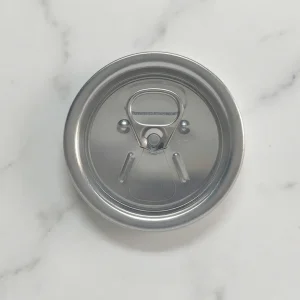
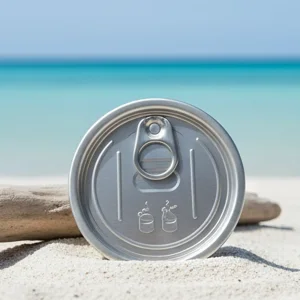
| Opening Mechanism Type | SOT (Stay-On Tab) / RPT | SOT (Stay-On Tab) | SOT (Stay-On Tab) |
| Minimum Buckle Pressure | ≥ 620 kPa (90 PSI) | ≥ 620 kPa (90 PSI) | ≥ 650 kPa (94 PSI) |
| Internal Coating System | BPA-NI Acrylic / Polyester | Epoxy-Phenolic / BPA-NI | BPA-NI Organosol / Waterborne |
| Sealing Compound Type | Waterborne Synthetic Rubber | Waterborne Synthetic Rubber | Waterborne High-Solids Rubber |
During pasteurization, a canned beer undergoes thermal expansion that subjects the end shell to extreme internal hydrostatic pressure. If the engineering tolerances of the score line, countersink wall, or seam curl are off by even a fraction of a millimeter, critical package failures occur. Chinese technical support teams focus heavily on four mechanical thresholds:
The ergonomic user interface requires precise calibration between the initial Pop Force (the leverage required for the tab tip to fracture the score line) and the subsequent Pull Force (the effort required to push the aperture panel inward). Pop force must be maintained within 15 to 26 N to prevent accidental bursting during drop transit, while Pull force is controlled under 35 N for effortless consumer opening. Score residual thickness—the depth of metal left un-carved at the score line—is maintained strictly between 0.055 mm and 0.065 mm.
Buckle strength measures the maximum internal pressure an end can sustain before the countersink geometry flexes permanently outward. Carbonated lagers and wheat beers often reach internal pressures of 50 to 65 PSI during tunnel pasteurization at 60°C (140°F). Premium 202 CDL ends are engineered with a curved countersink wall and reinforced panel anti-peaking beads, raising the ultimate buckle limit beyond 90 PSI (620 kPa), creating a robust safety margin against thermal spikes.
The hermetic seal between the aluminum can body flange and the can end curl is achieved through a double-seam mechanical interlock formed by first-operation and second-operation seaming rolls. Factories maintain rigorous end-curl height, curl diameter, and seam-compound coat weight (typically 20mg to 30mg per end). This prevents micro-leakage, ingress of environmental contaminants, and loss of dissolved CO₂ over extended ambient storage.
The rigid metal packaging sector is experiencing structural evolution driven by climate targets, digital supply networks, and shifting consumer demographics. Leading Chinese manufacturers are investing heavily in three transformation areas:
Every 0.01mm reduction in aluminum gauge across billions of manufactured units saves thousands of metric tons of raw alloy annually. Next-generation metal tempering protocols allow shell gauges to approach 0.190 mm while preserving full structural buckle compliance through modified countersink angles.
Global regulatory tightening regarding PFAS, Bisphenols, and volatile organic compounds (VOCs) is accelerating the adoption of 100% waterborne non-intent internal coatings. Advanced cross-linked polyester matrices provide high chemical resistance against low pH beverages without impacting delicate hop aromas.
High-speed laser etching directly onto the underside of Stay-On Tabs or inside the end aperture allows beverage brands to integrate real-time promotional QR codes, batch traceability markers, and anti-counterfeiting verification directly into the physical metal container.
Key technical answers for procurement officers, quality control managers, and packaging engineers evaluating factory sourcing options.
A: While all three profiles fit a standard 202 neck diameter (52.5mm), they differ in shell geometry, material thickness, and double-seam chuck requirements. The B64 profile is a traditional industry standard requiring thicker metal. CDL and ISE feature re-engineered countersink geometries that allow thinner gauge aluminum to achieve equivalent or superior buckle strength, yielding lower unit cost and reduced freight weight. Seaming tooling (chucks and rolls) must match the chosen profile geometry.
A: Can ends are nested in tight cylindrical paper sleeves (slips) or plastic sleeves, sealed in moisture-barrier bags with industrial desiccants, and secured vertically onto export-grade wooden or corrugated plastic pallets. Pallets feature top-frame wooden caps and are fully shrink-wrapped with high-tension stretch film to isolate contents from humidity variations encountered during maritime transport.
A: For standard pale lagers and pilsners, standard BPA-NI acrylic coatings perform exceptionally well. For sour beers, fruit-infused ales, or hard seltzers exhibiting low pH levels (< 3.2) or high halide contents, a high-build BPA-NI polyester or specialized modified organosol lining is recommended to prevent localized pitting corrosion and metal pick-up over extended shelf life.
A: Standard plain aluminum ends typically carry an MOQ of one 20-foot or 40-foot ocean container (approx. 1.2 to 1.5 million ends depending on stacking configuration). Custom colored tabs (e.g., anodized black, red, or green) or custom top-shell laser etching generally require a minimum run of 500,000 to 1,000,000 units per design, with standard export production lead times ranging from 15 to 25 business days following sample sign-off.
A: Enamel Rater Testing measures the electrical current conducting through an electrolyte solution placed inside the end shell shell. A perfectly sealed, continuous barrier layer prevents electrical contact with the raw aluminum base, yielding an ERT reading of < 2.0 milliamperes (mA). 100% VIS optical inspection paired with statistical batch ERT testing ensures zero pinholes pass through to filling lines.
Explore our full range of specialty tinplate closures, powder packaging lids, and custom aluminum ends built to international quality benchmarks.