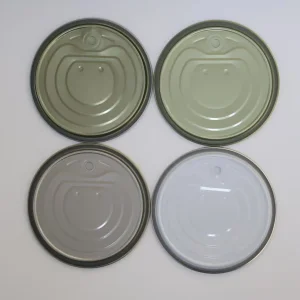
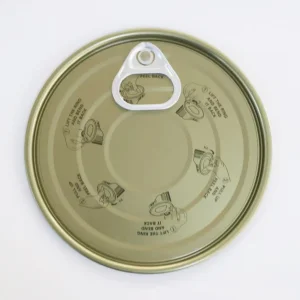
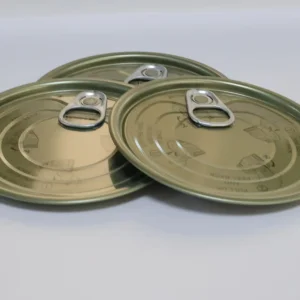
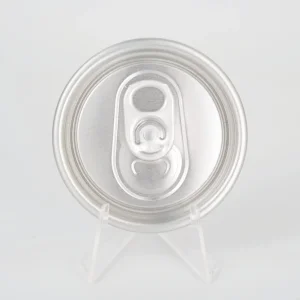
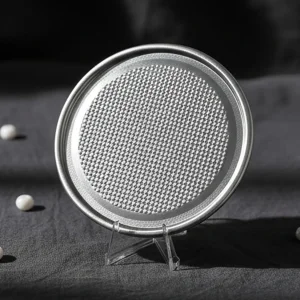
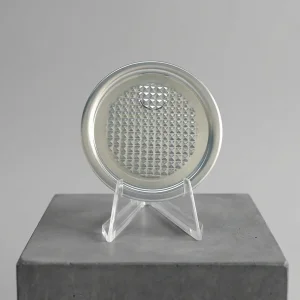
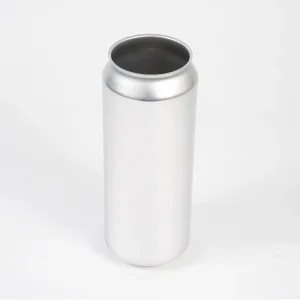
High-integrity aluminum food cans, specialized powder closures, and robust easy-open ends engineered for global high-speed filling lines.
Analyzing structural shifts toward infinitely recyclable, high-barrier rigid metal containers in commercial food, beverage, and nutritional powder processing.
Aluminum represents the pinnacle of circular economy packaging. Unlike rigid plastics (PET/PE) which degrade mechanically during recycling, aluminum retains its intrinsic metallurgical integrity indefinitely. Over 75% of all aluminum ever produced remains in productive material cycles today. For multinational FMCG food brands, transitioning to wholesale aluminum food cans dramatically slashes Scope 3 supply chain carbon emissions while providing 100% barrier protection against light, oxygen, and atmospheric moisture entry.
Food degradation is primarily driven by photo-oxidation and hygroscopic ingress. Aluminum food containers provide a zero-transmission rate for water vapor transmission (WVTR) and oxygen transmission (OTR). When combined with advanced compound-lined Easy-Open Ends (EOE) or Peel-Off Foils (POF), aluminum food cans ensure extended shelf-life retention up to 36–60 months without reliant synthetic chemical preservatives—meeting modern consumer demands for clean-label food products.
Modern high-speed food filling and closing machinery operates at rates exceeding 600 to 1,200 cans per minute (CPM). Aluminum's precise axial load strength and standardized double-seam geometry reduce jam rates to near-zero margins. Lightweight aluminum container designs lower freight weight penalties by up to 35% compared to equivalent volume tinplate or glass vessels, significantly lowering global landed freight costs for enterprise procurement managers.
Precision engineering, temper selection, and food-grade internal lacquer specifications for optimal structural integrity.
Choosing the correct aluminum food container involves rigorous matching of aluminum alloy tempers, body wall thickness, top curl dimensions, and internal lining chemistry to the specific acidic, lipid, or volatile profile of the target food media. Below is our engineering parameter matrix:
| Component Type | Alloy & Temper | Nominal Gauge (mm) | Internal Lining Chemistry | Axial Load / Pressure Rating | Primary Food Application |
|---|---|---|---|---|---|
| Two-Piece DWI Can Body | 3104 - H19 | 0.24mm - 0.28mm | Modified Polyester / Organosol (BPA-NI) | > 900 N Axial Strength | Beverages, Ready-To-Drink (RTD), Liquid Foods |
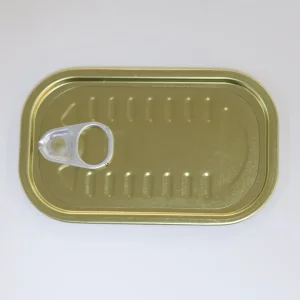
| 2-Piece DRD Shallow Can | 5052 - H39 / 3004 | 0.18mm - 0.22mm | Epoxy-Free Polypropylene Laminate | Retort Proof (121°C / 30 min) | Seafood (Tuna/Sardines), Canned Meat, Pet Food |
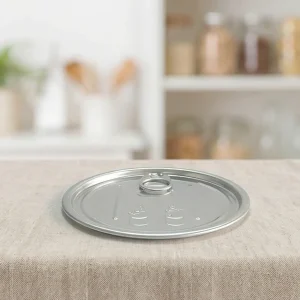
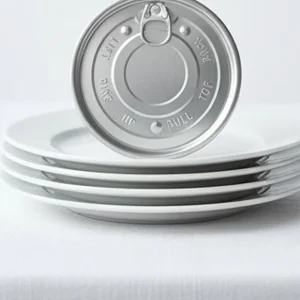
| Easy-Open End (EOE Shell) | 5182 - H48 | 0.21mm - 0.24mm | Water-based Synthetic Resin / Vinyl | Pop < 30 N, Pull < 50 N | General Dry Foods, Powder Cans, Retort Soups |
| Pharmaceutical Powder End | 209FA / 401# Non-Mag | 0.22mm - 0.25mm | Anti-Static Electrostatic Polymer | Vacuum Nitrogen Flush Tight | Infant Formula, Clinical Nutrition, Spices |
| Coastal Powder Lid | 8011 - O / 3104 | 0.25mm - 0.30mm | Triple-Layer Anti-Corrosion Barrier Coating | Salt Spray Resistant > 96 Hours | High-Humidity Coastal Powder Storage |
Internal lacquer application is critical to prevent metal migration and preserve taste integrity. We utilize advanced high-performance BPA-NI coatings—including modified polyester, acrylic, and polyolefin dispersant coatings—strictly verified under European Union Regulation (EU) No 10/2011 and US FDA 21 CFR 175.300 standards. Internal enamel rater testing is performed on 100% of production batches (current threshold < 2mA under standard conductivity testing).
Hermetic closure reliability depends on perfect seam engagement between the can body flange and the Easy-Open Lid curl. Our quality labs maintain tight double-seam tolerances: Countersink Depth (1.80mm - 2.10mm), Seam Thickness (1.10mm - 1.25mm), and Overlap Percentage (> 85%). This eliminates micro-leakages during thermal retort sterilization and high-altitude logistics distribution.
Leveraging advanced automation, strategic raw material access, and Shanghai deep-water port logistics for global cost leadership.
Our state-of-the-art production facilities house multi-die high-speed conversion presses from Minster and Stolle. Capable of executing multi-stage deep drawing, precision scoring, and tab feeding at speeds reaching up to 3,000 ends per minute per line. Vision control systems inspect 100% of finished ends for score depth micro-cracks and compound gasket anomalies.
Direct supply partnerships with tier-one aluminum rolling mills ensure priority allocation of premier 3104-H19, 5182-H48, and 8011 coil stock. In-house high-precision coil slitting and lacquering lines allow exact customized coil width slitting, reducing metal scrap loss during stamping by up to 4.2%—a saving directly passed to our global B2B clients.
Situated within proximity to Shanghai Port—the world’s busiest container terminal—we provide streamlined containerization, palletization under ISPM 15 heat-treated standards, and rapid customs clearance. Pre-booked vessel space guarantees reliable shipping schedules even during peak global freight cycles.
From technical drawing consultation to high-speed line integration, our end-to-end engineering protocol guarantees zero operational disruption.
Technical evaluation of liquid/powder chemical properties, target shelf-life requirements, internal pressure thresholds, and seamer tool specifications (Ferrum, Angelus, Continental compatibility).
Rapid CNC tooling modification, lacquer trial runs, and sample dispatch within 7–10 working days. Pre-production sample lots provided for customer double-seam teardown and pressure testing.
Continuous high-speed stamping and lining execution under ISO 22000 cleanroom standards. Inline high-voltage pinhole detection and optical vision sorting filter out minor defects.
Pallet packaging wrapped in heavy-duty moisture barrier stretch film, corner protectors, and desiccant packs inside sealed containers. Full documentation pack: COA, RoHS, FDA compliance.
Navigating regional food-contact standards, environmental mandates, and demanding local climate storage requirements with certified compliance.
Supplying global markets requires total alignment with destination-country food safety frameworks. Our wholesale aluminum food cans and closures comply fully with:
Exporting to tropical, island, or coastal regions (e.g., Southeast Asia, Latin America, Middle East) introduces severe atmospheric corrosion risks. High humidity and elevated salt aerosol concentrations induce external rust on standard steel or poorly coated rims.
Our proprietary Rust-Proof 401# and 502# Aluminum Lids utilize high-purity aluminum alloys passivated with specialized surface lacquers that exceed 96 hours of neutral salt spray testing (ASTM B117), completely eliminating edge rust during extended port warehousing.
Optimized metal packaging configurations engineered for specific food processing thermal profiles and distribution channels.
Requirement: Zero oxygen residual, anti-static powder flow, and tamper-evident opening.
Solution: Aluminum Easy-Open Lids paired with nitrogen flushing. Special anti-static lining prevents fine infant formula particles from clinging to the inner score line, ensuring clean consumer opening and precise dosing scoop operation.
Requirement: Withstanding 121°C thermal processing under 0.2MPa counter-pressure without rim buckle.
Solution: Deep-drawn 2-piece aluminum DRD cans with reinforced bottom profile geometry and high-elasticity vinyl organosol lining, preventing sulfur staining from tuna and sardine proteins.
Requirement: CO2 pressure retention up to 6.2 bar and alcohol chemical stability.
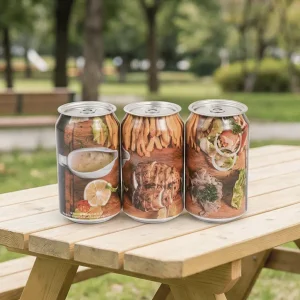
Solution: 12oz (355ml) standard and sleek 330ml aluminum cans with 202 SOT (Stay-On Tab) closures. Double-pass interior modified acrylic coating guarantees zero flavor leaching for acidic craft ciders and spirits.
Navigating ultra-lightweighting, digital offset decoration, and smart supply chain traceability.
Driven by raw material optimization, next-generation aluminum cans utilize advanced necking techniques (CDL and Super-End geometries). Reducing shell wall gauge down to 0.20mm yields a 6% metal savings per unit while maintaining identical buckle strength performance.
Transitioning from traditional dry-offset printing plates to direct-to-can digital inkjet technology enables micro-batch promotional campaigns, variable QR code printing, and vibrant tactile spot varnishes without plate charges.
Integrating laser-etched matrix codes on the underside of Easy-Open tabs facilitates direct-to-consumer digital engagement and supply chain anti-diversion tracking for high-value pharmaceutical and infant nutrition powders.
Explore our additional food-grade aluminum cans, specialized tinplate closures, and sustainable easy-open solutions.
Expert technical responses to common enterprise inquiries regarding alloy selection, minimum order quantities, compliance, and filling compatibility.