Engineered for high-speed filling lines, superior burst pressure resistance, and 100% infinite recyclability.
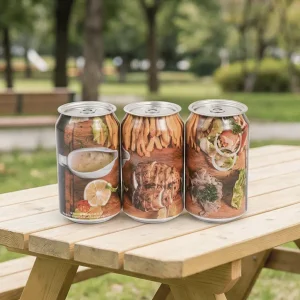
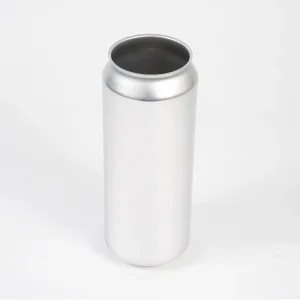
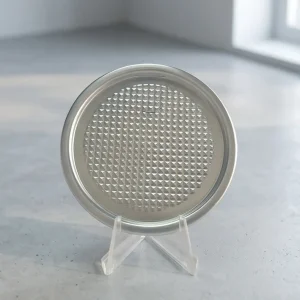
The global metal packaging industry is experiencing a seismic structural shift toward infinite circularity. The wholesale global aluminum beer cans service & products domain has moved far beyond simple beverage containment—it is now a key driver of corporate ESG compliance, lightweight logistics optimization, and carbon footprint reduction.
Driven by shifting consumer preferences away from single-use plastics (PET) and fragile glass containers, aluminum beverage cans have emerged as the gold standard for craft breweries, commercial cideries, ready-to-drink (RTD) cocktail producers, and energy drink conglomerates worldwide. In 2025–2026, the global aluminum beverage can market valuation surpassed $45 Billion USD, exhibiting a steady compound annual growth rate (CAGR) of 5.8%.
From an enterprise procurement perspective, managing a wholesale supply chain for aluminum cans requires deep alignment across alloy metallurgy, internal coating chemistries, high-speed filling line tolerance, and ocean logistics protection. Suppliers are no longer evaluated merely on unit price; technical authority, compliance certifications, and precision dimensional tolerances dictate global vendor selection.
Technical comparison of standard, sleek, and slim aluminum can configurations drawn from 3104-H19 high-yield coil stock.
| Profile Specification | Body Alloy & Temper | End Shell / Tab Alloy | Internal Lacquer Type | Axial Load Capacity | Max Internal Pressure |
|---|---|---|---|---|---|
| Standard 12oz / 355ml | AA 3104-H19 (Wall: ~0.097mm) | AA 5182-H48 / AA 5052 | BPA-NI Acrylic / Organosol | > 1,100 N | > 6.2 bar (90 psi) |
| Standard 500ml / 16oz | AA 3104-H19 (Wall: ~0.102mm) | AA 5182-H48 / AA 5052 | BPA-NI Cross-linked Polyepoxy | > 1,250 N | > 6.5 bar (94 psi) |
| Sleek 250ml / 330ml | AA 3104-H19 (Wall: ~0.092mm) | AA 5182-H48 (200# / 202# SOT) | BPA-NI Modified Polyester | > 1,000 N | > 6.0 bar (87 psi) |
| Slim 200ml / 250ml | AA 3104-H19 (Wall: ~0.088mm) | AA 5182-H48 (200# RPT/SOT) | Dual-layer Food Grade Epoxy | > 950 N | > 5.8 bar (84 psi) |
The manufacturing process relies on Drawn and Wall Ironed (DWI) technology. Heavy-gauge aluminum coils are lubricated, punched into cups, and ironed through sequential carbide rings to achieve microscopic wall consistency down to sub-100-micron tolerances. The top rim is trimmed, flanged, and necked inwards (e.g., reducing a standard 211 diameter body down to a 202 seamer profile) to decrease end shell diameter, cutting raw material mass while optimizing axial strength under vertical stacking loads.
How aluminum cans and easy-open closures are custom-adapted to aggressive liquid chemistry, pasteurization heat, and volatile milk/powder products.
Requires total light block (100% UV protection) to eliminate light-struck "skunking" of hops. Highly regulated dissolved oxygen (DO) pick-up levels demand precision 202# SOT lids with smooth lip radius and zero enamel failure under flash pasteurization.
High acid formulations, alcohol content up to 14% ABV, and volatile flavor esters can compromise standard lacquers. We apply advanced BPA-NI (Non-Intent) cross-linked polymer linings that eliminate flavor scalping and prevent pinhole corrosion over 18+ months shelf life.
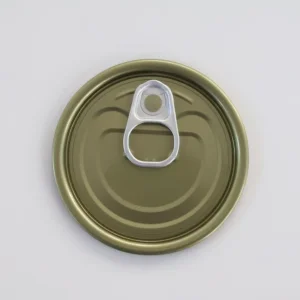
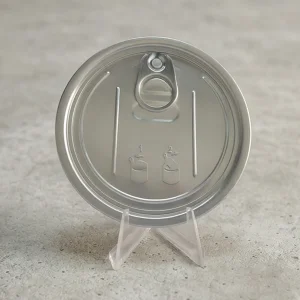
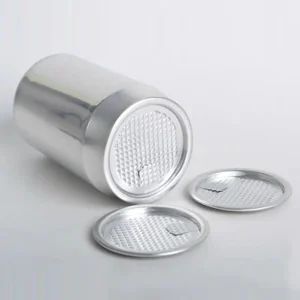
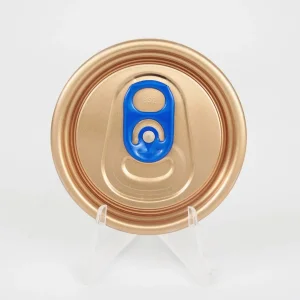
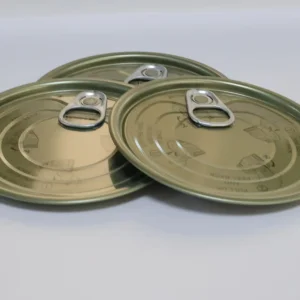
Beyond liquid beverages, non-magnetic 209FA#, anti-static 300#, and 401#/502# large format easy-open ends are critical for infant formula, nutritional supplements, and medical-grade powders requiring hermetic nitrogen flushing.
The global metal packaging landscape is undergoing rapid innovation. Manufacturers, brands, and filling operators must stay aligned with the engineering milestones shaping the next decade of beverage container manufacturing.
Migrating can body stock gauges down from 0.260mm to sub-0.200mm via high-tensile 3104 alloy refinement, saving thousands of metric tons of raw aluminum annually while retaining axial crash resistance.
Transitioning globally to 3rd-generation bio-based plant resin internal coatings. Eliminating bisphenol compounds, styrene, and PFAS fluorinated surfactants entirely to meet strict EU REACH and US FDA mandates.
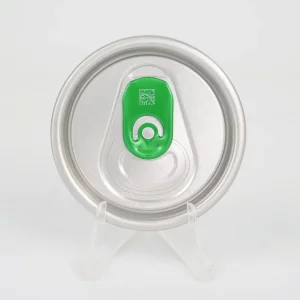
Laser-etched high-density QR codes on the underside of pull tabs for consumer engagement, track-and-trace anti-counterfeiting, and high-speed automated sorting at recycling MRFs (Material Recovery Facilities).
A single double-seam failure can halt a high-speed 1,200 can-per-minute filling line or destroy an entire shipping container due to spoilage. Industrial wholesale procurement demands absolute adherence to rigid quality verification protocols.
Our global supply framework enforces rigorous testing at every manufacturing node:
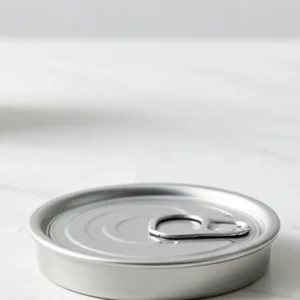
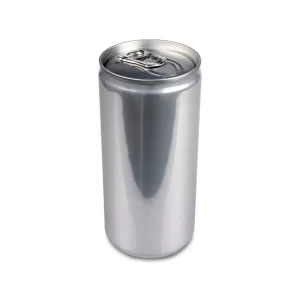
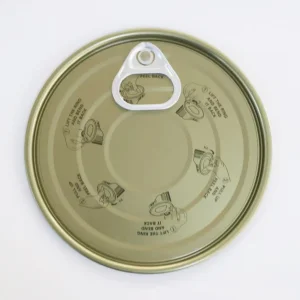
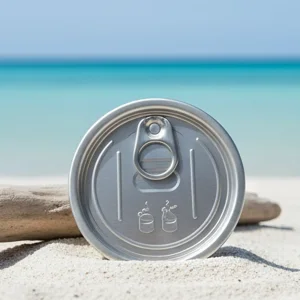
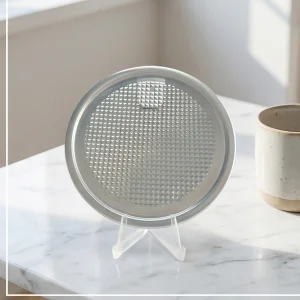
Explore our full line of standard, sleek, anti-static, and low-profile packaging solutions available for wholesale global shipment.
Expert insights for packaging engineers, procurement managers, and beverage line operators.
Can bodies are manufactured primarily from AA 3104-H19 aluminum alloy, which offers ideal work-hardening properties for deep drawing and wall ironing (DWI). Easy-open end shells utilize AA 5182-H48 for maximum buckle strength under high carbonation pressures, while pull tabs are stamped from AA 5052-H38 to ensure smooth rivet formation and tab lifting lever force without tearing.
BPA-NI coatings (utilizing acrylic, modified polyester, or polyolefins) eliminate intentional bisphenol-A compounds to comply with European Regulation (EU) 2024/3190 and US FDA food contact standards. Modern BPA-NI formulations match traditional epoxy in acid/sulfur resistance, flavor neutrality, and thermal flexibility during pasteurization.
Plain unprinted (bright) cans start at one 40ft high-cube ocean container (approx. 150,000 to 200,000 units depending on profile height). Fully customized 8-color printed cans typically require 100,000 to 300,000 units per design SKU due to high-speed dry offset plate setups and lacquer curing line balancing.
Cans are palletized using automated layer pad insertion, top wooden frames, high-tension polyester strapping, and full stretch-hood film wrapping. Container interiors are equipped with industrial VCI anti-corrosion desiccant bags to prevent 'container rain' condensation during oceanic transit through varying climate zones.
