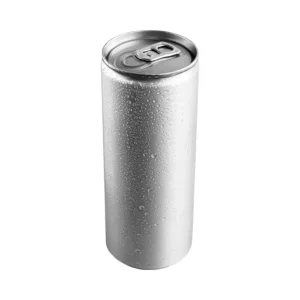
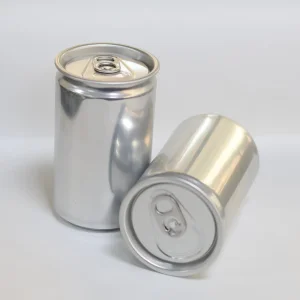
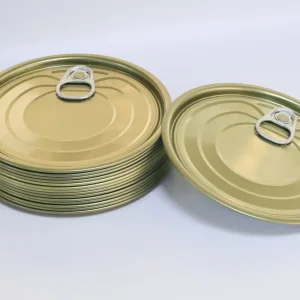
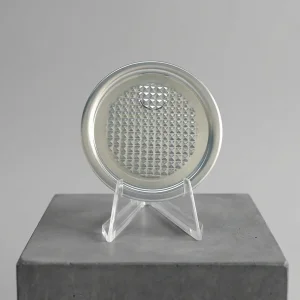
Explore our factory-direct wholesale aluminum beverage cans, tinplate lids, and easy-open ends optimized for high-speed filling lines.
Unpacking the metallurgical integrity, geometric precision, and scoreline physics of global 73mm easy open end (EOE) manufacturing.
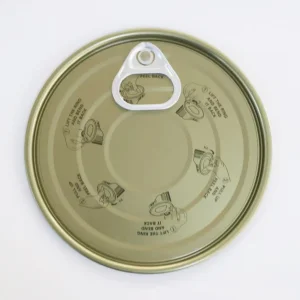
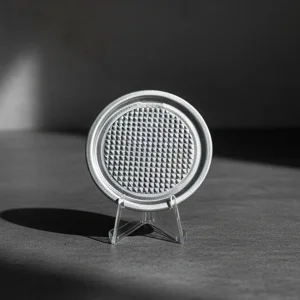
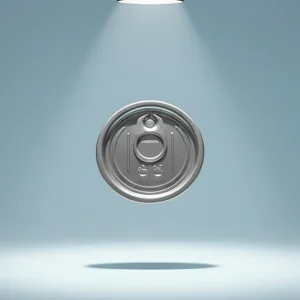
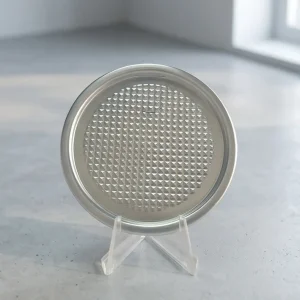
In modern industrial metal packaging, the 73mm Easy Open End (commonly referenced as the 300 diameter code in international trade) represents a mission-critical closure component. Engineered for seamless integration with tinplate cans, composite paperboard bodies, and rigid aluminum containers, the 73mm full-aperture easy-open end (FAEOE) allows consumers to access dry powders, processed seafood, ready-to-eat meals, and pet food products effortlessly without a can opener.
Achieving perfect reliability across high-speed seaming lines running at speeds of 600 to 1,200 cans per minute requires microscopic dimensional control. The end shell must exhibit extreme yield strength under thermal sterilization conditions while maintaining an engineered scoreline that requires low opening forces (pop and tear values) for end users.
The operational success of a 73mm easy open end relies heavily on scoreline residual control. Our automated Minster and Stolle conversion presses maintain score residuals within a tight ±0.002 mm tolerance. This guarantees that internal pressures up to 3.0 bar during retort process do not cause premature scoring fatigue, while ensuring consumer pull forces remain under 40 N.
| Parameter / Metric | Technical Specification (Aluminum EOE) | Technical Specification (Tinplate EOE) | Testing & Compliance Protocol |
|---|---|---|---|
| Nominal Diameter Code | 73 mm / 300 # (73.4 ± 0.15 mm) | 73 mm / 300 # (73.4 ± 0.15 mm) | ISO 9001:2015 Optical Gauge |
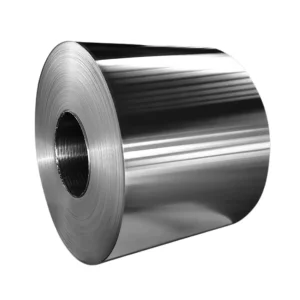
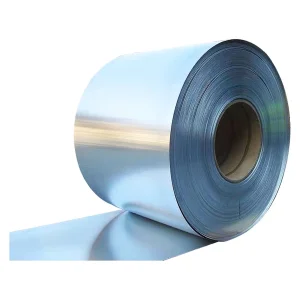
| Shell Base Metal | Aluminum Alloy 5182-H48 / 5052-H19 | Single/Double Reduced Tinplate (DR8 / T3) | ASTM B209M / EN 10202 |
| Nominal Thickness Gauge | 0.21 mm – 0.24 mm (±0.005 mm) | 0.19 mm – 0.22 mm (±0.005 mm) | Micrometer & X-ray Fluorescence |
| Pop Opening Force | 14.0 N – 22.0 N | 16.0 N – 26.0 N | Digital Force Gauge Tester |
| Tear Pulling Force | 22.0 N – 38.0 N | 25.0 N – 45.0 N | Full-Tear Dynamic Load Cell |
| Internal Coating System | Organosol / BPA-NI Polyester / Epoxy | Organosol / Epoxy Phenolic / BPA-NI | FDA 21 CFR 175.300 / EU 10/2011 |
| Sealing Compound | Water-based Synthetic Rubber Compound | Water-based / Solvent-free Elastomer | High-temperature Retort (121°C / 30 min) |
How sustainability mandates, lightweighting metallurgy, and stringent regulatory updates are reshaping B2B supply chains.
Global food brand owners face intense pressure to reduce Scope 3 emissions. Transitioning 73mm end shells from standard 0.24mm aluminum coil down to ultra-thin 0.205mm gauge using advanced 5182-H48 thermo-mechanically treated alloys cuts raw material consumption by up to 14% without compromising seam integrity or internal pressure limits.
Driven by strict European Food Safety Authority (EFSA) directives and California Proposition 65 regulations, the global metal packaging market has rapidly phased out Bisphenol-A (BPA)-based epoxy lacquers. Modern 73mm ends feature high-performance BPA-Non Intent (BPA-NI) acrylic, polyester, and organosol lining systems that offer superior chemical resistance against acidic tomato pastes and corrosive pet food formulations.
Tier-1 suppliers are embedding optical AI inspection modules directly onto 2,500 end-per-minute stamping lines. These vision sensors evaluate compound placement uniformity, check tab alignment, detect microscopic pinholes, and measure score depth consistency in real time, reducing defective parts per million (PPM) to under 5 PPM.
What procurement directors evaluate when qualifying 73mm EOE suppliers: Total Cost of Ownership (TCO), quality assurance, and high-speed double-seam compatibility.
For international food conglomerates and contract packagers, sourcing wholesale 73mm easy open ends extends far beyond baseline piece price. Procurement teams operate under stringent Total Cost of Ownership models where a single micro-crack, flange deformity, or double-seam failure can halt automated filling lines, triggering tens of thousands of dollars in lost throughput and product recalls.
A key requirement for global buyers is ensuring 73mm ends run smoothly across multi-brand seaming platforms like Angelus, Ferrum, Somme, and Comaco. Variations in countersink depth or end curl radius can cause micro-leakage or flange cutting during double seaming. Leading suppliers provide precise chuck and roll profiles tailored to the seamer, minimizing teardown rejection rates.
Given the ocean freight distances between manufacturing hubs and overseas packing facilities, bulk packaging architecture is critical. 73mm ends are nested into paper sleeves (or continuous plastic film tubes), packed in moisture-resistant corrugated cartons, and stretch-wrapped on heat-treated ISPM-15 compliant pallets fitted with heavy-duty top frames.
Tailoring 73mm EOE lacquer chemistries and mechanical features across diverse consumer product segments.
High-salt and sulfur-rich proteins require special sulfur-resistant Organosol lacquers (with aluminum paste additives) to prevent black staining caused by iron sulfide formation during high-temperature retort cooking (121°C for 45 mins).
For milk powders, specialty nutritionals, and instant coffee packed under nitrogen flush, 73mm ends must provide a near-zero oxygen transmission rate (OTR < 0.05 cc/m²/day) to prevent lipid oxidation and preserve freshness over a 36-month shelf life.
Processors packing premium wet cat and dog foods in 73mm cans require full-aperture ends that prevent meat tearing during consumer access, backed by acid-resistant internal linings engineered to withstand aggressive lipid and acid content.
Tomato paste, diced fruits, and pickled products contain high organic acid loads (low pH 3.2 – 4.5). High-build double-coat vinyl or BPA-NI polyester linings prevent acid migration and extend shelf life stability.
Assuring seamless global integration through local technical support, custom branding options, and comprehensive regulatory documentation.
Our field application engineers assist local canning facilities with double-seam setup, teardown measurements (optical overlap, body hook, cover hook), and chuck adjustment, ensuring zero seam leakage right from initial line trial.
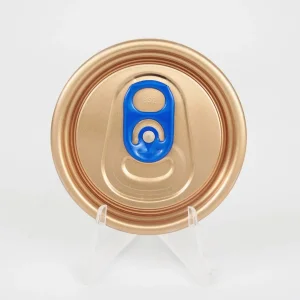
Enhance brand differentiation at the point of consumption with custom tab color anodization (red, black, blue, gold), under-tab laser etched promo codes, and up to 4-color high-resolution lithographic offset shell printing.
Every shipment is covered by batch-specific Certificates of Analysis (CoA), including ISO 9001:2015, FSSC 22000, US FDA 21 CFR 175.300 compliance, EU Regulation 1935/2004 food-contact suitability, and REACH/RoHS toxicity declarations.
Pioneering advancements in smart metal packaging, zero-solvent compounds, and hybrid peelable aluminum membranes.
Next-generation 73mm easy open ends are phasing out solvent-borne sealing compounds in favor of advanced water-based synthetic latex emulsions. These zero-volatile organic compound (VOC) sealants reduce ambient emissions during manufacturing while maintaining exceptional elasticity and seam seal integrity during retort heating cycles up to 131°C.
Emerging as an alternative to traditional full-aperture rigid aluminum easy-open ends, 73mm Peel-Off Ends combine a rigid tinplate or aluminum outer ring with a heat-sealed, multi-layer aluminum foil membrane. This innovation reduces opening force by over 70%, completely eliminates sharp tear edges, and cuts end component weight by up to 35%.
Expert engineering answers to common procurement, technical seaming, and compliance questions.
Complete your supply chain requirement with our factory-direct aluminum easy-open ends, slim beverage cans, and lacquered aluminum coils.