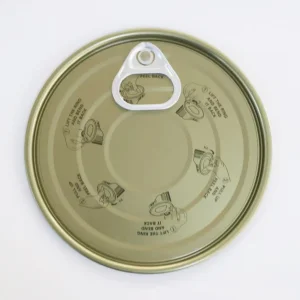
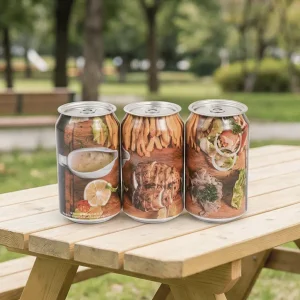
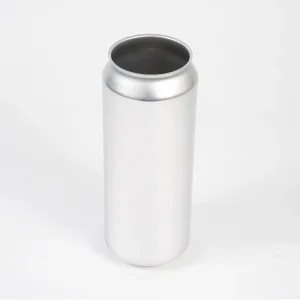
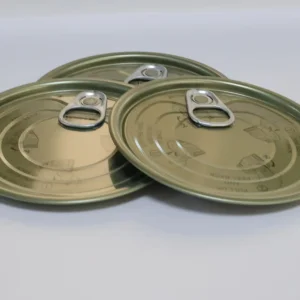
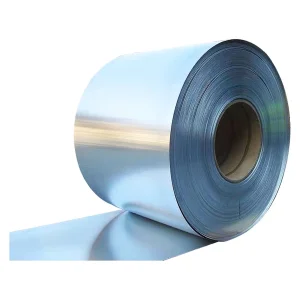
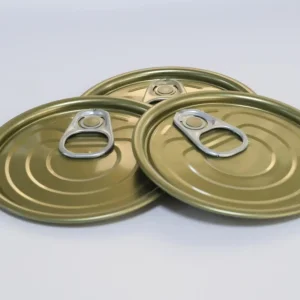
High-precision manufactured metal closures, tinplate lids, aluminum easy-open ends, and raw material coils engineered for seamless high-speed canning automation.
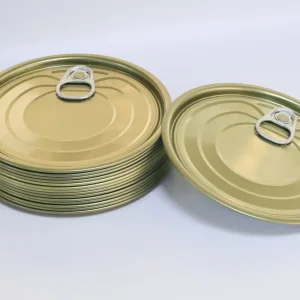
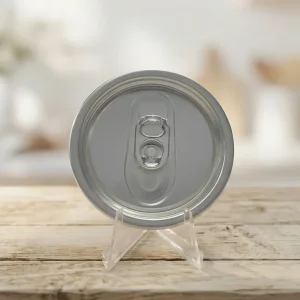
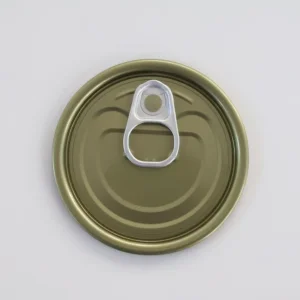
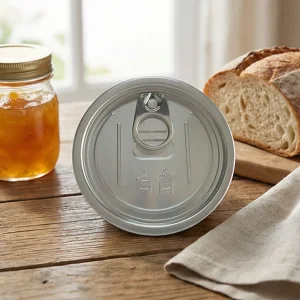
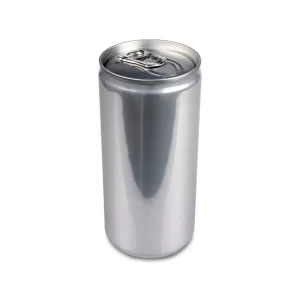
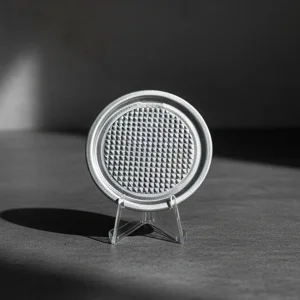
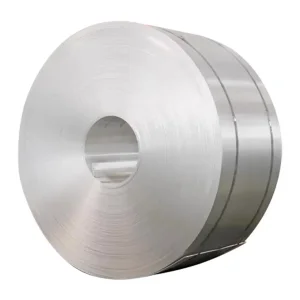
The international rigid metal packaging sector is experiencing a structural migration toward highly engineered, hermetically sealed, and consumer-friendly opening mechanisms. Among standard industry dimensions, the 307 Easy Open End (EOE)—measuring an inside shell diameter of 83.3mm—serves as the backbone for global food preservation, infant nutritional formula, canned seafood, processed vegetables, and premium dry powders.
Modern global food processors require absolute zero-defect performance on high-speed double-seaming filling lines operating at speeds between 600 to 1,200 cans per minute (CPM). In this demanding manufacturing ecosystem, direct procurement from tier-one wholesale 307 Easy Open End factories is no longer merely a purchasing decision; it is a critical strategy to secure supply chain resilience, ensure food safety compliance, and maximize line efficiency.
Providing genuine Information Gain requires delving into the precise metallurgical and mechanical parameters that differentiate high-tier 307 EOE production lines from standard stamping facilities.
Whether utilizing Electrolytic Tinplate (ETP) or high-tensile Alloy 5182-H48 Aluminum, raw material control is paramount. For tinplate 307 ends, single-reduced (SR) or double-reduced (DR) steel tempers (DR8 or T3/T4) with temper grades optimized for deep-drawing prevent buckle failure during thermal processing.
The score line is the laser-etched or mechanically coined groove that allows human fingers to pull open the metal lid without excessive force. In a 307 EOE, residual thickness must be calibrated to 28 µm to 35 µm (±2 µm). Too thick, and the consumer experience suffers (pop/pull force exceeds 35N); too thin, and micro-cracking leads to loss of vacuum during shipment.
With global mandates like EU Regulation 1935/2004 and US FDA 21 CFR 175.300 strictly regulating food contact materials, modern factories deploy BPA-Non-Intent (BPA-NI) organosol, acrylic, or polyester linings. These internal lacquers resist sulfur staining from high-protein canned meats and withstand high-acid environments (pH < 4.2).
| Specification Parameter | Tinplate 307 EOE (Full Opening) | Aluminum 307 EOE (Full Opening) | Aluminum 307 Peel-Off Membrane (POF) |
|---|---|---|---|
| Nominal Diameter | 307# (83.3 mm / 3-7/16") | 307# (83.3 mm / 3-7/16") | 307# (83.3 mm / 3-7/16") |
| Base Material & Temper | ETP / TFS (TH435 / DR8, 0.20-0.24mm) | Alloy 5182-H48 (0.22-0.26mm) | Tinplate Ring + Foil Membrane (0.06mm) |
| Pop Strength (Initial Opening) | 18.0 N – 26.0 N | 14.0 N – 22.0 N | 6.0 N – 12.0 N |
| Tear Force (Full Removal) | 28.0 N – 42.0 N | 22.0 N – 34.0 N | 8.0 N – 16.0 N |
| Pressure & Retort Capability | 121°C / 131°C Retort Resistant (1.8-2.5 bar) | 121°C Retort Resistant (1.5-2.0 bar) | Dry Powder / Non-Retort Vacuum Only |
| Sealing Compound | Water-based Synthetic Rubber Compound | Water-based PVC-Free Compound | Heat-Sealed Polyolefin Barrier Film |
The metal packaging market is undergoing massive structural modernization. Lead wholesale suppliers are integrating Industry 4.0 IoT monitoring, high-speed vision inspection, and light-weighting research to solve macro-level supply challenges.
Modern 307 EOE factories utilize 24-lane conversion presses operating at up to 3,000 ends per minute. Every single shell undergoes multi-stage curling, tab-forming, riveting, and compound injection. Integrated high-speed vision systems scan 100% of finished ends for pinholes, score-line anomalies, and coating scratches.
By optimizing shell geometry and utilizing Finite Element Analysis (FEA), advanced engineering teams have successfully reduced 307 EOE tinplate thickness from 0.24mm down to 0.20mm without compromising structural buckle strength during high-pressure thermal sterilization cycles.
To avoid product contamination, 307 ends employ automated water-based compound lining units. The lining weight is strictly controlled within ±5mg to guarantee double seam integrity (overlap percentage > 80%) on industrial can closing machinery.
The versatile 307 Easy Open End format adapts to distinct food processing standards across international markets. Understanding regional application nuances is critical for brand owners and cannery operators.
Market Application: Tuna, sardines, corned beef, and ready-to-eat meals.
Technical Requirement: Requires high retort-grade gold organosol or aluminum-pigmented inner lacquers capable of resisting 121°C thermal processing for 60-90 minutes without blistering or peeling. Anti-sulfur compound resists darkening caused by amino acid breakdown.
Market Application: Milk powder, protein supplements, and specialized clinical nutrition.
Technical Requirement: Frequently pairs 307 Peel-Off Foil (POF) membranes or anti-static aluminum easy-open ends with nitrogen-flush filling systems to ensure an oxygen level < 0.5%, preserving active nutrients and extending shelf life to 36 months.
Market Application: Pineapple slices, diced tomatoes, tomato paste, and sweet corn.
Technical Requirement: High acidity (pH 3.5 - 4.5) requires heavy tin coating mass (e.g., ETP 2.8/2.8 g/m²) and specialized organosol enamel to prevent iron dissolution and product discoloration.
The future of 307 EOE manufacturing lies at the intersection of material science, digital quality control, and zero-landfill circular economy targets.
Complete global migration away from legacy epoxy-phenolic resins to next-generation acrylic and polyester inner coatings. Transition to PVC-free waterborne sealant compounds to comply with EU microplastic and chemical safety directives.
Integration of inline AI-powered optical systems capable of measuring micro-score residual depth (accurate to ±0.5 µm) at full press speeds. Automated real-time tool adjustment eliminates manual gauge sampling and reduces scrap rates to near-zero.
Adoption of green hydrogen-reduced steel coil and 100% recycled aluminum alloys (5182 scrap recovery loops). Further gauge reduction down to 0.18mm via advanced corrugated rim stiffening designs.
Expert answers to common engineering, procurement, and quality assurance questions when sourcing 307 Easy Open Ends from wholesale manufacturing partners.
In standard metal packaging nomenclature, "307" denotes a nominal diameter of 3 inches and 7/16ths of an inch, which translates to an inside curl diameter of approximately 83.3 mm. This end size fits 307-diameter tinplate cans, composite paper cans, and plastic PET jars used across food and dry powder packaging.
To prevent retort micro-cracking and rust, specify an anti-corrosion repair lacquer over the score line (especially critical for tinplate ends). Ensure your retort system maintains appropriate counter-pressure (air overpressure) during the cooling phase to balance internal pressure spikes against the end's buckle threshold.
Full Opening (EOE) ends allow the entire center panel to be detached from the rim, which is essential for solid or viscous food products like meats, fish, fruit, and powders. Stay-On Tab (SOT) ends keep the tab connected after opening and are primarily utilized for liquid beverages.
Prior to full container release, validate the factory's COA (Certificate of Analysis) for: (1) Pop & Tear values, (2) Enamel Rater electrical conductivity (< 2mA), (3) Compound weight per end, (4) Micro-section double seam compatibility tests on your specific seaming chuck/roll profile, and (5) Migration compliance reports (BPA-NI, FDA, EU 1935/2004).
Explore additional specialized tinplate closures, aluminum beverage cans, and high-purity aluminum coil stock manufactured for worldwide distribution.