Engineered to deliver total gas barrier protection, precise seam tightness, and structural integrity under modified atmosphere packaging (MAP) conditions.
When commercial coffee roasters, contract packagers, and multinational beverage enterprises query "Wholesale Coffee Tin Can Factories Supplier & Suppliers", their intent extends far beyond procuring a simple metal cylinder. B2B procurement heads and packaging engineers seek an integrated manufacturing partner capable of solving the unique biophysical challenges of roasted coffee preservation.
Freshly roasted coffee beans represent a complex chemical system. Post-roasting degassing releases significant volumes of carbon dioxide ($CO_2$)—up to 10 liters per kilogram of dark roast over several weeks—while simultaneously remaining vulnerable to four critical environmental factors: Oxygen ($O_2$), Moisture ($H_2O$), UV Radiation, and Volatile Organic Compound (VOC) dissipation. Flexible laminate bags often fail under puncture stress or micro-channel leaks, leading to loss of aromatic notes (furans, pyrazines) and lipid rancidification.
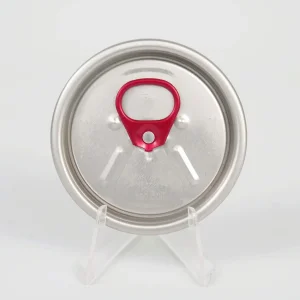
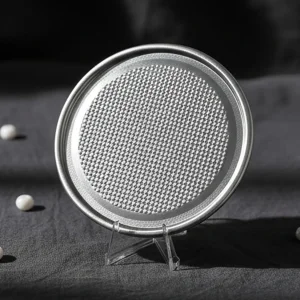
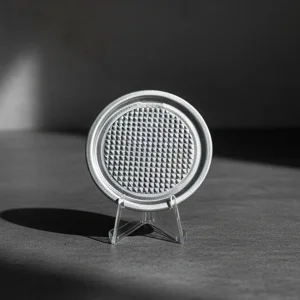
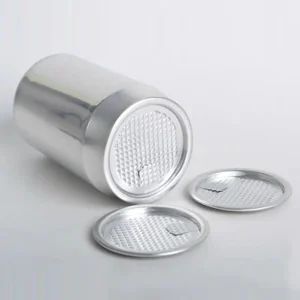
Rigid metal tinplate and aluminum containers manufactured by premier Chinese supplier plants deliver an impermeable physical barrier. By combining high-tensile tinplate bodies (ETP or TFS) with precision-machined aluminum easy-open ends (EOE) and integrated one-way degassing valves, modern coffee tin can factories offer unmatched shelf-life extension and premium brand positioning on retail shelves worldwide.
The global metal packaging industry is undergoing a structural paradigm shift driven by circular economy mandates, advanced material science, and Industry 4.0 automation. The technical roadmap for coffee tin can factories centers on four core engineering pillars:
Eliminating Bisphenol-A (BPA) is no longer optional. Modern factories utilize Bisphenol A Non-Intent (BPA-NI) and polyester-based organosol linings that prevent coffee oil acids from interacting with metal substrate walls, preventing corrosion while guaranteeing zero flavor migration.
Replacing thermal adhesive degassing valves, next-gen lines utilize ultrasonic welding to bond polyethylene one-way valves directly into the tinplate lid. This guarantees a pressure-tested seal that releases $CO_2$ at 2–5 mbar while blocking external air intrusion.
Through finite element analysis (FEA) and double-reduced (DR) tinplate temper technology (such as DR8/DR9), wall thicknesses have been reduced down to 0.16mm–0.18mm without sacrificing column crush resistance or buckle strength during high-pressure nitrogen dosing.
Laser-engraving unique serialized QR codes on the bottom dome or beneath the peel-off foil lid allows brand owners to implement end-to-end anti-counterfeiting, batch tracing, and direct-to-consumer digital engagement campaigns.
Selecting the correct metal container geometry and closure configuration depends heavily on the coffee product state—whether whole bean, fine espresso grind, instant freeze-dried powder, or ready-to-drink (RTD) nitro cold brew. Below is a comparative technical matrix mapping product formats to optimal packaging parameters:
| Coffee Product Format | Key Packaging Challenge | Recommended Substrate & Gauge | Closure & Sealing Mechanism | Target Nitrogen / MAP Spec |
|---|---|---|---|---|
| Whole Bean Specialty | Continuous $CO_2$ degassing & lipid oxidation | 3-Piece Welded Tinplate (0.19mm) or 3104 Aluminum | Aluminum Peel-Off Membrane + 1-Way Valve + Plastic Overcap | Residual $O_2$ < 0.5%, Positive pressure degassing |
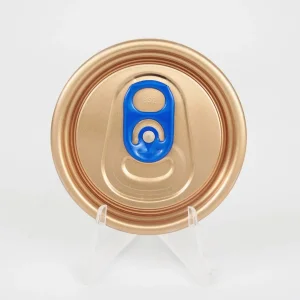
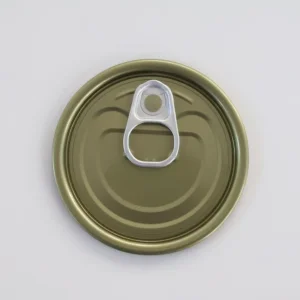
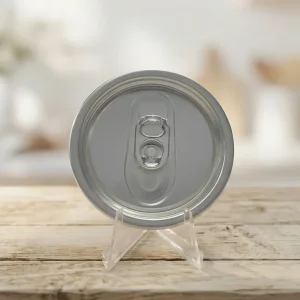
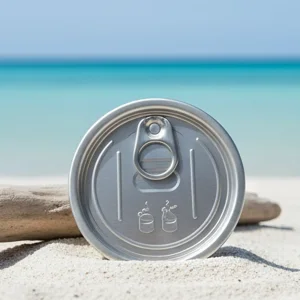
| Fine Espresso / Ground | High surface area rapid oxidation & moisture absorption | Electrolytic Tinplate (ETP) with Compound Curl | 211# or 307# Easy-Open End (EOE) with Full Aperture | Vacuum Sealing or High-Purity $N_2$ Flush (>99.99%) |
| Instant / Freeze-Dried | Extreme hygroscopic clumping risk | Seamless Drawn Tinplate or Aluminum Can | 401# or 502# Foil Membrane Lids with Plastic Lid | Relative Humidity inside package < 2.0% |
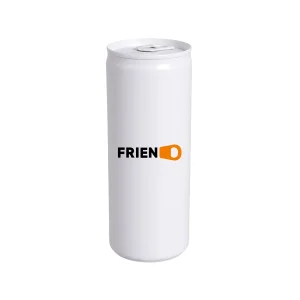
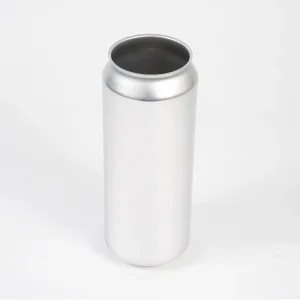
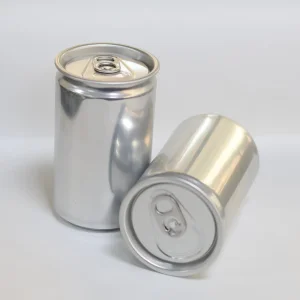
| Ready-To-Drink (RTD) Cold Brew | Liquid leakage, carbonation pressure, thermal sterilization | 3104-H19 Aluminum Beverage Can (200ml–500ml) | 202# SOT or RPT (Resealable) Easy Open Lid | Liquid Nitrogen Dosing for internal rigidity (1.2–2.0 bar) |
Double-seam integrity is the ultimate line of defense. A complete double seam consists of three metal thicknesses (cover hook) and two metal thicknesses (body hook) interlocked under high mechanical compression. Experienced Chinese factories conduct seam teardowns every 30 minutes, measuring seam height, thickness, countersink depth, body hook, cover hook, and calculating overlap percentage ($\ge 55\%$) via digital video seam inspection software.
China's metal packaging ecosystem offers unparalleled structural cost advantages, rapid tooling iteration, and vertically integrated supply chains. Modern automated coffee tin can plants in industrial hubs like Shanghai, Zhejiang, and Jiangsu leverage Industry 4.0 infrastructure to ensure consistent delivery at scale.
Utilizing ultra-fast presses (such as Minster, Schuler, and Soudronic welders), production lines achieve speeds up to 1,200 ends per minute and 500 cans per minute with automatic high-voltage pinhole leak detection.
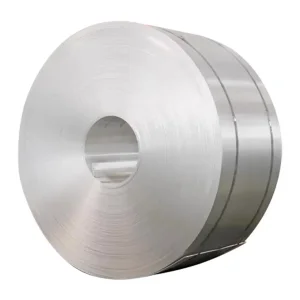
Advanced Fuji 8-color printing presses provide CMYK, Pantone color matching, tactile 3D spot embossing, matte/gloss hybrid varnishes, and metallic sheen effects directly onto coil stock before forming.
Direct partnerships with primary steel mills (Baosteel, Shougang) and aluminum smelters ensure consistent supply of 3104-H19 aluminum and prime ETP tinplate with guaranteed thickness tolerances ($\pm 0.005\text{ mm}$).
To mitigate risk and ensure seamless integration with high-speed automated filling lines, global procurement teams must audit prospective coffee tin can suppliers against strict technical metrics:
Navigating cross-border logistics and line commissioning requires proactive engineering consultation. Premier suppliers provide dedicated packaging engineers who assist clients during seam setup, providing custom chuck and roll profiles tailored to target seamers (e.g., Ferrum, Angelus, Continental Can).
Every shipment leaves the factory accompanied by a comprehensive Certificate of Analysis (COA), batch-level mill test certificates for steel/aluminum substrate, coating weight test records, and pre-shipment container loading photographs featuring intact security seal identification.
The one-way degassing valve consists of a rubber membrane, valve base, and viscous sealant oil. When $CO_2$ gas released by fresh coffee beans builds interior pressure above ambient pressure (approx. 2 to 5 mbar), the membrane lifts, allowing $CO_2$ to escape. Once pressure balances, the membrane snaps shut, preventing oxygen and moisture from entering the tin.
For plain/unprinted tin cans or stock aluminum easy-open ends, trial orders start at 10,000 to 20,000 units. For fully customized 8-color offset lithography printed tins, the standard production run starts at 30,000 to 50,000 units per design due to metal sheet coating and printing plate setup parameters.
Tinplate and aluminum offer zero oxygen permeability (OTR = 0 $cm^3/m^2\cdot day$), absolute moisture barrier (WVTR = 0 $g/m^2\cdot day$), 100% recyclability without quality loss, superior stackability for retail display, and complete protection against physical crushing during long-haul freight.
Yes. All food-contact lacquers (BPA-NI and organosol) are rigorously tested and certified per FDA 21 CFR 175.300, EU Regulation 1935/2004, and REACH/RoHS requirements. Test certificates are provided per production lot.
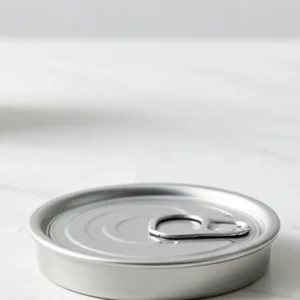
Absolutely. Our engineering team designs custom tooling for round, square, rectangular, and necked-in tin cans. Custom lid options include full-aperture aluminum easy-open ends (EOE), peel-off foil membranes, transparent window lids, and snap-on plastic overcaps.
Tooling development and sample proofing require 10 to 15 working days. Mass production following artwork approval typically takes 20 to 25 days. Port-adjacent shipment from Shanghai or Ningbo ensures fast vessel departure schedules.
Specialty powder lids, electronic-grade anti-static closures, non-magnetic lids, and raw aluminum coil stock for industrial packaging converting.