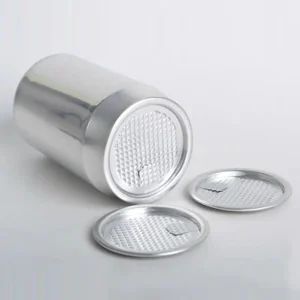
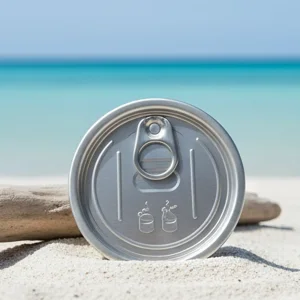
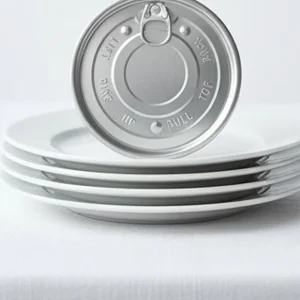
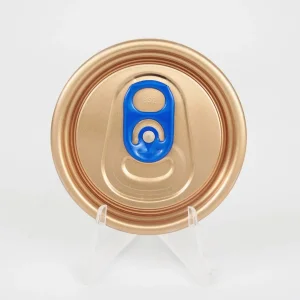
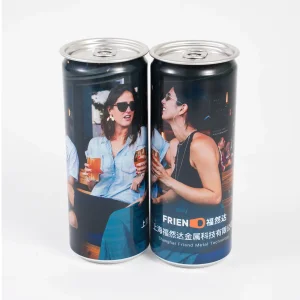
High-performance food-grade easy-open ends, sterilizable lids, and high-tensile beverage cans produced under strict ISO 9001 and FSSC 22000 protocols.
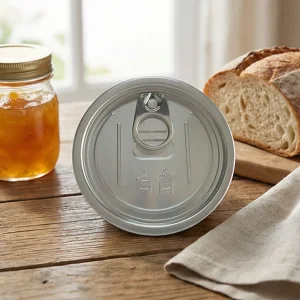
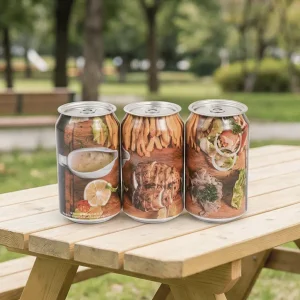


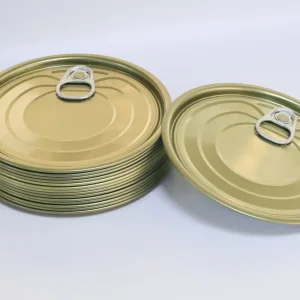
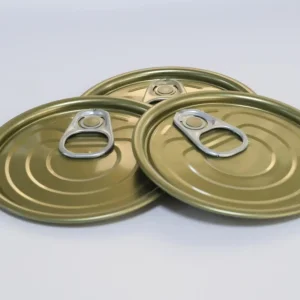
An analysis of structural demand, circular economy mandates, and advanced metallurgy driving rigid packaging procurements across international markets.
The global metal packaging market is undergoing an unprecedented structural shift driven by stringently enforced ESG (Environmental, Social, and Governance) policies, circular economy legislation, and shifting consumer preferences away from single-use plastics. Within this industrial landscape, can ends—encompassing Stay-On Tab (SOT), Ring Pull Tab (RPT), Full-Aperture Easy-Open Ends (EOE), and technical sanitary bottoms—represent the most complex, high-precision engineering node in the rigid container supply ecosystem.
Advanced OEM filling lines currently operate at speeds exceeding 1,200 to 2,000 cans per minute (CPM). At these velocities, dimensional tolerances for metal ends must be held to sub-micron accuracy. A deviation of mere hundredths of a millimeter in countersink depth, curl geometry, or score residual thickness can induce line stoppages, double-seam micro-leaks, or catastrophic pressure failures during thermal processing and retorting.
An engineering breakdown of material temper, barrier lacquer chemistries, and the mechanical forces governing double-seam hermetic seals.
Selecting the optimal alloy temper and internal liner chemistry is foundational to packaging longevity. Aluminum easy-open ends primarily utilize high-magnesium alloys such as AA 5182-H48 shell stock paired with AA 5052 tabs to deliver superior tensile strength, fracture toughness, and consistent rupture force during opening. For sanitary cans and specialized dry powder lids, Electrolytic Tinplate (ETP) and Tin-Free Steel (TFS/ECCS) offer cost-efficient, high-rigidity alternatives capable of enduring extreme axial pressure loading.
| Alloy Grade / Material | Typical Temper | Thickness Range | Tensile Strength (MPa) | Primary Industrial Application |
|---|---|---|---|---|
| AA 5182 Aluminum | H48 / H19 | 0.20 mm – 0.24 mm | 310 – 360 | Carbonated Soft Drink (CSD) & Beer Ends (202# SOT/RPT) |
| AA 3104 Aluminum | H19 | 0.24 mm – 0.28 mm | 270 – 310 | Deep-Drawn Can Bodies (Sleek, Slim, Standard Formats) |
| AA 8011 Aluminum | H14 / H24 | 0.18 mm – 0.30 mm | 140 – 180 | Peel-Off Foil Membrane Lids & Pharma Closures |
| Electrolytic Tinplate (ETP) | T3 / T4 / TH520 | 0.16 mm – 0.28 mm | 330 – 520 | Aerosol Bottoms, Retort Food Cans (211#, 300#, 401#) |
Advanced Bisphenol A Non-Intent (BPA-NI) acrylic, polyester, and organosol lacquers formulated to resist aggressive organic acids, high-sulfur compounds, and alcohol migration while satisfying FDA 21 CFR 175.300 and EU 10/2011 standard compliance.
Microscopic evaluation of seam parameters: First and second operation rolls engineered to yield optimal overlap percentage (>45%), controlled seam gap, precise countersink depth, and zero cover hook wrinkling under high internal pressures.
Ultra-precise scoring machinery ensures pop force (initial tab puncture) remains under 30 N, while pull-to-open force stays cleanly between 20 N and 45 N, preventing premature tab fatigue or incomplete membrane separation.
Different filling environments require distinct structural integrity profiles. Here is how modern metal factories configure ends across four critical sectors.
Specifically designed for CSDs, energy drinks, craft beers, and carbonated water. Utilizes 200# and 202# Stay-On Tab (SOT) and Resealable (RPT) ends engineered to withstand internal pressure loads reaching up to 6.2 Bar without buckle deformation.
Demands zero atmospheric oxygen ingress. Utilizes 305#, 401#, and 502# full-aperture aluminum ends and transparent-top view lids combined with high-barrier scoop-resting rims, anti-static interior coatings, and nitrogen flushing capabilities.
For canned vegetables, seafood, meat products, and ready meals. Incorporates 211#, 300#, and 307# tinplate ends with heat-resistant organosol compounds capable of surviving 121°C steam autoclave sterilization for 60 minutes without coat delamination.
Requires non-magnetic aluminum easy-open ends for sensitive active pharmaceutical ingredients (APIs), electronic-grade dry powders, and aggressive chemical reagents where non-reactivity and hermetic gas barrier defense are critical.
Demonstrating verifiable authority and engineering reliability through rigorous laboratory testing protocols and internationally recognized certifications.
To guarantee complete supply reliability, tier-1 metal can ends factories operate high-speed automated visual inspection lines integrated with real-time High-Voltage Pin-Hole Testers and Optical Vision Inspection Systems (OVIS). Every production batch undergoes comprehensive laboratory teardowns to measure critical structural metrics:
| Testing Parameter | Testing Methodology | Standard Threshold | Quality Objective |
|---|---|---|---|
| Enamel Rater Test (mA) | 1% NaCl solution under 6.3V DC current | < 2.0 mA (Target < 0.5 mA) | Verify 100% continuous coating integrity without micro-cracks |
| Buckle Pressure Resistance | Pneumatic water chamber pressurization | > 6.2 Bar (CSD Ends) | Prevent end dome distortion during pasteurization & transport |
| Pop & Pull Mechanics | Automated tensile pull gauge testing | Pop: 18 - 28 N / Pull: 22 - 38 N | Ensure effortless ergonomic opening for end consumers |
| Salt Spray Resistance | ASTM B117 5% NaCl fog chamber | > 96 Hours zero red rust | Guarantee ocean freight & humid climate shelf endurance |
| Cross-Hatch Coating Adhesion | ISO 2409 Cross-cut tape test | Class 0 (Zero flaking) | Ensure liner stays firmly bonded during deep drawing and scoring |
Seamless intercontinental shipping protection and localized technical support engineered to match your plant's exact seamer specifications.
Full tooling adjustment support for leading worldwide high-speed double-seamers including Angelus, Ferrum, Continental Can, Pneumatic Scale Corp, and CFT. Engineers provide custom chuck and roll profile recommendations to eliminate seam defects on-site.
Metal ends are bundled in heavy-duty polyethylene sleeves, packed inside moisture-sealed corrugated fibre drums or heavy boxes with industrial desiccants, and secured on fumigated ISPM-15 wooden or plastic pallets with automated stretch-hooding.
Complete documentation packages supplied with every shipment: Mill Test Certificates (MTC), Food-Contact Migration Reports, Heavy Metal Compliance Declarations (RoHS/REACH), Certificate of Origin (Form E/COO), and pre-shipment container seal photos.
How next-generation manufacturing technology is reducing metal consumption while adding digital value to the packaging supply chain.
The metal packaging industry is aggressively pursuing sustainable innovation through three core engineering pillars:
Deep-dive technical answers to crucial engineering, compliance, and supply chain queries raised by global buyers.
Additional certified aluminum lids, tinplate closures, and specialty easy-open ends ready for worldwide export dispatch.