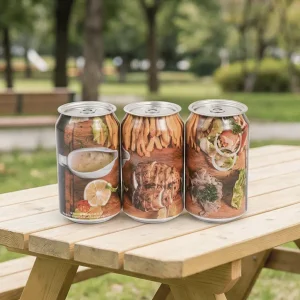
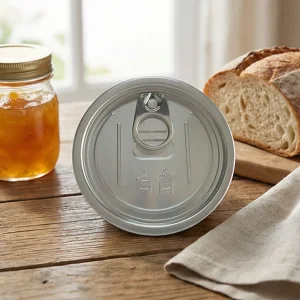
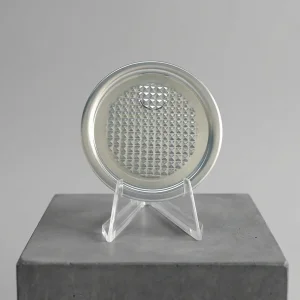
Explore our primary wholesale product selection featuring high-grade alloy formulations, hermetic integrity, and international food-grade compliance.
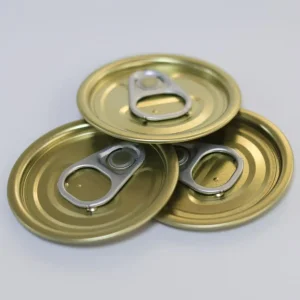
The global metal packaging market is undergoing a structural paradigm shift driven by extended producer responsibility (EPR) mandates, corporate ESG targets, and evolving consumer preferences toward infinitely recyclable substrate materials. Aluminium seals, easy-open ends (EOE), stay-on tabs (SOT), ring-pull tabs (RPT), and aluminium coil stock represent the absolute technological core of modern rigid container hermetic sealing. Valued at over $45 Billion globally, the market for aluminum beverage cans and rigid metal closures continues to demonstrate a robust CAGR exceeding 5.8%, outperforming traditional single-use polymers and fragile glass formats.
Commercial growth is strongly anchored across four key consumer and industrial categories: high-pressure carbonated soft drinks (CSD), craft brewing and ready-to-drink (RTD) alcoholic beverages, specialized infant nutrition and pharmaceutical powders, and industrial chemical aerosols. The structural transition toward slim, sleek, and high-volume standard cans requires closure mechanisms engineered to precise dimensional tolerances to prevent micro-leakage, pressure venting failures, and atmospheric contamination during trans-oceanic transit.
Furthermore, regional legislation across North America (FDA 21 CFR 175.300), the European Union (EU Regulation 1935/2004), and Asia-Pacific (GB 4806.10) has forced a complete overhaul of protective barrier coatings. The industry standard has fully migrated to BPA-Non-Intent (BPA-NI) acrylic and polyester lining systems. Modern procurement strategies require buyers to evaluate not merely unit price, but metallurgical integrity, double-seam teardown mechanics, enamel rating parameters, and supply chain continuity.
Achieving absolute hermetic integrity in high-speed canning operations demands rigorous controls over alloy chemistry, temper states, and mechanical forming tolerances. A failure in seal specification can lead to catastrophic pressure loss, oxidation, product spoilage, and costly line downtime. The primary aluminium alloys utilized in commercial packaging closure production are engineered for specific mechanical stressors:
Manganese-magnesium alloy formulated specifically for Drawn & Wall Ironed (DWI) can bodies. Provides exceptional tensile strength, ultra-consistent wall thickness, and superior earing control during high-speed deep drawing processes.
High-magnesium alloy engineered for easy-open end shell stock. Features outstanding work-hardening characteristics, offering high buckle resistance against internal carbonation loads while enabling precise rivet formation for tabs.
Formulated for superior ductility and anti-corrosion properties. 5052 is ideal for tough opening tabs, whereas 8011 is widely specified for lacquered foil seals, pharmaceutical pull-rings, and heat-sealable membrane covers.
The seal formed between the aluminium can neck and the end shell curl is governed by precise mechanical overlapping. Enterprise packaging buyers must regularly perform double-seam teardown checks to verify five core critical metrics:
| Seam Parameter | Technical Definition | Target Tolerance Range | Impact on Product Integrity |
|---|---|---|---|
| Body Hook Length (BHL) | Length of the turned end of the can body after seaming. | 1.35 mm – 1.55 mm | Inadequate hook leads to seam leakage; excessive length causes wall distortion. |
| Cover Hook Length (CHL) | Length of the folded end curl inside the double seam. | 1.30 mm – 1.50 mm | Ensures compound gasket compression to lock in gas pressure. |
| Actual Overlap | Interlocking distance between cover hook and body hook. | > 1.00 mm (> 55%) | The single most critical mechanical barrier against micro-channel leaks. |
| Countersink Depth | Vertical distance from top of seam to bottom of countersink radius. | 6.70 mm ± 0.10 mm | Resists internal pressure bulging and structural end buckle under thermal load. |
| Enamel Rating (mA) | Electrical conductivity test measuring internal lacquer continuity. | < 0.5 mA (Standard) | Prevents metal-beverage chemical contact and off-flavor migration. |
China's modern metal packaging sector has transitioned from high-volume assembly to advanced, automated precision manufacturing. Modern facilities, particularly located around key shipping hubs like Shanghai, combine upstream metallurgical refining with ultra-high-speed stamping, automated optical inspection (AOI), and integrated logistics management.
The operational efficiency of leading Chinese packaging manufacturers provides distinct commercial and technical advantages for global procurement directors:
Utilizing high-speed multi-cavity press lines capable of stamping over 3,000 easy-open ends per minute per line, coupled with dynamic stroke control to maintain micron-level dimple and rivet geometry.
100% automated optical inspection systems evaluate every single end shell and seam curl for microscopic pinholes, compound application voids, lacquer scratches, and tab positioning anomalies.
Direct proximity to deep-water maritime routes (such as Shanghai Port) minimizes land freight exposure, allowing automated stretch-hood palletized products to move smoothly from cleanroom packing straight into sea containers.
Different product categories require specialized aluminum seal formulations to withstand internal pasteurization temperatures, chemical acidity, vacuum pressure, or volatile ambient shipping environments. Below are the primary industrial application matrices:
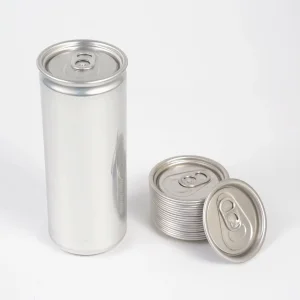
Primary Specs: 202 SOT / RPT ends, 200 Sleek & Standard 330ml/355ml/473ml Cans.
Technical Focus: High CO₂ internal pressure tolerance (up to 6.2 bar burst strength), pasteurization stability (121°C heat cycle endurance), and specialized BPA-NI organosol internal coatings to prevent citric or phosphoric acid flavor stripping.
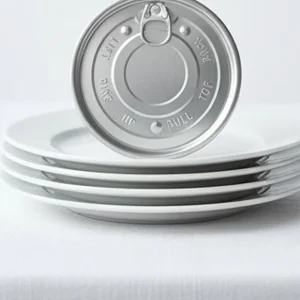
Primary Specs: 300#, 307#, 401#, and 502# Easy-Open Lids & Transparent-Top Powder Lids.
Technical Focus: Nitrogen-flush compatibility to ensure oxygen content remains below 0.5% for extended 24-month shelf life. Features score-line peelability for smooth consumer opening without metal edge hazard.
Primary Specs: Non-Magnetic 209FA#, 305# Sterilizable Aluminum Covers.
Technical Focus: Non-magnetic alloys for clean-room filling environments, high-temperature retort capability, complete moisture-vapor barrier, and anti-static internal varnish treatments to minimize powder adhesion.
Global supply chain executives must evaluate rigid packaging partners against structured technical criteria. Short-term unit price savings can be completely negated by seam failures, container collapses, or regulatory customs holds. Ensure your audit process covers these critical operational benchmarks:
Verify supplier documentation including FDA 21 CFR 175.300 migration testing, EU 1935/2004 declarations, Heavy Metal compliance (CONEG/RoHS), and REACH SVHC certifications.
Ensure end curls match your seaming chuck profile (e.g., Ferrum, Angelus, Pneumatic Scale). Request seaming setup diagrams and sample lots for mechanical trial seaming before mass order release.
Require bulk pallet packaging engineered with solid top-frames, heavy-duty corrugated slip sheets, VCI moisture protection film, and desiccant packs inside sealed stretch hoods.
The global metal packaging landscape between 2026 and 2030 will be governed by three major technological vectors:
1. Ultra-Lightweighting and Gauge Reduction: Engineering innovations are allowing end shell gauges to decrease from traditional 0.22mm down to 0.18mm without compromising structural buckle resistance. Advanced countersink ribbing and modified curl geometry allow thinner shells to safely maintain 6.2+ bar internal pressure performance.
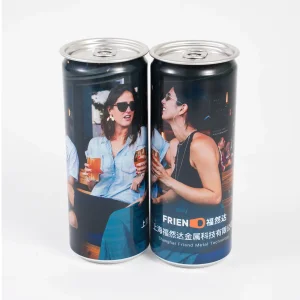
2. Digital Pre-Press & High-Definition Dry Offset Printing: Modern high-speed printing technology allows up to 8-color high-definition artwork directly applied onto aluminium can bodies, featuring matte varnish contrasts, tactile thermochromic inks, and laser-etched anti-counterfeiting QR codes directly on stay-on tabs.
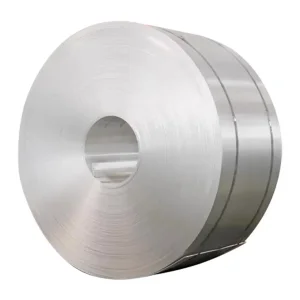
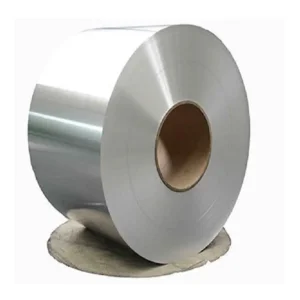
3. Closed-Loop Recycling Infrastructure: Used Beverage Cans (UBC) represent the gold standard of circular economics. Recycled aluminium requires 95% less energy than primary smelting. Leading Chinese manufacturers are drastically increasing post-consumer recycled (PCR) alloy content in 3104 coil stock to help global brands meet zero-carbon goals.
Clear answers to essential sourcing, engineering, and quality control questions.
Complete your packaging line procurement with our specialized industrial lids, transparent powder covers, and raw aluminium coil feedstock.