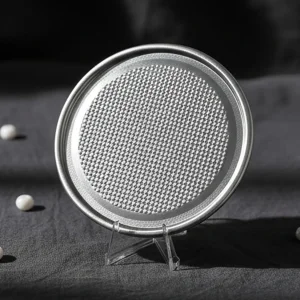
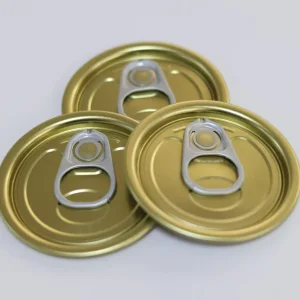
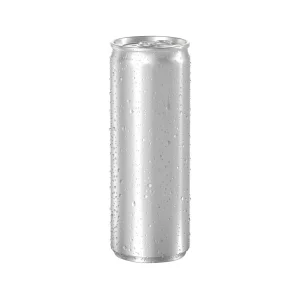
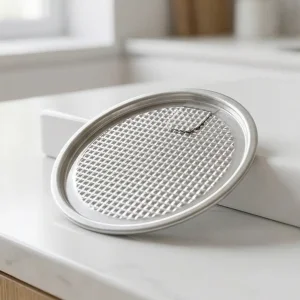
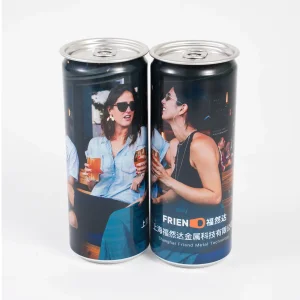
Explore our high-precision engineered aluminum containers, food-grade ends, and lacquered coils designed for seamless integration with high-speed filling lines.
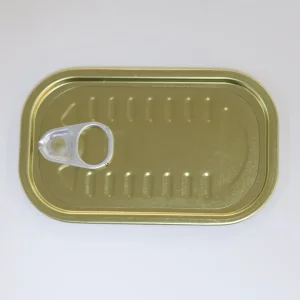
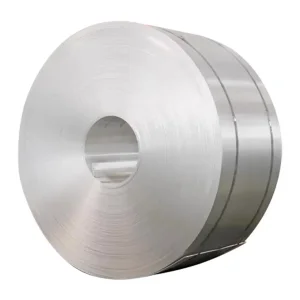
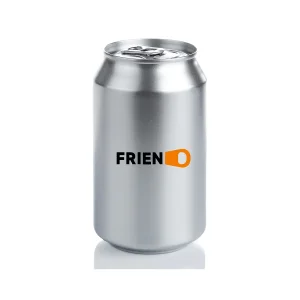
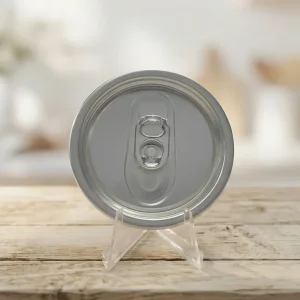

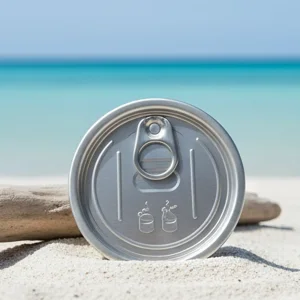
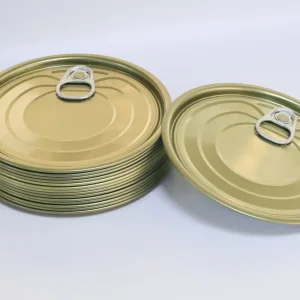
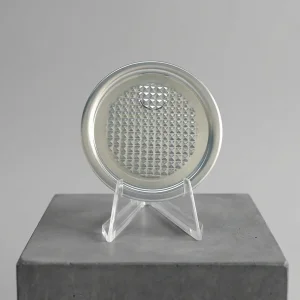
In the contemporary global packaging ecosystem, Wholesale Aluminum (Alu) Containers and their structural closures represent much more than inert vessel solutions. They are the backbone of the sustainable circular economy, engineered to fulfill demanding mechanical, barrier, and chemical requirements across fast-moving consumer goods (FMCG), beverage processing, infant nutrition, and pharmaceutical industries.
As corporate sustainability directives converge with tight regulatory frameworks—such as the European Union’s Packaging and Packaging Waste Regulation (PPWR) and global Extended Producer Responsibility (EPR) mandates—b2b enterprise buyers are rapidly shifting from traditional single-use polymers and multi-material laminates to infinitely recyclable aluminum architectures. Modern aluminum container manufacturing operates at a level of micrometer precision, demanding extreme metallurgical uniformity across 3104-H19, 5182-H48, and 5052-H32 alloys to guarantee zero-defect performance on automated filling lines operating at speeds exceeding 1,500 cans per minute.
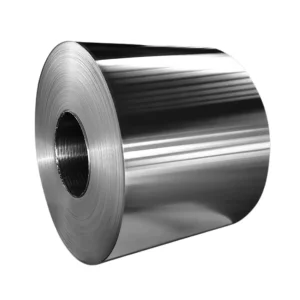
Leveraging advanced continuous casting and cold-rolling technology to maintain ultra-tight thickness tolerances (±0.002mm) and precise earing control, essential for deep-drawing and necking operations.
Complete isolation from ultraviolet light, ambient oxygen, moisture vapor, and volatile organic contaminants, maintaining interior flavor stability and extending shelf-life up to 36 months.
Advanced BPA-NI (Non-Intent) epoxy-acrylic and polyester internal lacquers engineered to pass stringent FDA 21 CFR 175.300 and EU 1935/2004 total migration compliance tests.
Understanding the macro drivers that dictate global aluminum container sourcing, material specifications, and regulatory compliance strategies across international trade corridors.
Multinational brands are heavily prioritizing low-carbon primary aluminum alongside high-recycled-content secondary aluminum. The implementation of Europe's Carbon Border Adjustment Mechanism (CBAM) has turned metal footprint tracing into an urgent operational requirement.
Wholesale aluminum container suppliers must now provide audited Scope 1, Scope 2, and Scope 3 emissions certificates. Utilizing clean hydroelectric power during primary smelting and maximizing scrap loop integration allows Chinese advanced factories to supply aluminum coils and container stock with dramatically lower carbon intensities per metric ton.
Engineering departments are aggressively pursuing "lightweighting"—reducing the gauge thickness of can body stock from 0.280mm down to 0.245mm, and end shell stock down to 0.208mm. While this yields significant savings in freight and raw material cost, it dramatically narrow the tolerance window for seamers.
To prevent sidewall buckling or flange cracking during high-speed double seaming, modern containers require enhanced axial column strength and strict countersink depth management. Suppliers must provide precise chuck and roll tooling recommendations alongside material heat lots.
| Alloy Grade | Temper | Tensile Strength (MPa) | Yield Strength (MPa) | Typical Thickness Range | Primary Industrial Application |
|---|---|---|---|---|---|
| 3104 Aluminum | H19 | 275 - 310 | 260 - 295 | 0.240mm - 0.285mm | DWI (Drawn & Wall Ironed) Beverage Can Bodies |
| 5182 Aluminum | H48 / H19 | 360 - 400 | 310 - 350 | 0.208mm - 0.240mm | Easy-Open Shells (SOT / RPT), High Buckle Pressure Ends |
| 5052 Aluminum | H32 / H34 | 210 - 260 | 150 - 200 | 0.220mm - 0.380mm | Pull Tabs, Specialty Powder Lids, General Packaging Caps |
| 8011 Aluminum | O / H14 | 100 - 165 | 80 - 145 | 0.150mm - 0.250mm | Peelable Foil Membranes, Pharmaceutical Seals, Deep-Draw Caps |
| ETP Tinplate | T2 - T4 / DR8 | 330 - 520 | 230 - 480 | 0.170mm - 0.230mm | Airtight Processed Food Cans, 401#/603# Heavy-Duty Food Lids |
How advanced Chinese manufacturing hubs integrate automated precision stamping, high-speed optical quality control, and cluster-based supply chain infrastructure to deliver unmatched enterprise value.
Deployment of state-of-the-art multi-die cupping and conversion presses running up to 3,000 ends per minute. Automated lubrication systems ensure zero metal scoring and consistent score-line residual depths within ±0.001mm.
100% online high-resolution optical cameras inspect every single container and closure for pinholes, tab misalignments, curl deformation, and coating scratches, rejecting sub-millimeter defects in real-time.
Direct access to the world’s largest container port facilitates seamless FOB/CIF/DDP freight execution. Factory-to-pier transit time under 4 hours ensures rapid booking turnaround and reliable shipping schedules.
The structural advantage of Chinese metal packaging manufacturing lies in its fully integrated supply chain network. Within a 50-kilometer radius, hot-rolling coil mills, chemical coating formulators, precision die-makers, lithographic printing houses, and automated testing labs co-exist. This cluster density slashes prototyping lead times from months to days, enables agile production shifts, and absorbs global market demand volatility effortlessly.
Evaluating suppliers purely on unit cost is a critical mistake in high-speed packaging applications. Total Cost of Ownership (TCO) is dictated by seamer downtime, line micro-stops, and shelf-life failures.
Tailoring aluminum containers and closure geometries to meet harsh climate conditions, varied filling technologies, and localized consumer preferences around the globe.
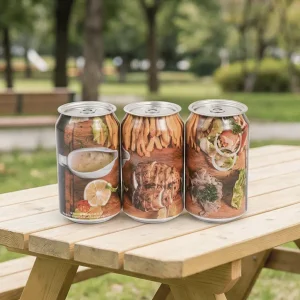
Configuration: 330ml / 355ml Standard & Sleek Cans + 202# SOT / RPT Ends.
Technical Challenge: High internal pressure stability up to 6.2 bar during thermal pasteurization.
Solution: 5182-H48 shell stock with modified countersink depth preventing end dome reversal during tunnel pasteurization.
Configuration: 401# & 502# Easy-Open Foil/Aluminum Lids + Anti-Static Lacquers.
Technical Challenge: Nitrogen-flush vacuum retention and prevention of fine powder static adhesion on rim.
Solution: Specialized anti-static lacquer formulations integrated with high-barrier peelable aluminum foil membranes.
Configuration: Rust-Proof Heavy-Duty Food Tinplate & Aluminum Ends.
Technical Challenge: Exterior rim oxidation and seam corrosion during multi-week ocean transit across equatorial humid regions.
Solution: Double-pass exterior clear/gold varnish with salt-spray corrosion resistance exceeding 96 hours continuous exposure.
Engineering answers to critical enterprise sourcing questions regarding alloys, minimum order quantities, filling line integration, and ocean freight protection.
Explore our full catalog of factory-direct metal packaging components engineered for global enterprise demands.