Standard-compliant lids, aluminum coils, and high-performance easy-open closures manufactured under strict ISO 9001 and FSSC 22000 quality systems.
Understanding the macroeconomic drivers, sustainability imperatives, and engineering breakthroughs redefining soft drink canning worldwide.
Aluminum beverage cans represent the ultimate closed-loop packaging model. With an average global recycling rate exceeding 70% and over 75% of all aluminum ever produced still in active use today, aluminum soft drink cans drastically outperform single-use PET bottles and glass in carbon payback periods and lifecycle sustainability benchmarks.
Modern Drawn and Wall Ironed (DWI) manufacturing technologies have allowed structural engineers to reduce container wall thickness down to sub-0.1mm dimensions while maintaining internal pressure capability up to 6.2 bar. This relentless lightweighting directly translates into reduced freight emissions and optimized material yield per ton of aluminum coil.
Global beverage giants require seamless compatibility at filling speeds surpassing 1,200 to 2,000 cans per minute (CPM). Microscopic tolerances in flange diameter, neck geometry, and countersink depth are paramount to eliminate double-seamer jam rates, downtime costs, and micro-leakage risks in high-throughput bottling plants.
Comprehensive engineering metrics governing aluminum coil grades, body temper specifications, and internal protective coating chemistry.
The manufacturing of high-performance soft drink cans demands precise metallurgical control. The can body, easy-open end, and pull tab each utilize specialized aluminum alloys engineered to balance formability, tensile strength, corrosion resistance, and axial load capacity.
| Component | Aluminum Alloy Grade | Temper Standard | Tensile Strength (MPa) | Primary Engineering Function |
|---|---|---|---|---|
| Can Body Shell | AA3104 / AA3004 | H19 | 270 – 310 MPa | Deep drawing & wall ironing (DWI), excellent structural rigidity under internal pressure. |
| Easy-Open Lid Shell | AA5182 | H48 / H19 | 360 – 410 MPa | High buckle strength, optimal score line consistency, superior pressure containment. |
| Pull Tab Mechanism | AA5052 | H19 | 310 – 350 MPa | Exceptional bend ductility, high torque resistance, zero rivet fracture rate. |
| Closure Foil / Lids | AA8011 | O / H14 | 140 – 180 MPa | Optimal foil dead-fold, airtight heat sealing, peelable barrier protection. |
For carbonated soft drinks (CSDs) containing aggressive organic acids (such as phosphoric acid in colas and citric acid in fruit-flavored drinks), internal lacquer integrity is the single most critical factor dictating product shelf life. A failure in the internal barrier coating leads to direct metal contact, causing aluminum dissolution, flavor degradation, gas loss, and eventual container pinholing.
From raw coil slitting to high-speed optical inspection, how our state-of-the-art facilities guarantee zero-defect delivery.
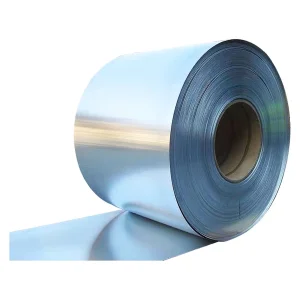
Sub-millimeter aluminum coils (AA3104-H19) are fed into multi-die cupping presses. The cups undergo continuous wall ironing through carbide dies, reducing side wall thickness down to precise fractions of a millimeter while forming the thick bottom dome designed to withstand internal pressure expansion.
Trimmed can bodies pass through multi-chamber industrial washers using deionized water and ecological surface conditioning agents. This removes all lubricant residues and creates a micro-etched conversion layer optimized for maximum lacquer adhesion.
Can bodies are decorated at speeds up to 1,800 CPM using 8-color dry-offset rotary printing presses. Specialized UV-curable inks, matte finishes, tactile varnish, or metallic gloss coatings are applied and cured in high-efficiency thermal pin ovens.
Precision airless spray guns inject food-grade BPA-NI liquid lacquers inside the rotating can body. Curing ovens cross-link the polymer coating into a seamless, flexible, acid-resistant protective barrier covering 100% of internal surfaces.
Can top openings are progressively die-necked down to standard end diameters (e.g., 200, 202, or 206 formats) and flanged for seam alignment. Every single can passes through 360-degree optoelectronic light testers to detect micro-cracks or pinholes down to 20 microns.
Finished cans are layer-stacked on heavy-duty export pallets with solid kraft slip-sheets, strapped under controlled tension, and sealed in moisture-vapor-proof heat-shrink film to guarantee pristine condition upon overseas container arrival.
Different beverage chemical matrixes require customized can volumes, pressure profiles, and easy-open end geometries.
Highly carbonated beverages generate significant internal pressures, often exceeding 4.0 to 5.0 bar under ambient transport temperatures. Our CSD containers utilize 3104-H19 high-tensile body stock paired with 202 SOT (Stay-On Tab) 5182 ends, engineered to prevent end-buckling or bottom-dome expansion during tropical ocean freight.
Craft beers and ready-to-drink (RTD) alcoholic beverages demand near-zero dissolved oxygen (DO) pick-up during high-speed filling. Our precision-flanged neck dimensions ensure exact double-seam interlock with 202 RPT (Ring Pull Tab) or SOT ends, preserving subtle hop aromatics and carbonation structure over 12+ month shelf lives.
Functional drinks containing vitamins, electrolytes, or dairy proteins often undergo pasteurization or tunnel retort processes (up to 121°C). Our high-temperature resistant internal coatings maintain structural cross-linking without blistering, peeling, or imparting organoleptic off-flavors to sensitive formulations.
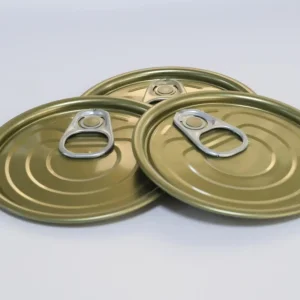
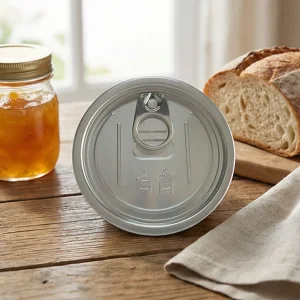
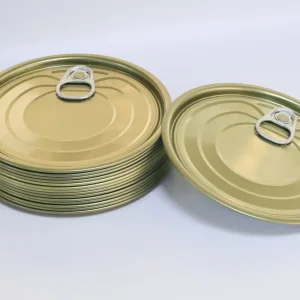
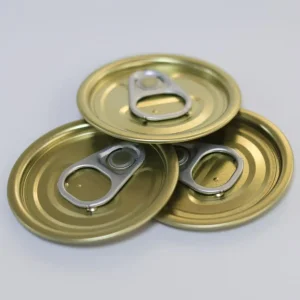
For sensitive infant formulas, milk powders, and dry coffee powders, vacuum-sealed nitrogen-flush protection is essential. Utilizing our 401#, 502#, and 300# easy-open foil and tinplate lids ensures absolute moisture barrier integrity and tamper-evident consumer safety.
Pioneering the next era of metal packaging through AI-driven quality monitoring, bio-based coatings, and smart supply chain traceability.
Targeting an additional 5-8% reduction in body wall gauge through advanced finite element analysis (FEA) computer modeling without sacrificing axial crush strength.
Development of 100% plant-derived internal protective resins replacing petroleum-based monomers to achieve true carbon-neutral packaging footprints.
High-resolution laser etching of unique QR/2D matrix codes directly onto pull tabs for direct consumer engagement and automated recycling deposit scanning.
Deep-learning neural networks analyzing 100% of high-speed production images in real time to spot micron-level surface flaws, print registration errors, or flange dents.
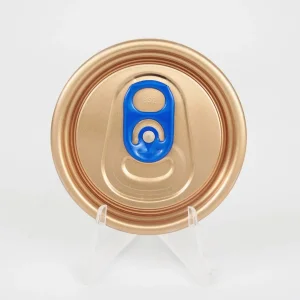
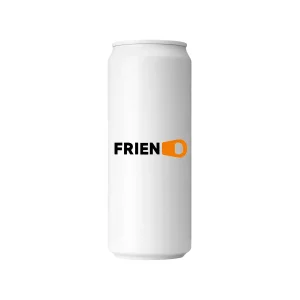
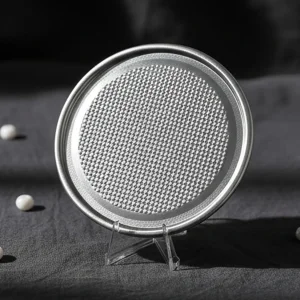
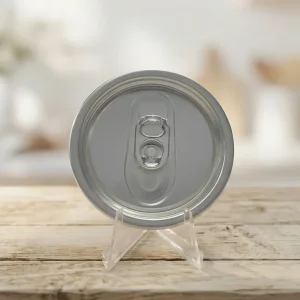
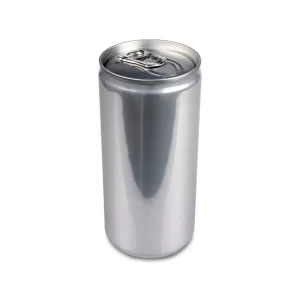
Explore our extended manufacturing lineup including standard 473ml cans, SOT/RPT easy-open ends, and high-purity aluminum coils.
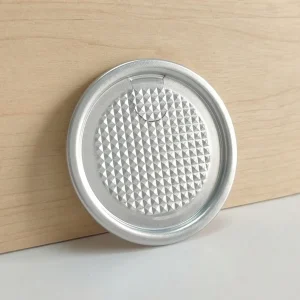
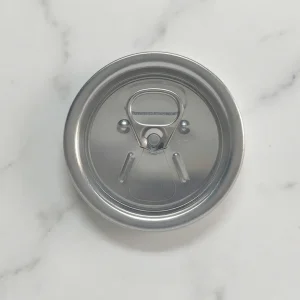
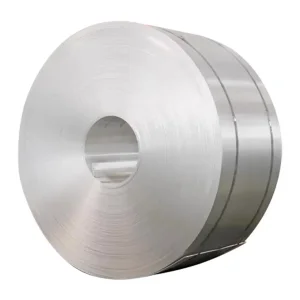
Answers to common engineering, regulatory, seamer setup, and bulk supply chain queries from beverage procurement managers.
Can bodies are drawn from AA3104-H19 alloy, providing optimal wall ironing performance and high tensile strength to withstand carbonation pressure. Easy-open ends are produced from AA5182-H48 shell stock, offering superior buckle strength. Internal surfaces are coated with BPA-NI acrylic or modified organosol lacquers specially formulated to withstand citric and phosphoric acid attack.
Standard plain or unprinted aluminum cans start at one 20 ft ocean container per size batch. For fully decorated custom cans with up to 8-color rotary offset printing, MOQs start at 100,000 units per artwork design due to high-speed line changeovers and printing plate set-ups. Easy-open lids (200#, 202#, 300#, 401#) in standard inventory ship with minimums starting at 200,000 units.
All products strictly comply with US FDA 21 CFR 175.300, EU Regulation 1935/2004, EU 10/2011, and GB 4806.10 food-contact standards. Every shipment is delivered with comprehensive batch documentation, including Enamel Rater test certificates, heavy metal analysis (RoHS/REACH), and overall migration test reports from accredited third-party laboratories (SGS / TUV).
Prior to mass production, our technical team reviews your seamer chuck and roll tooling specifications (e.g., Ferrum, Angelus, Cask). We supply precise CAD drawings detailing flange width, end curl height, countersink depth, and wall thickness. Sample lots are dispatched for double-seam teardown analysis (checking seam thickness, seam length, body hook, end hook, and overlap) on your actual filling line.
Cans are layer-packed on heat-treated solid wood or plastic pallets with heavy-duty top frames and thick paperboard slip-sheets. The entire pallet is unitized under automatic strapping tension and sealed inside moisture-barrier stretch-hood film with desiccant packs. Pre-shipment container loading photographs and seal verifications are provided with every bill of lading.
For beverages subjected to tunnel pasteurization (60-70°C) or hot-filling (85-92°C), we apply specialized cross-linked polyester or epoxy-free thermosetting coatings. These coatings retain high elasticity and adhesion without experiencing thermal softening, micro-crazing, or flavor transfer during heating cycles.
