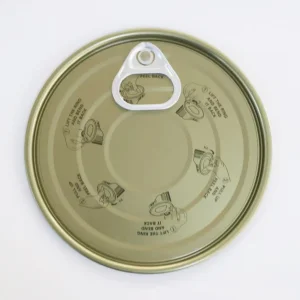
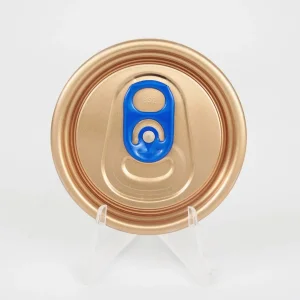
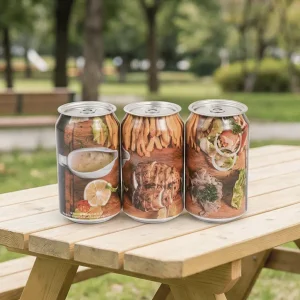
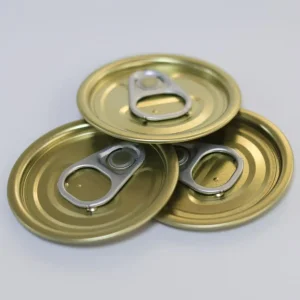
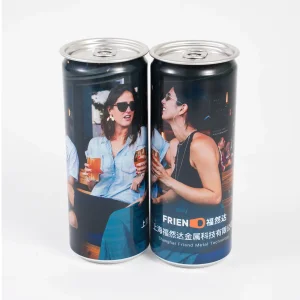
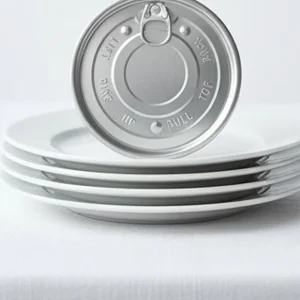
Explore our premium industrial-grade easy-open ends, food-contact tinplate lids, and drawn aluminum bodies designed for ultra-long shelf life and high-sterilization integrity.
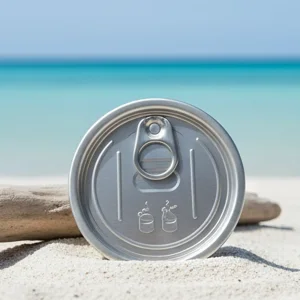
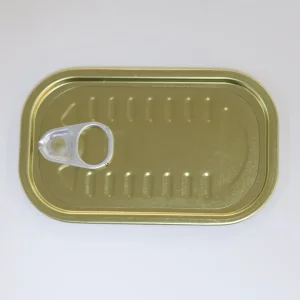
In modern supply chain nomenclature, "Old Canned Food" does not refer to expired or degraded inventory. Rather, it represents the pinnacle of thermal food preservation engineering: food products specifically processed, hermetically sealed, and metallurgically stabilized to withstand continuous storage over extended timelines—ranging from 5 to over 30 years—without organoleptic breakdown, nutritional loss, or structural corrosion.
Achieving decades-long shelf stability demands an uncompromising integration of material science, precise hermetic double-seaming, advanced internal lacquering, and rigorous retort thermal sterilization. Metal packaging—primarily comprised of Electrolytic Tinplate (ETP), Tin-Free Steel (TFS/ECCS), and specialized 3000/5000-series Aluminum Alloys—remains the only non-permeable barrier material capable of total protection against light, oxygen ingress, moisture transfer, and microbial infiltration.
The primary failure mechanism in ultra-long-term food preservation is lipid oxidation and micro-bacterial proliferation caused by oxygen permeation. High-performance tinplate containers utilize continuous double-seam technology engineered with synthetic rubber or water-based compound sealants, guaranteeing a leak-rate under 1 x 10⁻8 atm·cc/sec. This vacuum-tight environment inhibits chemical degradation and preserves complex flavor molecules.
To prevent acidic or salty food matrices (such as canned meat, tomatoes, or meals-ready-to-eat) from reacting with the steel/aluminum substrate, advanced internal organosol and BPA-NI (BPA Non-Intent) resin coatings are applied via precision liquid spraying or coil coating. These cross-linked polymer barriers maintain adhesion even under high-pressure thermal retort sterilization at 121°C to 135°C.
As global procurement directors seek reliable, scalable, and cost-optimized supply chains for long-shelf-life canned foods and packaging substrates, China’s industrial ecosystem stands out as an unrivaled manufacturing benchmark. The convergence of raw material integration, state-of-the-art automation, and strict global quality management system (QMS) adherence enables Chinese metal packaging suppliers to deliver unmatched precision.
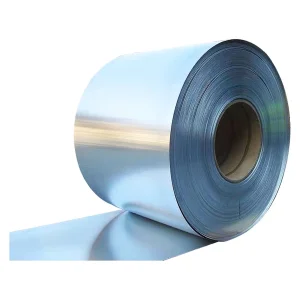
Direct partnership with tier-1 steel mills (such as Baosteel and Shougang) provides Chinese factories with immediate access to prime-grade ETP coils with uniform tin coating weights (e.g., 2.8/2.8 g/m², 5.6/5.6 g/m²) and precise temper classifications (T-2.5 up to DR-8). This guarantees superior column strength, axial load resistance, and anti-corrosion properties.
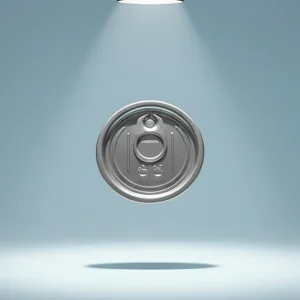
Utilizing high-speed conversion presses (including Minster, Stolle, and Buhrke tooling systems), Chinese manufacturing facilities produce easy-open lids (EOE), full-aperture ends, and two-piece drawn and wall-ironed (DWI) cans at speeds exceeding 2,000 components per minute with micron-level tolerance control.
Leading Chinese export facilities operate under stringent quality certifications including ISO 9001, FSSC 22000, ISO 22000, and BRCGS. Internal coatings and sealants comply with US FDA 21 CFR 175.300, EU Regulation 1935/2004, and China National Food Safety Standard GB 4806.10, ensuring seamless customs clearance globally.
| Parameter / Feature | Electrolytic Tinplate (ETP) Cans | Aluminum Easy-Open Ends (EOE) | Tin-Free Steel (TFS) Bottoms |
|---|---|---|---|
| Base Alloy / Metal | Low-Carbon MR Grade Steel | AA5182-H48 / AA5052-H38 | Chromium/Chromium Oxide Coated Steel |
| Thickness Range | 0.15 mm – 0.28 mm | 0.20 mm – 0.25 mm | 0.16 mm – 0.24 mm |
| Internal Lacquer | Organosol / Phenolic Epoxy / BPA-NI | Vinyl / Epoxy / Organosol | BPA-NI Gold / Clear Lacquer |
| Thermal Resistance | 121°C – 135°C (60–90 Mins Retort) | Up to 130°C Retort Capable | 121°C Retort Capable |
| Target Application | Canned Meats, Soups, Ready Meals | Beverages, Processed Food, Powders | Dry Goods, Non-Acidic Preserves |
The global canned food landscape is undergoing a structural transformation driven by sustainability mandates, stringent chemical safety regulations, and the need for enhanced logistics resilience. Innovations in packaging technology directly influence shelf longevity, carbon footprint, and consumer opening experience.
Global health authorities (including the European Food Safety Authority - EFSA) have dramatically tightened migration limits for Bisphenol A. Modern canned food producers are transitioning entirely to BPA-Non-Intent (BPA-NI) systems—utilizing acrylic, polyester, or polyolefin resins. These coatings deliver equal chemical resistance against acidic food matrices without compromising long-term lacquer flexibility or micro-porosity standards.
Through advanced Finite Element Analysis (FEA), container walls are engineered with circumferential bead patterns and optimized neck-in geometries. This allows manufacturers to reduce tinplate sheet gauge by up to 12% while increasing vertical column collapse strength and paneling resistance during post-retort vacuum cooling.
Emergency management agencies and military logistics divisions are increasingly demanding 2D matrix laser etching and high-density RFID tagging directly on can ends. This enables automated FIFO (First-In, First-Out) inventory rotation, real-time temperature-history tracking, and instant verification of product authenticity across strategic stockpiles.
To push shelf life beyond 25 years for dry canned food products (such as powdered dairy, freeze-dried rations, and grains), packaging lines integrate high-efficiency vacuum seaming accompanied by high-purity Nitrogen/Carbon Dioxide gas flushing, reducing residual oxygen levels within the headspace to strictly below 0.5%.
High-durability canned food products and engineered metal packaging serve crucial roles across diverse localized environments where refrigeration is unavailable, power infrastructure is vulnerable, or extreme ambient conditions prevail.
Municipalities and national disaster preparedness agencies mandate high-calorie canned food stockpiles (stews, grains, cooked proteins) capable of enduring decades in non-climate-controlled warehouse facilities, ensuring rapid deployment during seismic events, floods, or grid failures.
Military Operational Rations (MRE alternatives, emergency iron rations) demand crush-proof, flame-sterilizable metal cans capable of surviving high-altitude drop deliveries, ocean transport humidity, and extreme heat shocks (+50°C) without seal failure.
Commercial cargo fleets, offshore oil platforms, and scientific research vessels rely heavily on salt-spray-resistant, double-lacquered canned provisions that withstand constant marine moisture and vessel vibration over multi-month voyages.
Polar research stations, high-altitude mining camps, and desert exploration teams require hermetically sealed canned nutrition that remains completely impervious to sub-zero freeze-thaw cycles and intense UV radiation.
In premium culinary sectors (such as aged Spanish sardines, French confit, or cellared vintage seafood), high-quality tinplate packaging allows controlled in-can maturation, where time enhances flavor complexity over 5 to 10 years.
Remote humanitarian aid stations and regional food banks leverage large-format (e.g., 603# / 10# size) long-shelf-life canned ingredients to feed communities efficiently without cold-chain dependency.
For enterprise food processors, commercial canneries, and government procurement officers, purchasing canned food packaging is not merely a transactional component order—it requires a complete, calibrated packaging system engineering solution. Misalignments between can body specifications and end seamer tooling can lead to micro-seam defects and catastrophic inventory loss.
We provide full technical alignment between our easy-open ends (EOE/SOT/RPT) and your automated seaming equipment (e.g., Angelus, Ferrum, FMC, Shanghai Metal). Our engineering team specifies exact double-seam dimensional parameters:
Different food products exert distinct chemical stresses on container walls. Our metallurgists map your specific food formulation to the optimal coating chemistry:
International B2B procurement of metal packaging and long-shelf-life canned products mandates rigorous testing protocols prior to factory release. Every batch produced under our supervision undergoes exhaustive laboratory and inline destruction testing to verify mechanical and chemical safety.
Utilizing high-precision Enamel Raters (mA meters), 100% of sample lots are tested under 6.3V electrical potential to confirm zero metal exposure or lacquer micro-cracking across the formed beads and stamped riveted tabs. Pass threshold is strictly set at < 0.1 mA.
Easy-open lids undergo automated digital force testing to ensure ergonomically comfortable opening for consumers while maintaining high structural burst stability. Pop force (initial score rupture) and Tear force (full panel removal) are calibrated within ISO standard envelopes.
Containers and ends are subjected to internal pneumatic pressure chambers to determine maximum buckle strength (resistance to outward dome distortion) and burst pressure, ensuring containers withstand pressure spikes during high-temperature retort cooking.
Technical guidance and commercial answers curated by our senior packaging engineers and quality directors.
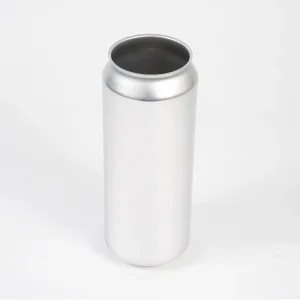
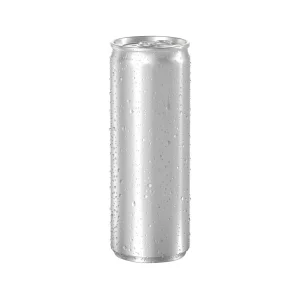
Discover our full suite of large-format tinplate ends, sleek/slim beverage bodies, transparent powder lids, and premium aluminum coils available for global distribution.