Explore our certified range of high-barrier easy-open lids, transparent powder closures, and food-grade tinplate ends engineered for ultra-fast filling lines.
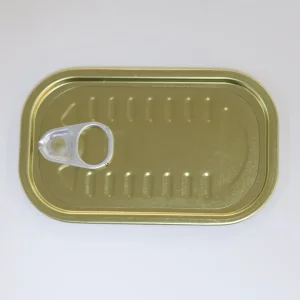
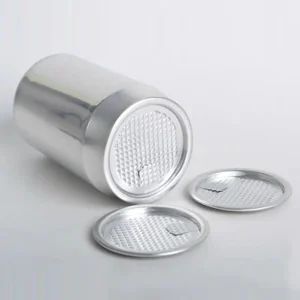
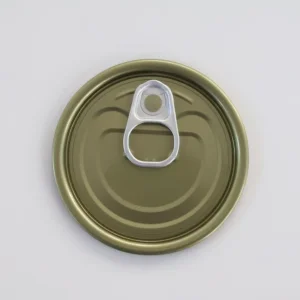

Analyzing the structural migration from single-use rigid plastics and glass containers to infinitely recyclable aluminium packaging across international beverage and FMCG markets.
Global regulatory push—including the EU Packaging and Packaging Waste Regulation (PPWR) and US State-level Extended Producer Responsibility (EPR) laws—is mandating closed-loop recyclability. Aluminium beverage cans achieve a 70%+ global recycling rate, outperforming PET and glass by substantial margins.
The rapid expansion of Ready-To-Drink (RTD) cocktails, hard seltzers, cold-brew coffees, and functional sparkling waters demands lightweight packaging that guarantees 100% total barrier protection against light, oxygen, and ambient vapor transmission.
High-Definition Dry Offset Printing (up to 8 colors) combined with tactile varnishes, matte/gloss spot effects, and laser-engraved QR codes on tabs empowers multinational brands to capture immediate retail attention while securing anti-counterfeiting integrity.
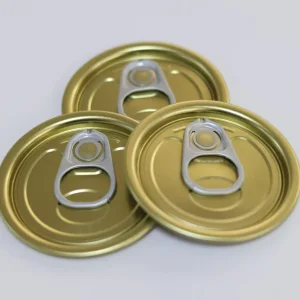
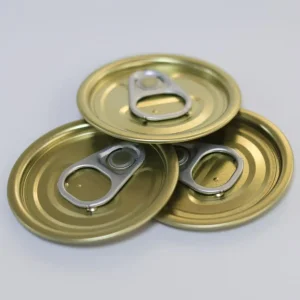
Modern canmaking relies heavily on continuous metallurgical improvements. Drawn and Ironed (DWI) 2-piece aluminium cans are crafted primarily from 3104-H19 aluminium alloy, engineered specifically for high tensile strength and extreme formability. This allow thickness gauges to be reduced to under 0.095mm in the body wall while maintaining axial crush strength exceeding 900 N. Concurrently, easy-open lids employ 5182-H48 shell stock and 5052 tab stock, providing the optimal balance of score-line pop force, pull-up tear strength, and pressure containment up to 6.2 bar (90 PSI).
What procurement directors, packaging engineers, and QA leads demand when evaluating tier-1 global aluminium container and lid manufacturers.
Enterprise procurement in the global beverage, infant nutrition, and pharmaceutical packaging sectors has evolved beyond simple unit pricing. High-speed automated filling lines operating at speeds up to 1,500 to 2,000 cans per minute (CPM) mean that even minor dimensional variances, burrs, or score-depth inconsistencies result in catastrophic line stoppages and double-seamer jam-ups. Modern procurement intent revolves around four pillars of technical performance:
Micro-leakage at the double-seam junction compromises shelf stability and leads to microbial contamination. Buyers require strict adherence to rim curl diameter, countersink depth, and flange radius tolerances within ±0.05mm to ensure perfect integration with Ferrum, Angelus, or Pneumatic Scale seamers.
With aggressive global bans on Bisphenol-A (BPA), global suppliers must provide next-generation BPA-Non-Intent (BPA-NI) internal lacquers, such as modified acrylics or polyester linings, fully tested against US FDA 21 CFR 175.300, EU Regulation 1935/2004, and China GB 4806.10 standards.
Evaluating direct unit FOB cost against freight cube density, palletization stability, scrap rate allowances (<0.05%), and raw material indexation (LME metal price hedging) to secure long-term procurement margin stability.
Proactive Quality Guarantee: Every production batch of printed aluminium cans and easy-open ends from Shanghai Friend Metals is backed by rigorous lot-traceability, Enamel Rater porosity testing (<2mA under 6.3V), and hydrostatic burst pressure verification.
How Shanghai Friend Metals leverages smart factory automation, vertical coil processing, and deep Shanghai port connectivity to deliver unshakeable global supply reliability.
China's industrial modernizations have elevated metal packaging manufacturing into a high-precision, AI-monitored discipline. As a premier hub operating in Shanghai since 2010, Shanghai Friend Metals Technology Co., Ltd. integrates automated coil slitting, high-speed cupping, wall-ironing, online high-resolution CCD visual inspection, and automated robot arm palletizing under a unified MES (Manufacturing Execution System).
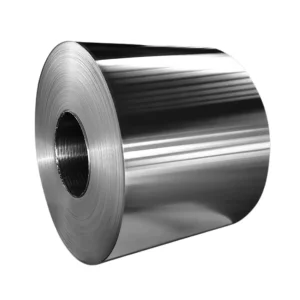
Direct sourcing of premium 3104, 5182, 5052, and 8011 coil stock with custom lacquering and precision slitting capability. Control over raw material tension, gauge uniformity, and surface lubricity ensures flawless downstream stamping.
High-speed optoelectronic camera systems screen 100% of finished ends and cans at full line speed. Micro-pinholes, lacquer scratches, flange deformations, and tab misalignments are automatically rejected in real-time.
Strategic proximity to Shanghai Port—the world’s busiest container terminal—enables streamlined container stuffing, rapid ocean freight dispatch, short factory-to-vessel lead times, and flexible shipping schedules worldwide.
In-depth engineering parameters comparing aluminium alloys, end closure geometries, internal coating formulas, and target application thresholds.
| Specification Category | 3104-H19 Can Body Stock | 5182-H48 End Shell Stock | 5052-H16 Tab Stock | 8011-O / H14 Foil & Lids |
|---|---|---|---|---|
| Tensile Strength (MPa) | 270 – 310 MPa | 360 – 410 MPa | 210 – 260 MPa | 140 – 180 MPa |
| Yield Strength (MPa) | ≥ 260 MPa | ≥ 310 MPa | ≥ 170 MPa | ≥ 100 MPa |
| Primary Application | DWI 2-Piece Can Bodies (Standard, Sleek, Slim) | SOT / RPT / EOE Lid Shells (200# - 502#) | Stay-on & Ring Pull Tabs | Peel-Off Foil Lids, Pharmaceutical Seals |
| Pressure Resistance | Up to 6.2 bar (Internal Pressure) | Buckle Pressure > 6.5 bar | N/A (Mechanical Leverage) | Hermetic Low-Pressure / Gas Flush |
| Internal Lacquer Systems | Modified Acrylic (BPA-NI), Organosol, Epoxy (Standard Food), Vinyl (High-Acid Products) | |||
| Compliance Certification | FDA 21 CFR 175.300, EU Reg 1935/2004, GB 4806.10, ISO 9001:2015, FSSC 22000 | |||
Selecting the correct neck-to-end diameter is critical for both container volume optimization and filling line logistics. Standard industry end codes correspond to strict physical rim dimensions:
Custom-engineered container and closure combinations optimized for distinct thermal processing, gas flushing, and shelf-life conditions.
Requires high internal pressure containment (up to 90 PSI during tunnel pasteurization at 62°C). Paired with 202# SOT lids coated with corrosion-resistant BPA-NI liners to prevent flavor scalping and sulfur off-notes.
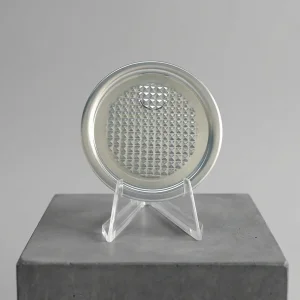
Demands zero-oxygen transmission to prevent lipid oxidation. Utilizes 401# and 502# Easy-Open Aluminum Ends or Transparent-Top Lids under modified atmosphere nitrogen flushing (<0.5% residual O₂).
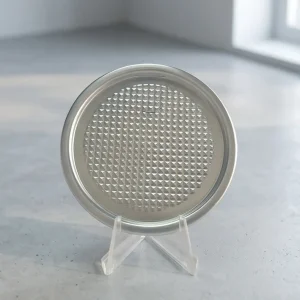
Requires non-magnetic closures such as the 209FA# Aluminum Lid. Prevents static particle attraction during high-speed dosage filling and maintains total sterility for clinical-grade formulations.
Browse our complete catalog of wholesale aluminium beverage cans, high-performance coils, and sustainable easy-open metal solutions.
In-depth responses compiled by Shanghai Friend Metals packaging engineers to address technical compliance, seam tolerances, freight safety, and custom manufacturing.
DWI can bodies are produced from 3104-H19 aluminium alloy, optimized for high drawability and axial wall strength. Easy-open end shells utilize 5182-H48 shell stock for maximum buckle pressure resistance, while tabs are formed from 5052-H16 alloy. Raw lacquered coils for specialty lid converting are offered in 8011 and 3104 tempers. All incoming raw coil materials are delivered with mill certificates detailing chemical composition, temper, and gauge tolerances.
For unprinted bright cans, standard MOQs start at one 20ft container. Custom dry-offset printed cans (up to 8 colors) typically require 100,000 pieces per artwork design due to plate set-up and internal coating changeovers. Standard easy-open ends (200#, 202#, 300#, 401#, 502#) maintained in rolling stock can be dispatched in trial lots starting at 200,000 pieces within 15 working days.
Our internal lacquers feature state-of-the-art BPA-Non-Intent (BPA-NI) acrylic and polyester formulations. They undergo rigorous chemical migration testing in accordance with US FDA 21 CFR 175.300, European Union Regulation (EC) No 1935/2004, and China Food Safety Standard GB 4806.10. Complete migration certificates, heavy metal test reports (RoHS/REACH), and food-grade declarations accompany every batch.
Aluminium cans are loaded onto heavy-duty wood pallets separated by kraft slip-sheets, secured with plastic top frames, and wrapped in shrink-hood film. Easy-open lids are packed into moisture-sealed polyethylene sleeves inside heavy-wall corrugated fiberboard cartons or fibre drums with industrial desiccant packs. Pre-shipment loading photographs and seal documentation are generated for complete cargo traceability.
Yes. By analyzing your seamer parameters (Angelus, Ferrum, Somme, Pneumatic Scale), target fill volume, and processing temperatures (hot fill, tunnel pasteurization, or retort), our engineering department provides precision CAD drawings for countersink depth, curl height, and flange width, accompanied by sample test lots for double-seam teardown evaluation prior to full-scale commercial runs.
