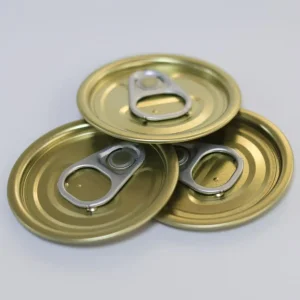
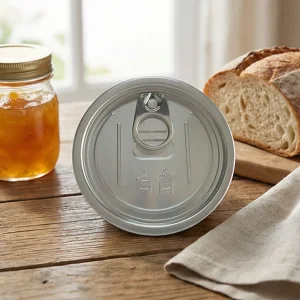
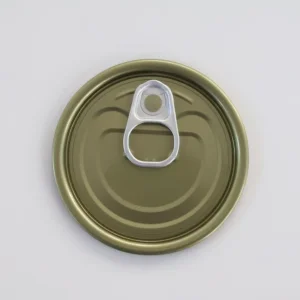
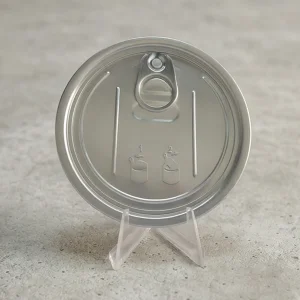
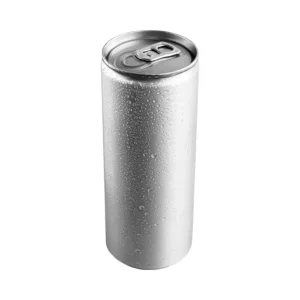
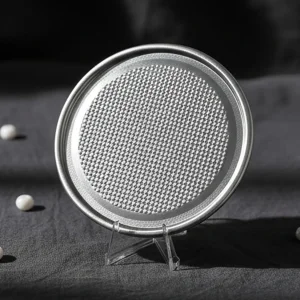
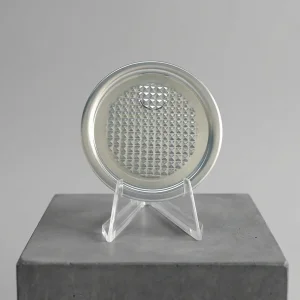
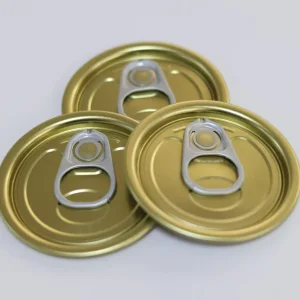
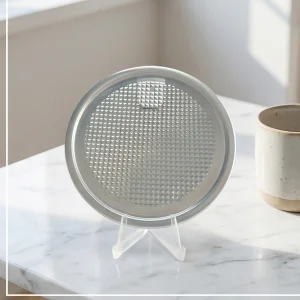
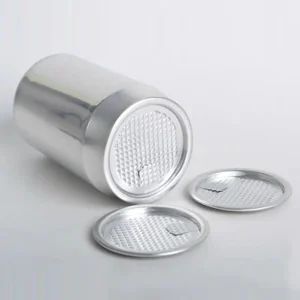
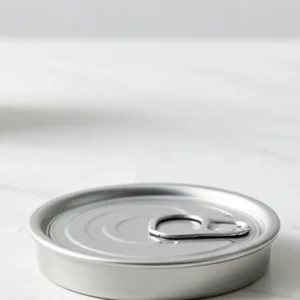
High-barrier, food-grade certified tinplate lids, aluminum easy-open ends, and specialized cans designed for maximum seaming integrity and extended product shelf life.
Why premier edible oil producers, automotive lubricant brands, and chemical processors are abandoning plastic containers in favor of high-integrity electrolytic tinplate solutions.
Lipids, especially polyunsaturated fatty acids and virgin olive oils, suffer severe chemical degradation when exposed to ambient light. Tinplate containers offer 100% light opacity (0 LUX transmission), eliminating rancidity caused by chlorophyll-catalyzed photo-oxidation and preserving free fatty acid (FFA) equilibrium over multi-year storage cycles.
Unlike HDPE or PET bottles, which suffer from structural micro-porosity permitting oxygen ingress at rates between 0.05 to 0.55 cm³/container/day, prime tinplate delivers an absolute barrier. This zero Oxygen Transmission Rate (OTR) stops lipid oxidation, preserving essential organoleptic properties and extending shelf life up to 36 months.
With strict international legislation such as the European Union's Packaging and Packaging Waste Regulation (PPWR), metal packaging leads the circular economy. Steel and tinplate possess an infinitely recyclable nature with magnetic separation efficiency exceeding 92% across municipal recycling infrastructures globally.
A rigorous engineering audit reveals why global oil exporters are migrating towards fully certified tinplate container systems:
| Performance Metric | Electrolytic Tinplate (ETP) Can | HDPE Plastic Container | PET Bottled Packaging |
|---|---|---|---|
| Oxygen Permeability (OTR) | 0.00 cm³/m²/24h (Absolute) | 18.5 - 45.0 cm³/m²/24h | 3.2 - 8.5 cm³/m²/24h |
| UV & Visible Light Transmission | 0.00% (100% Opacity) | 15% - 40% (Semi-Translucent) | 70% - 90% (High Exposure) |
| Chemical Migration & Leaching | Zero (BPA-NI & Organosol Lining) | Risk of Phthalate / Oligomer leaching | Risk of Antimony / Microplastic drop |
| Stacking Compression Strength | > 8,500 N (High Stacking Force) | ~ 2,200 N (Deformation prone) | ~ 1,800 N (Pallet collapse risk) |
| Recycling Rate & Circularity | > 85% Global Rate (Permanent Metal) | < 25% Downcycled Rate | < 30% Mechanical Recycle |
An authoritative breakdown of prime raw materials, temper designations, double-seaming tolerances, and non-reactive internal lacquers engineered for oil stability.
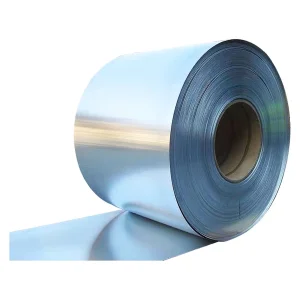
Our manufacturing utilizes prime grade single-reduced (SR) and double-reduced (DR) electrolytic tinplate sourced directly from premier steel mills (e.g., BAOSTEEL, WISCO). Temper options span from T2.5, T3, T4 to DR8 / TH570, yielding yield strengths between 300 to 570 MPa. Nominal wall gauge ranges from 0.18mm to 0.38mm to provide maximum column crush force.
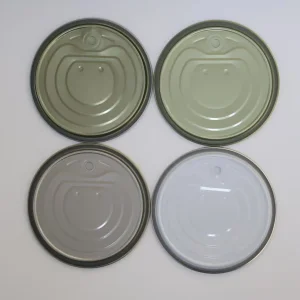
To withstand aggressive fatty acids, moisture, or chemical solvents, our oil containers feature customized inner lacquer systems. Options include Organosol, Gold Epoxy-Phenolic, and 100% BPA-NI (Bisphenol A Non-Intent) linings. Applied at strict film weights (6.0 to 12.0 g/m²), these coatings undergo 200°C thermal curing to ensure zero pores and complete chemical inertness.
Can bodies are formed using SOUDRONIC automated high-frequency electric resistance seam welding. The weld seam is protected via a continuous nitrogen-purged internal and external powder or liquid stripe coating. Double-seaming parameters (Body Hook 1.1-1.4mm, End Hook 1.1-1.4mm, Overlap > 55%) undergo real-time optical video micrometer checks to guarantee zero leak rates under internal pressures exceeding 2.5 bar.
Adapting container geometry, closure spouts, and internal lacquers to match exact regional market preferences, filling line equipment, and liquid viscosities.
Target Oils: Premium Extra Virgin Olive Oil, Avocado Oil, Truffle-infused Oils.
Regional Demand: Southern Europe (Spain, Italy, Greece), North America, East Asia.
Engineering Spec: 250ml, 500ml, 1L, and 3L square/rectangular tin cans equipped with telescopic pull-up plastic pourer spouts (24mm, 32mm, 42mm). Features non-drip retractable pourers and gold organosol lining that preserves polyphenol content and subtle aroma notes.
Target Products: Synthetic Engine Oils, Brake Fluids, Hydraulic Greases, Additives.
Regional Demand: North America, Middle East, Southeast Asia.
Engineering Spec: 1L cylindrical and 4L / 5L square metal cans with heavy-duty metal screw caps or child-resistant closures (CRC). Double-reduced (DR) double-seamed tinplate resists chemical solvent degradation, rough transport shock, and high ambient warehouse heat.
Target Oils: Bulk Sesame, Sunflower, Palm, and Frying Oils for Foodservice.
Regional Demand: Asia-Pacific, Middle East, Latin America.
Engineering Spec: 15L, 18L, and 20L square tin drums ("Jerry Cans") with reinforced top handle bridges and 57mm / 63mm metal screw caps or flexible plastic spouts. Engineered with corrugated side panels to achieve superior vertical load resistance (> 1,000 kg stacking limit).
Leveraging industrial clustering, direct mill partnerships, and automated high-speed CANOMAT production lines to offer unmatched lead times and cost efficiency.
Located in the heart of the Yangtze River Delta manufacturing hub, our facility benefits from immediate proximity to top-tier steel mills, specialized lacquer formulators, and precision die makers. This vertical integration cuts raw material procurement lead times down to less than 72 hours.
Our workshop houses fully automated CANOMAT and SOUDRONIC container production lines capable of manufacturing up to 600 cans per minute per line. Integrated inline high-speed AI vision systems automatically eject cans with microscopic pinholes, surface scratches, or flange deformities.
Operating adjacent to Shanghai Port—the world's largest container shipping terminal—allows us to offer agile ocean freight routing, continuous container availability, and rapid custom clearance, ensuring seamless global delivery schedules even during macro logistics disruptions.
Pioneering the next generation of eco-friendly, ultra-lightweight, and smart metal packaging solutions for the global liquid oil industry.
Through advanced mechanical bead profiling and high-yield double-reduced (DR) steel alloys, we are cutting container body thickness down to 0.15mm–0.17mm while maintaining complete structural crush strength, reducing total carbon footprint per unit by up to 18%.
Anticipating future regulatory bans on fluorinated substances, our R&D division is co-developing plant-derived, bio-based polyolefin internal linings that offer zero PFAS chemistry while matching the corrosion resistance of traditional epoxy resins.
Replacing traditional lithographic plate setups with 2400 DPI high-definition UV direct-to-metal printing. Enables short-run custom branding, variable QR anti-counterfeiting codes, and batch-level digital tracking directly stamped onto the tin surface.
Ensuring your packaging meets all destination market legal requirements, food safety standards, and dangerous goods transit certifications.
Fully compliant with US FDA 21 CFR 175.300, EU Regulation 1935/2004, EU 10/2011, and China GB 4806.10. Comprehensive heavy metal leaching and overall migration test reports are supplied with every delivery lot.
For chemical solvent and industrial lubricant packaging, our containers are certified under UN 1A1 & 1A2 standards for international sea (IMDG Code) and air (IATA) transport of dangerous liquids (Packing Groups II and III).
Our manufacturing facility operates strictly under audited quality management systems including ISO 9001:2015, FSSC 22000 (Food Safety System Certification), and ISO 14001 environmental management protocols.
Clear, authoritative engineering answers to common inquiries from procurement directors, packaging engineers, and plant managers.
Tinplate provides an absolute barrier against light transmission (0 LUX) and atmospheric oxygen (Oxygen Transmission Rate = 0.00 cm³/m²/24h). Light and oxygen are the two primary drivers of lipid auto-oxidation and photo-oxidation. By eliminating UV/visible light exposure and oxygen ingress, our tin cans maintain the initial Peroxide Value (PV) and Free Fatty Acid (FFA) parameters of extra virgin olive oils and specialty vegetable oils over a shelf life of up to 36 months.
For organic edible oils with elevated free fatty acids or flavored oils containing aggressive essential extracts, we recommend our specialized Organosol or BPA-NI (Bisphenol A Non-Intent) internal lacquers applied at 8.0–12.0 g/m² dry weight. For industrial oils, synthetic engine lubricants, and solvent thinners, we specify high-density Epoxy-Phenolic linings cured at 200°C, providing exceptional chemical resistance against swelling, blistering, and chemical peeling.
Yes. We supply standard ISO neck openings (such as 24mm, 32mm, 42mm, and 57mm) compatible with automated capping and inserting machinery (e.g., BERICAP-compatible press-fit or screw pourers). Our engineering team provides detailed CAD drawings of the container top plate, neck height, and curl dimensions to ensure seamless synchronization with your high-speed filling line machinery.
For plain unprinted standard size containers, MOQs start as low as 5,000 units. For custom lithographic offset CMYK + spot varnish printed containers, standard MOQs range between 10,000 to 30,000 units depending on the container volume (e.g., 250ml vs. 5L). We also offer high-definition digital UV printing options for smaller trial batches and promotional seasonal runs.
All containers are palletized on heat-treated ISPM-15 compliant wooden or plastic pallets, separated by heavy-duty corrugated board layer pads, corner-protected with high-density V-boards, and tightly wrapped in thick stretch hood film. In addition, desiccants are placed inside every shipping container to control moisture dew point and eliminate 'container rain' rust risks during long sea voyages.
Every production batch undergoes strict quality control checks including: 100% online automated pinhole helium/air leak testing, double seam cross-section optical micrometer teardown analysis, enamel rater electrical porosity tests on lacquers, 1.2m drop impact tests, and vertical compression stack force verification. Batch-numbered Certificate of Analysis (COA) documents accompany every sea container.
Explore our extended industrial range including premium lacquered coil stock, non-magnetic pharmaceutical lids, and sustainable high-barrier closures.