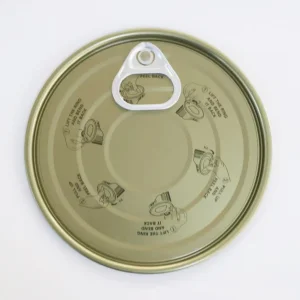
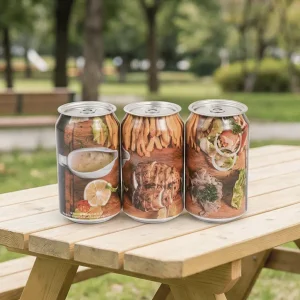
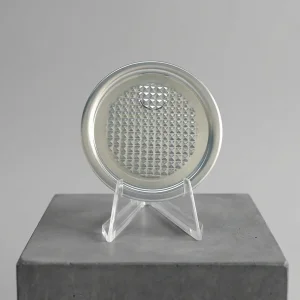
Explore our state-of-the-art easy-open lids, beverage cans, and tinplate closures manufactured in compliance with international food-grade standards.
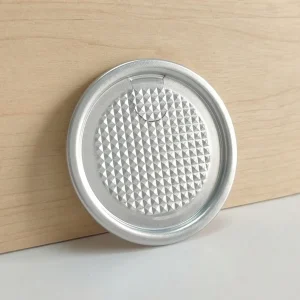
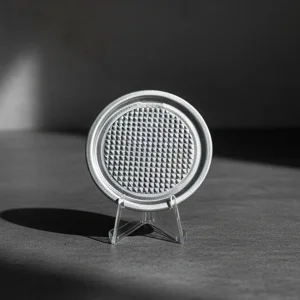
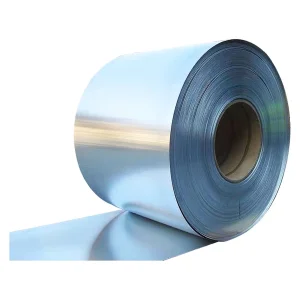
In modern industrial packaging, the choice of material substrates, surface lacquers, and precise mechanical tolerances dictates product shelf stability, gas barrier effectiveness, and overall brand perception. Gold wrap aluminum foil and specialized food-grade aluminum coil substrates represent the pinnacle of flexible and rigid metal packaging engineering. Utilizing specialized alloys such as 8011, 3104, 5182, and 5052, modern packaging plants achieve extraordinary tensile strength, ductility, and absolute zero-permeability protection against light, oxygen, moisture, and microbial ingress.
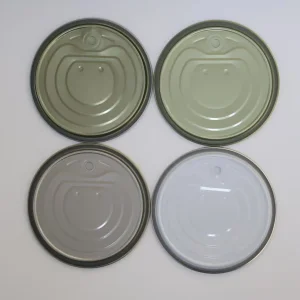
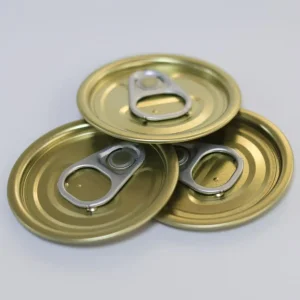
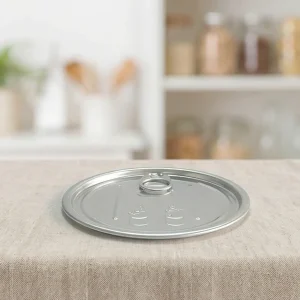
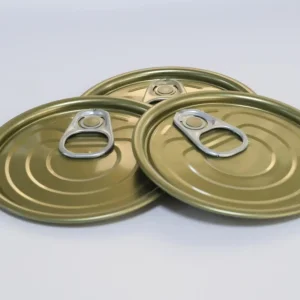
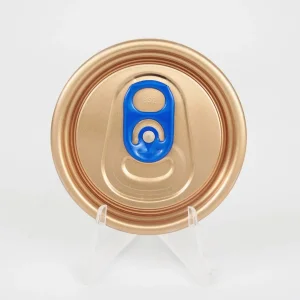
Gold wrap foil—characterized by its high-purity aluminum matrix coated with a food-compliant, heat-resistant gold lacquer system—serves critical roles across luxury confectioneries, high-potency pharmaceuticals, premium dairy products, and specialized technical wraps. Concurrently, high-speed automated canning lines rely on perfectly slit lacquered coil to manufacture 200#, 202# SOT/RPT easy-open lids, rust-proof 401# aluminum ends, and 300#/307#/603# tinplate lids.
From an authoritative quality standpoint, achieving peak barrier performance requires precise control over earing ratios, tensile strength, yield limits, and coating thickness uniformity. A failure in lacquer micro-porosity can lead to pinhole corrosion when in contact with acidic media (such as carbonated craft beverages or fermented dairy), while inconsistent temper can cause score-line fracture during high-speed seaming operations.
Every industry demands distinct chemical resistance, thermal stability, and mechanical endurance. Our integrated material solutions address global market challenges directly.
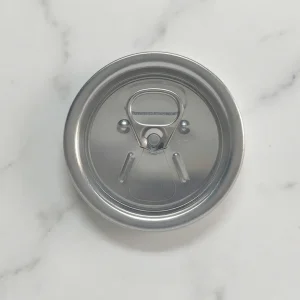
High-speed canning lines filling craft beers, RTD cocktails, and carbonated soft drinks (CSD) require ultra-consistent end geometry. Our 202# SOT and RPT easy-open ends engineered from 5182-H48 shell stock withstand internal pressures up to 6.2 bar, featuring BPA-NI epoxy lacquers that pass strict FDA 21 CFR 175.300 and EU 1935/2004 organoleptic testing.
Nutraceuticals and dairy powders require total moisture exclusion and zero-oxygen ingress. Large-diameter 401#, 502#, and 209# aluminum powder lids incorporate high-integrity score lines and anti-peel foil layers, providing effortless opening while ensuring hermetic double-seam integrity under nitrogen flushing environments.
Standard tinplate or untreated metal lids degrade rapidly in tropical or marine environments. Our 401# rust-proof aluminum lids and gold-lacquered aluminum coils utilize multi-layer passivation and anti-corrosion barrier coatings, passing 500-hour neutral salt spray tests (ASTM B117) without micro-pitting.
Leveraging Shanghai's unmatched industrial cluster and deep-water port logistics, our manufacturing infrastructure combines Industry 4.0 smart automation with rigorous metallurgical quality controls. Factory 4.0 integration guarantees real-time process monitoring from raw ingot casting to high-speed coil slitting and automated end stamping.
Our production facilities house multi-station high-speed conversion presses operating at speeds exceeding 2,500 ends per minute. Every line is integrated with high-resolution visual inspection systems that evaluate curl diameter, countersink depth, tab alignment, and lacquer integrity in real time.
| Technical Metric | Factory Benchmark | Global Standard Compliance |
|---|---|---|
| Alloy Temper Consistency | ± 1.5% Yield Strength | ASTM B209 / EN 485 |
| Coating Weight Precision | 5.0 - 12.0 g/m² (± 0.3g) | FDA 21 CFR 175.300 |
| Seam Curl Uniformity | ± 0.05 mm | ISO 9001 / ISO 22000 |
| Burst Strength (202 SOT) | ≥ 6.2 Bar | Beverage Can Institute (BCI) |
| Salt Spray Resistance | > 500 Hours Grade 10 | ASTM B117 Corrosion Standard |
For multinational procurement leads, packaging engineers, and supply chain directors, sourcing metal packaging components is not merely a unit-cost transaction—it is a Total Cost of Ownership (TCO) calculation. Line downtime resulting from end-jamming, double-seam leaking, or varnish flaking can instantly negate minor per-unit procurement savings.
By strictly adhering to precise curl radius and countersink depth specifications, our 202# SOT, 200# RPT, and 307# tinplate ends seamlessly integrate with major global seamer equipment (Ferrum, Angelus, CFT, Stolle). This eliminates seamer jam-ups and maintains line efficiencies above 99.2%.
Recognizing the dynamic shift toward craft beverages, functional energy drinks, and direct-to-consumer nutritional brands, we maintain active inventory of stock coil and standard end sizes (200# through 502#), enabling trial orders from 200,000 pieces to ship within 15 working days.
Metal components are highly vulnerable to transit deformation and moisture condensation. Products ship on heavy-duty wooden pallets secured with rigid top frames, kraft slip sheets, anti-humidity desiccant bags, and multi-layer stretch hood wrapping to withstand long-haul maritime transport.
As the global metal packaging industry transitions toward aggressive decarbonization targets and ultra-lightweight designs, our R&D engineering roadmap focuses on three pivotal pillars of innovation over the 2026–2030 horizon:
Reducing end shell thickness from traditional 0.22mm down to 0.18mm–0.20mm through high-magnesium alloy tempering (5182-H48 modification), reducing carbon footprint per unit without compromising dome buckle pressure or seam integrity.
Accelerating the deployment of 100% bio-based, PFAS-free, and next-gen non-intent epoxy lacquers that exceed strict European Chemicals Agency (ECHA) SVHC requirements while providing complete resistance to high-acidity beverages and fatty food matrices.
Partnering with tier-1 aluminum smelters to increase recycled content in 3104 and 8011 coil stock to > 80%, substantially reducing embodied energy and supporting circular economy initiatives required by global enterprise brand owners.
Exporting food-grade metal packaging across North America, Europe, the Middle East, Latin America, and Asia-Pacific requires seamless alignment with regional food-contact legislation, customs regulations, and local engineering practices. We provide end-to-end technical documentation and local service integration:
Every commercial delivery is accompanied by complete regulatory documentation, including FDA 21 CFR 175.300 certificates, EU Regulation (EC) No 1935/2004 declarations of compliance, heavy metal test reports (RoHS & REACH), and GB 4806.10 national safety standard compliance.
Our packaging application engineers assist overseas customers with seamer setup, double-seam teardown evaluation (thickness, overlap, seam gap, and body hook length), ensuring your filling lines achieve air-tight seal integrity from day one.
Detailed technical insights for packaging engineers, procurement officers, and plant managers.
Complete spectrum of raw coils, tinplate lids, and specialty closures tailored for global export distribution.