Precision-engineered food-grade aluminum lids, easy-open ends, and continuous coil systems manufactured under strict ISO/FSSC regulatory standards.
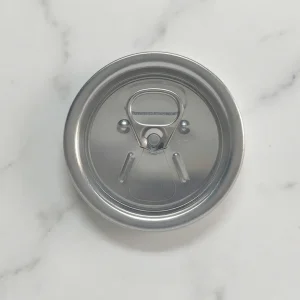
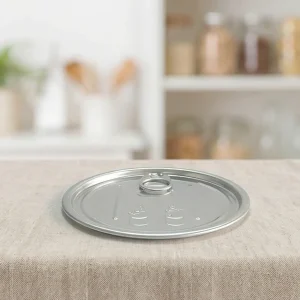
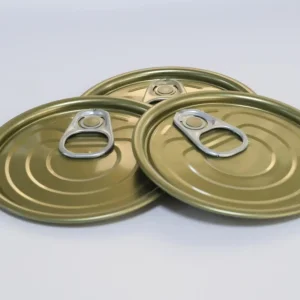
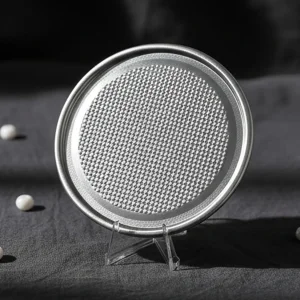
Analyzing global packaging paradigms, barrier thermodynamics, and structural metallurgy driving modern food preservation.
In the contemporary fast-moving consumer goods (FMCG) and industrial food processing sectors, metal packaging represents the apex of shelf-life preservation. Unlike flexible polymers or paper-board composites, high-purity aluminum alloys (such as 3104-H19, 5182-H48, and 8011-O/H14) establish an absolute, non-permeable physical barrier against vapor, molecular oxygen, ambient humidity, and ultraviolet radiation. The thermodynamic integrity of an aluminum vessel eliminates organic photo-oxidation, rancidity of lipophilic compounds, and hygroscopic powder clumping.
From an empirical standpoint, the shelf-life stability of sensitive food products—such as infant formula, freeze-dried active nutriments, specialty coffee, and specialty dairy powders—is governed by the Oxygen Transmission Rate (OTR) and Water Vapor Transmission Rate (WVTR). High-grade aluminum easy-open ends (EOE) and tinplate closures reduce both OTR and WVTR to functionally zero (<0.001 g/m²/24h and <0.001 cc/m²/24h/atm, respectively). This performance metric cannot be duplicated by mono-layer or co-extruded polymers without risking micro-fissuring during thermal transport fluctuations.
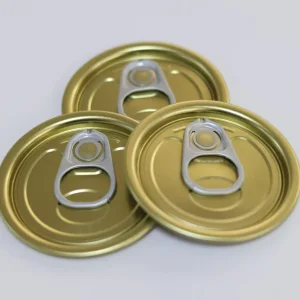
Utilizing high-speed double-seaming geometry (specifically 200#, 202#, 300#, 307#, and 401# formats), our lids deliver zero-leak seals validated via helium leak detection and high-pressure seam tear-down analyses.
Specialized electrostatic-neutral internal coatings applied to 300# and 209FA# ends prevent fine electronic-grade powders and active pharmaceutical ingredients (APIs) from adhering to lid surfaces during automatic filling.
Multi-layer organosol and epoxy-phenolic inner lacquers encapsulate aromatic volatility, isolating essential oils and coffee terpenes while protecting external ambient atmospheres from odor migration.
Global food contact regulations (EU 2018/213, FDA 21 CFR 175.300, and China GB 4806.10) have accelerated the phase-out of traditional Bisphenol-A epoxy resins. Modern food-grade aluminum storage relies on specialized acrylic, polyester, or polyorganosol BPA-NI (BPA Non-Intent) internal lacquer matrices. These advanced coatings undergo high-temperature stoving (190°C–210°C) to form cross-linked polymeric networks that maintain elasticity during stamping while offering resistance against aggressive food acids (pH < 3.5) and sulfur-rich protein formulations.
Selecting the precise alloy and temper is paramount for optimizing high-speed seaming performance and structural rigidity. The table below outlines technical parameters across primary packaging alloys employed in our manufacturing facilities:
| Alloy & Temper | Tensile Strength (MPa) | Yield Strength (MPa) | Elongation (%) | Primary Application Scenarios | Corrosion Resistance |
|---|---|---|---|---|---|
| 3104-H19 | 275 – 310 | 260 – 295 | 5 – 8 | DWI Beverage Can Bodies, Deep-Drawn Containers | High (Mn-Alloyed) |
| 5182-H48 | 360 – 400 | 310 – 350 | 6 – 10 | SOT / RPT Easy-Open Shell Ends, High-Pressure Tabs | Superior (Mg-Rich) |
| 8011-H14 / O | 140 – 185 | 110 – 150 | 12 – 20 | Lacquered Lid Stock, Flexible Peel-Off Foil Membranes | Excellent (Pure Fe-Si) |
| 5052-H32 | 215 – 265 | 160 – 210 | 10 – 16 | Ring-Pull Tabs, Anti-Corrosive Industrial Tops | Marine Grade |
| MR Grade Tinplate | 330 – 450 | 300 – 410 | 15 – 22 | 202#, 300#, 401# High-Vacuum Sanitary Food Lids | Passivated Tin-Coated |
Macroeconomic structural shifts, decarbonization mandates, and supply chain resilience in the international metal container sector.
Aluminum packaging stands as the benchmark for circularity. Unlike plastics which degrade mechanically during thermal reprocessing (downcycling), aluminum is infinitely recyclable without losing its elemental lattice properties. Secondary remelting of post-consumer aluminum scrap requires 95% less energy compared to primary smelting from bauxite ore. Enterprise buyers across Europe, North America, and East Asia prioritize aluminum closures to achieve Scope 3 carbon reduction targets and comply with extended producer responsibility (EPR) regulations.
Modern automated beverage and dry-powder filling lines operate at velocities between 300 to 1,500 cans per minute (CPM). Margin errors in shell curl diameter, countersink depth, or tab alignment cause line jams, machine downtime, and micro-fractures in internal coatings. Our precision tooling guarantees dimensional tolerances within ±0.03mm, providing seamless integration with high-speed pneumatic seaming heads including Ferrum, Angelus, and pneumatically assisted rotary chucks.
Geopolitical volatility and ocean freight disruptions demand robust, multi-regional supply chain strategies. Operating out of Shanghai's global logistics hub, our shipping framework incorporates heavy-duty seaworthy bulk packaging: corrosion-inhibiting VCI film wrapping, fumigated ISPM-15 wooden pallets, desiccants, and reinforced corner cards. This ensures zero oxidation or ovalization during extended multi-modal transit across tropical or maritime trade lanes.
Market intelligence indicates a 7.4% Compound Annual Growth Rate (CAGR) in the demand for sleek aluminum cans and high-barrier powder closures through 2030. Key growth vectors include ready-to-drink (RTD) functional beverages, specialty botanical powders, clinical nutrition formulations, and high-purity industrial chemical reagents. The industry transition from legacy composite paper cans to 100% recyclable aluminum end-to-end systems has become a key differentiator for premium global brands.
Tailoring metallurgical specifications and surface chemistry to overcome regional environmental challenges and product-specific chemistry.
Challenge: High-salinity coastal environments and equatorial humidity accelerate external oxidation on standard steel packaging, leading to pinhole degradation.
Solution: High-magnesium 5182/5052 aluminum alloy lids coated with a 12-micron external clear passivation layer. Tested up to 96 hours in neutral salt spray (NSS) chambers per ASTM B117 with zero red/white rust formation.
Challenge: Static accumulation during high-speed vacuum filling causes micro-particulates of conductive or semiconductor powders to cling to lid chuck seams, compromising airtightness.
Solution: Specialized Anti-Static 300# EOE closures engineered with conductive carbon-infused food-contact polymers that bleed off surface static (surface resistivity < 10⁹ Ω/sq), ensuring clean seam contact.
Challenge: Metal detection devices and Magnetic Resonance (MR) diagnostic environments require zero ferromagnetic interference from active pharmaceutical packaging.
Solution: Pure non-ferrous 209FA# aluminum easy-open ends with 0.00% iron content, featuring low-burst pull scores tailored for clinical staff and geriatric patient accessibility.
Advanced low-temperature, pharmaceutical-grade, and beverage-compatible packaging components engineered for extreme environments.
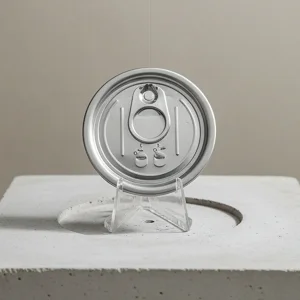
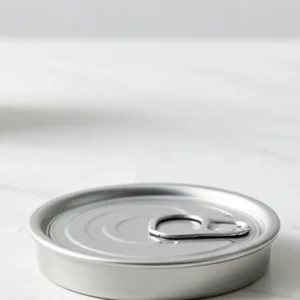
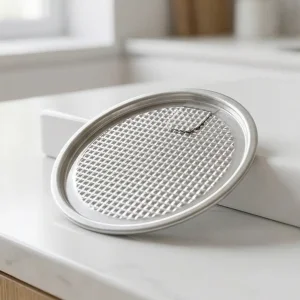
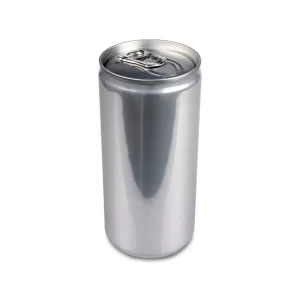
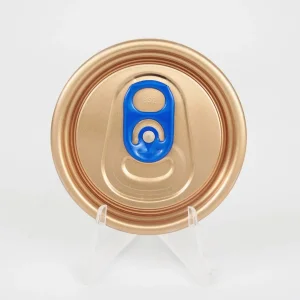
Pioneering ultra-lightweight alloys, smart packaging, AI vision quality assurance, and zero-carbon aluminum manufacturing.
Rigorous quality protocols, international food-contact certifications, and tailored technical assistance for worldwide clients.
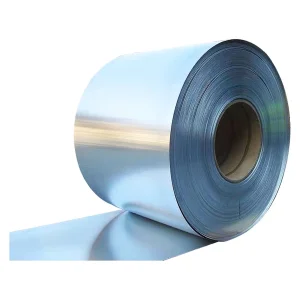
Quality assurance is embedded in every stage of production—from incoming coil inspection to automated seaming trials. Each batch of raw aluminum coil (8011, 3104, 5182, 5052) undergoes chemical spectroscopy analysis to verify compliance with ASTM standards. Prior to slitting and stamping, coating weights are verified via gravimetric testing, ensuring uniform coverage across internal and external surfaces.
| Inspection Parameter | Testing Methodology | Acceptable Quality Limit (AQL) | Regulatory Standard |
|---|---|---|---|
| Enamel Rater Porosity | 1% NaCl Electrolytic Current Test (WACO Rater) | < 0.5 mA / End | ASTM F1929 / Industry Standard |
| Pop & Pull Force | Pneumatic Actuation Force Gauge | Pop: 15-28 N | Pull: 25-45 N | ISO 9001 Quality System |
| Buckle & Burst Pressure | Internal Hydraulic / Pneumatic Pressurization | > 6.2 Bar (CSD) | > 2.5 Bar (Powder) | GB/T 17590 / EN 13030 |
| Food Contact Migration | Overall & Specific Migration Simulants (3% Acetic Acid, 10% Ethanol) | < 10 mg/dm² | FDA 21 CFR 175.300 / EU 1935/2004 |
Our regulatory compliance team maintains active certifications and declarations of compliance across major international regulatory frameworks:
Technical answers to common engineering, procurement, and logistics questions from global packaging buyers.
