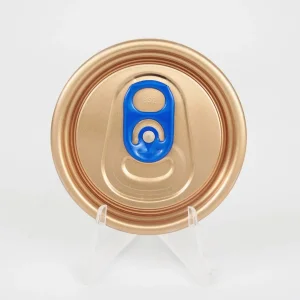
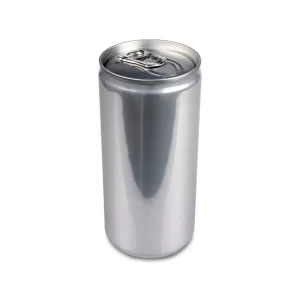
Featured Global Standard Container Ends & Coil Materials (Part I)
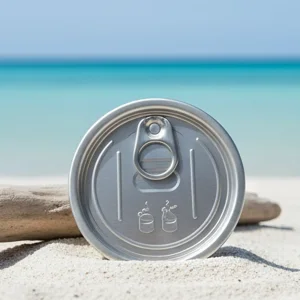
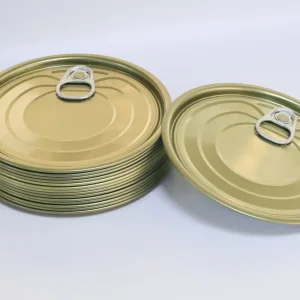
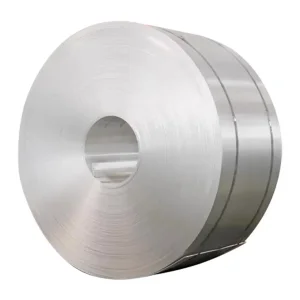
A Deep-Dive Whitepaper on Metallurgical Innovation, Regulatory Compliance, and Circular Economy Dynamics
The global metal packaging market is undergoing a seismic structural transition. As brand owners, contract fillers, and multinational consumer packaged goods (CPG) conglomerates align with aggressive carbon-neutrality mandates and plastic-reduction legislation (such as the EU Single-Use Plastics Directive and US EPR frameworks), the demand for infinitely recyclable aluminum container lids, easy-open ends (EOE), and specialized lacquered coils has accelerated exponentially.
Modern high-speed conversion lines leverage advanced 5182-H48 and 3104-H19 temper alloys. By optimizing countersink depth and feathering profiles, shell thickness is down-gauged to 0.20mm–0.22mm without sacrificing internal burst strength (>6.2 bar) or seaming reliability.
Transitioning from traditional bisphenol-A epoxy lacquers to Next-Gen BPA Non-Intent (BPA-NI) acrylic, polyester, and PVC-free organosol internal linings ensures zero chemical migration across acidic carbonated drinks, high-fat food formulations, and sensitive electronic powders.
From anti-static surface treatments designed for high-purity pharmaceutical and electronic-grade powders (preventing particulate accumulation on sealing faces) to re-sealable RPT (Ring Pull Tab) and SOT (Stay-On Tab) mechanisms tailored for on-the-go consumption formats.
Aluminum container lids are not simple stamped metal disks; they represent highly complex structural components operating under severe mechanical strain. During the double-seaming process—where the end curl interlocks with the container body flange—the lid metal undergoes intense plastic deformation. Achieving zero micro-cracking along the score line requires immaculate metallurgical purity and tight grain size distribution within the aluminum coil stock.
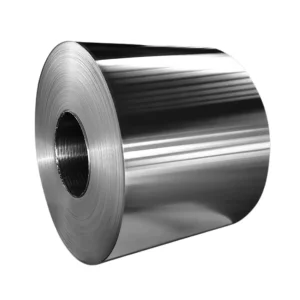
Specifically, 5182-H48 aluminum alloy serves as the premier choice for shell stock due to its elevated magnesium content (4.0%–5.0%), providing high yield strength and strain-hardening capacity. For tab stock, 5052-H19 alloy offers superior tensile toughness during the riveting and scoring formation. Meanwhile, container body stock derived from 3104-H19 alloy balances deep-drawing workability with high column crush resistance.
Engineering Specifications Tailored for High-Speed Seaming & High-Barrier Applications
Global procurement teams evaluate aluminum closure suppliers based on strict quantitative metrics: double seam compatibility, score opening force profiles, coating porosity, and thermal resistance during sterilization or freeze storage. Below is the technical performance baseline engineered into our comprehensive lid portfolio:
| Closure / Alloy Specification | Diameter Code | Substrate & Temper | Internal Lacquer System | Pop / Pull Force Metric | Target Application Intent |
|---|---|---|---|---|---|
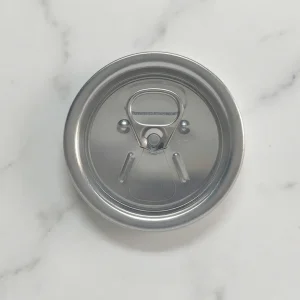
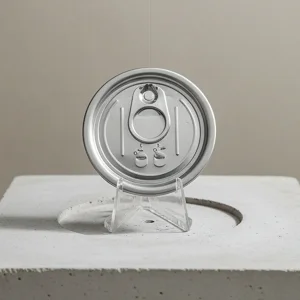
| 300# Anti-Static EOE Lid | Ø73mm (300#) | Aluminum 5182-H48 | Anti-Static BPA-NI Organosol | Pop: 12-16 N | Pull: 22-28 N | Electronic-grade powders, high-purity chemical reagent drums |
| 200# RPT Resealable End | Ø50mm (200#) | Aluminum 5182-H48 | Modified Polyester / Acrylic | Pop: 14-18 N | Pull: 24-30 N | Energy drinks, RTD teas, craft beverages requiring re-closure |
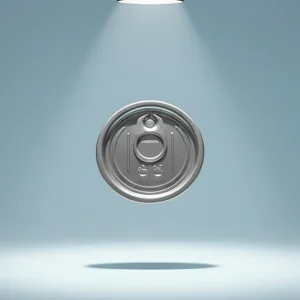
| 202# SOT Beverage Lid | Ø52mm (202#) | Aluminum 5182-H48 | Waterborne Acrylic / BPA-NI Epoxy | Pop: 12-16 N | Pull: 20-26 N | Carbonated soft drinks, beer, hard seltzers (Pasteurization proof) |
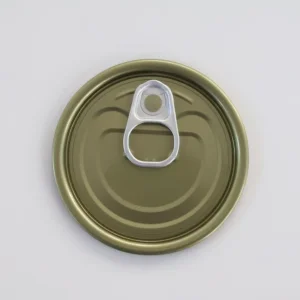
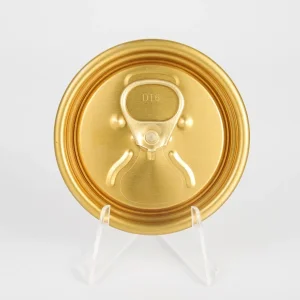
| 401# High-Barrier Powder End | Ø99mm (401#) | Tinplate (T3/T4) / Al 8011 | Epoxy Phenolic / Gold Organosol | Pop: 18-24 N | Pull: 30-38 N | Infant formula, milk powder, nitrogen-flushed nutritional foods |
| 206# Odor-Proof Aroma Lid | Ø57mm (206#) | Aluminum 5182-H48 | Aroma-Barrier Polymer Liner | Pop: 13-17 N | Pull: 21-27 N | Specialty coffee beans, aromatic tea powders, volatile spices |
| 209# Freeze-Resistant End | Ø63mm (209#) | Aluminum 5182-H48 | Cryogenic Low-Temp Elastomeric | Pop: 15-19 N | Pull: 25-32 N | Cold-chain storage (-40°C), frozen dessert sauces, frozen seafood cans |
| 3104 / 5052 Coil Stock | Custom Slitting Width | Al 3104-H19 / Al 5052 | Lacquered / Prime Bright Surface | N/A (Tensile 270-310 MPa) | DWI Can body drawing, tab rivet forming, closure shell stamping |
Next-Generation Manufacturing Infrastructure Empowering Global Supply Reliability
Navigating global supply chain volatility demands more than baseline manufacturing capability; it requires integrated digital smart-factories, raw material reserves, and automated quality verification systems. China's advanced metal packaging industry has evolved into a high-precision, AI-driven manufacturing powerhouse, with Shanghai serving as the primary technological and logistical nexus.
Utilizing high-speed Minster and Stolle conversion presses operating at up to 3,000 ends per minute. Integrated optical vision systems scan 100% of manufactured lids in real-time, detecting micro-defects down to 0.001mm in curl geometry, tab positioning, and score depth.
Every coil lot is assigned a digital barcode tracking chemical composition, temper, and lacquer thickness. Automated high-voltage enamel rater testing (< 0.5 mA) ensures absolute coating continuity, eliminating metal exposure and post-fill corrosion risks.
Strategically backed by direct access to Shanghai Port—the busiest container terminal in the world—our integrated supply chain guarantees rapid container loading, standardized ocean-freight packaging (polyethylene sleeves, desiccant charges, reinforced pallets), and seamless customs clearance.
To eliminate double-seaming downtime on client filling lines, our quality assurance protocol involves rigorous pre-shipment testing. Each production batch undergoes:
Customized Engineering Solutions Across Global Key Market Sectors
Container closures must adapt to highly specific environmental, chemical, and mechanical stresses. Below are real-world application frameworks demonstrating how tailored aluminum closure specifications solve key operational challenges across localized market sectors:
In high-tech manufacturing regions across East Asia and Western Europe, electronic-grade powders, specialty conductive pastes, and high-purity chemical reagents require airtight, static-free container closures. Standard metal lids generate electrostatic charges during handling, causing fine particulates to cling to the inner rim. This causes powder contamination along the sealing gasket and compromises airtight integrity. Our 300# Anti-Static Aluminum Easy-Open Lid incorporates a proprietary surface-dissipative organic coating that prevents static build-up, guaranteeing pristine sealing faces and zero particulate migration.
North American and European craft breweries operating high-speed canning lines face significant challenges regarding pasteurization stability and pressure spikes. During tunnel pasteurization (reaching 60°C–65°C), internal carbon dioxide pressure expands rapidly. Our 202# SOT and 200# RPT Ends utilize 5182-H48 high-yield aluminum shell stock engineered with a deep-countersink profile. This allows the lid to withstand internal pressure surges up to 6.2 bar without panel dome reversal (buckling), maintaining precise double-seam integrity across automated conveyor lines.
In global cold-chain distribution networks—where canned food, seafood, and specialty culinary products are stored at sub-zero temperatures (-20°C to -40°C)—standard sealing compounds can become brittle, leading to micro-leaks and oxidation. Our 209# Freeze-Resistant Aluminum Lids are lined with specialized low-temperature elastomeric sealant compounds that retain elasticity under deep-freeze conditions, ensuring zero vacuum loss and absolute moisture barrier preservation.
Nutritional milk powders require strict shelf-life protection against oxygen and moisture ingress to prevent lipid oxidation and nutrient degradation. Utilizing 401# and 502# High-Barrier Easy-Open Lids with nitrogen-flushing vacuum seaming achieves residual oxygen levels below 0.5%, maintaining infant formula freshness over a 36-month shelf life.
Featured Global Standard Container Ends & Coil Materials (Part II)
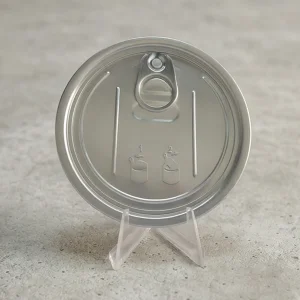
Authoritative Answers to Critical Aluminum Closure & Seaming Questions