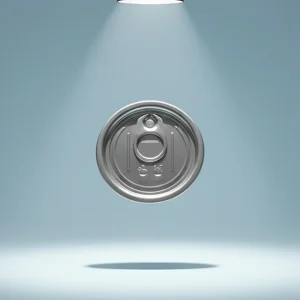
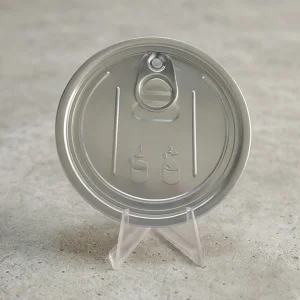
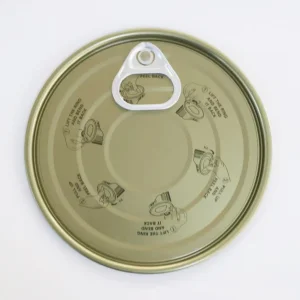
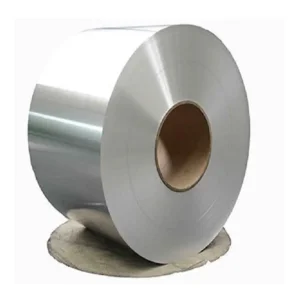
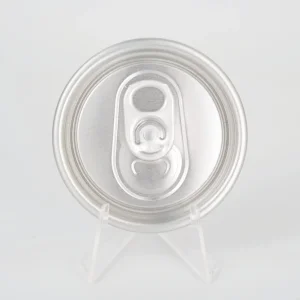
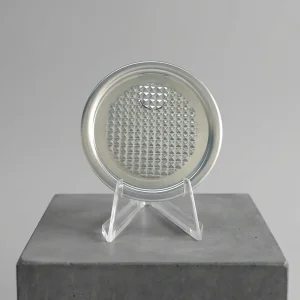
Engineered to interface seamlessly with modern high-speed seamers operating up to 2,000 CPM, eliminating micro-leakage and maximizing line yield.
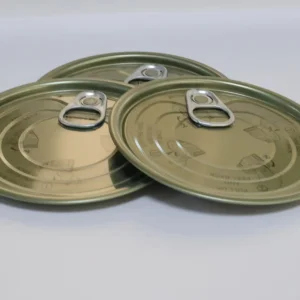
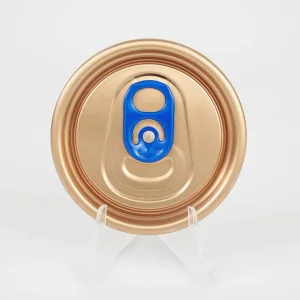
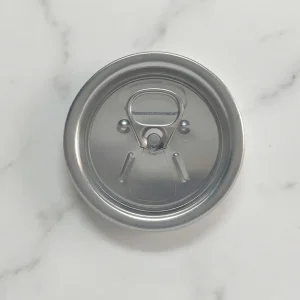
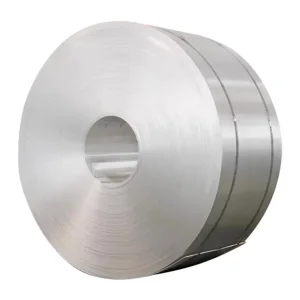
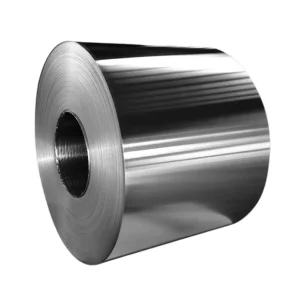
Shanghai Friend Metals Technology Co., Ltd. addresses the systemic vulnerabilities of the modern beverage packaging chain through end-to-end integration: from raw alloy coil cold-rolling down to micro-inch wall thickness calibrations.
The standard 330ml format relies on Drawing and Wall Ironing (DWI) metallurgical consistency. By closely regulating inter-annealing grain textures in our 3104-H19 virgin coil stock, our container bodies maintain tensile elongation thresholds that prevent pinholing, body split under necking stresses, and sidewall wrinkles at rapid line feeds.
High-acid formulas (pH < 3.0), craft ciders, and carbonated energy drinks demand unyielding boundary barriers. We engineer epoxy-phenolic and third-generation non-intent (BPA-NI) spray coatings tested to < 0.5 mA enamel rater ratings, guaranteeing total isolation between acidic liquid matrices and bare alloy walls.
A failed double-seam halts multimillion-dollar filling facilities. We customize can necking profiles (202# down to lightweight 200#) and end curls to interface flawlessly with Ferrum, Angelus, and CFT seamers. Each production run ships with verified countersink depth, seam gap, and body hook teardown reports.
Market economics, consumer ergonomics, and decarbonization mandates are converging, establishing the 330ml standard and sleek profile as the global benchmark across retail distribution channels.
Stringent Extended Producer Responsibility (EPR) regulations and single-use plastic taxes across the European Union (PPWR) and North America have forced major beverage groups to abandon PET. Aluminum’s true closed-loop recyclability yields a 95% energy reduction compared to primary smelting, driving record conversion rates to standard 330ml bodies.
Compared to heavy glass containers, the featherweight 330ml can body (averaging approximately 12.2 grams) maximizes payload cubic efficiency. Transporters eliminate deadweight tare, lowering freight carbon emissions per hectoliter by up to 38% across ocean and overland line-hauls.
The rise of ready-to-drink (RTD) premium cocktails, kombuchas, cold-brew coffees, and nootropics has elevated the 330ml sleek and standard silhouettes into emblems of modern consumer health and luxury. Matte varnishes, tactile inks, and high-definition dry-offset printing differentiate brands instantly at shelf appeal.
A rigorous breakdown of our 330ml standard beverage can envelope, engineered in accordance with international DIN EN 13888 and packaging machinery operational clearances.
| Critical Parameter | Standard 330ml Specification | Sleek 330ml Specification | Quality Test Protocol / Standard |
|---|---|---|---|
| Nominal Body Alloy | EN AW-3104-H19 Aluminum | EN AW-3104-H19 Aluminum | Spectrometric Verification / ASTM E1251 |
| Nominal Outer Diameter | Ø 66.0 mm ± 0.2 mm | Ø 58.4 mm ± 0.2 mm | Laser Optical Micrometer Verification |
| Total Finished Height | 115.2 mm ± 0.3 mm | 146.0 mm ± 0.3 mm | Digital Height Gauge Fixture |
| Neck Diameter Fitting | 202# (Ø 52.4 mm) | 200# (Ø 50.0 mm) / 202# | Precision Plug & Ring Go/No-Go Gauges |
| Mid-Wall Thickness | 0.095 mm ± 0.005 mm | 0.098 mm ± 0.005 mm | Resonance Ultrasonic Thickness Gauge |
| Internal Lacquer Coating | Epoxy-Phenolic / Modified Polyacrylic BPA-NI | Epoxy-Phenolic / Modified Polyacrylic BPA-NI | Enamel Rater WACO (< 0.5 mA) |
| Bottom Dome Inversion Pressure | ≥ 6.20 Bar (90 PSI) | ≥ 6.50 Bar (94 PSI) | Pneumatic Dome Buckle Tester |
| Axial Load Collapse Strength | ≥ 1,000 N (225 lbf) | ≥ 900 N (202 lbf) | Servo-Hydraulic Crush Test Stand |
*Note: High-speed canning setups require zero dimensional divergence. Our factory lines integrate automated inline visual inspection systems operating at up to 2,400 cans per minute, filtering out flange ovality, neck micro-cracks, and internal coating pinholes before secondary palletization.
Cross-border procurement demands rigorous traceability and documented safety. Shanghai Friend Metals backs every production batch with international certifications recognized across North America, Europe, Asia, and Oceania.
Our internal lacquers and coil conversions strictly satisfy FDA 21 CFR 175.300, European Commission Regulation (EU) No 1935/2004, and Chinese National Standard GB 4806.10. Comprehensive specific migration limits (SML) and overall migration test dossiers are issued per coil heat number.
Transitioning to our 330ml bodies or lids does not mean risking production downtime. Our field engineers provide setup blueprints: chuck-and-roll profiles, pin-height alignments, base plate pressures, and countersink clearance checks to dial in your equipment for zero-burr hermetic folds.
Exporting from our Shanghai terminal, bulk cans are stacked with heavy corrugated tier sheets, capped with solid timber top frames, and hermetically stretch-hooded with desiccants. We deliver verified container load maps to resist trans-oceanic humidity and dynamic shipboard vibrations.
Every beverage chemistry presents distinct barrier pressures and shelf stability challenges. Our engineering team custom-calibrates internal varnishes and base alloys to fit specific fill profiles.
Beer requires absolute zero oxygen pickup (< 15 ppb) and strong light barrier performance to eliminate photo-oxidation and skunking. Our 330ml bodies coupled with 202# SOT lids withstand tunnel pasteurization thermal expansion (reaching up to 65°C / 149°F) without seam fatigue.
Elevated carbonation pressures (up to 4.2 gas volumes) exert constant outward radial strain on the container sidewall and bottom dome. Our reinforced 3104-H19 alloy geometry ensures stable shelf-stacking integrity and eliminates dome snap-out during summer logistics.
Non-carbonated beverages lack internal pressure to resist vertical top-load crushing during automated pallet stacking. We provide tailored liquid nitrogen dosing guidelines and end-shell thicknesses, generating positive internal head space pressure (15–25 PSI) for rigid pack performance.
At Shanghai Friend Metals, technological development is a continuous process. Our R&D teams are pioneering next-generation materials, smart tracking, and closed-loop metallurgy.
By refining high-reduction cold-rolling methods for 3104-H19 aluminum stock, we are progressing toward target body-wall thicknesses of 0.088 mm without degrading axial collapse limits. This initiative strips an estimated 0.8 grams per container, saving hundreds of metric tons of raw aluminum annually across mass filling operations.
In partnership with secondary smelters, we are qualifying post-consumer recycled (PCR) alloy formulations exceeding 85% closed-loop recovered scrap. Maintaining tight control over magnesium, manganese, and iron intermetallic phases allows us to match the mechanical resilience of virgin aluminum while reducing embodied carbon footprints.
To combat gray-market diversions and fulfill European digital product passport (DPP) initiatives, our can domes and tabs integrate high-precision micro laser-etched 2D DataMatrix and QR patterns. Operating reliably at can speeds exceeding 1,200 CPM, these codes facilitate real-time supply chain monitoring.
Straightforward technical answers from our packaging metallurgical team to simplify your line changeover and supplier qualification.
The drawn 330ml can body is stamped exclusively from virgin or certified PCR EN AW-3104-H19 temper alloy, engineered for deep-draw ductility and work hardening. Easy-open ends (such as 200# and 202# SOT/RPT) utilize EN AW-5182-H48 shell stock for high buckle strength under carbonation, while the rivet tabs are stamped from 5052-H38 aluminum alloy.
We employ automated continuous electrostatic spray booths applying advanced BPA-Non-Intent (BPA-NI) or epoxy coatings cured in specialized pin ovens. Every production lot undergoes Waco Enamel Rater electrical conductivity testing (< 0.5 mA target threshold), copper sulfate porosity soak checks, and accelerated acid aging tests to confirm complete interior protection.
For plain/bright 330ml bodies and stock 202# / 200# lids, trial orders start at one 20-foot or 40-foot high-cube container (approx. 150,000–280,000 units). For custom 6- to 8-color high-definition dry-offset printed can designs, the standard production minimum is 100,000 units per artwork SKU, with initial container dispatches running 15 to 20 days post-prepress proof approval.
Yes. We supply comprehensive seam tooling manuals detailing proper first and second operation roll profiles, recommended pin pressures, overlap percentages (> 55% target), body hook lengths, and countersink depths. Our technical services team can analyze your seamer cross-section photomicrographs and coordinate trial lots before volume commitments.
Explore our complete inventory of industrial packaging components engineered for automated canning lines, dairy processing, and high-barrier industrial containers.